Poodle Puppy Sleep Schedule Guide: 7 Vital Rest Rules by Age
A tired poodle puppy does not always act sleepy. Many puppies get bitey, wild, noisy, and harder to train when they need rest. This poodle puppy sleep schedule guide explains how much sleep your puppy needs by age, when to use enforced naps, how to build a calm nighttime routine, and when sleep changes may need a vet check.
Quick Answer
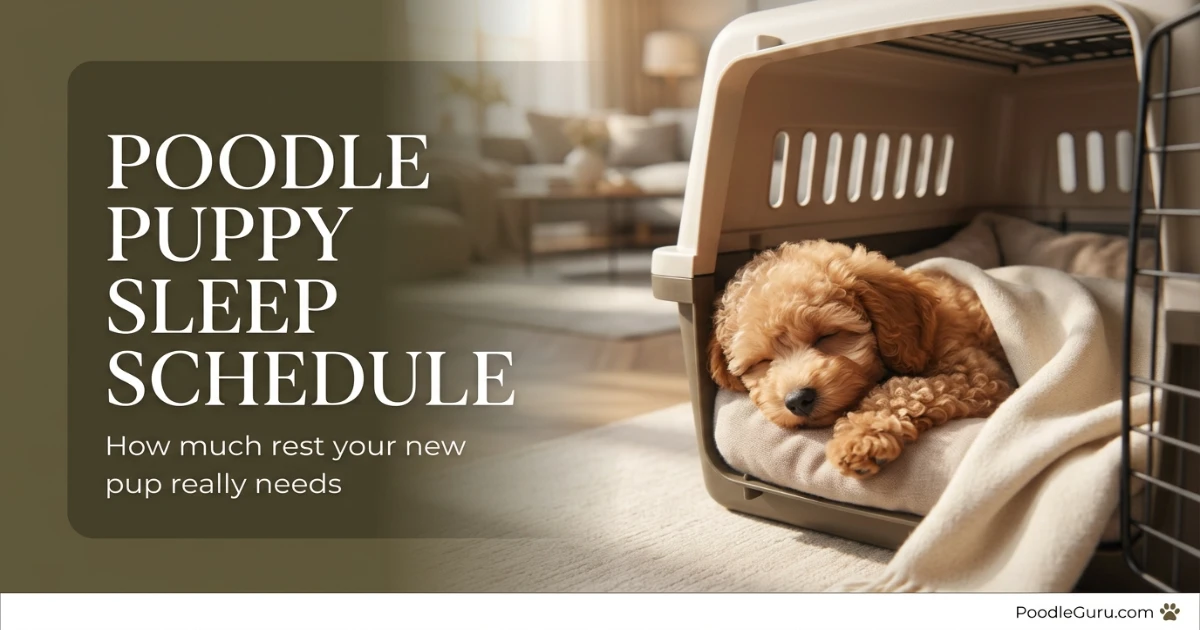
Poodle puppies usually need 18 to 20 hours of sleep per day at 8 to 12 weeks old. By 4 to 6 months, many need around 16 to 18 hours, and by 6 to 12 months they often settle into 14 to 16 hours including daytime naps. A healthy poodle puppy sleep schedule should include short awake windows, regular enforced naps, a calm bedtime routine, and a safe crate or quiet sleep zone.
Why a Poodle Puppy’s Sleep Schedule Matters
Bringing home a poodle puppy is exciting, sweet, and exhausting. One moment your puppy is bouncing around the room, and the next they are asleep on the floor like someone switched off the battery.
That sudden crash is normal. What owners often miss is that puppies do not always choose rest when they need it. Some poodle puppies fight sleep the same way toddlers do: by getting louder, mouthier, and more frantic.
Poodles are highly trainable, alert, and often sensitive to household activity. That can make them wonderful companions, but it also means they can become overstimulated quickly. Sleep gives the brain time to process training, socialization, sounds, smells, and new routines.
Good sleep will not solve every puppy challenge, but it can make biting, barking, crate resistance, and training frustration much easier to manage.
What a Healthy Poodle Puppy Sleep Schedule Looks Like by Age
The biggest mistake new poodle owners make is waiting for the puppy to fall asleep naturally. Some puppies will. Many will not.
When a puppy has been awake too long, they may get zoomies, bite harder, bark at nothing, or ignore cues they already know. Owners often think the puppy needs more exercise, but the better answer is usually a quiet nap.
| Age Range | Total Daily Sleep | Typical Nap Pattern | Nighttime Sleep | Awake Window |
|---|---|---|---|---|
| 8–12 weeks | 18–20 hours | Frequent naps after short awake periods | 6–8 hours with potty breaks | 30–60 minutes |
| 12–16 weeks | 17–19 hours | 3–4 structured naps, often 1–2 hours each | 7–9 hours with fewer potty breaks | 45–75 minutes |
| 4–6 months | 16–18 hours | 2–3 longer naps after play or training | 8–10 hours | 60–90 minutes |
| 6–12 months | 14–16 hours | 1–2 naps plus calm rest periods | 9–11 hours | 90–120 minutes |
The awake window is the detail most owners overlook. A 10-week-old poodle who has been awake for 90 minutes may already be overtired. By the time the puppy is biting ankles and sprinting in circles, you may have missed the ideal nap window.
Poodle puppies can mask fatigue with hyperactivity. If your puppy suddenly starts nipping, barking, racing, or refusing simple cues after being awake for a while, try a calm potty break followed by crate rest before assuming the puppy needs more play.
How Poodle Size Affects Sleep: Toy, Miniature, and Standard
Toy, Miniature, and Standard Poodle puppies all need a lot of sleep. The difference is usually the pattern, not the basic need for rest.
Toy Poodles often tire quickly and may need shorter, more frequent naps. Standards may handle slightly longer awake windows as they mature, but they still need rest to protect developing joints and avoid overstimulation.
| Poodle Size | Puppy Sleep Tendency | Awake Window Around 4 Months | Key Sleep Consideration |
|---|---|---|---|
| Toy Poodle | Short bursts of energy followed by frequent rest | 45–60 minutes | Small bodies can tire quickly; keep meals, naps, and potty trips predictable. |
| Miniature Poodle | Moderate stamina with good routine adaptability | 60–75 minutes | Often settles well when naps are consistent and the home is calm. |
| Standard Poodle | Longer awake windows may develop gradually | 75–90 minutes | Avoid over-exercising young joints; ask your vet about safe activity limits. |
The Nighttime Sleep Routine That Works for Poodle Puppies
Nighttime is where many new owners struggle. The first week can include whining, potty breaks, and the temptation to bring the puppy into bed.
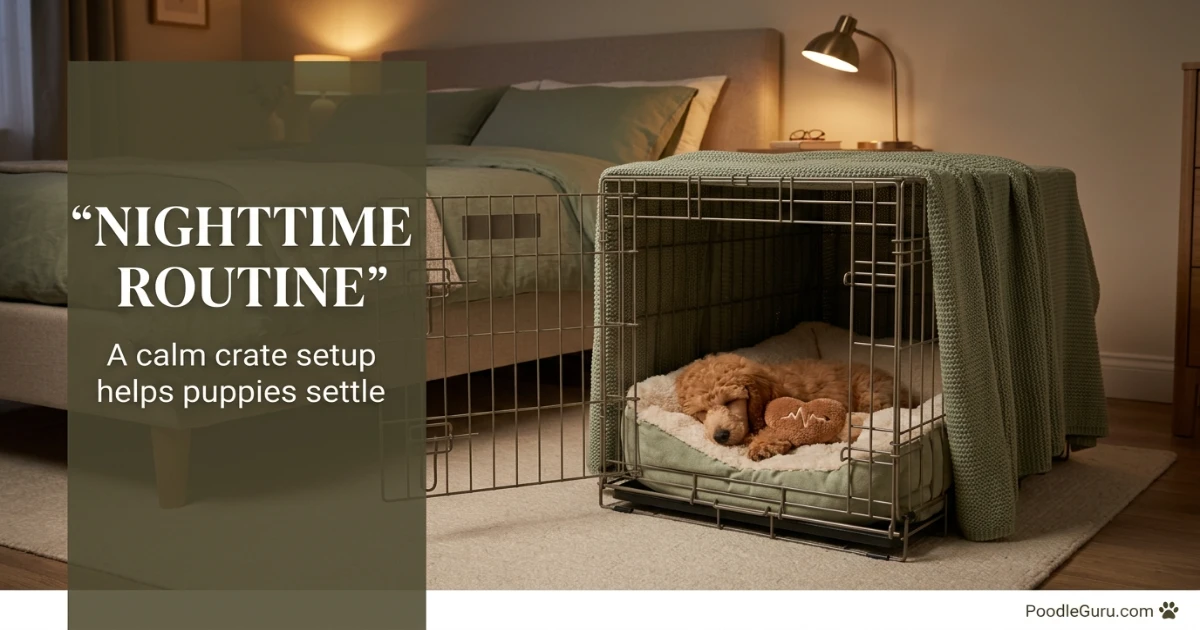
A consistent routine usually helps faster than changing the plan every night. Place the crate in your bedroom at first, so your puppy can hear and smell you. Cover part of the crate for coziness while leaving airflow open.
A Safe Wind-Down Routine
Begin your bedtime routine around 30 to 45 minutes before sleep. Keep the house calm, avoid rough play, and do a final potty trip right before crating.
For healthy puppies, you can reduce late-evening water right before bed if your vet has not advised otherwise. Do not restrict water during hot weather, after exercise, during illness, after diarrhea or vomiting, or for very young or medically fragile puppies.
Use a consistent phrase such as “night-night,” then keep the room quiet. A safe heartbeat toy or familiar-scent blanket can help some puppies feel less alone.
- Keep evenings boring. Avoid wrestling, chasing, and exciting games near bedtime.
- Use a predictable final potty break. Keep it calm: potty, praise, back inside.
- Respond calmly, not dramatically. If your puppy needs a potty break, take them out quietly without play.
- Keep morning wake time steady. Poodles usually settle better when the day starts at a predictable time.
Enforced Naps: The Game-Changer Many Poodle Owners Learn Too Late
Enforced naps simply mean you guide the puppy into rest before they become overtired. You do not wait for chaos. You build a rhythm of potty, short training, gentle play, chew time, and then crate rest.
A 10-week-old poodle puppy might wake at 6:30 a.m., go potty, eat breakfast, play gently, train for two or three minutes, and return to the crate around 7:30 a.m. After a good nap, the cycle repeats.
This routine is not punishment. It teaches the puppy that rest is safe, predictable, and part of daily life.
Track Awake Windows
Write down when your puppy wakes up. At 8–12 weeks, plan a nap after about 30–60 minutes of awake time.
Use Potty Before Crate
Always give a calm potty opportunity before nap time. This reduces crate frustration and prevents avoidable accidents.
Keep the Crate Calm
Use a quiet room, partial cover, safe bedding, and white noise if needed. Avoid turning nap time into a negotiation.
Watch Behavior, Not Just the Clock
If your puppy gets bitey, glassy-eyed, frantic, or unable to settle, shorten the next awake window.
What New Owners Often Get Wrong About Poodle Puppy Sleep
The phrase “a tired puppy is a good puppy” can be misleading. A well-rested puppy is usually easier to train. An exhausted puppy may become wired, mouthy, and unable to think clearly.
Another mistake is offering too much stimulation in one day. A busy café, visitors, grooming practice, leash walking, and training all in the same afternoon may be too much for a young poodle.
Standard Poodle puppies also need sensible exercise limits while their bodies grow. Long forced walks, repeated stairs, and high-impact jumping are not the same as gentle puppy play. Ask your veterinarian what is safe for your puppy’s size, age, and health.
When speaking with a breeder, ask how puppies are introduced to quiet time, crate exposure, and nighttime routine. A breeder who starts gentle rest routines before puppies go home can make the first week much easier.

How Sleep Supports Poodle Temperament and Trainability
Sleep helps puppies process what they learned while awake. A puppy who naps after training may come back calmer and more ready to repeat the lesson.
When a poodle puppy is overtired, they may seem stubborn, but the problem is often low impulse control. They may forget “sit,” bite harder during play, or fail to settle even when nothing is wrong.
Consistent rest can support confidence, crate comfort, and calmer reactions to normal household activity. It is not a guarantee against anxiety or behavior issues, but it is one of the simplest foundations owners can control.
What a Day With a Well-Rested Poodle Puppy Feels Like
A sleep-regulated poodle puppy is still a puppy. They will still bite, play, explore, and need supervision. But the day usually feels more manageable.
The puppy wakes, goes potty, eats, plays, trains briefly, and then rests before they spiral into overtired behavior. After a real nap, they come back more curious and less frantic.

Transitioning the Sleep Schedule as Your Poodle Puppy Grows
Sleep schedules change as puppies mature. Around 5 to 6 months, many poodle puppies move from three structured naps to two. By 9 to 12 months, some do well with one solid midday nap plus quiet evening rest.
Do not rush the transition. If behavior suddenly gets worse after dropping a nap, add the nap back for another week or two.
Toy Poodles may keep a two-nap rhythm longer than some Standards because they tire differently. Watch your individual puppy rather than forcing a calendar-based schedule.
When Sleep Patterns Signal a Problem Worth Investigating
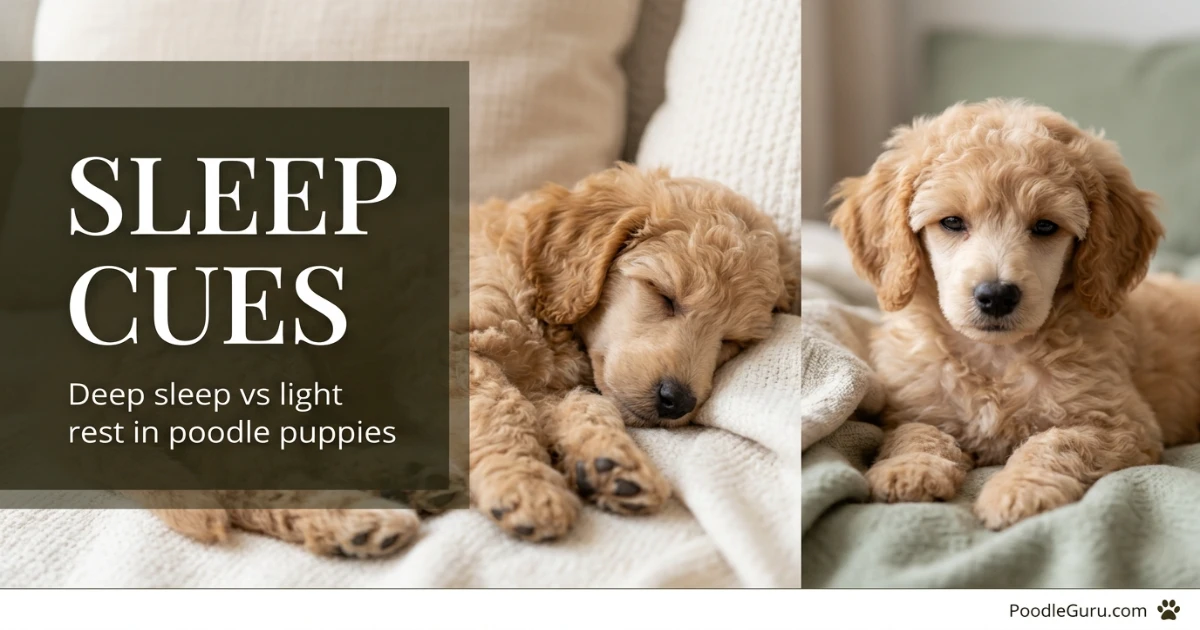
Most poodle puppy sleep quirks are normal. Twitching, little paw movements, soft whimpers, and changing positions can all happen during healthy sleep.
Still, sudden or extreme sleep changes deserve attention. A puppy who cannot stay awake even briefly, cries in pain while resting, or suddenly fights sleep after doing well may need a vet check.
Contact your veterinarian if your poodle puppy sleeps more than 22 hours a day and is difficult to rouse, suddenly cannot settle despite a stable routine, vocalizes as if in pain, refuses food, has vomiting or diarrhea, or shows a dramatic change in nighttime sleep for more than a few nights.

Frequently Asked Questions About Poodle Puppy Sleep
How many hours a day should a poodle puppy sleep?
A poodle puppy between 8 and 12 weeks old usually needs 18 to 20 hours of sleep per day. Around 4 to 6 months, many need 16 to 18 hours. From 6 to 12 months, 14 to 16 hours is common. These totals include nighttime sleep and daytime naps.
Should I wake my poodle puppy up from naps?
Generally, let your puppy wake naturally unless you need to keep a potty schedule, protect bedtime, or follow your veterinarian’s instructions. Waking a puppy in the middle of deep sleep can make them groggy or irritable.
Why does my poodle puppy get hyper right before bed?
Hyper behavior before bed is often overtired behavior. When a puppy has been awake too long, they may get zoomies, nip harder, bark, or seem unable to settle. Shorter awake windows and a calmer wind-down routine usually help.
Is it normal for a poodle puppy to twitch and whimper while sleeping?
Yes, mild twitching, tiny paw movements, soft whimpers, and quiet sleep sounds are usually normal during puppy sleep. Call your vet if your puppy seems distressed, cannot be woken normally, or shows other symptoms.
How long can a poodle puppy hold their bladder at night?
A common guideline is about one hour per month of age plus one, but every puppy is different. Toy Poodles may need more frequent potty breaks because of smaller bladders. By 5 to 6 months, many puppies begin sleeping longer stretches.
Should my poodle puppy sleep in my bedroom or a separate room?
For the first several weeks, a bedroom crate often helps because your puppy can sense you nearby and you can hear potty signals. Later, you can gradually move the crate if you want your poodle to sleep in another room.
Do Toy Poodle puppies need more sleep than Standard Poodle puppies?
Total sleep hours are usually similar, but Toy Poodles may take shorter and more frequent naps. Standard Poodles may gradually handle longer awake windows as they mature, but they still need structured rest.
What if my poodle puppy refuses to nap in the crate?
First, check that your puppy has had a potty break and is not hungry, hot, cold, or uncomfortable. Then return to positive crate games, feed meals inside the crate, use a calm room, add white noise, and keep nap routines consistent. If panic or distress continues, ask your vet or a qualified trainer for help.
Key Takeaways: Poodle Puppy Sleep Schedule Guide
Sleep is not empty time in your puppy’s day. It is part of training, growth, emotional regulation, and confidence building.
- Most 8–12 week poodle puppies need 18 to 20 hours of sleep per day.
- Short awake windows prevent overtired biting, zoomies, barking, and crate resistance.
- Enforced naps help smart, sensitive poodle puppies learn how to settle.
- Night routines work best when they are calm, predictable, and paired with a final potty break.
- Toy, Miniature, and Standard Poodles have similar sleep needs but may nap in different patterns.
- Sudden sleep changes, pain signs, or extreme sleepiness should be discussed with your veterinarian.
Next step: Pair this sleep plan with a simple feeding and potty routine so your poodle puppy’s whole day becomes easier to predict.