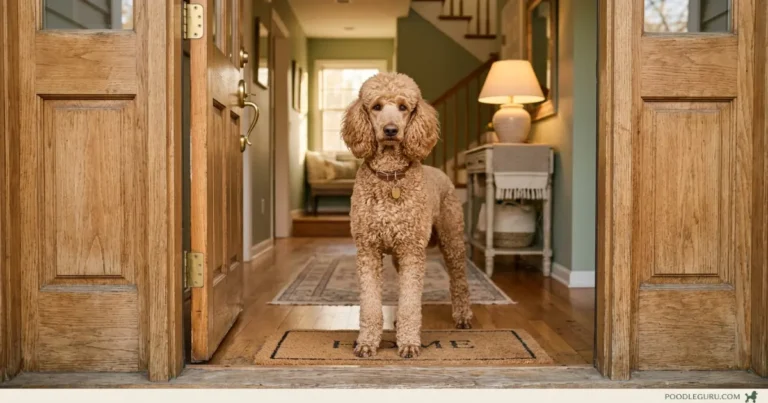
Poodle at the Dog Park: 11 Critical Safety Rules for a Safe Outing
Quick Answer: Yes, a well-prepared poodle can safely enjoy the dog park — but the breed’s intelligence, sensitivity, and coat type demand a few critical precautions. The key is knowing your poodle’s size, reading subtle body language, and never assuming a dog park is automatically a safe space just because it’s enclosed. With the right prep, poodles often thrive as polite, engaged playmates.
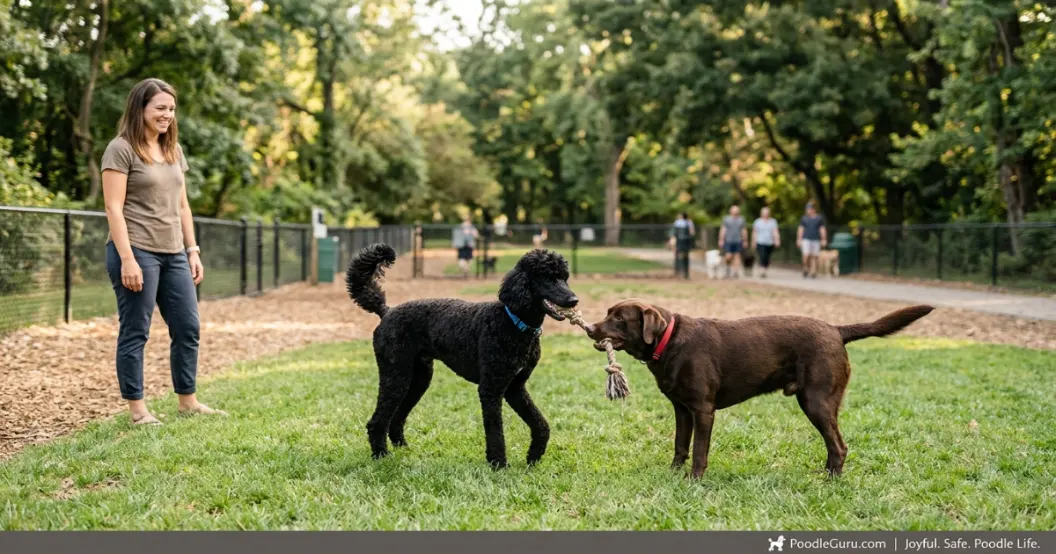
Taking a poodle to the dog park feels like a natural choice. You imagine an elegant, athletic dog showing off a spectacular recall, mingling gracefully with others. But reality can veer in a heartbeat — a scuffle over a stick, a larger dog that mistakes a toy poodle’s squeaky bounce for prey, or a standard poodle’s extravagant coat becoming a magnet for mud and burrs. For poodle owners, safety at the dog park is not about luck; it is about reading the breed you love and preparing for the environment you cannot control.
The poodle at the dog park experience is fundamentally different from that of many other breeds. Poodles are not just “smart dogs” — they are intensely observant, sometimes overthinkers, and acutely aware of social tension. Their non-shedding coat, while a blessing indoors, turns into a liability when zoomies meet a muddy puddle. And their size diversity means the same set of safety rules cannot apply universally to a 4-pound toy, a 15-pound miniature, and a 55-pound standard. This guide walks you through every nuance, from pre-visit grooming to recognizing when your poodle is mentally checked out, so you can protect your dog while preserving the joy of off-leash play.
Size Matters
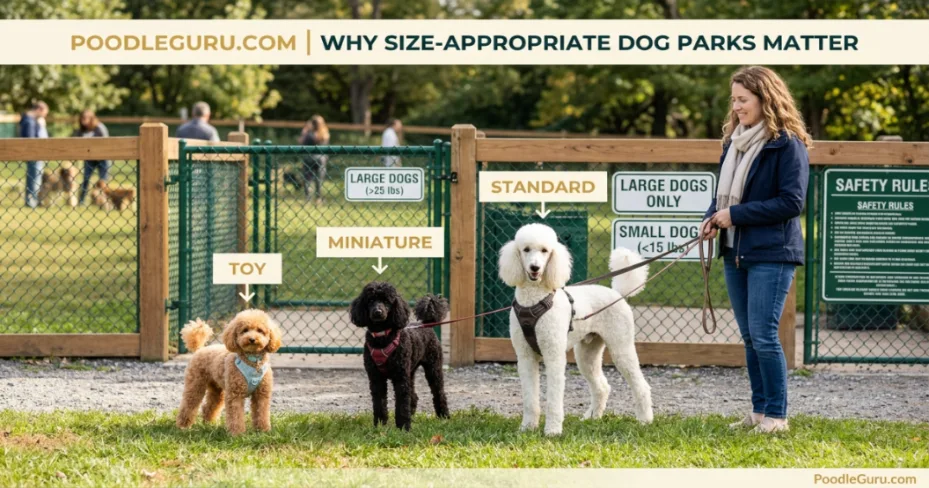
Toy, Miniature, and Standard poodles face vastly different risk profiles. A toy can be injured by a friendly but clumsy Labrador, while a standard might intimidate smaller dogs unintentionally.
Coat as a Safety Factor
That luxurious curly coat collects dirt, foxtails, and can even cause overheating in summer. A proper cut before the park isn’t just cosmetic — it’s protective.
Brain Before Brawn
Poodles often solve problems during play, which can lead to creative escape attempts or manipulating gates. Their mental alertness means they can become overstimulated faster than goofier breeds.
Social but Selective
Well-bred poodles tend to be social, but they also have a strong sense of personal space. Forcing interactions with pushy dogs can erode their confidence over time.
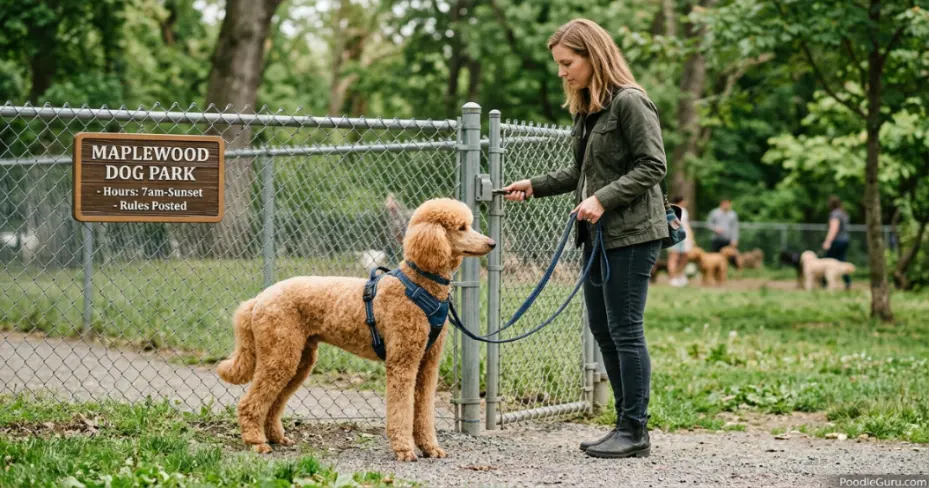
Understanding Your Poodle’s Nature Before You Unclip the Leash
Too many owners walk into a dog park assuming the breed’s intelligence guarantees good behavior. Intelligence and impulse control are not the same thing. A young poodle may know the recall command perfectly in your living room but completely ignore it when a pack of dogs is chasing a tennis ball. Acknowledging this nuance is the first safety rule. Poodles were originally water retrievers; many still have a soft mouth and a prey-drive flicker that can surface when small fluffy dogs run past. That doesn’t make them aggressive — it makes them a breed that needs managed introductions.
Additionally, poodles are emotionally sensitive. Harsh corrections, even from another dog, can leave a lasting impression. One overly rough encounter at a crowded park can make a sensitive miniature poodle far more cautious around dogs later. The lesson? The environment you choose matters as much as your dog’s training. Opt for quieter times, smaller groups, and always, always separate small and large dog sections.
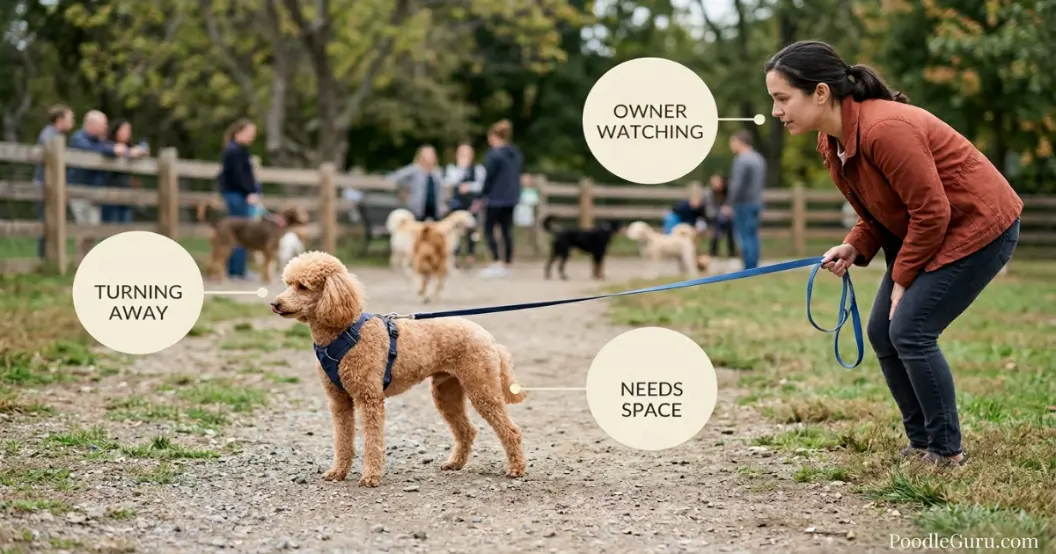
PoodleGuru Safety Note: Freezing, lip licking, yawning, turning away, and sudden ground sniffing are not random quirks. At the park, treat these as early stress signals and give your poodle space before tension escalates.
Pre-Park Preparation: A Poodle-Specific Checklist
Safety begins long before you open the car door. Because poodles are prone to ear infections, coat matting, and joint concerns in larger sizes, your prep routine is unique.
1. Grooming for function, not just beauty. A sanitary trim around the rear and a shorter clip on the legs and belly prevent mud, snow, and plant matter from clinging. Long ear hair can trap moisture and debris; tie it back gently or use a snood if your poodle tolerates it. Never let a poodle with tight curls run in tall dry grass — foxtails can burrow into skin and migrate dangerously.
2. ID and microchip check. Poodles are escape artists. A panicked poodle can slip a flat collar in seconds. A well-fitted martingale or a secure harness with current ID tags is non-negotiable. Ensure your microchip registration is up to date because collars can come off during rough play, gate pressure, or sudden panic.
3. Vaccination and parasite protection. Keep core vaccines such as rabies and DHPP current, and ask your veterinarian whether leptospirosis protection makes sense for your area and lifestyle. Poodles often love water, and dog parks may have shared bowls or puddles, so bring your own portable bowl and fresh water.
4. Mental warm-up. A quick obedience tune-up session in your yard reduces overexcitement. Ask for a sit, a down, and a recall before entering. This reminds your poodle that you are still the most interesting thing, even when distractions spike.
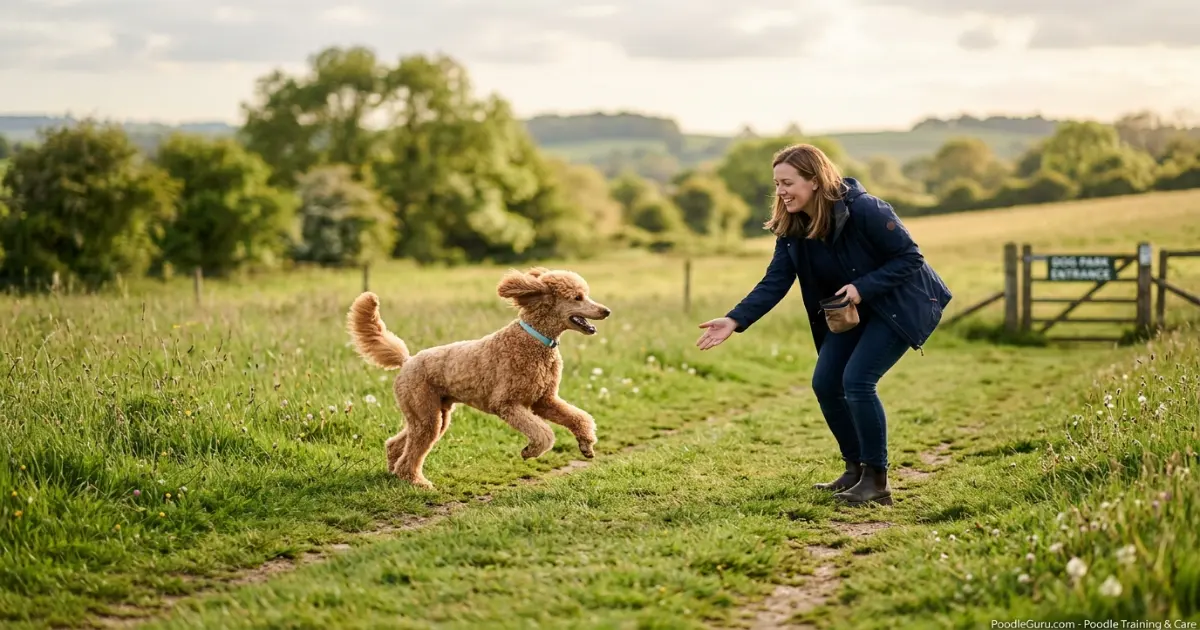
Dog Park Safety Rules That Poodle Owners Often Overlook
Beyond the obvious — pick up waste, don’t bring treats that cause resource guarding — there are poodle-specific rules that elevate safety from good to exceptional.
- Manage the gate calmly. Keep your poodle leashed through the parking lot and first gate. Once you are safely inside the off-leash area, the gate is closed, and the entry is clear, unclip calmly so your dog is not trapped on leash while other dogs crowd them.
- Size separation isn’t optional. A toy poodle in the large dog side because “he loves big dogs” is a medical emergency waiting to happen. Predatory drift is real, and even a friendly large dog can accidentally crush a small dog. Respect the posted weight limits.
- No squeaky toys from home. Poodles love squeakers, but a squeak can trigger possessive aggression from another dog. Let the park provide neutral toys or none at all.
- Monitor humping immediately. Poodles sometimes get targeted for mounting because of their upright carriage and fluffy appearance. Interrupt it instantly — it isn’t cute; it’s rude and can escalate.
Reading Poodle Body Language: When ‘Fine’ Means ‘I Need an Exit’
Standard poodles especially are masters of the stoic mask. By the time a poodle growls, it has likely been uncomfortable for a while. You need to spot the precursors: whale eye (showing the whites), stiffening, repeated lip licking, tail tucking, or sudden over-interest in sniffing the ground. If your poodle does any of these, call them to you casually, praise them, and move to a quieter area. Don’t punish the communication — protect it.
Play bows are great, but a poodle who constantly rolls onto its back with every approach may be overwhelmed, not submissive-natured. That’s a cue to leave. Similarly, a poodle that becomes the “fun police” — barking at running dogs but not joining in — is overstimulated and needs a break. Overstimulation can lead to a bite faster in a poodle than in a more resilient breed because they internalize stress deeply.
Pro Tip: The 3-Second Rule
- After any intense play burst, call your poodle back for a 3-second touch and treat. This resets their arousal level.
- If they can’t respond within 3 seconds, they’re over threshold. Leash up and leave for the day.
Comparing Toy, Miniature, and Standard Poodles at the Dog Park
Not all poodles share the same risk profile. This table distills the major differences so you can tailor your approach.
| Aspect | Toy Poodle (4–6 lbs) | Miniature Poodle (10–15 lbs) | Standard Poodle (40–70 lbs) |
|---|---|---|---|
| Best park setup | Small-dog-only section, no exceptions | Small-dog section or very calm mixed group | Large-dog area with structure (benches, tunnels) |
| Primary risk | Injury from larger dogs; predatory drift; escape through fence gaps | Getting overwhelmed by speed; coat matting from rough play | Overheating/ bloat risk if intense exercise right after eating; joint stress on hard ground |
| Recall challenge | High-pitched voice may get lost; very quick, can dart | Moderate; tends to stick near owner but may ignore under excitement | Strong but can be stubborn; needs proofing around water |
| Coat clean-up | Quick dry but may get chilled | Moderate; legs collect mud | Substantial; full body wipe-down often needed |
A common buyer mistake is assuming a miniature poodle can handle the large-dog park because they have “big dog energy.” Energy doesn’t equal structural safety. Stick to weight-appropriate sections, and if no small-dog area exists, skip the park entirely and opt for a playdate with known dogs.
Common Misunderstandings About Poodles at the Dog Park (Even Experienced Owners Get These Wrong)
One persistent myth is that poodles are naturally “prissy” and won’t enjoy rough-and-tumble play. In truth, most well-socialized standards love robust chase games. But they also have a lower tolerance for rude behavior than, say, a Labrador. That doesn’t make them aggressive — it makes them communicators. Another misconception: shaving a poodle short eliminates coat-related risks. It reduces matting, yes, but also removes sun protection. A poodle with a very close clip can get sunburned on pale skin. A light summer sweater or dog-safe sunscreen on the back is wise.
Perhaps the biggest oversight is the belief that if a poodle is great with dogs at home, the dog park will be fine. Park dynamics are unpredictable. A poodle accustomed to one-on-one play can find a pack of six dogs completely dysregulating. Treat the park as a skill to be built gradually, not a default weekend activity.
Health Hazards That Hit Poodles Harder at the Dog Park
Because poodles have drop ears and hair-lined canals, they are more susceptible to ear infections after swimming or rolling in damp grass. After every park visit, gently lift the ear flap and do a sniff test. Any musty odor means a vet check. Their curly coat also cleverly hides cuts, ticks, and grass awns. Run your fingers deliberately through the coat after every outing — especially between the toes, armpits, and under the tail.
For standards and large miniatures, pay attention to water intake. Poodles often drink a lot after running, and gulping air with water can contribute to bloat (gastric dilatation-volvulus). Avoid exercising your dog right after a full meal, and offer small amounts of water frequently rather than letting them gulp.
Eye injuries from twigs or enthusiastic dogs are another concern. Poodles’ prominent eyes can be vulnerable. If you see squinting, tearing, or any cloudiness post-park, visit your vet promptly.
Health Check Note: Not every park injury is obvious. Torn dewclaws, ticks, burrs, foxtails, and small cuts can hide under a curly coat. A quick paw, ear, and coat check after every visit can prevent bigger problems later.
Step-by-Step: How to Introduce a Poodle to the Dog Park Safely
If this is your first visit, don’t just fling open the gate. Use this gradual, poodle-friendly approach.
Step 1: Observe from outside the fence for 10 minutes. Let your poodle watch the dog dynamics. Reward calm behavior. You’ll learn which dogs are bullies and which owners are attentive.
Step 2: Enter during a quiet window. Weekday mornings or late afternoons often have fewer dogs. Avoid peak times initially.
Step 3: Walk the outside perimeter first if the park layout allows. This lets your poodle process scents and dog movement without being immediately surrounded. Avoid keeping your dog leashed inside a busy off-leash group unless park rules require it.
Step 4: Unclip and let your dog set the pace. Don’t push them to interact. Many poodles prefer to sniff the fence line for a while before engaging.
Step 5: Call them back frequently and reward safely. Use praise, movement, or treats only when you are away from other dogs and there is no risk of resource guarding. You are building a reinforcement history that overrides distraction.
Step 6: End on a positive note. Leave while your poodle is still happy, not exhausted. A 20–30 minute session is often enough for young or highly sensitive dogs.
What This Means for Prospective Poodle Owners
If you’re considering a poodle and envision frequent dog park adventures, understand that not every poodle loves the chaos. Some adore it; others prefer structured hikes or beach romps. Ask the breeder about the parents’ sociability. A poodle from shy lines may never be a dog-park dog, and that’s perfectly fine. Forcing it can create a fearful adult.
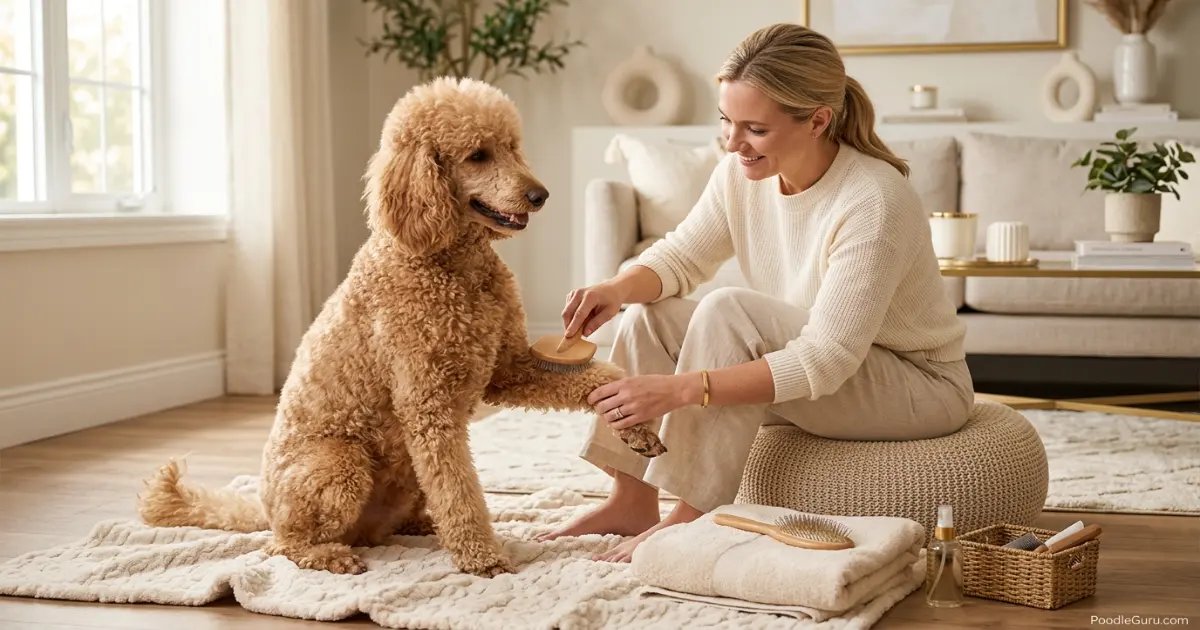
You should also factor in the ongoing cost of grooming, which affects park readiness. A poodle with a longer clip needs more post-park maintenance. Many owners keep a dedicated “park cut” — a short, even trim that makes drying and brushing a breeze. Budget for grooming every 4–6 weeks, and have a canine first-aid kit in your car: saline eye wash, tick remover, styptic powder for torn nails, and a clean towel. These small preparations separate a stressful outing from a rewarding one.
Common Mistakes Poodle Owners Make at the Dog Park
Even devoted poodle lovers slip into these errors. The first is letting their poodle drink from communal bowls. Shared water easily spreads kennel cough and giardia. Bring your own collapsible bowl and fresh water. The second is assuming a wagging tail means happiness. A high, stiff wag can indicate arousal that’s about to tip into conflict. Poodles communicate with nuance; pay attention to the entire body. Third is staying too long. Poodles often don’t show tiredness until they’re completely spent. Once your dog’s responses slow or they start lying down away from the action, it’s time to go.
Finally, many owners forget that poodles are creative problem-solvers. Some poodles learn gate routines quickly and may test latches when excited. Always double-check gates yourself, and don’t rely only on the park’s infrastructure.
Frequently Asked Questions About Poodles at the Dog Park
Are poodles safe in dog parks with larger breeds?
Only if the poodle is a standard and the large dog area is well-managed. Toy and miniature poodles should never be in a large-breed section, regardless of their confidence. Predatory drift can occur even with dogs that have previously been gentle.
My toy poodle loves chasing big dogs. Can I let him into the large area under supervision?
No. A single misstep from a larger dog can cause severe injury or death. Find a small-dog-only park or organize a playgroup with other small, gentle dogs. The risk isn’t worth it.
What if my poodle gets overwhelmed at the dog park?
Leave immediately. Don’t try to “work through it.” An overwhelmed poodle may shut down or snap. Next time, visit at quieter hours, or consider alternative socialization like parallel walks with a calm dog friend.
How do I clean my poodle after the dog park to prevent infection?
Wipe paws with a damp cloth, check between toes for foxtails, lift ears and gently dry any moisture, and give a quick brush to remove tangles. A full bath isn’t needed every time, but a rinse-off with plain water can help if they’re muddy.
Should I trim my poodle’s coat shorter before frequent dog park visits?
Many owners opt for a “sport clip” or a short kennel cut during muddy seasons. It reduces matting and makes post-park checks easier. Just ensure the skin isn’t exposed to direct sun for long periods.
At what age can a poodle puppy start going to the dog park?
Wait until your puppy has completed their full vaccination series (usually around 16 weeks) and has had positive controlled socialization with known dogs. A dog park is too unpredictable for a young puppy. Start with one-on-one playdates first.
Do poodles need a special harness for the dog park?
A well-fitted Y-shaped harness is ideal because it doesn’t restrict shoulder movement. Avoid harnesses that tighten or put pressure on the neck. Always remove any dangling straps that another dog could grab during play.
The Bottom Line: A poodle at the dog park can be a joyful, enriching experience when you respect the breed’s intelligence, physical vulnerabilities, and emotional sensitivity. Prioritize preparation, read your dog’s signals in real time, and never hesitate to leave early. Your poodle’s well-being matters more than a few extra minutes of off-leash time. With mindfulness, you’ll create a safe space where your poodle can shine — and you’ll leave the park with a happy, healthy companion every time.