Poodle vs Dachshund: Size, Energy & Care Compared
Poodle vs Dachshund is a choice between two very different histories, body types, and daily realities. One breed carries itself like royalty; the other was built to tunnel underground after badgers. This guide strips away the cute social-media photos and examines exactly what each breed demands from you — in grooming, training, exercise, and long-term health management.
Quick Answer
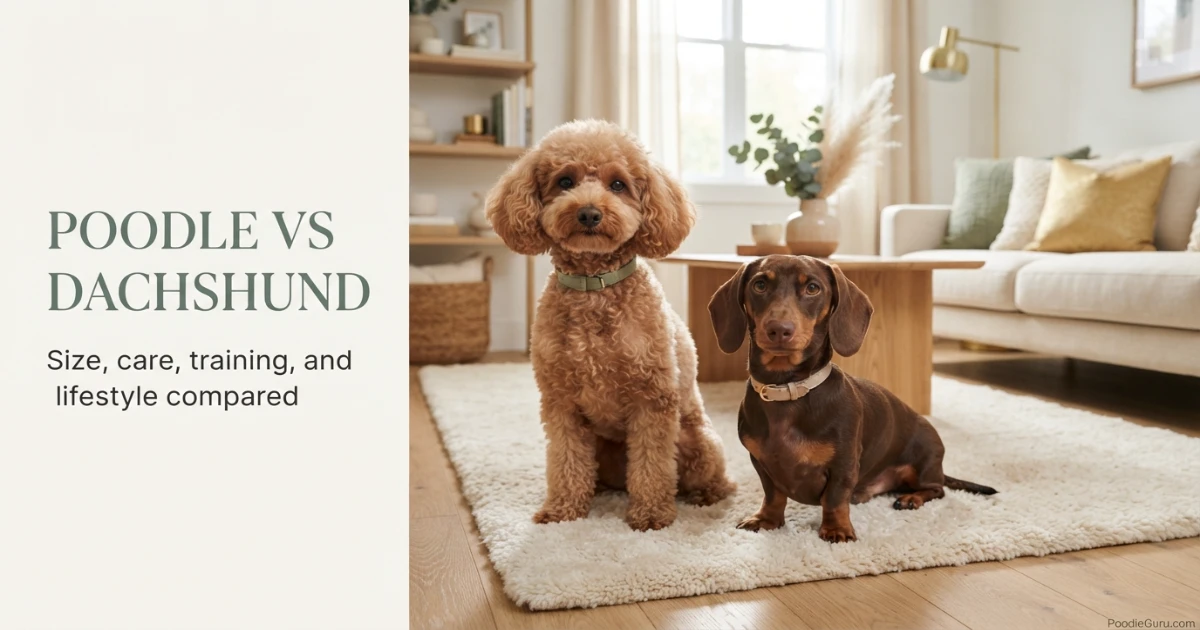
In a poodle vs dachshund comparison, the Poodle offers three size varieties (Toy, Miniature, Standard), high trainability, and a high-maintenance curly coat requiring regular professional grooming. The Dachshund comes in two sizes (Standard, Miniature) and three coat types (smooth, wirehaired, longhaired), with moderate to low grooming needs but a famously stubborn, independent streak. The Poodle fits owners wanting an eager-to-please, allergy-friendly companion; the Dachshund suits those who appreciate a big personality in a small package and can manage a breed prone to back problems and selective hearing.
What Are the Core Differences Between a Poodle and a Dachshund?
A Poodle vs Dachshund comparison is fundamentally about structure and purpose. Poodles are elegant, athletic retrievers with long legs and a proud carriage, built to swim and work closely with humans. Dachshunds are elongated scent hounds bred to dig into burrows, with short legs, a deep chest, and a fearless, independent drive. For potential owners, this means the Poodle will likely adapt more readily to training and a variety of living situations, while the Dachshund will require creative motivation and an environment that protects its fragile spine. The most important thing to understand is that neither breed is a “low maintenance” personality; they simply require different kinds of investment from their people.
Quick Facts at a Glance
Available Sizes
Poodle: Toy, Miniature, Moyen (not AKC), Standard. Dachshund: Standard (16–32 lbs), Miniature (under 11 lbs).
Coat & Shedding
Poodle: single curly coat, minimal shedding. Dachshund: smooth, wirehaired, or longhaired; smooth sheds moderately.
Training Style
Poodle: highly biddable, thrives on positive reinforcement. Dachshund: intelligent but independent; demands creative, consistent motivation.
Key Health Risk
Poodle: bloat, Addison’s disease, hip dysplasia. Dachshund: intervertebral disc disease (IVDD) due to long back; weight control is critical.
Grooming Commitment
Poodle: professional grooming every 4–6 weeks, daily brushing if kept long. Dachshund: minimal for smooths; regular brushing for wire/longhaired.
Lifespan
Poodle: 12–15+ years. Dachshund: 12–16 years. Both are long-lived with proper care.
Size & Varieties: Poodle vs Dachshund
While both breeds come in smaller options suitable for apartment living, their body proportions are worlds apart. This table breaks down the official size categories according to breed standards.
| Breed & Variety | Height (at shoulder) | Weight (healthy adult) | Best Living Situation |
|---|---|---|---|
| Poodle — Toy | Under 10 inches | 4–6 lbs | Apartments, seniors, frequent travelers |
| Poodle — Miniature | 10–15 inches | 10–15 lbs | Apartments, families with gentle children |
| Poodle — Standard | Over 15 inches (22–25 typical) | 45–70 lbs | Houses with yards; active singles/couples |
| Dachshund — Miniature | 5–6 inches | Under 11 lbs | Apartments, adults, families with older kids |
| Dachshund — Standard | 8–9 inches | 16–32 lbs | Houses with ramps, adults who can manage back safety |
The Dachshund’s short legs don’t mean less energy — both standard and miniature varieties are surprisingly sturdy and athletic, but their length demands careful handling to protect the spine.
Energy & Exercise Needs: Athlete vs. Burrower
Poodles are natural athletes. Even the Toy Poodle needs daily mental challenges and play, while a Standard Poodle thrives on 45–60 minutes of running, swimming, or retrieving. They are versatile sporting dogs that want to do things with you. A bored Poodle may become anxious, bark excessively, or engage in destructive chewing.
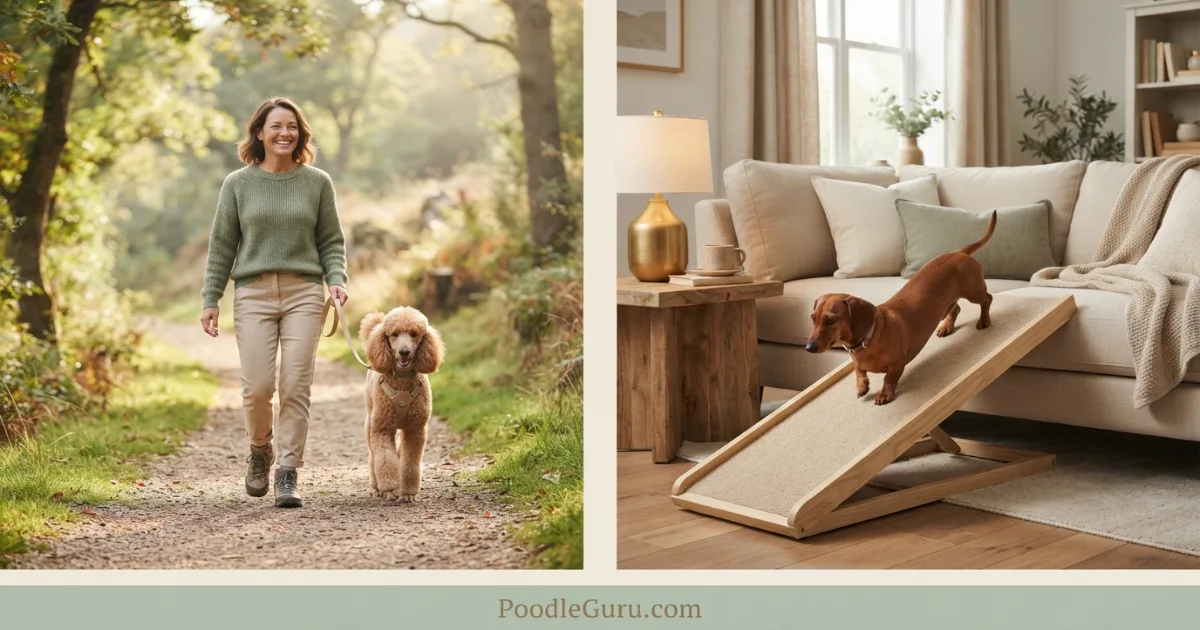
Dachshunds have surprising stamina for their size, but their exercise needs are more about scent exploration and short bursts of energy. A standard Dachshund enjoys a 30-minute walk with plenty of sniffing; a miniature can tire out indoors with structured play. Crucially, Dachshunds must avoid high-impact jumps and stairs to protect their backs. A home with a fenced yard where they can follow their nose is ideal, but owners must actively prevent them from leaping off furniture.
Temperament & Trainability: People-Pleaser vs. Independent Thinker
The Poodle’s reputation as one of the most intelligent breeds is well-earned, but more importantly, Poodles want to work with you. They respond beautifully to clicker training, shaping, and gentle praise. Their sensitivity means harsh corrections will shut them down. They are typically friendly with strangers and other dogs when socialized early.
Dachshunds are equally clever but were bred to work independently, making decisions underground where a handler couldn’t help. This translates to a modern pet that knows exactly what you’re asking but may weigh whether it’s worth their while. Dachshunds can be big barkers, devoted to their families but sometimes wary of strangers. Food motivation is high, which helps with training, but their stubborn streak is legendary. Consistent, short, game-based training sessions yield better results than long drills.
Grooming & Coat Care: High-Maintenance vs. Wash-and-Wear
This is where the poodle vs dachshund decision becomes financially concrete. A Poodle’s single, continuously growing coat mats easily and requires professional grooming every 4–6 weeks ($60–$150 per session), plus daily brushing if kept in a longer clip. Shaved short “pet clips” reduce maintenance but still demand regular appointments.
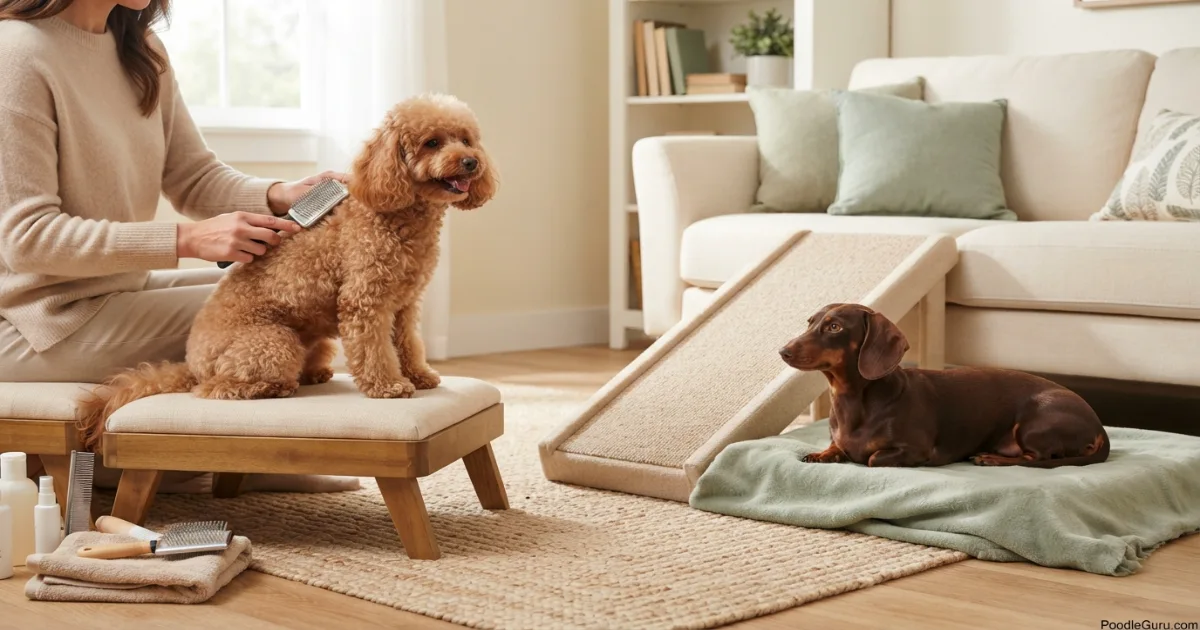
Dachshund grooming varies by coat type. Smooth Dachshunds are the lowest maintenance — a weekly wipe-down with a hound glove is often sufficient, though they do shed more than Poodles. Wirehaired Dachshunds need hand-stripping or clipping a few times a year, and longhaired Dachshunds benefit from regular brushing to prevent tangles, especially behind the ears and feathering. None require the ongoing expense of a professional groomer on the Poodle’s schedule.
When to Ask a Professional Groomer
- For Poodles: if you’re not confident shaving sanitary areas or between paw pads, see a groomer monthly.
- For wirehaired Dachshunds: hand-stripping preserves the harsh coat texture; a groomer experienced with the breed is best.
- Never shave a double-coated wirehaired Dachshund too short — it can permanently damage the coat’s protective quality.
Health Considerations & Lifespan
Both breeds are generally healthy and long-lived, but each has signature concerns. The AKC Poodle breed page outlines recommended health tests for issues like hip dysplasia, progressive retinal atrophy (PRA), and von Willebrand’s disease. Standard Poodles are also at risk for bloat (gastric dilatation-volvulus), which requires immediate emergency care.
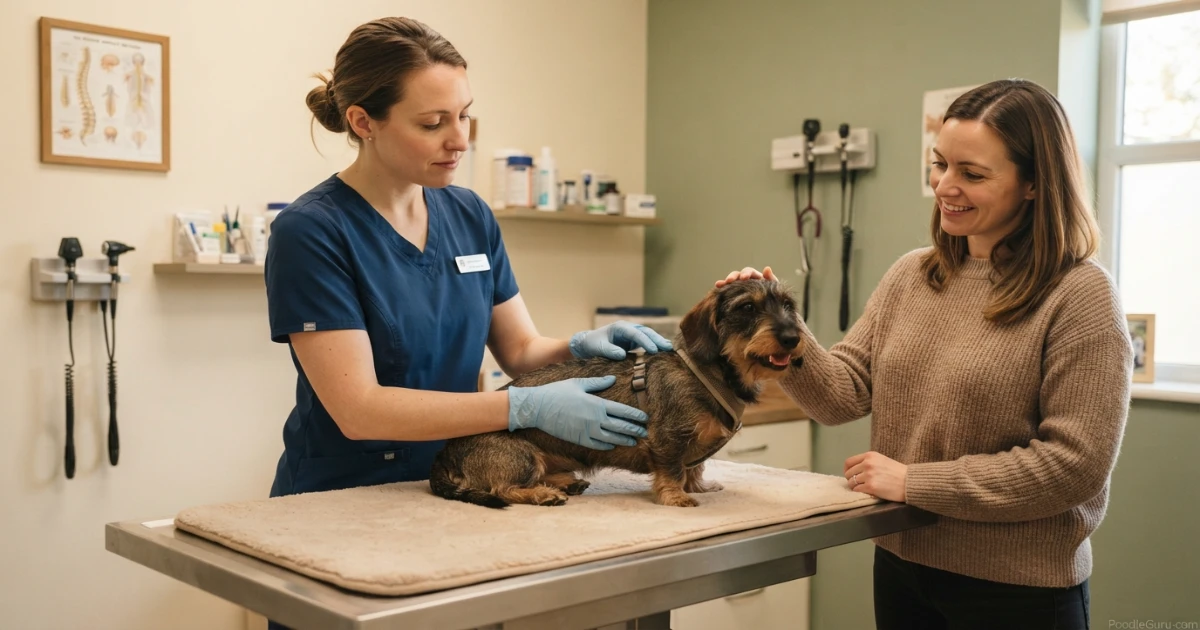
The Dachshund’s most critical vulnerability is intervertebral disc disease (IVDD), a condition where the cushioning discs between vertebrae bulge or rupture, causing pain, paralysis, or incontinence. Maintaining a lean body weight, using ramps instead of stairs, and supporting the back when picking up the dog are non-negotiable preventive measures. The AKC Dachshund breed page also highlights eye conditions and epilepsy as concerns to discuss with breeders.
When to Call the Vet Immediately
- For Poodles: Restlessness, unproductive vomiting, or a swollen belly — signs of possible bloat. Minutes matter.
- For Dachshunds: Sudden back pain, dragging a leg, or loss of bladder control — potential IVDD episode requiring urgent intervention.
Price, Breeders & Red Flags (2026)
2026 Price Guide
Poodle Puppy: $1,500–$4,000+ depending on size and color. Toy and Miniature Poodles often sit at the higher end due to demand. Rare colors (red, silver, parti) may increase price but should never overshadow health testing.
Dachshund Puppy: $800–$2,500 depending on coat type and lineage. Wirehaired and longhaired varieties tend to cost more than smooths. Miniatures are generally more expensive than standards.
Breeder Red Flags for Both Breeds
- No health clearances for the parents — especially IVDD screening for Dachshunds and OFA hips/eyes for Poodles.
- “Teacup” or “toy” Dachshund claims — extremely small size can signal health problems or poor breeding.
- Merle Dachshunds (dapple) from two dapple parents — double dapple genetics cause severe eye and ear defects.
- Poodle breeders who push “rare” colors without corresponding health documentation.
The PoodleGuru Right-Breed Decision Framework
At PoodleGuru, we evaluate breed matches by looking at the daily routine, not just the highlight reel. Work through these five steps to see which dog aligns with your actual life.
Audit Your Grooming Budget and Patience
Estimate the annual cost of professional grooming for a Poodle (roughly $700–$1,800) versus occasional grooming supplies for a Dachshund. Also ask yourself: do you enjoy the process of brushing, or does it feel like a chore?
Outcome: A clear financial and emotional commitment level that matches either the Poodle’s salon schedule or the Dachshund’s lower-maintenance routine.
Match Your Training Style
If you love seeing quick results and want a dog that responds eagerly to every cue, the Poodle will reinforce your training confidence. If you’re patient, enjoy the challenge of persuading an independent mind, and don’t take stubbornness personally, a Dachshund can be deeply rewarding.
Outcome: A training relationship that feels fun rather than frustrating, reducing the risk of behavior problems caused by mismatched expectations.
Assess Your Home’s Back-Safety Factor
Walk through your home as if you had a Dachshund. Are there stairs without gates? Furniture they’ll be tempted to jump off? Can you commit to using ramps and carrying the dog appropriately? If these modifications feel overwhelming, a Poodle’s athletic build may be a better match.
Outcome: A safe environment for a long-backed dog, or the realization that a leggier breed better suits your home’s layout.
Check Your Noise and Social Tolerance
Dachshunds were bred to bark at prey underground; that instinct translates to a vocal companion that may alert to every doorbell, passerby, and squirrel. Poodles can also be barkers, but are often more selective. If you have close neighbors or a low tolerance for noise, factor this in.
Outcome: A realistic expectation of household noise levels that won’t create tension with neighbors or family.
Interview Breeders and Meet Adult Dogs
For both breeds, arrange to visit a responsible breeder or attend a dog show. Meeting adult dogs reveals temperament, size, and that intangible “fit” better than any written description. A good breeder will ask about your lifestyle and may steer you toward the specific variety or sex that best suits your home.
Outcome: A well-informed final decision based on real interactions, not just theory.
Owner Action Plan: Which Breed Fits Your Life?
Choose the Poodle If:
- You want a highly trainable, eager-to-please companion.
- You are willing to budget for regular professional grooming.
- You need a low-shedding breed due to allergies.
- You enjoy an active lifestyle with swimming, hiking, or dog sports.
Choose the Dachshund If:
- You appreciate a dog with a big, independent personality.
- You want a lower-maintenance grooming routine (especially smooth coat).
- You can commit to back-safety measures like ramps and weight management.
- You enjoy a dog that’s equal parts cuddly and comically stubborn.
Frequently Asked Questions About Poodle vs Dachshund
Which breed is easier to train, a Poodle or a Dachshund?
Poodles are generally easier to train because they are highly biddable and eager to please. Dachshunds are intelligent but independent, often requiring more creative, food-motivated approaches and a sense of humor about their stubborn streak.
Do Poodles or Dachshunds shed more?
Smooth Dachshunds shed moderately, while wirehaired and longhaired varieties shed less. Poodles shed very little — their loose hairs become trapped in the curls — making them a better fit for allergy sufferers, though no dog is completely hypoallergenic.
What is the price difference between a Poodle and a Dachshund?
In 2026, a well-bred Poodle ranges from $1,500–$4,000 depending on size. Dachshunds range from $800–$2,500, with wirehaired and longhaired at the higher end. Poodles often incur higher lifetime grooming costs.
Which breed is better for an apartment?
Both Toy and Miniature Poodles and Miniature Dachshunds can thrive in apartments. Consider noise: Dachshunds tend to bark more. Poodles need daily walks; Dachshunds can exercise indoors with play but still need outdoor sniff walks.
Are Dachshunds good with children?
Dachshunds can be good family dogs, but they are better suited to homes with older, gentle children who understand how to handle a long-backed dog carefully. Rough play or improper lifting can cause serious spinal injury. Poodles, especially Standards, are generally more robust with kids.
What health problems should I worry about with each breed?
For Poodles: bloat, hip dysplasia, Addison’s, and eye disorders. For Dachshunds: intervertebral disc disease (IVDD) is the biggest concern, along with obesity, epilepsy, and eye conditions. Responsible breeders screen for these.
How much exercise does a Dachshund need compared to a Poodle?
A Standard Poodle needs 45–60 minutes of active exercise daily. Toy and Miniature Poodles need less but still benefit from walks and play. Dachshunds need 20–30 minutes of walking plus indoor play, with strict limits on jumping and stair climbing.
Can both breeds be left alone during the day?
Both breeds can develop separation anxiety if left alone for long hours. Poodles are particularly people-oriented. Dachshunds may become destructive. Gradual alone-time training and puzzle toys are essential for either breed if owners work full-time.
Key Takeaways: Poodle vs Dachshund
Both breeds can be wonderful companions, but they suit different lifestyles. The Poodle is the athlete-people-pleaser; the Dachshund is the independent hunter with a long body and a big voice.
- The Poodle comes in multiple sizes and has a high-maintenance, low-shedding coat; the Dachshund comes in two sizes and three coat types, with smooths being the lowest care and highest shedders.
- Poodles are highly trainable and eager to please; Dachshunds are clever but independent, requiring more patience and creativity in training.
- Dachshunds face a serious risk of IVDD (back problems); owners must prevent jumping, use ramps, and maintain a lean weight — an entirely different safety mindset than with a Poodle.
- Grooming costs for a Poodle average $700–$1,800 annually, while Dachshund grooming expenses are minimal; initial puppy price ranges overlap but lifetime care budgets differ significantly.
- The PoodleGuru Decision Framework helps match your grooming patience, training style, home layout, noise tolerance, and breeder interaction to the right breed.
- Before deciding, meet adult dogs of both breeds and explore our Poodle Size Chart to see which size Poodle might fit, or research Dachshund rescue organizations to experience the breed firsthand.
Your next step: schedule visits with responsible breeders or attend a dog show. See the temperament and energy in person, and then read our Complete Poodle Grooming Guide if the Poodle is calling your name.