Poodle Skin Allergy Symptoms: Food Vs Environmental Triggers
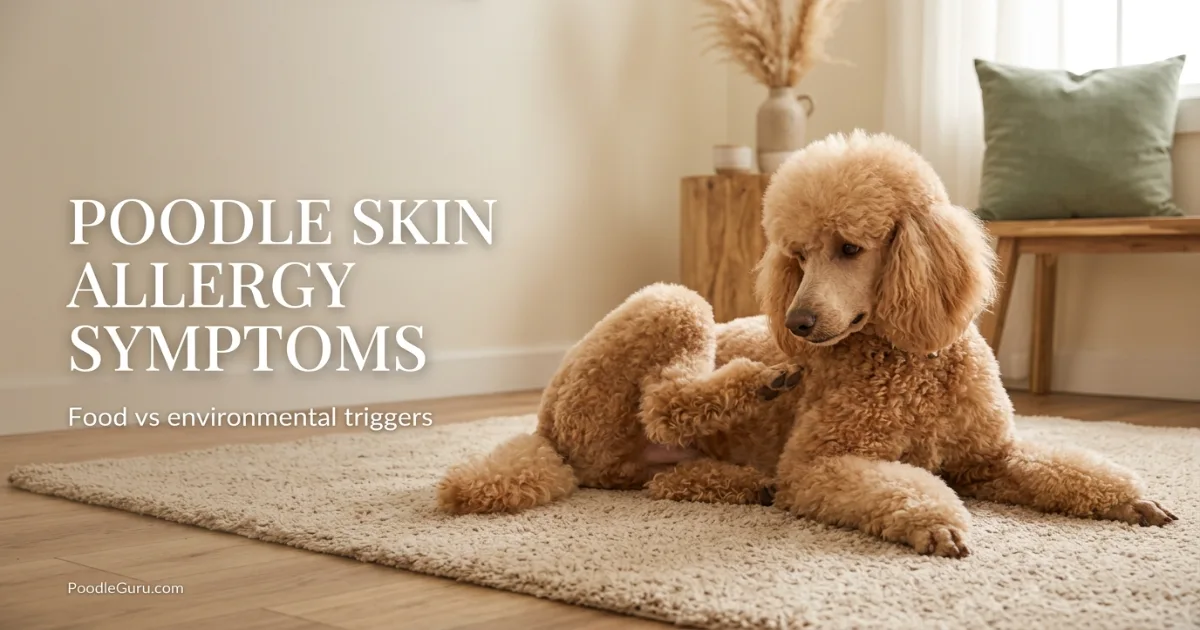
Poodle skin allergy symptoms can be confusing: your poodle is scratching nonstop, their paws are pink, and the skin under that beautiful curly coat looks red or irritated. But is it the chicken in the dinner bowl or the pollen on the evening walk? Distinguishing food triggers from environmental triggers is the single most important step toward lasting relief — because guessing wrong can mean months of unnecessary itching.
Quick Answer
The most common poodle skin allergy symptoms — intense itching, red inflamed skin, paw licking, ear infections, and hair loss — can be caused by both food proteins and environmental allergens like pollen or dust mites. The key difference lies in timing and location: food allergies tend to produce year-round symptoms focused on the paws, ears, and rear, while environmental allergies often flare seasonally and affect the belly, face, and armpits. A veterinarian-supervised elimination diet trial remains the only reliable way to separate the two.
What Are Poodle Skin Allergy Symptoms?
Poodle skin allergy symptoms are outward signs of an immune system reaction to a specific trigger — either a food protein or an environmental substance. For poodle owners, this means that two dogs with identical scratching behaviors could need completely different treatments. The most important thing to understand is that food and environmental allergies can look nearly identical, but treating the wrong trigger can prolong your poodle’s discomfort for months while the real cause continues unchecked.
Unlike a simple insect bite or dry winter skin, allergic reactions in poodles tend to be chronic, progressive, and patterned. You’ll rarely see a single isolated red patch. Instead, the inflammation follows specific zones — paws, ears, groin, muzzle, and the underside where the coat is thinner. Many owners first notice the problem during routine grooming, when a normally cooperative poodle flinches as the brush touches inflamed skin or when a groomer points out areas of hair thinning.
Quick Facts at a Glance
Affected Areas
Paws, ears, belly, armpits, groin, muzzle, and around the eyes are allergy hotspots — regardless of the trigger type.
Age of Onset
Food allergies can appear at any age, even in dogs that have eaten the same diet for years. Environmental allergies often start between 6 months and 3 years.
Key Distinguisher
Seasonal itching strongly suggests environmental triggers. Year-round symptoms often point to food — though dust mites can also be year-round.
Ear Connection
Recurring ear infections, especially yeast, are a major allergy clue in poodles and should be discussed with your veterinarian.
Diagnosis Standard
A strict 8–12 week elimination diet trial with a novel or hydrolyzed protein is the only reliable way to diagnose a food allergy.
Secondary Infections
Scratching breaks the skin barrier, inviting bacterial and yeast infections that make itching even worse — a cycle that needs medical interruption.
Food Allergies in Poodles: Triggers & How They Show Up
Food allergies happen when your poodle’s immune system mistakenly identifies a dietary protein as a threat. The reaction isn’t immediate like a peanut allergy in humans — it builds over months or even years of exposure, which is why a dog can suddenly become allergic to a food they’ve eaten safely for a long time. The most common protein culprits in poodles are chicken, beef, dairy, and wheat, though any protein can be a trigger.
Symptoms That Suggest a Food Allergy
- Year-round itching that doesn’t change with the seasons — your poodle is consistently uncomfortable regardless of the weather.
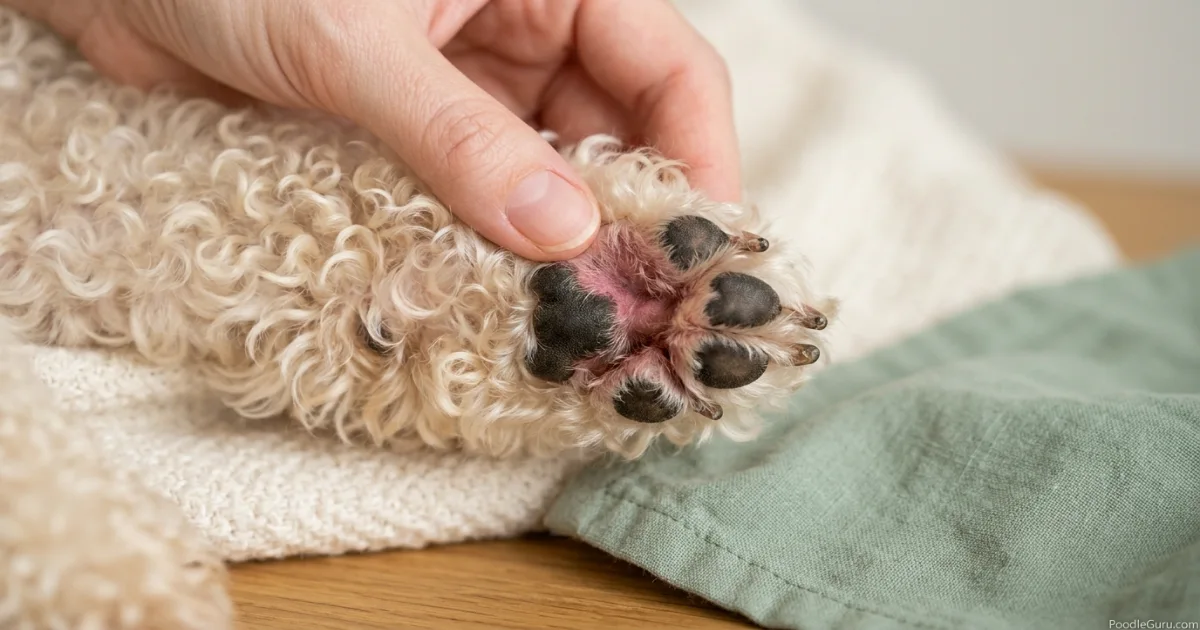
- Intense paw licking and chewing — the feet are often red, stained brown from saliva, and may develop interdigital cysts.
- Chronic ear infections that return within weeks of treatment — the dark, moist ear canal becomes a secondary yeast playground.
- Gastrointestinal signs — soft stools, increased flatulence, or occasional vomiting can accompany skin symptoms, though not always.
- Anal gland issues — some poodles with food allergies experience recurrent anal gland impaction or scooting.
Environmental Allergies (Atopic Dermatitis): When the World Itches
Environmental allergies, also called atopic dermatitis, occur when your poodle’s skin barrier reacts to airborne particles — pollen, mold spores, dust mites, or even human dander. Unlike food allergies, these often have a seasonal pattern, though severe cases can become year-round. Poodles are among the breeds predisposed to atopic dermatitis, and the signs usually start young.
Symptoms That Suggest Environmental Allergies
- Seasonal itch flares — your poodle seems miserable in spring and fall but improves in winter or during a rainy week that washes pollen from the air.
- Belly, armpit, and face rubbing — the thinner-skinned areas where allergens make direct contact are most affected.
- Itchy, runny eyes — environmental allergies can produce eye discharge similar to human hay fever.
- Skin that improves after bathing — washing allergens off the coat provides temporary relief, which is a strong clue.
- Licking paws after walks — grass and weed pollen collect between paw pads, causing focused licking immediately after outdoor time.
VCA Animal Hospitals explains how atopic dermatitis develops in dogs and why it’s a diagnosis of exclusion — meaning other causes like parasites and food allergies must be ruled out first.
Food vs. Environmental Allergies: A Side-by-Side Comparison
Because symptoms overlap so heavily, this table is designed to help you organize your observations before a vet visit. It isn’t a diagnostic tool, but it can guide the conversation and help you avoid months of chasing the wrong trigger.
| Characteristic | Food Allergy | Environmental Allergy |
|---|---|---|
| Seasonal Pattern | No — symptoms are constant year-round | Often yes — flares in spring, summer, or fall |
| Age of Onset | Any age, even seniors | Usually 6 months to 3 years old |
| Primary Itch Locations | Paws, ears, rear, groin | Belly, armpits, face, paws, inner thighs |
| Response to Bathing | Little to no improvement | Often temporary relief after washing allergens away |
| Gastrointestinal Signs | Common — soft stools, gas, vomiting possible | Rare — skin-only symptoms are the norm |
| Ear Infections | Frequent, often bilateral and recurrent | Frequent, but may be unilateral or seasonal |
| Diagnostic Test | 8–12 week elimination diet trial | Intradermal skin testing or serum allergy testing |
| Treatment Foundation | Avoidance of identified protein for life | Allergen avoidance, immunotherapy, medications |
Many poodles have both food and environmental allergies simultaneously, complicating the picture. A systematic diagnostic approach with your veterinarian is essential.
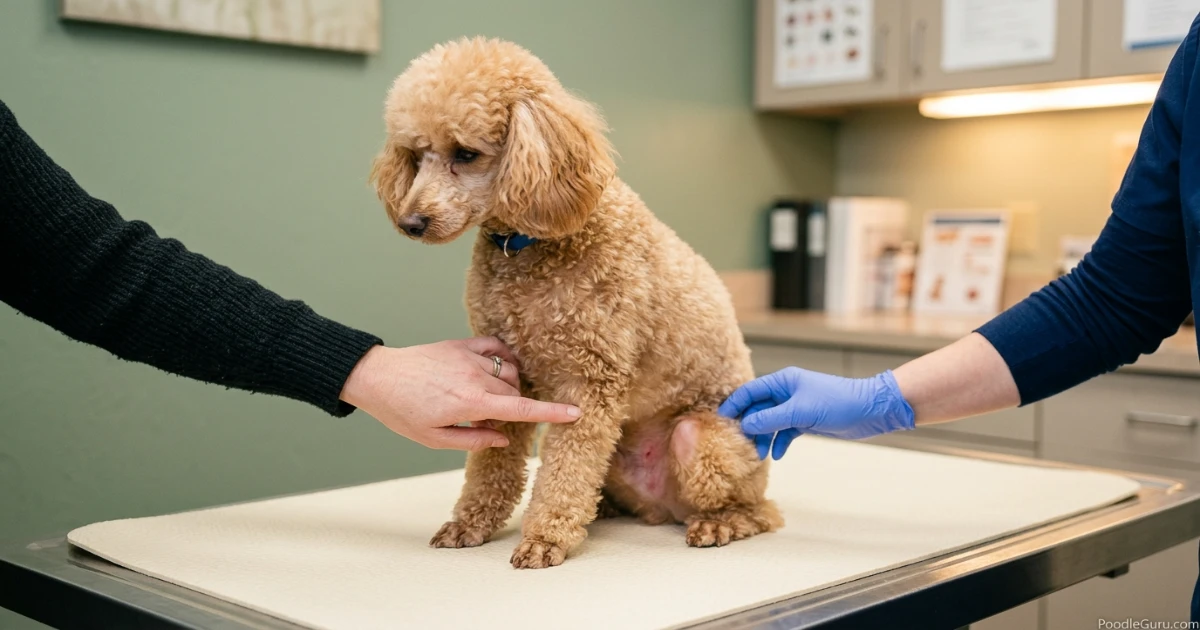
The PoodleGuru Allergy Trigger Evaluation Framework
At PoodleGuru, we developed this four-step observation framework to help owners collect the high-quality information vets need to distinguish between food and environmental allergies faster.
Map the Itch Calendar
For 30 days, record your poodle’s itching intensity on a 1–5 scale each day. Note the weather, any new foods or treats, and whether symptoms worsen after walks. A calendar reveals seasonal patterns that casual memory misses.
Outcome: A visual timeline that clearly shows whether symptoms cluster with pollen seasons or remain steady throughout the month.
Document Every Ingredient
Write down every single thing your poodle eats for two weeks — main diet, treats, dental chews, flavored medications, table scraps, and even the peanut butter in their Kong. Many owners unknowingly feed multiple protein sources.
Outcome: A complete dietary inventory that reveals hidden proteins and makes an elimination diet feasible.
Photograph Affected Areas Weekly
Take clear, well-lit photos of your poodle’s paws, belly, ears, and any red patches every seven days. Use the same lighting and angles. Subtle worsening or improvement becomes obvious in side-by-side comparison over time.
Outcome: Objective visual evidence that shows your vet exactly how the condition is evolving — far more useful than a verbal description.
Run the Bath Test
After a period of active itching, give your poodle a gentle bath with a fragrance-free, hypoallergenic shampoo. Observe whether the itching significantly decreases for the next 12–24 hours. Repeat this test twice. Temporary relief strongly suggests environmental allergens being physically washed off.
Outcome: A simple at-home clue that can tilt the probability toward an environmental trigger and guide the vet’s next diagnostic step.
How Vets Diagnose the True Cause
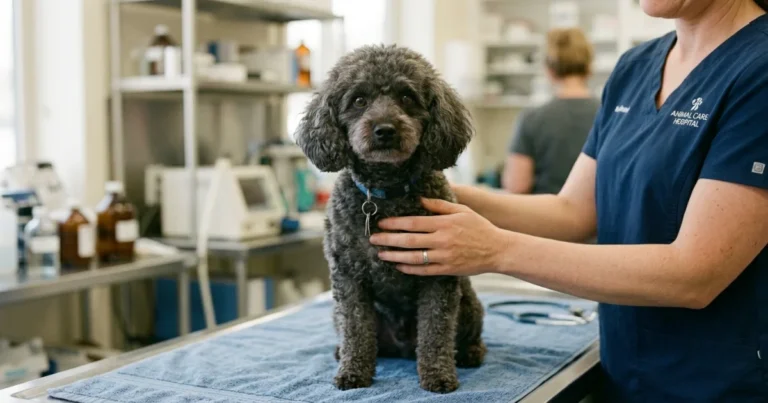
Veterinary diagnosis of skin allergies is methodical. The vet will first rule out parasites (fleas, mites), fungal infections (ringworm), and secondary bacterial or yeast infections — all of which can mimic allergy symptoms. Once those are excluded, the real detective work begins.
For suspected food allergies, the only reliable test is a strict elimination diet trial lasting 8–12 weeks. This means feeding a prescription hydrolyzed protein diet or a single novel protein and carbohydrate — with absolutely no other food, treats, or flavored items. If symptoms resolve and then return when the original diet is reintroduced, food allergy is confirmed. Blood and saliva tests for food allergies are not considered accurate by most veterinary dermatologists.
For environmental allergies, intradermal skin testing (injecting small amounts of allergens under the skin to observe reactions) or serum allergy testing can identify specific triggers. Based on results, allergen-specific immunotherapy — custom allergy shots or sublingual drops — can desensitize your poodle’s immune system over time. PetMD discusses the difference between true food allergies and intolerances and why an elimination trial remains the gold standard.
Common Mistakes That Delay Allergy Relief
| Mistake | Why It Backfires | Better Approach |
|---|---|---|
| Guessing the trigger and switching foods randomly | Without a strict elimination trial, you never know which ingredient is the problem, and the dog remains itchy. | Commit to a veterinarian-guided elimination diet with a single novel protein for 8–12 weeks. |
| Using over-the-counter antihistamines without vet guidance | Antihistamines help only a minority of allergic dogs and don’t address the root cause; dosing must be precise. | Ask your vet if antihistamines are appropriate and at what dose; don’t self-prescribe. |
| Stopping the elimination diet because “it’s not working” after 2 weeks | It can take 8 weeks or longer for skin inflammation from a food allergy to fully subside. | Follow the full 12-week protocol before evaluating results. |
| Feeding “hypoallergenic” over-the-counter foods without checking ingredients | Many contain common allergens like chicken fat or beef meal and are not truly novel proteins. | Use only prescription hydrolyzed diets or work with a veterinary nutritionist to formulate a true novel-protein home-cooked diet. |
| Bathing too infrequently or with harsh shampoos | Environmental allergens sit on the skin; medicated or soothing baths can significantly reduce itching but are often underutilized. | Bathe every 1–2 weeks during flare seasons with a veterinarian-recommended shampoo containing oatmeal, ceramides, or chlorhexidine. |
Owner Action Plan: What to Do This Week
Your 7-Day Skin Allergy Start:
- Day 1: Start a symptom journal. Rate itching 1–5 and note the day’s weather, walks, and food.
- Day 2: Take baseline photos of your poodle’s paws, belly, ears, and any red spots in good light.
- Day 3: List every food item — including treats and supplements — fed in the past month. Look for protein overlap.
- Day 4: Schedule a veterinary appointment. Bring your photos, journal, and food list.
- Day 5: Bath test: bathe with a gentle hypoallergenic shampoo and observe itching for 24 hours.
- Day 6: If your vet suspects food allergy, get the prescription elimination diet and remove all other foods from the house.
- Day 7: Continue journaling. Set a reminder for a weekly photo to track progress over the elimination trial period.

Frequently Asked Questions About Poodle Skin Allergy Symptoms
What are the most common signs of skin allergies in poodles?
The most common poodle skin allergy symptoms are persistent itching, red inflamed skin (especially on paws, belly, and ears), excessive paw licking, recurrent ear infections, hair loss from scratching, and brown saliva staining on the fur. Some poodles also develop hot spots or thickened, darkened skin in chronic cases.
How can I tell if my poodle is allergic to food or the environment?
Year-round symptoms, especially involving paws, ears, and gastrointestinal issues, often suggest a food allergy. Seasonal itching that improves after bathing and affects the belly and face more often points to environmental triggers. The only definitive way to diagnose a food allergy is an 8–12 week elimination diet trial under veterinary guidance.
Can poodles develop food allergies later in life?
Yes. Food allergies can appear at any age, even in poodles that have eaten the same diet for years without issue. The immune system’s tolerance can shift over time, and a previously safe protein can become a trigger. This is why an elimination diet is necessary regardless of your poodle’s age.
What is the best diet for a poodle with skin allergies?
The best diet is one that avoids the specific protein your poodle is allergic to — identified through an elimination trial. This may be a prescription hydrolyzed protein diet or a carefully chosen novel protein like venison or rabbit. Grain-free diets are rarely the solution unless a grain allergy has been specifically confirmed.
How long does it take for poodle allergy symptoms to improve after removing the trigger?
For food allergies, skin symptoms may take 4–8 weeks to noticeably improve, and full resolution can take 12 weeks. Environmental allergy relief from medications or bathing can be faster — sometimes within days — but immunotherapy takes months to build effectiveness. Patience and consistent follow-through are essential.
Can I give my poodle human antihistamines for skin allergies?
Only under direct veterinary instruction. While some antihistamines are used in dogs, the appropriate type and dose depend on your poodle’s weight and health status. Many human formulations contain decongestants or other ingredients that are toxic to dogs. Never self-prescribe.
Are poodles more prone to skin allergies than other breeds?
Poodles are considered a predisposed breed for atopic dermatitis (environmental allergies). Their dense curly coat can also trap allergens against the skin and hide early redness, making regular inspections during grooming especially important for catching poodle skin allergy symptoms early.
When should I take my poodle to the vet for skin allergy symptoms?
Schedule a vet visit if itching disrupts your poodle’s sleep or normal activities, if the skin shows open sores or a foul odor (signaling secondary infection), or if symptoms have persisted for more than two weeks despite home care. Ear infections, hair loss, or gastrointestinal signs alongside itching warrant an urgent appointment.
Key Takeaways: Solving Poodle Skin Allergies
Poodle skin allergies are complex, but they’re not unsolvable. The path to relief starts with distinguishing between food and environmental triggers — a task that requires patience, precision, and partnership with your veterinarian.
- Poodle skin allergy symptoms — itching, redness, paw licking, ear infections, and hair loss — can be caused by either food proteins or environmental allergens like pollen and dust mites.
- Food allergies tend to be year-round and often involve the paws, ears, rear, and gastrointestinal system, while environmental allergies frequently follow a seasonal pattern and affect the belly, face, and armpits.
- A veterinary-supervised elimination diet trial lasting 8–12 weeks is the only reliable way to diagnose a food allergy; blood and saliva tests for food allergies are not considered accurate.
- The PoodleGuru Allergy Trigger Evaluation Framework — tracking itch patterns, documenting every ingredient, photographing skin weekly, and running the bath test — helps owners collect the information vets need for a faster diagnosis.
- Common owner mistakes like randomly switching foods, self-prescribing antihistamines, or quitting the elimination diet early prolong suffering and delay effective treatment.
- With systematic investigation and the right veterinary partnership, most poodle skin allergies can be managed successfully — restoring comfort, coat health, and quality of life.
For a complete guide to bathing techniques that soothe allergic skin, see our Complete Poodle Grooming Guide. If your poodle is showing allergy symptoms, schedule a vet visit today — the sooner the trigger is identified, the sooner relief begins.