Why Is My Poodle Growling at Me? What It Really Means
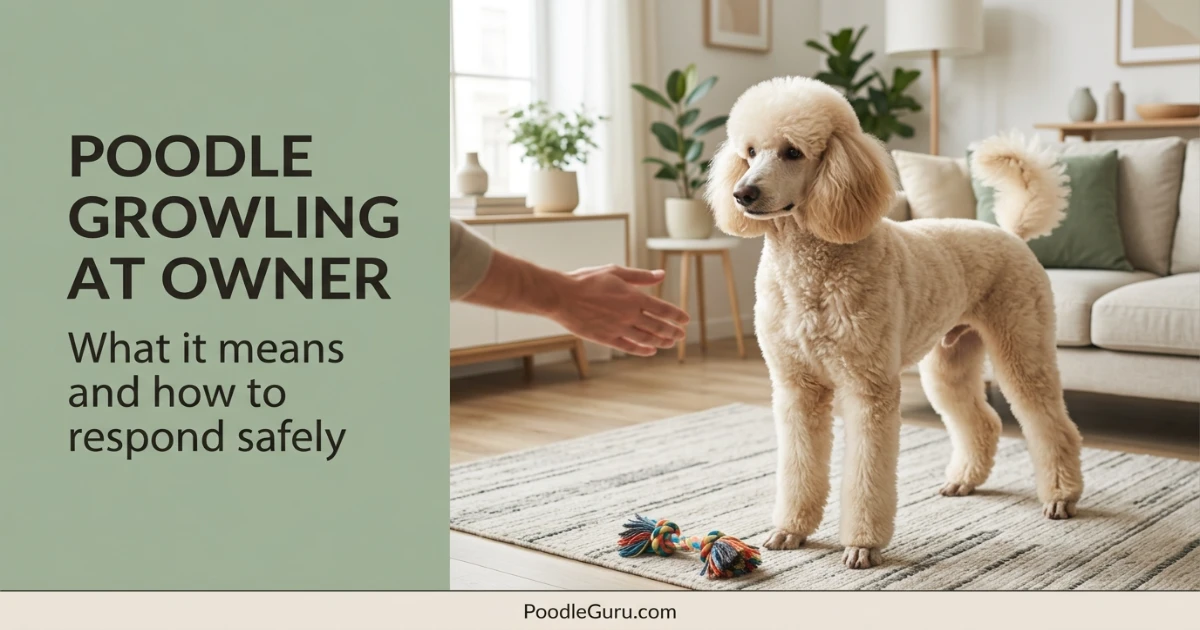
A low rumble escapes your poodle’s chest while you’re reaching for a toy or trying to shift them on the couch. Your heart sinks. Your first instinct might be to scold, to back away, or to wonder what you did wrong. Before you react, understand this: a growl is not the end of your bond — it’s your poodle trying desperately to communicate something they can’t put into words.
Quick Answer
If your poodle growls at you, do not punish the growl. A growl is communication — a clear signal that your dog is uncomfortable, fearful, in pain, or guarding something valuable. In most cases, the correct response is to calmly give space, assess what triggered the growl, and address the underlying reason. Punishment suppresses the warning without fixing the cause, which can teach a dog to skip the growl and go straight to a snap or bite. This is the single most important takeaway for any owner facing the “poodle growling at owner” problem.
Understanding Poodle Growling: A Message, Not a Threat
Growling is a vocal communication signal that expresses a dog’s internal emotional state. For poodle owners, this means the sound is not random aggression — it’s a deliberate attempt to convey discomfort, fear, playfulness, or a need for space. The most important thing to understand is that a poodle that growls is still communicating; a poodle that stops growling without addressing the root issue may have learned that warning is unsafe, and that’s when bites happen “without warning.”
Poodles aren’t inherently aggressive. In fact, breed standards describe them as proud, intelligent, and generally sensitive dogs. When a poodle growls at its owner, the behavior is almost always situational. The AKC breed profile for poodles emphasizes their high trainability and people-oriented nature, making it even more jarring when they vocalize negatively. But sensitivity cuts both ways: a poodle that feels cornered, in pain, or overwhelmed may growl as a well-calibrated distance-increasing signal.
Quick Facts About Poodle Growling at Owner Behavior
A Growl Is Information
Think of it like a dashboard warning light. It tells you something needs attention, not that the engine has failed.
Not All Growls Are Aggressive
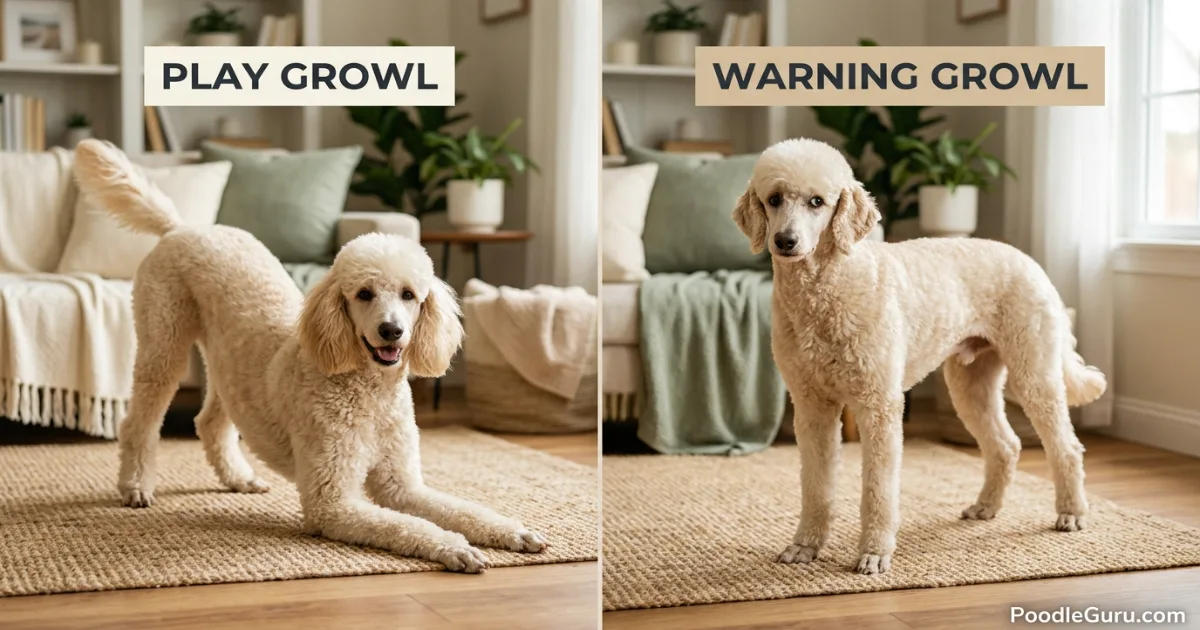
Play growls, contentment rumbles, and warning growls sound different. Context and body language reveal the difference.
Punishment Suppresses, Not Solves
Scolding or correcting a growl removes the warning signal, not the underlying discomfort. This can create a dog that bites without growling first.
Poodles Are Deeply Sensitive
Their emotional attunement to owners means they can react strongly to tension, anger, or sudden changes in routine.
Pain Hides Behind Growls
A sudden onset of growling in an otherwise gentle adult poodle should always trigger a veterinary pain check.
Resource Guarding Is Common
Poodles can become protective of food, toys, or even a favorite resting spot. This is a normal canine instinct, not a moral failing.
The Most Common Reasons Your Poodle Growls at You
Growls don’t all mean the same thing. Here is a comparison table designed to help you decode what your poodle is saying.
| Growl Type | Body Language | Pitch & Duration | Common Triggers | What to Do |
|---|---|---|---|---|
| Play Growl | Play bow, wagging tail, relaxed ears, bouncy movements | Higher-pitched, repetitive, often interspersed with barks | Tug-of-war, chasing, roughhousing | Continue playing but check for overstimulation. If the growl deepens or the dog stiffens, pause. |
| Fear Growl | Cowering, tail tucked, ears flat, whale eye (showing whites), leaning away | Low, continuous, may escalate in intensity | Strangers, loud noises, sudden movements, raised voices | Increase distance immediately. Do not corner or stare. Let the dog retreat. |
| Resource Guarding Growl | Stiff body over an item, hard stare, may show teeth, tail may be high and rigid | Low and rumbling, often short | Approaching food bowl, reaching for a toy, getting close to a stolen object | Do not forcibly remove the item. Trade for a higher-value treat or call the dog away. Consult a professional for management plans. |
| Pain Growl | Guarding a specific body part, flinching when touched, stiff gait | Sharp, sudden, may be coupled with a yelp | Being petted on a sore hip, lifted under the abdomen, touched near an ear infection | Stop touching that area. Schedule a vet visit promptly to rule out injury, arthritis, dental issues, or internal discomfort. |
| Frustration Growl | Pacing, whining, staring at an inaccessible object, pawing | Mid-range, often paired with whining | Leash restraint when wanting to greet another dog, being behind a barrier, unable to reach a toy | Redirect to a calm alternative, teach impulse control exercises. Avoid punishing the emotional state. |
| Warning/Defensive Growl | Stiff body, head low, direct stare, may freeze, lips slightly lifted | Deep, prolonged, serious | Being hugged, stared at, bent over, disturbed while sleeping | Back away slowly, avoid eye contact, give space. This is a clear distance-increasing request. Respect it. |
Expert Insight
According to the ASPCA’s behavior resources, growling is a normal part of canine communication and serves as a warning system. Suppressing it through punishment is one of the most dangerous mistakes an owner can make. The goal is to listen, not to silence.
How Poodle Sensitivity Shapes Growling Behavior
Poodles are bred to be companion dogs with high social intelligence. They read human tone, body language, and even emotional states with unsettling precision. This sensitivity means a poodle may growl in situations that a more laid-back breed would shrug off: a tense household argument, a new piece of furniture that changes their favorite napping corner, or even a shift in your daily routine.
What looks like random aggression is often anxiety. A Toy or Miniature Poodle that growls when guests arrive isn’t being “spoiled” — they are genuinely overwhelmed. A Standard Poodle that growls when children approach rapidly may be protecting their personal space. Understanding this emotional depth helps you respond with empathy rather than frustration.
If your poodle has always been gentle and suddenly starts growling, don’t assume a personality change. Check for hidden stressors: has your work schedule shifted? Has a new pet or baby altered the home dynamic? Have you accidentally reinforced fear by comforting them too intensely during a scary event? Poodle minds are like sponges — they absorb everything.
The PoodleGuru Growl Interpretation Framework (GIF)
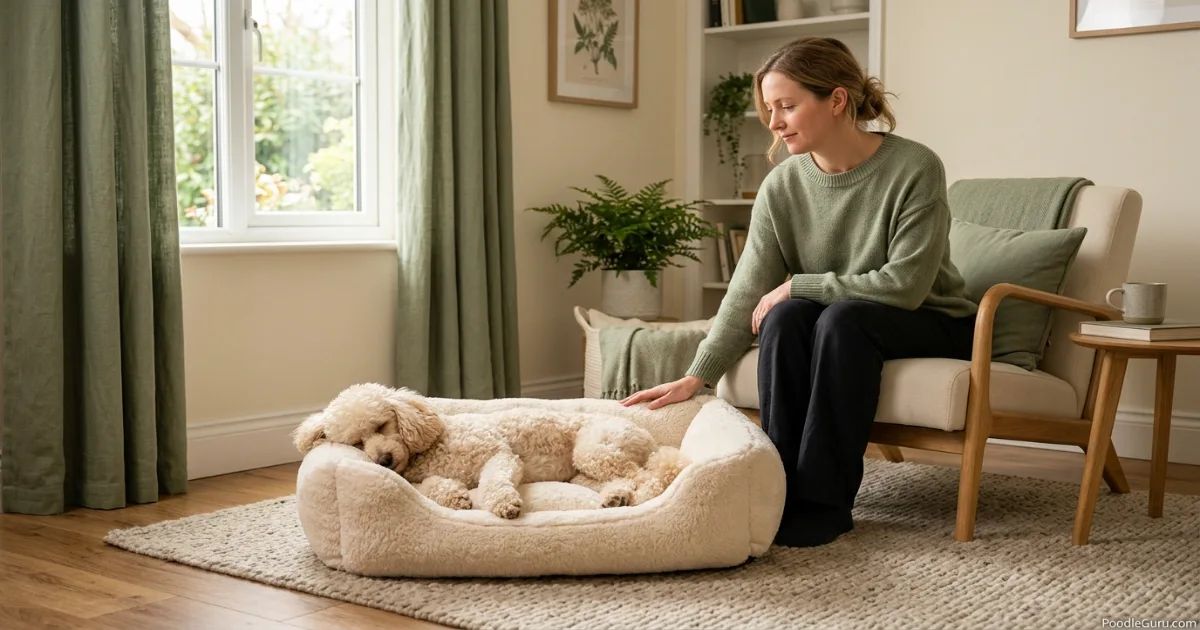
At PoodleGuru, we approach growling not as a behavior to extinguish but as a signal to interpret. This 3-step method helps you move from alarm to understanding in real time.
Observe the Whole Body
Ears, eyes, tail, posture, mouth tension. A play growl comes with loose, wiggly movements. A fear growl shows a low body, tail tuck, or whale eye. A guarding growl stiffens the entire frame. Take a mental snapshot of the body language before you do anything else. This information is your key to decoding the message.
Identify the Context & Trigger
What happened right before the growl? Was someone reaching for a toy, leaning over the dog, or making a loud noise? Was the dog just woken up? Is the dog in a new environment? Write down the trigger if this is a recurring pattern. The context reveals whether the growl is about resource guarding, fear, pain, or simply play that got too rough.
Respond Appropriately, Never Punish
Based on your assessment: for play, continue gently but monitor escalation. For fear, create space and remove the trigger. For guarding, do not challenge — trade or back away. For pain, stop all physical contact and seek veterinary care. In every case, never scold, stare down, hit, or alpha-roll your poodle. Punishment breaks trust and teaches your dog that warning is futile.
What Owners Usually Misunderstand About Poodle Growling
Several dangerous myths surround growling. Clearing them up can save relationships — and prevent bites.
Myth: A growling poodle is a bad or dominant dog. Reality: Dominance theory has been thoroughly debunked in modern canine behavior science. Growling is not about social hierarchy; it’s about emotion. Your poodle is not trying to “be the alpha.”
Myth: If I punish the growl, my poodle will learn not to growl and the problem is solved. Reality: Punishing the growl doesn’t fix the emotional state causing it. It only removes the warning system. The dog may still feel fear, pain, or possessiveness, but now they believe that growling leads to punishment. The next step could be a bite with no vocal warning.
Myth: Poodles are too smart to growl; they’re just being dramatic. Reality: Intelligence doesn’t override emotional distress. In fact, a highly intelligent dog may become more anxious or frustrated when their needs aren’t met. A growl is not dramatics — it’s communication.
Myth: Growling means my poodle doesn’t love me anymore. Reality: Growling in specific contexts has nothing to do with affection. A dog can adore you and still growl when you accidentally hurt them, touch a painful spot, or try to take away something they value. Love and growling coexist all the time.
When Growling Becomes a Concern
Growling becomes a clinical or behavioral red flag when it’s sudden, severe, or escalating. A poodle who has never growled before and suddenly begins growling at family members warrants immediate investigation — especially if the dog is an adult. Pain is the number one medical rule-out. Dental disease, ear infections, arthritis, and even gastrointestinal discomfort can cause a dog to lash out when touched.
Other red flags include:
- Growling that escalates to snapping or biting within the same incident.
- Growling at multiple family members without an obvious trigger.
- Growling paired with resource guarding that intensifies despite management.
- Growling during sleep startle — a reflex that can be dangerous in dogs with sleep aggression.
- Growling from a puppy younger than 6 months that is accompanied by hard staring and stiffness — this may require early behavioral intervention.
When to See a Veterinarian First
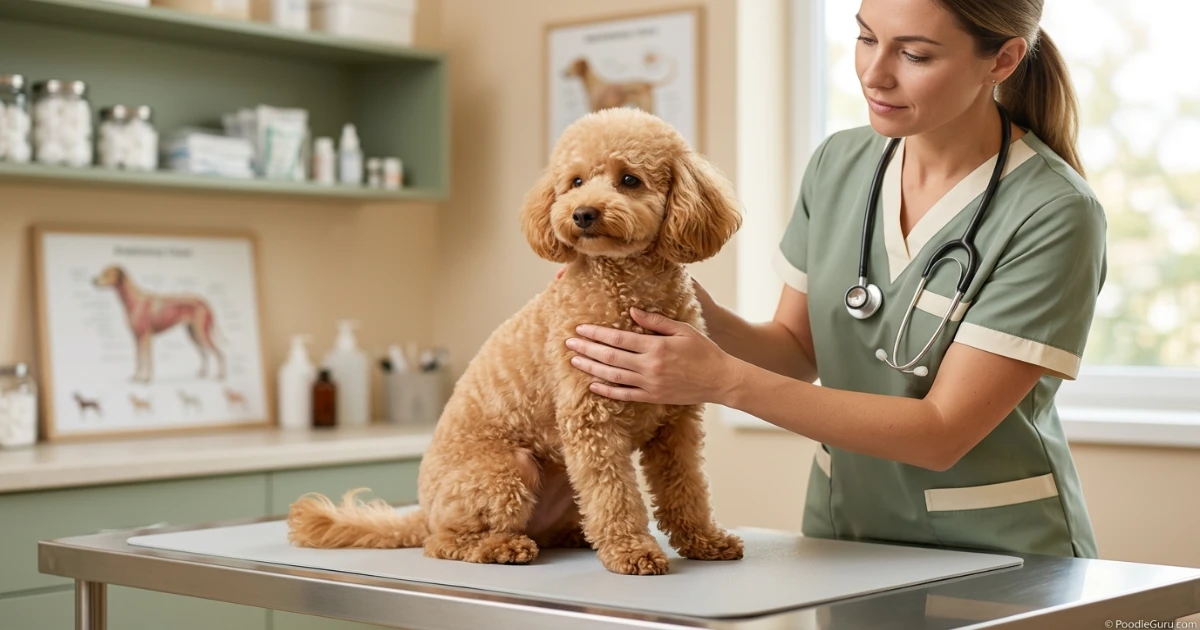
If your poodle’s growling is new and you cannot identify an obvious environmental trigger, a thorough veterinary examination is the first step. Bloodwork, orthopedic assessment, and dental checks can uncover hidden pain that turns a normally sweet poodle into a defensive growler. Do not assume it’s purely behavioral until medical causes are ruled out.
How to Respond in the Moment: Do’s and Don’ts
Do This
- Freeze and breathe. Sudden movements can escalate the situation. Stay calm and still.
- Look away softly. Direct eye contact is a threat in dog language. Turn your head slightly to the side.
- Give space. If the dog is cornered, create a clear escape route. Let them move away if they choose.
- Speak in a low, soothing voice. A calm tone can help de-escalate tension.
- Redirect if safe. Toss a treat away from you to encourage movement and break the focal point.
Don’t Do This
- Don’t punish. Yelling, hitting, leash corrections, or “alpha rolls” are counterproductive and dangerous.
- Don’t stare down or lean over. These are intimidating postures that increase defensive reactions.
- Don’t corner or chase. A trapped dog is far more likely to bite.
- Don’t forcibly take an object. This teaches the dog that guarding works — they’ll escalate next time.
- Don’t ignore the growl and continue what you were doing. The dog has told you they are uncomfortable. Respect it or risk consequences.
Owner Action Plan After a Growling Incident
Once the immediate moment has passed, follow this 4-step plan to turn a growl into a learning opportunity — for both of you.
Document the Episode
Write down the date, time, who was present, what happened immediately before, and the exact body language you observed. This log becomes invaluable if you need to consult a trainer or veterinarian.
Rule Out Pain
Schedule a veterinary appointment if the growl was associated with touch, movement, or if it’s a new behavior. Pain-driven growling will not resolve with training alone.
Manage the Environment
If the trigger was resource guarding, remove the guarded item from the environment or feed in a separate, quiet space. If it was fear-based, minimize exposure to the trigger while you work on counterconditioning.
Seek Qualified Help
If growls recur or escalate, a certified positive-reinforcement behavior consultant can design a tailored plan. Avoid trainers who use punishment or dominance-based methods with poodles.
When to Seek Professional Help
Not all growling requires professional intervention, but certain patterns do. Contact a veterinarian behaviorist or a certified applied animal behaviorist (CAAB) if:
- Growling is frequent (multiple times a week) and not tied to an obvious, isolated trigger.
- The poodle has snapped or bitten, even if it didn’t break skin.
- Resource guarding is intensifying despite your management efforts.
- The dog is growling at family members, especially children, in contexts beyond resource guarding.
- You feel afraid of your own dog.
Professional help is not a failure — it’s a responsible, loving act. Poodles thrive with the right guidance, and many apparent aggression cases resolve beautifully when underlying pain, fear, or communication gaps are addressed.
Frequently Asked Questions
Is it normal for a poodle to growl at its owner?
Yes, in context. Growling is a normal part of canine communication. The vast majority of poodles who growl are not abnormal or aggressive — they are expressing an emotional state. The key is to interpret why it happened and respond appropriately.
Should I punish my poodle for growling?
Never. Punishment suppresses the growl but not the underlying feeling. A dog who learns that growling is unsafe may stop warning and bite instead. This is one of the most critical safety rules in poodle ownership.
What does a low growl vs. a high-pitched growl mean?
Generally, a low, deep growl signals seriousness: fear, warning, or guarding. A higher-pitched, more staccato growl is often associated with play or excitement. Always check body language — a loose, wiggly body with a high-pitched growl is likely play; a stiff body with a low rumble is a clear distance request.
Why does my poodle growl when I try to move him from the couch?
This is classic resource guarding of a resting spot. Your poodle values the comfort and may feel challenged. Instead of physically pushing or lifting, teach a “off” cue using high-value treats, or toss a treat away from the couch to encourage movement voluntarily. Management prevents escalation.
Can pain cause a poodle to growl?
Absolutely. Pain is a major medical cause of sudden growling, especially in adult or senior poodles. Arthritis, dental disease, ear infections, and internal discomfort can all make a previously gentle dog react defensively when touched. A veterinary exam should always be your first step when growling appears without a clear behavioral trigger.
Why does my poodle growl during play?
Play growling is normal and usually sounds lighter and more repetitive. Look for a play bow, bouncy movements, and brief pauses. If the growl deepens, the body stiffens, or one dog stops enjoying the interaction, it’s time to intervene calmly and give both dogs a break.
How can I tell if my poodle’s growl is playful or aggressive?
Watch the whole dog. Playful growls come with loose, wiggly posture, open mouth, play bows, and the dog usually initiates or reciprocates engagement. Aggressive or warning growls involve stiffness, a fixed stare, ears pinned back, lips curled, and the dog may freeze. When in doubt, pause the interaction and see if the dog re-engages playfully.
When should I see a veterinarian for growling?
See a vet promptly if the growling is new, sudden, or associated with touch, movement, or handling. Also seek veterinary care if your poodle shows any other signs of illness — lethargy, appetite loss, limping, or whining. Pain-driven behavior won’t improve with training alone.
Key Takeaways: Poodle Growling at Owner
Growling can feel like a betrayal, but it’s actually one of the most honest things your poodle can do. Here’s what to remember:
- Poodle growling is communication, not aggression. It indicates discomfort, fear, play, pain, or resource guarding — and punishing the growl removes the warning, not the problem.
- Poodles are highly sensitive dogs. Their growling often stems from environmental stress, emotional overwhelm, or physical pain, not a desire to dominate.
- Not all growls are equal. The PoodleGuru Growl Interpretation Framework (Observe the whole body, Identify context, Respond appropriately) helps you decode what your dog is saying.
- Punishment, staring, or cornering a growling poodle can escalate the situation. Give space, stay calm, and respect the message.
- A sudden onset of growling in an adult poodle should prompt a veterinary pain assessment. Dental issues, arthritis, and hidden infections are common culprits.
- If growling becomes frequent, escalates to snapping, or involves children, seek help from a certified positive-reinforcement behavior consultant or veterinary behaviorist — it’s a responsible, not a shameful, step.
- You and your poodle can move past growling. With understanding, management, and patience, a growl can strengthen your bond by showing you what your dog needs.
Next step: Dive deeper into the Poodle Behavior Guide to learn the full language of your poodle.