Why Is My Poodle Coughing? Causes From Kennel Cough To Collapsed Trachea
That unmistakable honk or hack from your poodle can stop you cold. Poodle coughing isn’t a single disease — it’s a symptom map that spans everything from mild irritation to structural airway problems. Here’s how to read what your poodle’s cough is actually telling you.
Quick Answer: Why Is My Poodle Coughing?
Poodle coughing is most commonly caused by respiratory infections like kennel cough, allergic airway irritation, or tracheal collapse — a condition toy and miniature poodles are genetically prone to. Less common but serious causes include heart disease, pneumonia, or foreign objects lodged in the throat. The sound, timing, and duration of the cough are the clues that separate a wait-and-watch situation from a get-to-the-vet-now emergency.
Most Common
Kennel cough, allergies, and mild irritant reactions top the list. Mild kennel cough is often self-limiting, but it can still be contagious.
Breed-Specific Risk
Toy and Miniature Poodles are predisposed to tracheal collapse; Standards have higher bloat risk, but not structural airway collapse.
Red-Flag Sounds
A honking goose cough, wet rattling, or cough ending in gagging needs faster veterinary attention than a dry occasional hack.
Poodle Coughing Sound Decoder: What Each Cough May Mean
Coughing is a protective reflex. For poodle owners, the first diagnostic tool isn’t a stethoscope — it’s your ears. Different underlying problems produce noticeably different cough sounds. Learning to distinguish them can help you describe the problem accurately to your veterinarian.
A dry, hacking cough often points to kennel cough or early tracheal irritation. It sounds harsh, unproductive, and sometimes ends with a gag. This cough is common after boarding or grooming visits. A honking cough — the one that eerily resembles a goose — is the hallmark of tracheal collapse. Toy and Miniature Poodles produce this sound because the cartilage rings supporting the windpipe weaken and flatten during breathing.
A wet, gurgling cough suggests fluid. That fluid could be mucus from infection, or — more concerning — fluid backing up from the lungs due to heart disease. Standards carrying extra weight in their senior years occasionally develop this pattern. A soft, persistent cough that worsens at night or during rest sometimes points to heart enlargement pressing on airways.
Veterinary guidance generally recommends recording a short video of the coughing episode. Sound, posture, and duration give your vet a head start before the exam room door opens.
Important: Owner Observation vs. Diagnosis
Sound patterns offer strong clues, but they are not a replacement for a physical exam. Coughs can overlap. A toy poodle with a honking cough might also have a secondary respiratory infection. Always let your veterinarian make the final call.
Kennel Cough in Poodles: What It Sounds Like and How It Spreads
Kennel cough is a contagious respiratory infection that acts like a canine cold with a loudspeaker. The classic sign is a dry, forceful cough that sounds like something is stuck in the throat. Poodles of any size can catch it, though it spreads fastest where dogs congregate — grooming salons, boarding facilities, dog parks, and even veterinary waiting rooms.
One common contributor is the Bordetella bronchiseptica bacterium, often paired with viral co-infections as part of canine infectious respiratory disease complex. Many mild cases improve within 7–14 days, although some coughs can linger longer and your vet may prescribe treatment if the hacking disrupts sleep. Puppies, seniors, and immunocompromised dogs face higher risks of the infection progressing to pneumonia.
Vaccination reduces severity but does not eliminate the possibility of infection — there are multiple strains beyond those covered by the standard Bordetella vaccine. If your poodle visits groomers regularly, staying current on the kennel cough vaccine is a practical layer of protection. For a deeper look at keeping your poodle healthy through regular care routines, our Complete Poodle Grooming Guide covers grooming-salon safety tips.
Collapsed Trachea: What Toy & Mini Owners Must Know
Tracheal collapse is a structural weakening of the cartilage rings that hold the windpipe open. Instead of staying rigid, the trachea flattens during breathing, triggering that goose-honk cough and exercise intolerance. Toy and Miniature Poodles are genetically predisposed — the condition is far less common in Standards.
The most important thing to understand is that tracheal collapse is progressive but manageable. Early-stage collapse might only produce a cough during excitement or when pulling against a collar. As the condition advances, coughing episodes become more frequent and can be triggered by heat, humidity, or even drinking water.
| Grade | Tracheal Narrowing | Typical Signs | Management Approach |
|---|---|---|---|
| Grade I | ~25% reduction | Occasional honk, excitement-triggered | Weight control, harness only, mild suppressants |
| Grade II | ~50% reduction | Frequent cough, exercise intolerance | Medication, environmental changes, harness mandatory |
| Grade III | ~75% reduction | Severe honking, distress, cyanosis risk | Aggressive medical management, possible stent consideration |
| Grade IV | Near-complete collapse | Respiratory crisis, emergency risk | Surgical intervention in select cases |
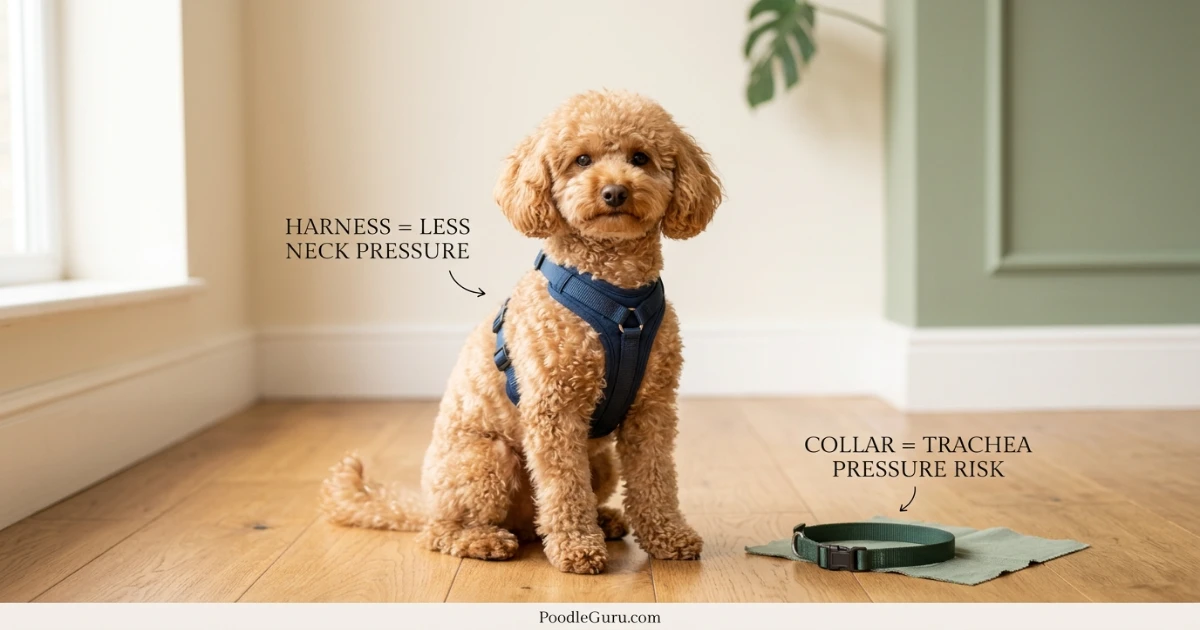
At PoodleGuru, we evaluate tracheal collapse risk as a breed-aware factor: if you own a Toy or Miniature Poodle, switching from a collar to a harness is one of the single highest-impact changes you can make. Collars place direct pressure on the trachea exactly where weakened cartilage is most vulnerable. A properly fitted Y-shaped harness distributes pressure across the chest instead.
Weight management also plays a major role. Excess body fat increases the pressure on the trachea from surrounding tissue. A lean poodle is a safer poodle when tracheal health is on the line. For guidance on nutrition and maintaining ideal body condition, our guide to the best food for poodles walks through practical feeding strategies.
Allergic & Irritant Coughing: Environmental Triggers
Not every cough signals infection or structural disease. Poodles can develop coughs from airborne irritants — dust, pollen, scented candles, aerosol sprays, fireplace smoke, and even certain cleaning products. This cough is typically dry, intermittent, and worsens during specific seasons or in specific rooms of the house.
Poodles with atopic dermatitis or known environmental allergies are more likely to show respiratory signs as part of a broader allergic picture. Owners often notice the cough clusters with other signs: paw licking, ear inflammation, or watery eyes. The pattern matters more than any single episode.
Eliminating common triggers is the first practical step. Switch to fragrance-free cleaning products, avoid burning candles or incense in rooms where your poodle sleeps, and consider a HEPA air purifier for high-pollen seasons. If the cough resolves when triggers are removed and returns when they’re reintroduced, you’ve likely found the culprit.
Quick Environmental Audit for Poodle Owners
Ask yourself these questions when tracking an unexplained dry cough:
- Did we recently change laundry detergents, floor cleaners, or air fresheners?
- Is the cough worse in a specific room or after outdoor walks during high pollen?
- Do symptoms improve when we’re away from home for a day or two?
Heart Disease: When Coughing Signals Something Deeper
In senior poodles — particularly Standards — a persistent soft cough that worsens at night can point toward heart disease. The mechanism is different from respiratory infection. As the heart’s pumping efficiency declines, fluid can back up into the lungs, triggering a cough as the body tries to clear it.
Mitral valve disease is the most common cardiac condition linked to coughing in older small-breed dogs, including Toy and Miniature Poodles. It typically progresses slowly. The cough often starts soft and intermittent — easy to dismiss. Over time, it becomes more frequent, and owners may notice reduced stamina, faster breathing at rest, or a distended abdomen.
Veterinary diagnosis typically involves listening for a heart murmur, chest X-rays to assess heart size and lung fluid, and sometimes an echocardiogram. Early detection widens treatment options significantly. If your poodle is over eight years old and develops a new cough without other signs of infection, a cardiac workup is a prudent step.
Pneumonia & Other Respiratory Infections
Pneumonia is what happens when a respiratory infection moves deeper into the lungs. Unlike the dry hacking of kennel cough, pneumonia produces a wet, productive cough. Poodles with pneumonia often look sick — lethargy, fever, reduced appetite, and labored breathing frequently accompany the cough.
Bacterial pneumonia can develop as a secondary complication after kennel cough, particularly in puppies or dogs with weakened immune systems. Aspiration pneumonia — caused by inhaling food, water, or vomit — is a separate risk. Poodles that eat too quickly or have laryngeal dysfunction are at slightly higher risk for aspiration events.
Veterinary guidance generally recommends antibiotics, supportive care, and sometimes hospitalization for moderate to severe cases. The recovery window is typically longer than for kennel cough alone — expect 2–4 weeks before your poodle returns to normal energy levels.
Foreign Objects & Obstructions
Poodles explore the world with their mouths. Grass seeds, small sticks, bits of chew toys, and food particles can lodge in the throat or trachea, triggering sudden, violent coughing. This cough is distinct: it starts abruptly, often during or immediately after eating, chewing, or playing outdoors.
If your poodle is pawing at their mouth, gagging repeatedly, or showing signs of distress alongside the cough, a foreign object is a strong possibility. Partial obstructions may produce a honking sound similar to tracheal collapse — but the sudden onset is the differentiator. A dog that was fine five minutes ago and is now coughing forcefully is not experiencing gradual tracheal weakening.
This is a veterinary emergency if the coughing is severe, breathing is compromised, or the gums appear pale or bluish. Do not attempt to blindly sweep the throat with your finger — you risk pushing the object deeper or getting bitten.
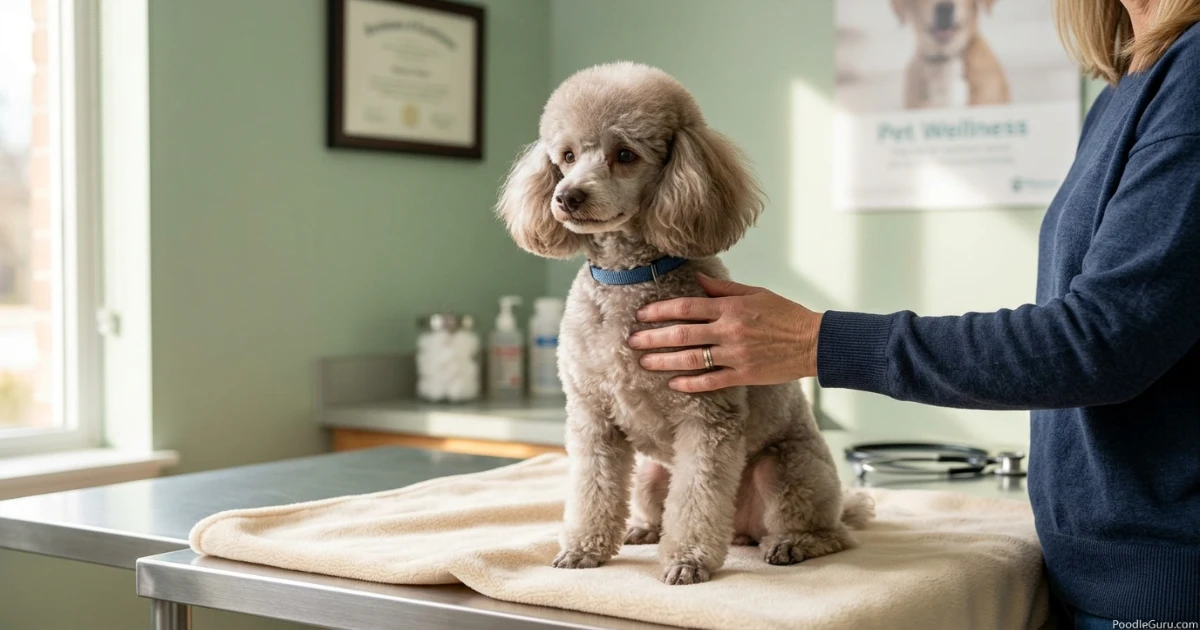
When to Call the Vet Immediately
Most coughs don’t require a middle-of-the-night emergency visit. But a few signs cross the line from monitor-at-home to act-now. The difference is often visible in breathing effort and gum color.
| Symptom | What It Might Signal | Action |
|---|---|---|
| Blue-tinged or pale gums | Oxygen deprivation | Emergency — go to the nearest veterinary hospital immediately |
| Labored breathing at rest | Pneumonia, heart failure, severe tracheal collapse | Urgent — same-day veterinary visit required |
| Coughing up blood | Infection, trauma, clotting disorder | Emergency — immediate evaluation needed |
| Sudden collapse or fainting | Severe cardiac or respiratory crisis | Emergency — transport to vet immediately |
| Cough persisting beyond 48 hours | Infection, allergies, early structural issue | Schedule a non-emergency vet visit |
The PoodleGuru Cough Assessment Method
At PoodleGuru, we’ve developed a simple three-step framework to help owners evaluate a cough before the veterinary visit. This isn’t a replacement for professional diagnosis — it’s a tool to sharpen your observations and communicate them clearly.
Listen & Record
Capture a 15–30 second video of the coughing episode. Note the sound: dry, wet, honking, or gagging. Pay attention to whether the cough is productive (bringing up mucus) or non-productive.
Map the Triggers
Track when coughing occurs — after drinking water, during walks with a collar, at night, after excitement, or in specific rooms. Patterns are diagnostic gold for your veterinarian.
Assess the Whole Dog
Look beyond the cough. Is appetite normal? Energy level unchanged? Gums pink? Breathing easy at rest? A coughing dog who is otherwise bright and active is less concerning than one who is lethargic and refusing food.
The Harness Swap Rule
For Toy and Miniature Poodle owners: if you haven’t already switched from a collar to a harness, do it today. This single change can reduce tracheal pressure and may decrease coughing frequency in dogs with early-stage tracheal collapse. It costs less than a veterinary visit and has zero downside.
What Changes With Age: Puppy vs. Adult vs. Senior Coughing
Coughing means different things at different life stages. Puppy coughing is most often infectious — kennel cough, distemper (in unvaccinated dogs), or early respiratory irritation. Poodle puppies have developing immune systems and are more vulnerable to infections picked up in group settings like puppy classes or adoption events.
Adult poodles — roughly ages two through seven — who develop new coughs are more likely facing allergies, irritant exposure, or the earliest signs of tracheal collapse in predisposed sizes. This is the stage where environmental triggers often emerge for the first time.
Senior poodles warrant a broader differential. Heart disease climbs the probability list after age eight, particularly in Standards. Dental disease — which is common in aging toy breeds — can also introduce bacteria into the bloodstream and contribute to low-grade respiratory signs. A senior poodle with a new cough deserves a thorough workup, not a wait-and-see approach.
For more on the aging process and how to support your poodle through every life stage, read our guide on poodle lifespan and senior care.
Common Owner Mistakes When Evaluating Poodle Coughing
Good owners sometimes make understandable missteps when their poodle starts coughing. Avoiding these common mistakes can prevent delayed care and unnecessary stress.
| Mistake | Why It Happens | Better Approach |
|---|---|---|
| Dismissing a cough because the dog “seems fine” | Dogs mask illness well; a bright attitude doesn’t rule out progressive conditions | Track frequency and duration — even in an energetic dog, a cough lasting over 48 hours merits attention |
| Using human cough medicine | Owners assume OTC remedies are safe across species | Never give human medications without explicit veterinary approval — some ingredients are toxic to dogs |
| Continuing collar use after tracheal collapse diagnosis | Habit, or belief that harnesses are only for large breeds | Switch to a harness immediately — this is the single most effective mechanical change for tracheal health |
| Attributing every cough to “allergies” without investigation | Allergies are common and visible; it’s an easy assumption | Even allergic dogs can develop infections or structural issues — don’t let allergy history delay other diagnostics |
Frequently Asked Questions
Why is my poodle coughing like something is stuck in his throat?
This is the classic description of kennel cough — a dry, hacking cough that often ends with a gag. It can also signal a partial tracheal collapse or mild irritation. If the cough started suddenly after boarding or grooming, kennel cough is the most likely cause.
How can I tell if my poodle’s cough is serious?
Look for labored breathing, blue-tinged gums, coughing up blood, lethargy, or refusal to eat. These signs warrant emergency veterinary attention. A cough that persists beyond 48 hours — even without other symptoms — deserves a non-emergency vet visit to rule out progressive conditions.
Do Toy Poodles cough more than Standard Poodles?
Toy and Miniature Poodles are genetically predisposed to tracheal collapse, which produces a distinct honking cough. Standard Poodles have lower structural airway risk but may cough due to heart disease, allergies, or infection. The size-related difference is mostly about tracheal collapse risk.
Can I give my poodle honey for a cough?
A small amount of plain honey may temporarily soothe mild throat irritation, but it does not treat the underlying cause. Never give honey to diabetic dogs, puppies under one year, or as a substitute for veterinary care. Always consult your vet before offering any home remedy.
Why does my poodle cough after drinking water?
Water-triggered coughing can indicate tracheal collapse, laryngeal dysfunction, or simply drinking too fast. If this happens regularly, your poodle may benefit from a raised water bowl or a slow-drink bowl. Mention this pattern to your veterinarian — it’s a specific diagnostic clue.
Is kennel cough dangerous for poodles?
For many healthy adult poodles, kennel cough is uncomfortable but mild and often improves within 7–14 days, though some dogs cough longer. Puppies, seniors, and immunocompromised dogs face higher risks of secondary pneumonia. Vaccination helps reduce severity even if it doesn’t prevent all strains.
When should I switch from a collar to a harness for my poodle?
Immediately — especially for Toy and Miniature Poodles. Harnesses reduce tracheal pressure and may prevent or slow the progression of tracheal collapse. If your poodle already has a diagnosed tracheal issue, a harness is non-negotiable.
Can heart disease cause coughing in poodles?
Yes. Mitral valve disease is common in older small-breed dogs, and heart enlargement can press on airways or cause fluid buildup in the lungs, both of which trigger coughing. Senior poodles with new, persistent coughs should receive a cardiac evaluation.
Key Takeaways: Poodle Coughing Causes & Next Steps
- Poodle coughing ranges from mild kennel cough to structural tracheal collapse — the sound and timing are the first diagnostic clues.
- Toy and Miniature Poodles carry a breed-specific risk for tracheal collapse; switching from a collar to a harness is a high-impact preventive step.
- Kennel cough is the most common infectious cause and typically resolves in 1–3 weeks in healthy adults, but puppies and seniors need closer monitoring.
- A wet cough, labored breathing, or blue-tinged gums are red flags requiring emergency veterinary attention — do not wait.
- Senior poodles with new persistent coughs should be evaluated for heart disease and dental-related respiratory issues, not just infections.
- Record a video of the coughing episode, track triggers, and assess your poodle’s overall demeanor before your veterinary visit for clearer communication.
External resources: VCA Hospitals — Tracheal Collapse in Dogs provides a detailed clinical overview of this condition. The AKC Poodle breed page covers breed-specific health notes and standards.