Poodle vs Bichon Frise: Size, Coat & Temperament Compared
Poodle vs Bichon Frise is a curly-coated breed comparison that looks simple at first but matters deeply in daily life. One breed gives you three size choices, high trainability, and a wide coat-color range. The other gives you one compact companion size, a cheerful social personality, and the iconic white powder-puff look. If you are stuck between a Poodle and a Bichon Frise, the real answer lives in size, coat care, temperament, grooming cost, and how much mental stimulation your home can provide.
Quick Answer: Poodle vs Bichon Frise
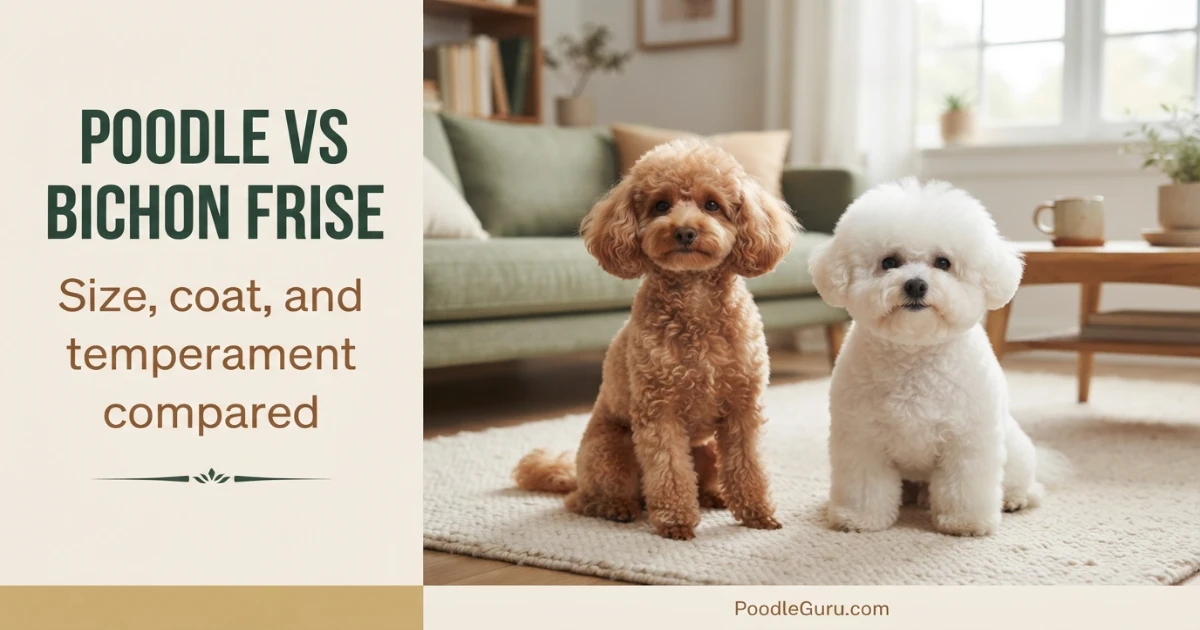
Poodles come in three sizes (Toy, Miniature, Standard); Bichons are one compact size. Poodles have a wider range of coat colors, a more athletic build, and higher trainability — but they demand more mental stimulation. Bichons are consistently cheerful, slightly lower-energy companion dogs with a pure-white powder-puff coat and fewer size variables to weigh. If you want size choice, color variety, and an eager-to-work brain, lean Poodle. If you want a single-size, reliably sunny lap dog with a simpler decision path, lean Bichon.
That’s the honest snapshot. The rest of this guide breaks down every layer that actually shapes daily life with either breed.
Quick Facts: Poodle vs Bichon Frise
Size Range
Poodle: Toy 4–6 lbs, Miniature 10–15 lbs, Standard 40–70 lbs.
Bichon: 12–18 lbs, one consistent size.
Coat Colors
Poodle: Wide solid-color range including black, white, cream, apricot, silver, blue, brown, café au lait, and silver beige; some pet lines also show patterns.
Bichon: Signature white coat, with limited cream, buff, or apricot shading sometimes seen.
Lifespan
Poodle: 12–15 years (Toy/Miniature often reach 15+).
Bichon: 14–15 years, with many living well past 15.
Energy Level
Poodle: Moderate to high, varies by size — Toy less demanding, Standard needs real exercise.
Bichon: Moderate, playful bursts, settles well indoors.
Trainability
Poodle: Exceptional — ranked 2nd in canine intelligence.
Bichon: Above average — eager to please but can be softer and more sensitive.
Grooming Frequency
Both breeds: Professional grooming every 4–6 weeks minimum, plus consistent home brushing.
Why These Two Breeds Get Compared So Often
Walk through any park with a well-groomed white Toy Poodle and someone will ask if it’s a Bichon. The confusion isn’t random. Both breeds share a curly-coated, non-shedding profile that appeals to allergy-conscious owners. Both trace lineage to European companion-dog traditions. Both carry themselves with a certain jaunty confidence that reads as “charming small dog” from a distance.
But the comparison collapses the moment you dig into real ownership. A Poodle — even a Toy — is a working brain wrapped in a curly coat. Poodles were retrieving waterfowl long before they became lap-warmers. The breed standard still reflects that: square build, athletic movement, keen expression. Bichons, by contrast, were bred purely as companion dogs for European nobility. Their job was to be delightful. They’re outstanding at it.
This matters because it shapes what each breed needs from you. A Poodle who doesn’t get enough mental engagement will invent her own jobs — sometimes destructively. A Bichon who feels abandoned will follow you room to room, quietly miserable. Different problems, different solutions.
At PoodleGuru, we see owners drawn to both breeds for the same surface reasons: curly, cute, hypoallergenic. But the dog you actually live with is shaped by what’s underneath the curls. That’s what this guide unpacks.
Size Comparison: One Breed, Three Sizes vs One Compact Companion
Size is the single biggest practical difference between choosing a Poodle and choosing a Bichon. It’s also the difference most buyers underestimate.
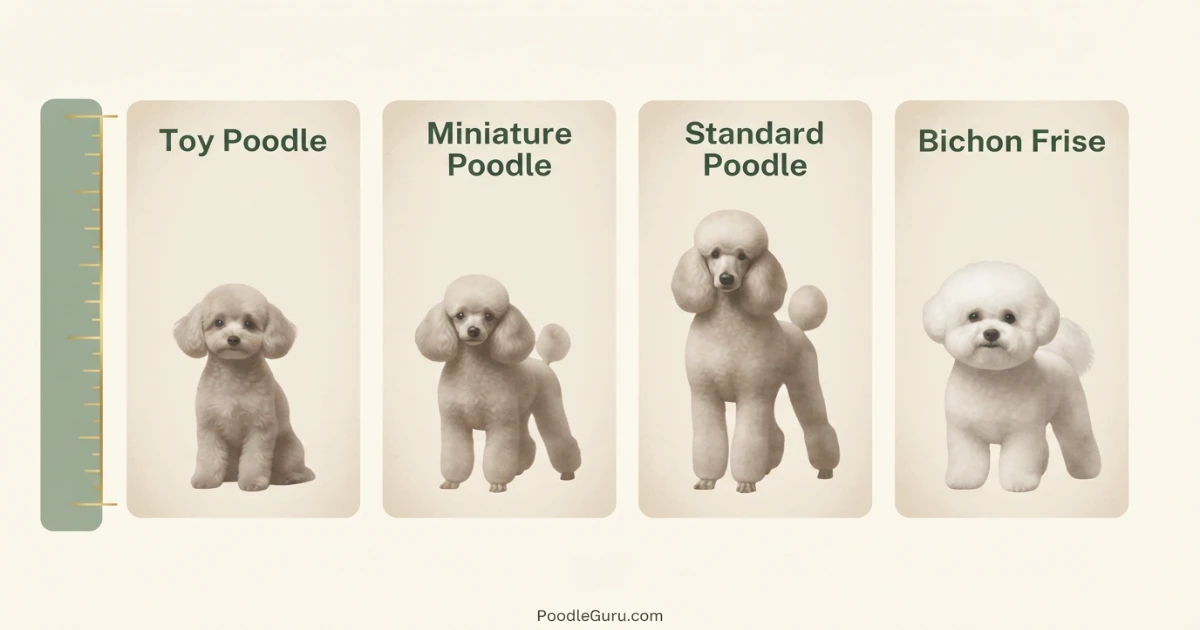
The AKC recognizes three distinct Poodle varieties — Toy, Miniature, and Standard — each with separate size standards, different growth timelines, and meaningfully different space and exercise requirements. A Toy Poodle reaches full size by 6–8 months and tops out at 10 inches at the shoulder. A Standard Poodle keeps growing for 18–24 months and can stand over 15 inches — often much taller. That’s not a small difference. That’s a completely different dog in a completely different body.
Bichons offer one compact size range. The AKC Bichon Frise profile describes the breed as standing just under a foot at the shoulder, with typical weight often falling around 12 to 18 pounds. That’s squarely in the Miniature Poodle range — which is why Bichons get compared most often to Miniatures, not Toys or Standards.
Size at a Glance
| Trait | Toy Poodle | Miniature Poodle | Standard Poodle | Bichon Frise |
|---|---|---|---|---|
| Height at shoulder | Up to 10 in | 10–15 in | Over 15 in | 9.5–11.5 in |
| Weight | 4–6 lbs | 10–15 lbs | 40–70 lbs | 12–18 lbs |
| Full size reached | 6–8 months | 10–12 months | 18–24 months | 10–12 months |
| Apartment-suitable | Excellent | Excellent | Moderate — needs space | Excellent |
| Fragility risk | Higher — very small frame | Moderate | Lower — sturdy build | Moderate |
The takeaway isn’t that one is better. It’s that “Poodle” is actually three breed-size experiences, and picking the wrong one is a common buyer regret. A family who’d thrive with a Standard may feel a Toy is too delicate. A retiree who’d adore a Toy may find a Standard’s exercise needs overwhelming. Bichons remove that variable — but they also remove the flexibility of choosing your ideal size within a single breed family.
Coat Comparison: Curls, Colors, and Care Reality
Coat is where the Poodle vs Bichon Frise comparison gets emotionally charged. Both breeds are marketed as hypoallergenic. Both have hair that grows continuously instead of shedding seasonally. Both need regular professional grooming. But the differences in texture, color, and what owners actually manage at home are substantial.
Texture: Corded Curl vs Double-Layer Plush
The Poodle coat is famously dense and curly — a single-layer coat with tight, springy curls that feel almost woolly. When properly maintained, it’s remarkably resistant to matting because the curls have natural separation. But when neglected, those same curls twist into tight mats close to the skin, and that’s painful.
The Bichon coat is fundamentally different. It’s a double coat with a soft, dense undercoat and a coarser outer coat that creates the breed’s signature “powder-puff” look. The texture is more cottony than curly — plush and springy rather than corded. This double-layer structure means Bichon coats can mat faster than Poodle coats in high-friction areas like behind the ears, under the collar, and in the armpits.
Color: A Whole Palette vs One Signature White
Here’s where Poodles give you creative freedom. Poodles appear in a remarkably wide color range, including black, white, cream, apricot, silver, blue, brown, silver beige, and café au lait. Many pet owners also search for red Poodles and patterned Poodles, though show standards and registration categories treat color and pattern differently. The practical point is simple: Poodles give you far more visual variety than Bichons.
Bichons are known for their signature white powder-puff look. Small cream, buff, or apricot shading can appear, especially around the ears or in young dogs, but the breed’s adult impression is still overwhelmingly white. This matters practically. A white coat shows tear staining, dirt, and discoloration far more visibly than darker Poodle colors. Owners who choose a Bichon are signing up for ongoing stain management around the eyes, mouth, and paws.
Owner Reality Check: Coat Maintenance
Professional groomers commonly report that both breeds need a full groom every 4–6 weeks. At home, Poodle owners typically brush 2–3 times weekly with a slicker brush and metal comb. Bichon owners often brush more frequently — 3–4 times weekly is common — because the cottony undercoat tangles faster than Poodle curls. Neither breed is wash-and-wear. Both require a committed grooming budget and routine.
Temperament: Brain, Bounce, and Daily Energy
If coat gets the attention, temperament decides the daily experience. And the gap between a Poodle’s mind and a Bichon’s heart is where most owners form their strongest preference.
The Poodle Mind: Intelligence With Intensity
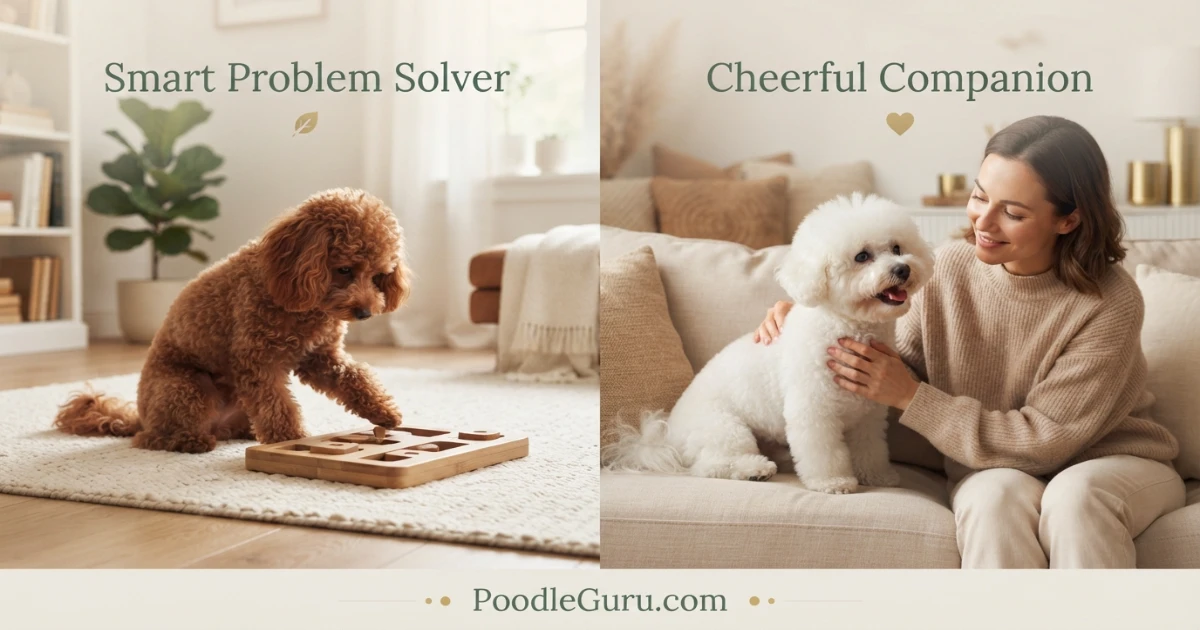
Poodles rank among the most intelligent dog breeds ever studied. They learn commands in fewer repetitions, retain training longer, and solve problems independently. That’s the good news. The reality check: a smart dog who’s bored is a creative problem-maker. Poodles who lack mental stimulation — puzzle toys, training sessions, scent work, structured play — will find their own projects. Counter-surfing, strategic barking, and door-handle manipulation are well-documented in the breed.
Poodles also tend to be more reserved with strangers. Not aggressive — discerning. A well-socialized Poodle will politely observe before engaging. That discernment, combined with intelligence, makes them outstanding watchdogs. They notice everything. They’ll tell you when something’s different.
The Bichon Heart: Cheerful, Soft, and Social
Bichons were bred for one purpose: companionship. That breeding shows in every interaction. They’re famously merry — the AKC standard uses that word deliberately — with a gentle, affectionate default setting that extends to strangers, children, and other dogs. A Bichon’s first instinct is usually to make friends, not to evaluate.
The trade-off is sensitivity. Bichons don’t respond well to harsh corrections or raised voices. They shut down. Training requires patience and positive reinforcement — more so than with Poodles, who tend to be more resilient to handler error. Bichons also struggle more with separation anxiety. A Bichon left alone for long hours without preparation may develop destructive behaviors or excessive vocalization, not out of defiance but out of distress.
Grooming Reality Check: What Owners Actually Face
Both breeds are high-maintenance in the grooming department. Anyone who tells you otherwise is selling something. But the specific challenges differ, and knowing them prevents expensive surprises.
| Grooming Factor | Poodle | Bichon Frise |
|---|---|---|
| Professional groom frequency | Every 4–6 weeks | Every 4–6 weeks |
| Home brushing needed | 2–3 times weekly | 3–4 times weekly |
| Matting risk zones | Behind ears, harness area, tail base | Behind ears, under collar, armpits, hindquarters |
| Tear stain management | Moderate — visible on white/cream coats | High — white coat shows all staining |
| Style flexibility | Very high — multiple clip styles | Moderate — powder-puff or puppy cut most common |
| Typical monthly grooming cost | $60–$120 (varies by size and region) | $50–$90 |
The cost column deserves attention. A Standard Poodle’s grooming bill is meaningfully higher than a Bichon’s simply because there’s more dog to wash, dry, and scissor. Over a 14-year lifespan, that difference adds up to thousands of dollars. Toy and Miniature Poodles are more comparable to Bichons in grooming expense.
Health and Lifespan Considerations
Both breeds are generally healthy with long expected lifespans, but each carries breed-specific risks that responsible buyers should know before committing.
Poodle Health Landscape
Poodles, particularly Standards, can be predisposed to hip dysplasia, bloat (gastric dilatation-volvulus), sebaceous adenitis (a skin condition), and certain eye disorders including progressive retinal atrophy. Toy and Miniature Poodles face higher risk for patellar luxation and dental issues due to smaller jaw structure. Reputable breeders screen for these conditions and should provide health clearances through organizations like the Orthopedic Foundation for Animals.
Bichon Health Landscape
Bichons are prone to allergies — both food and environmental — that often manifest as skin issues. They also carry elevated risk for patellar luxation, cataract formation, and bladder stones. Dental health deserves special attention in Bichons; their small mouths can crowd teeth, leading to early periodontal disease without consistent care.
When to Talk to Your Vet
This guide describes patterns observed across each breed, not individual predictions. Every dog is different. Veterinary guidance generally recommends annual wellness exams, breed-specific screening as recommended, and immediate consultation if you notice changes in appetite, mobility, skin condition, or behavior. If you’re considering a puppy, ask the breeder directly about health testing for the conditions listed above.
The PoodleGuru Breed Match Framework
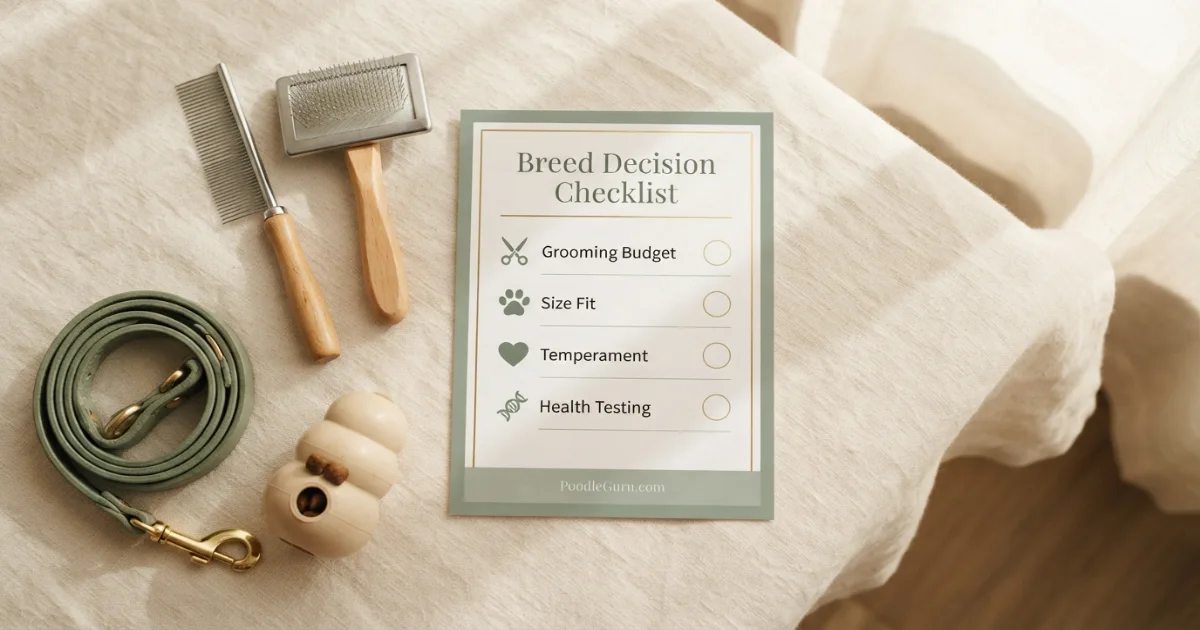
At PoodleGuru, we evaluate breed fit by looking at five practical dimensions — not just breed descriptions, but what daily life actually demands. Run both breeds through this framework and see which column feels more like your real life.
| Dimension | Poodle Fits Better If… | Bichon Fits Better If… |
|---|---|---|
| Size flexibility | You want to choose among Toy, Miniature, or Standard | You want one predictable size with no decisions needed |
| Mental engagement | You enjoy training, puzzle work, and teaching new skills | You want a dog who’s content with affection and moderate play |
| Social style | You prefer a dog who’s discerning — friendly but not instantly everyone’s best friend | You want a dog who greets everyone like a long-lost relative |
| Coat color | You want options — red, silver, black, apricot, parti, or classic white | You love the iconic white powder-puff look and don’t mind stain management |
| Alone-time tolerance | Your household has someone home often, but the dog can handle moderate alone time with training | Someone is home most of the time — Bichons struggle more with extended solitude |
| Activity level | You want a walking, hiking, or training partner — level depends on size chosen | You want a companion for gentle walks, errands, and couch time |
If three or more rows land in one column, that breed is likely your stronger practical match — regardless of which one you find cuter on Instagram.
Buyer Mistakes and Red Flags
Good decisions get made before you ever meet a puppy. These are the most common traps buyers fall into when choosing between a Poodle and a Bichon.
Choosing by Looks Alone
Both breeds are adorable in photos. But a Standard Poodle who looks regal in a show clip is still a 50-pound athlete who needs real exercise. A Bichon who looks like a plush toy still needs frequent grooming and doesn’t tolerate long hours alone. Looks draw you in; temperament keeps you happy.
Underestimating Grooming Costs
Grooming isn’t optional for either breed. Budget $600–$1,400 per year for professional grooming, more for a Standard Poodle. If that number feels uncomfortable, neither breed is the right choice. Consider a smooth-coated breed instead.
Buying Without Health Clearances
Responsible breeders provide health testing documentation for both parent dogs. If a breeder can’t show you OFA results, current CAER/OFA eye exam records, or equivalent documentation — for either breed — walk away. A lower upfront price from an untested breeding can mean catastrophic vet bills later.
Confusing “Hypoallergenic” With “No Maintenance”
No dog is completely allergen-free. Both breeds produce dander and saliva proteins that can trigger allergies. Spend time with adult dogs of the breed you’re considering before committing — ideally in a home environment, not just at a breeder’s facility.
The safest path for either breed is the same: find a breeder or rescue who asks you as many questions as you ask them. Good placement matters more than fast placement.
Frequently Asked Questions
Are Poodles and Bichon Frises both hypoallergenic?
Both breeds are low-shedding and produce less airborne dander than heavy-shedding breeds, but no dog is completely hypoallergenic. Allergy responses vary by individual. Spend time with adult dogs of each breed before committing.
Which is better for first-time owners — Poodle or Bichon?
Bichons are often gentler for first-time owners because they’re more forgiving of training mistakes and less demanding of mental stimulation. Toy and Miniature Poodles can also work well if the owner is committed to training and enrichment.
Do Poodles bark more than Bichons?
Poodles tend to be more alert and vocal about environmental changes — they notice everything. Bichons may bark more from separation distress or excitement. Neither breed is silent, but the triggers differ meaningfully.
Can Bichon Frises be any color besides white?
Per the AKC breed standard, Bichons are white. Puppies may show cream or apricot shading that typically fades by maturity. If you’re seeing a “colored Bichon” advertised, it’s likely a mixed breed or a misrepresented dog.
Which breed is easier to train?
Poodles learn faster and retain commands longer due to exceptional intelligence. Bichons are eager to please but can be softer and more sensitive — training with positive reinforcement works well, but harsh methods backfire quickly with a Bichon.
How much does a Poodle cost compared to a Bichon Frise?
In 2026, a well-bred Poodle puppy from health-tested parents typically ranges from $1,500 to $3,500 depending on size and color. Bichon puppies from reputable breeders range from $1,200 to $2,800. Lifetime grooming costs for Standards are notably higher.
Is a Poodle or Bichon better with children?
Both can be excellent family dogs when properly socialized. Standard Poodles are often sturdier for homes with young children. Toy Poodles and Bichons, given their smaller frames, do better in homes where children understand gentle handling.
Key Takeaways: Poodle vs Bichon Frise
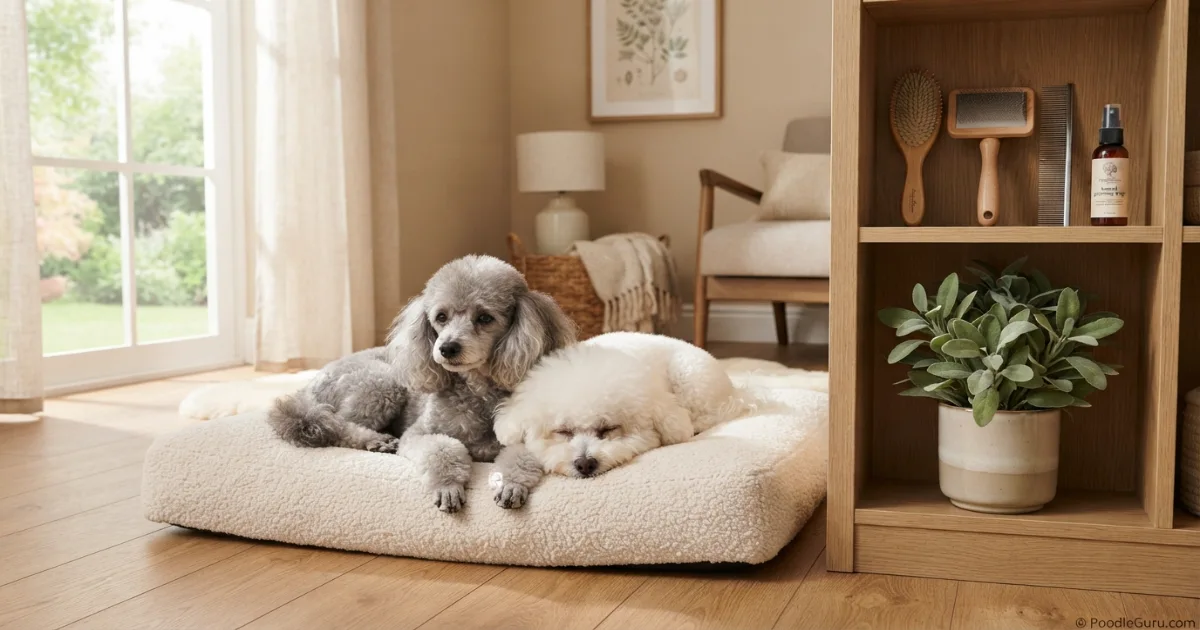
Both breeds bring curly coats, long lifespans, and deep devotion. Your decision lives in the details.
- Poodles come in three distinct sizes from 4 to 70 pounds; Bichons are consistently 12 to 18 pounds with no size variables.
- Poodle coats range across 10+ recognized colors including red, silver, and black; Bichons are white with minimal variation.
- Poodle intelligence ranks among the highest of all breeds — they need mental work; Bichons need companionship and are more sensitive to being left alone.
- Both breeds require professional grooming every 4–6 weeks and consistent home brushing — neither is low-maintenance.
- A Standard Poodle is a completely different ownership experience from a Toy Poodle; don’t choose “Poodle” generically — choose a specific size.
- The PoodleGuru Breed Match Framework helps you evaluate your real daily life against what each breed actually needs, not just what looks appealing in photos.
Still weighing your decision? Start with our Poodle Size Chart to narrow which Poodle variety might fit — or eliminate Poodles if Bichon’s single-size simplicity feels like the right path.