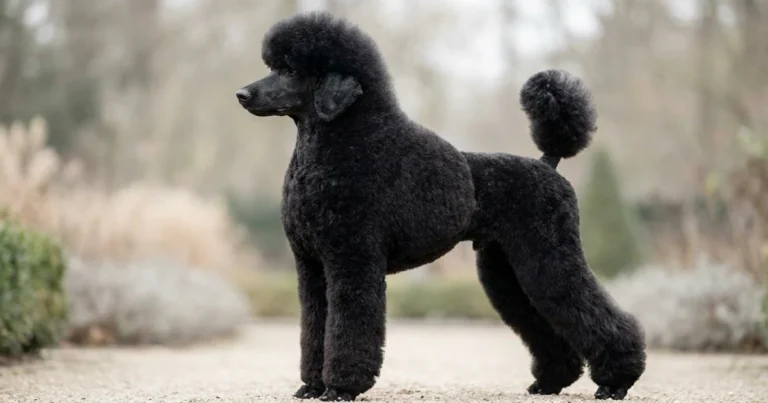
Poodle Coat Care: Daily & Weekly Routine
A practical, no-fluff system for keeping your poodle’s coat healthy, mat-free, and manageable — built for real owners, not show rings.
Quick Answer
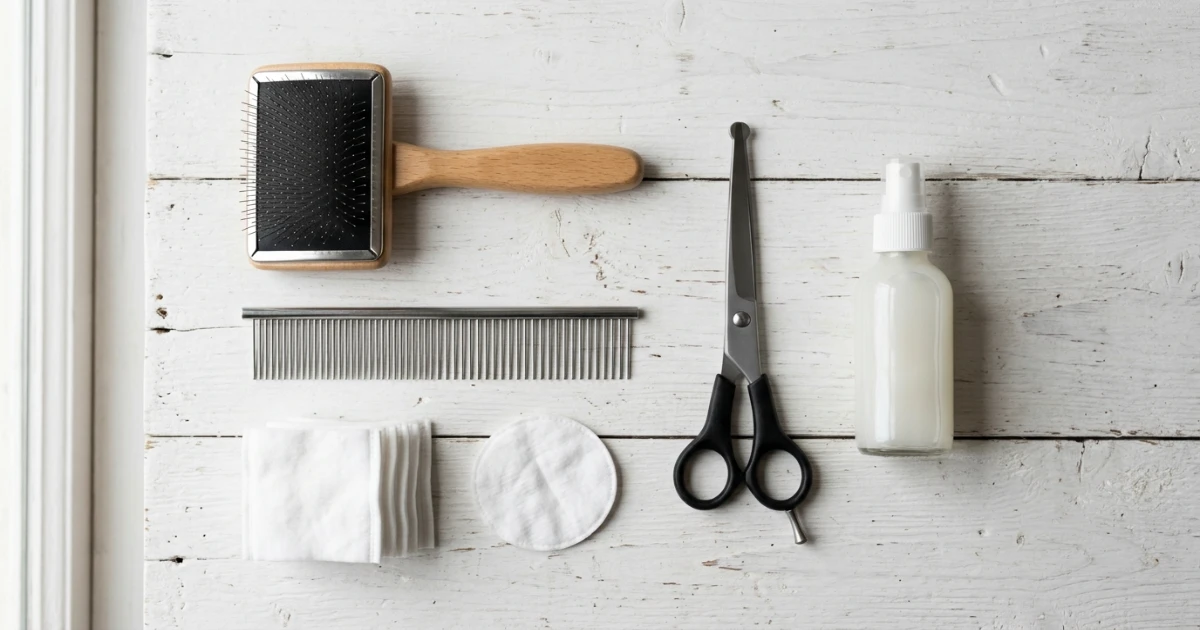
Poodle coat care requires brushing at least every other day — daily for dogs in full coat — using a slicker brush followed by a metal comb to check for hidden mats. A complete weekly routine adds ear cleaning, paw pad trimming, sanitary area checks, and a full line-brushing session. The non-negotiable rule: never skip more than two days between brushings. Mats form silently against the skin and tighten fast. Once they do, at-home fixes become painful for the dog and risky for the coat.
Why Poodle Coat Care Is Different From Other Breeds
Poodle coat care is a fundamentally different task from brushing a Labrador or a Golden Retriever. Most double-coated breeds shed loose fur onto your floor. Poodles don’t shed that way. Instead, their single-layer curly coat traps shed hair against the body. That trapped hair tangles into itself within days, forming mats that tighten toward the skin.
This isn’t a design flaw. It’s exactly what made the poodle coat functional as a water-retrieving breed — dense, insulating, and protective. But in a modern companion dog, it means the owner shoulders the full burden of coat maintenance. There’s no seasonal blowout to help you. No natural shedding cycle that clears the old coat.
The AKC poodle breed standard describes the ideal coat as naturally curly, harsh in texture, and dense throughout. That density works against you if you skip brushing. A poodle left unbrushed for five days can develop mats that take a professional groomer thirty minutes to remove — or require shaving entirely.
First-time poodle owners often underestimate this. They’ve brushed dogs before. They assume it’s similar. It’s not. The good news: once you build the right routine, poodle coat care becomes predictable. You’ll know exactly what to do each day, each week, and what to watch for between grooming appointments.
Understanding the Poodle Coat Structure
Poodle coat care is the systematic maintenance of a single-layer, continuously growing curly coat that requires mechanical detangling to prevent mats, skin irritation, and moisture-related conditions. For poodle owners, this means coat care isn’t optional or seasonal — it’s a permanent part of dog ownership, like feeding or walking. The most important thing to understand is that the poodle coat hides problems at the skin level. What looks smooth on the surface can be tightly matted underneath.
The poodle coat has three distinct zones owners need to know:
Outer Curl Layer
The visible coat. Curls should be defined, springy, and cool to the touch. This layer shows brushing results immediately — but it can also hide what’s happening deeper.
Mid-Coat Density Zone
Where shed hair collects and tangles begin. This layer sits about halfway between skin and surface. Line brushing targets this zone specifically.
Skin-Level Foundation
The root zone where mats first form. Skin should be visible when you part the coat. Redness, flaking, or a musty smell here signals a problem that needs attention.
Poodle hair also changes significantly with age. Puppies have a softer, finer coat that’s easier to maintain but mat-prone in different ways. The coat change — the transition from puppy coat to adult coat — typically begins around 9 to 12 months and can last several months. This is the highest-risk period for matting. The two coat textures tangle against each other, and owners who maintained a puppy easily suddenly find themselves battling daily mats.
The Daily Poodle Coat Care Routine
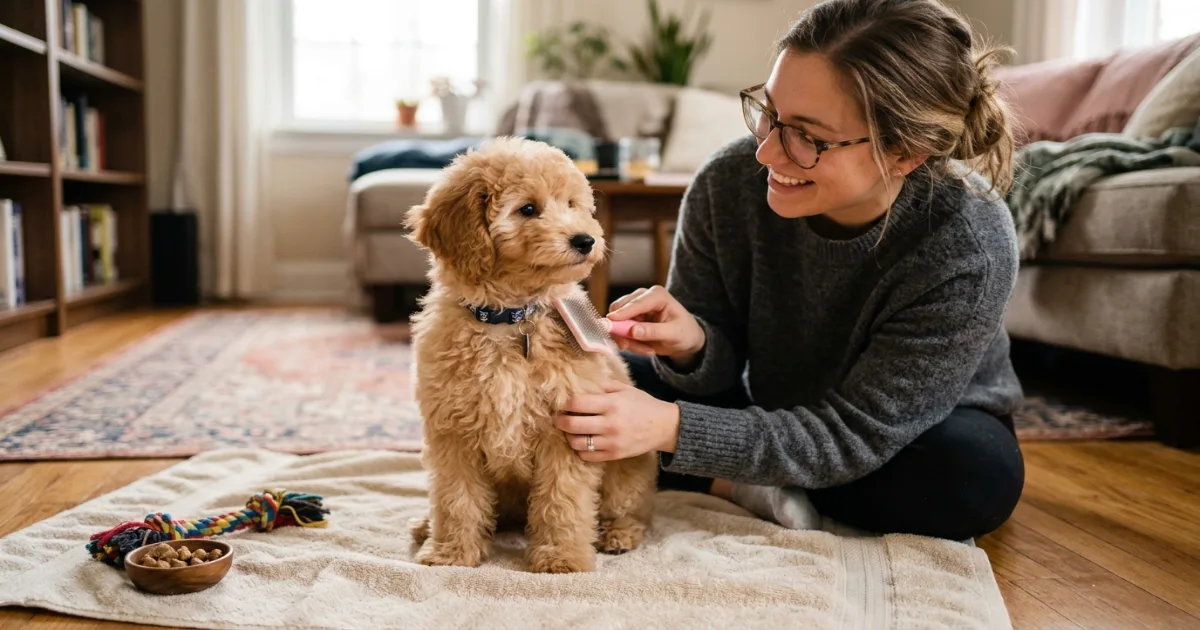
Daily doesn’t mean a full groom. It means a focused 5-to-10-minute session that prevents problems before they start. Here’s what a realistic daily poodle coat care routine looks like for a companion dog — not a show dog, not a kennel dog, but a pet living in your home.
Step 1: Quick Visual Scan (1 Minute)
Run your hands over your poodle’s body before you pick up a brush. Feel for lumps, bumps, or areas where the coat feels denser than it should. Pay special attention behind the ears, under the collar, and in the armpits. These are mat hotspots. Your fingers will detect early tangling before your eyes can see it.
Step 2: Targeted Brushing (4–7 Minutes)
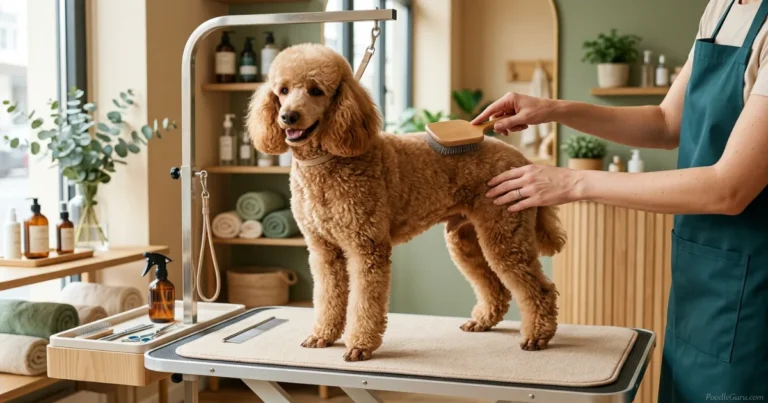
Use a slicker brush on the high-risk zones: ears, neck, chest, legs, and tail base. You don’t need to brush the entire dog every single day unless they’re in full show coat. What you must do is hit the friction zones — anywhere the coat rubs against itself, a collar, a harness, or the ground.
Brush in small sections. Lift the coat, brush from the skin outward, and move methodically. A common mistake is surface brushing — running the brush over the top layer and calling it done. That smooths the visible coat but leaves tangles building underneath. Always brush down to the skin.
Step 3: Quick Eye & Ear Check (1 Minute)
While you’re in the head area, glance at the eyes for tearing or discharge. Check inside each ear briefly. Poodles grow hair inside the ear canal, and that hair traps moisture and debris. A quick daily look tells you whether the ears need attention during the weekly session.
The Weekly Poodle Coat Care Routine
Once a week, set aside 25 to 40 minutes for a thorough session. This is where you catch what the daily routine might have missed and handle maintenance tasks that don’t need daily attention.
| Weekly Task | Time | Tool Needed | What to Watch For |
|---|---|---|---|
| Full line brushing | 15–20 min | Slicker brush + metal comb | Resistance at skin level, ripping sounds, skin redness |
| Ear cleaning | 3–5 min | Vet-approved ear cleaner, cotton pads | Dark discharge, odor, head shaking, sensitivity to touch |
| Paw pad inspection & trim | 5–7 min | Blunt-tip grooming scissors or small clippers | Overgrown hair between pads, cracked pads, foreign objects |
| Sanitary area trim | 3–5 min | Quiet clippers or blunt-tip scissors | Urine staining, fecal residue, skin irritation |
| Nail check | 2–3 min | Nail clippers or grinder | Clicking on hard floors indicates nails are too long |
| Coat condition assessment | 2 min | Your hands and eyes | Dullness, excessive oil, flaking, hot spots, unusual odor |
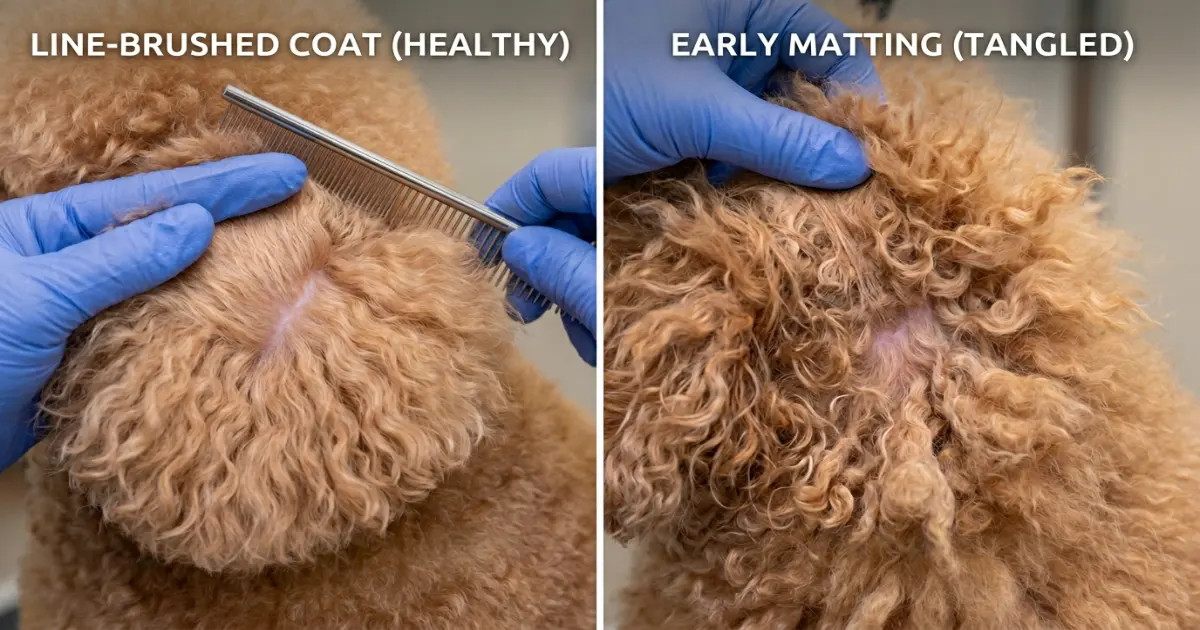
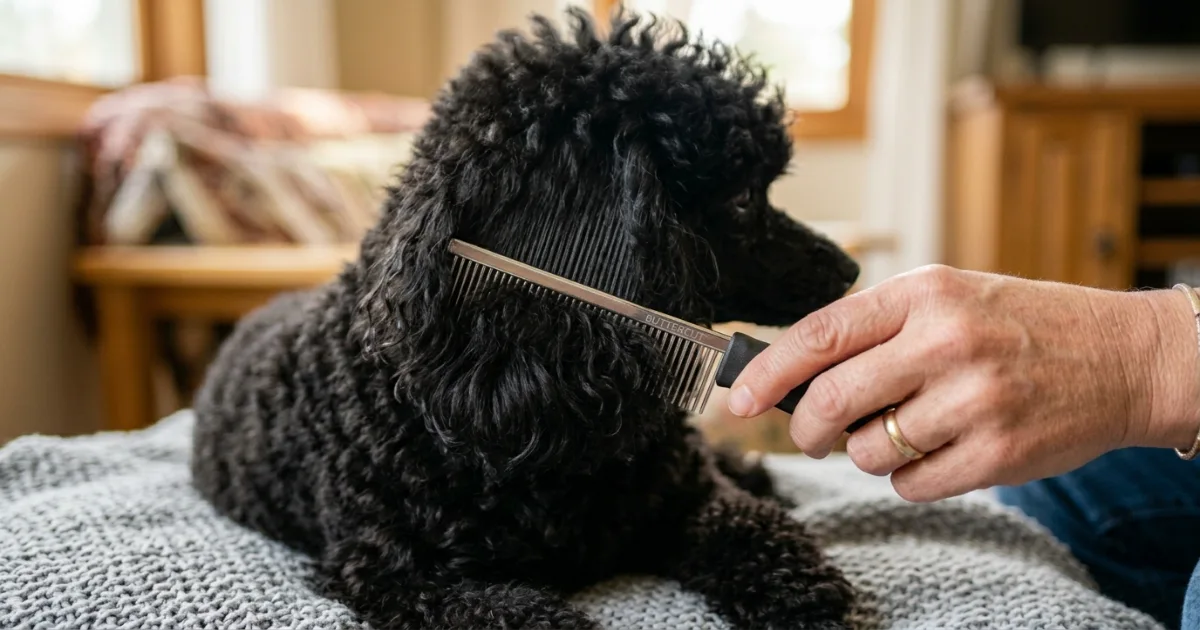
Line brushing deserves extra explanation because it’s the skill that separates poodle owners who struggle with mats from those who don’t. Here’s how it works: you part the coat with one hand, creating a line of exposed skin, then brush small sections outward from that part. You work across the body methodically — part, brush, move over. Part, brush, move over. After finishing a section, run a metal comb through it. If the comb catches, the section isn’t done.
Essential Tools for Poodle Coat Care
You don’t need a professional grooming table or a dozen specialty items. But you do need the right versions of a few core tools. Cheap tools make poodle coat care harder and can hurt your dog. Here’s what matters:
Slicker Brush
The daily driver. Look for medium-firm pins with rounded tips — not sharp, not bent. A comfortable handle matters because you’ll use it constantly. Expect to spend $18–$35 for a quality slicker.
Greyhound Comb
A metal comb with two pin densities: wider spacing for initial checks, tighter spacing for finishing. This is your truth-teller. If it doesn’t glide through, there’s still tangling.
Detangling Spray
Not a replacement for brushing, but a helper. A light mist reduces static and adds slip. Avoid heavy, silicone-heavy sprays that build up. Look for water-based formulas without alcohol.
Tool Safety Warning
Never use a slicker brush with sharp, bent, or rough pins. Cheap brushes can scratch the skin, especially on poodles with lighter pigmentation. If you run the brush across your own forearm and it feels sharp or scratchy, it’s too harsh for your dog. Also, never use scissors to cut out mats you can’t clearly see the base of — it’s dangerously easy to cut skin pulled up into the mat. When in doubt, see a groomer.
The PoodleGuru Coat Check Method
At PoodleGuru, we evaluate coat health through a simple three-step weekly assessment that catches problems before they become expensive or painful. This isn’t about achieving a show-ring finish. It’s about making sure your dog is comfortable, healthy, and mat-free between grooming appointments.
Part and Inspect Five Key Zones
Use your greyhound comb to part the coat at these five high-risk points: behind both ears, under the collar line, both armpits, the groin area, and the base of the tail. Look at the skin. It should be clean, pale pink (or dark, depending on pigmentation), and free of redness, flakes, or bumps. Sniff each zone — a healthy poodle coat has almost no odor. A musty or yeasty smell means moisture is trapped.
Line Brush Each Zone to the Skin
Work each zone section by section with your slicker brush. Part the hair, brush outward from the skin, move to the next part. Listen carefully — a smooth brushing sound is good. A ripping or dragging sound means you’re hitting tangles or early mats. Don’t pull harder. Back off, use smaller sections, and work the tangle gently from the tips inward.
Comb Test Every Brushed Section
After each zone, run the metal comb through from skin to tip. If the comb snags anywhere — even slightly — return to that exact spot with the slicker brush. The comb test is binary: either it glides through cleanly, or the section isn’t finished. No gray area. This single habit prevents the slow accumulation of hidden mats that owners only discover at grooming appointments.
Run this full Coat Check Method once a week. It takes about twenty minutes once you’re practiced. If you find mats you can’t work through in under five minutes with gentle brushing, stop. Book a grooming appointment. Forcing a tight mat hurts your dog and damages the coat structure.
Common Poodle Coat Care Mistakes (and How to Fix Them)
Most poodle coat problems aren’t caused by neglect. They’re caused by well-intentioned owners doing the wrong thing with confidence. Here are the mistakes that show up repeatedly in grooming shops — and what to do instead.
Mistake vs. Fix: The Five Most Common Errors
| Common Mistake | Why It Happens | What to Do Instead |
|---|---|---|
| Surface brushing only | It’s faster and looks effective | Line brush to the skin every time — surface brushing hides matting |
| Bathing a matted dog | Owner thinks water will loosen tangles | Water tightens mats into felt. Fully brush out all tangles before any bath. |
| Skipping the comb test | Comb feels like an extra step | The comb is your quality control. If you skip it, you’re guessing. |
| Using the wrong brush | Bristle brushes work on other breeds | Poodle coats need slicker brushes with pins that reach the skin |
| Waiting too long between sessions | Life gets busy, coat looks fine on surface | Mats form in 3–5 days. Daily spot-brushing prevents this; weekly line brushing catches it. |
One more mistake that deserves its own mention: scissoring out mats you can’t see the base of. When a mat is tight against the skin, the skin can get pulled up into the mat. Owners cutting blindly with scissors frequently cut the dog. Veterinary guidance generally recommends leaving tight mats to a professional groomer with proper tools and training. The vet bill for a scissor injury costs far more than a grooming appointment.
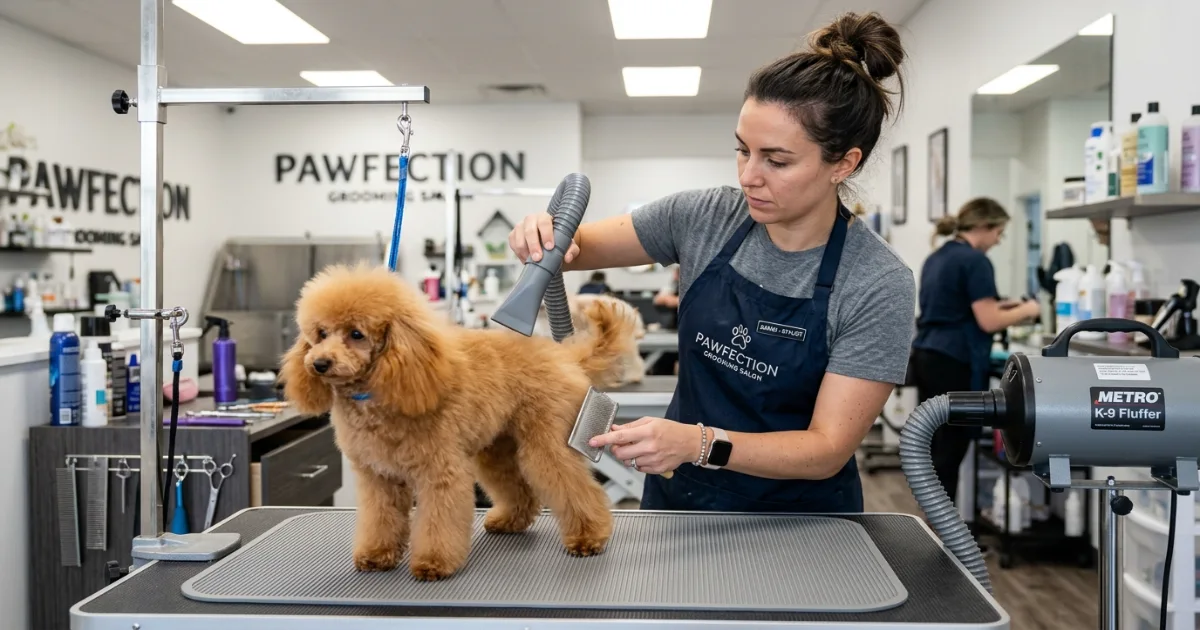
When to Call a Professional Groomer
Poodle coat care has limits that responsible owners recognize. You don’t need to handle everything yourself. Professional groomers watch for specific problems and have tools — high-velocity dryers, professional clippers, specialized blades — that aren’t practical for home use.
Signs It’s Time to Book a Grooming Appointment
- Mats you can’t work out in under five minutes of gentle brushing — forcing it hurts the dog
- Matting that covers more than 15–20% of the body — full shaving may be the kindest option
- A coat that feels greasy or smells even after bathing — may indicate skin infection requiring veterinary attention
- Nails you can hear clicking on hard floors but aren’t comfortable trimming yourself
- You’ve been maintaining well but haven’t had a professional groom in 6–8 weeks — even well-cared-for coats benefit from professional resetting
Most companion poodles do best on a 4-to-8-week professional grooming schedule, depending on coat length and lifestyle. Dogs kept in shorter cuts can stretch longer. Dogs in full coat need more frequent appointments. Find a groomer experienced specifically with poodles — the coat is unique, and general-practice groomers sometimes treat it like any other breed’s coat, with disappointing results.
Seasonal Coat Care Adjustments
Your poodle coat care routine shouldn’t stay static all year. Environmental changes affect coat condition in predictable ways, and adjusting your routine prevents seasonal problems.
Winter Adjustments
Static electricity makes brushing harder and can cause coat breakage. Use a light detangling spray to reduce static before brushing. Dry indoor heating dries out the skin — you may notice more flaking. A humidifier in the room where your poodle sleeps helps. Snow and ice balls cling to leg and paw hair. Keep paw pads and between-toe hair trimmed short during winter months. After walks, check between pads for ice melt chemicals, which irritate skin.
Summer Adjustments
Humidity tightens curls and accelerates matting in some coat types. You may need to brush slightly more frequently. Swimming introduces a specific challenge — chlorine and salt both dry the coat. Rinse your poodle with fresh water after swimming, even if a full bath isn’t happening. Wet coat against warm skin creates the perfect environment for hot spots. Dry thoroughly after any water exposure, especially in skin folds and behind ears.
Coat Change Season (Puppies 9–18 Months)
This isn’t a calendar season but it behaves like one. The puppy coat sheds while the adult coat grows in, creating a high-friction transition zone. During the coat change, daily brushing becomes genuinely non-negotiable. Many owners who maintained their puppy beautifully find themselves overwhelmed during this period. It passes. Keep brushing, use detangling spray liberally, and consider a shorter trim during the worst months to reduce maintenance burden.
Building a Routine That Actually Sticks
The best poodle coat care routine is the one you actually follow. Elaborate plans that require forty minutes every day collapse within two weeks. Here’s what works in real households:
- Tie brushing to an existing habit. Brush while you watch one episode of a show, or right after the evening walk. Habit stacking works better than willpower.
- Keep tools visible. Store your slicker brush and comb where you can see them — not in a closed drawer. Visibility triggers action.
- Accept that some days you’ll do the minimum. A two-minute ear-and-armpit spot-check is infinitely better than skipping entirely because you can’t do the full routine.
- Schedule grooming appointments in advance. Book the next appointment before you leave the current one. A 6-week recurring calendar event removes decision fatigue.
- Involve other household members. If someone else can handle even one weekly task — ear cleaning, paw checks — the burden lightens measurably.
Frequently Asked Questions About Poodle Coat Care
How often should I brush my poodle’s coat?
Brush your poodle at least every other day — ideally daily for full-coated dogs. Poodle hair traps shed fur against the skin, so skipping more than two days risks mat formation, especially behind the ears, under the collar, and in friction zones like armpits.
What happens if I don’t brush my poodle regularly?
Mats form quickly when poodle coat care is neglected. Mats tighten against the skin, causing pain, restricted movement, skin infections, and trapped moisture. Severe matting often requires professional shaving and can hide underlying skin problems that go untreated for weeks.
What’s the best brush for poodle coat care?
A slicker brush with medium-firm pins is the workhorse tool for poodle coat care. Pair it with a greyhound-style metal comb for line-checking. Avoid cheap brushes with sharp bent pins that scratch skin. Quality matters measurably for both results and your dog’s comfort.
Can I bathe my poodle at home between grooming appointments?
Yes, but only if you fully brush out all mats first. Water tightens existing mats into felt-like knots that become nearly impossible to remove. Use lukewarm water, poodle-safe shampoo, and always follow with conditioner. Dry thoroughly — damp coat against skin invites hot spots.
How do I know if my poodle’s coat is healthy?
A healthy poodle coat feels springy and cool to the touch, parts easily to reveal clean skin, and holds its curl pattern after brushing. Watch for dullness, excessive oiliness, flaking skin, or a musty odor — all signal something needs attention, from diet adjustments to veterinary evaluation.
At what age should I start a coat care routine with a poodle puppy?
Start gentle brushing sessions as early as 8–10 weeks, even before the adult coat comes in. Keep sessions short and positive with treats. This builds lifelong tolerance for handling — critical before the challenging coat change begins around 9–12 months.
What’s the difference between line brushing and surface brushing?
Surface brushing only smooths the top layer of hair and leaves tangles building underneath. Line brushing parts the coat section by section and brushes from the skin outward. For poodles, only line brushing prevents hidden matting near the roots, where problems start unseen.
Key Takeaways: Poodle Coat Care That Works
A successful poodle coat care routine isn’t about perfection — it’s about consistency, the right techniques, and knowing when to ask for help. Here’s what matters most:
- Brush at least every other day with a slicker brush — daily for dogs in full coat, focusing on friction zones: ears, collar area, armpits, groin, and tail base.
- Line brush to the skin every session — surface brushing is the number one cause of hidden matting that owners don’t discover until the grooming table.
- Always follow brushing with a metal comb test — if the comb catches anywhere, the section isn’t finished, and mats will accumulate silently over time.
- Never bathe a poodle with existing mats or tangles — water tightens them into felt-like knots that become far harder to remove and may require shaving.
- Schedule professional grooming every 4–8 weeks depending on coat length — even well-maintained coats benefit from professional resetting, sanitary trimming, and skin assessment.
- The PoodleGuru Coat Check Method — part and inspect five key zones, line brush each to the skin, and comb test every section — catches problems before they become painful or expensive.