How to Groom a Poodle at Home Step by Step: The Complete Owner’s Guide
Learning how to groom a poodle at home step by step is one of the most valuable skills a Poodle owner can build. It saves hundreds of dollars a year, strengthens your bond, and keeps your dog’s coat comfortable between professional visits. This guide walks you through the full process — from pre-brush to finishing spray — with the exact techniques that make a home-groomed Poodle look and feel fantastic, not “homemade.”
Quick Answer
Yes, you can absolutely groom your Poodle at home with the right tools and a structured plan. The process follows a consistent sequence: pre-brushing and mat removal, a thorough bath and dry, body clipping with appropriate blade lengths, face-feet-sanitary trim, nail trimming, ear cleaning, and a final coat-enhancing brush-out. Expect your first full session to take 2–3 hours. Speed comes naturally with practice. The result is a clean, comfortable Poodle — and a deep sense of accomplishment.
Grooming a Poodle isn’t like grooming a short-coated breed. Their hair grows continuously, curls tightly, and mats against the skin if neglected for even a few days. That’s why the question how to groom a poodle at home step by step gets searched thousands of times a month — owners want control over the process without making mistakes that hurt their dog or ruin the coat for months. This guide strips away the guesswork. You’ll see exactly what to do, in what order, and why each step matters. No fluff, no skipped corners.
Before you reach for the clippers, understand this: home grooming is a skill, not a personality trait. You will get better every time you do it. Even a beginner can produce a clean, comfortable trim that keeps a Poodle happy for weeks. And the money you save — a single professional groom on a Standard Poodle often costs $120–$200 — adds up fast. But the real payoff is the trust your Poodle develops in you when you handle their coat with patience and care.
Time Commitment
First-timers should block off 3 hours. Experienced home groomers can finish a full groom in 90–120 minutes. Never rush; a calm Poodle grooms better.
Skill Level
Beginner-friendly but technique-dependent. Face, feet, and sanitary areas require extra care. Watching a few reputable video tutorials alongside this guide accelerates your learning curve.
Cost Savings
Quality tools cost $180–$350 upfront, but you’ll save $800–$2,000+ annually compared to professional grooming, depending on your Poodle’s size and coat style.
In This Guide
- Why Home Grooming Matters for Poodle Owners
- The Tools You Absolutely Need
- Step 1: Pre-Grooming Brushing and Mat Check
- Step 2: Bathing the Poodle Correctly
- Step 3: Drying Techniques That Prevent Matting
- Step 4: Clipping and Trimming the Coat
- Step 5: Face, Feet, and Sanitary Trim
- Step 6: Nails, Ears, and Finishing Touches
- Common Mistakes First-Time Home Groomers Make
- What Buyers and New Owners Often Misunderstand
- Home Grooming vs Professional Grooming
- Practical Owner Insights: Time, Money, and Realistic Expectations
- FAQs
- Final Summary
Why Home Grooming Matters for Poodle Owners
Poodles need consistent coat care — not just an occasional salon trip. The non-shedding, continuously growing hair demands maintenance every 1–4 weeks depending on the clip style. When you know how to groom a poodle at home step by step, you’re no longer chained to a groomer’s schedule. You can handle touch-ups, extend the life of a professional cut, or take full control of your dog’s grooming calendar. This is especially useful for Poodles with grooming anxiety, for owners in rural areas, or for anyone who simply enjoys the hands-on bond that grooming creates.
Many owners discover that their Poodle is calmer in their own hands than under the restraint of a stranger. With time, you learn the exact spots where your dog is ticklish, the pressure they tolerate, and the rhythms that keep them relaxed. That kind of personalization is impossible to replicate in a busy salon. And from a practical standpoint, between-groom maintenance — paws, face, sanitary — becomes a normal part of your week rather than a dreaded event.
The Tools You Absolutely Need
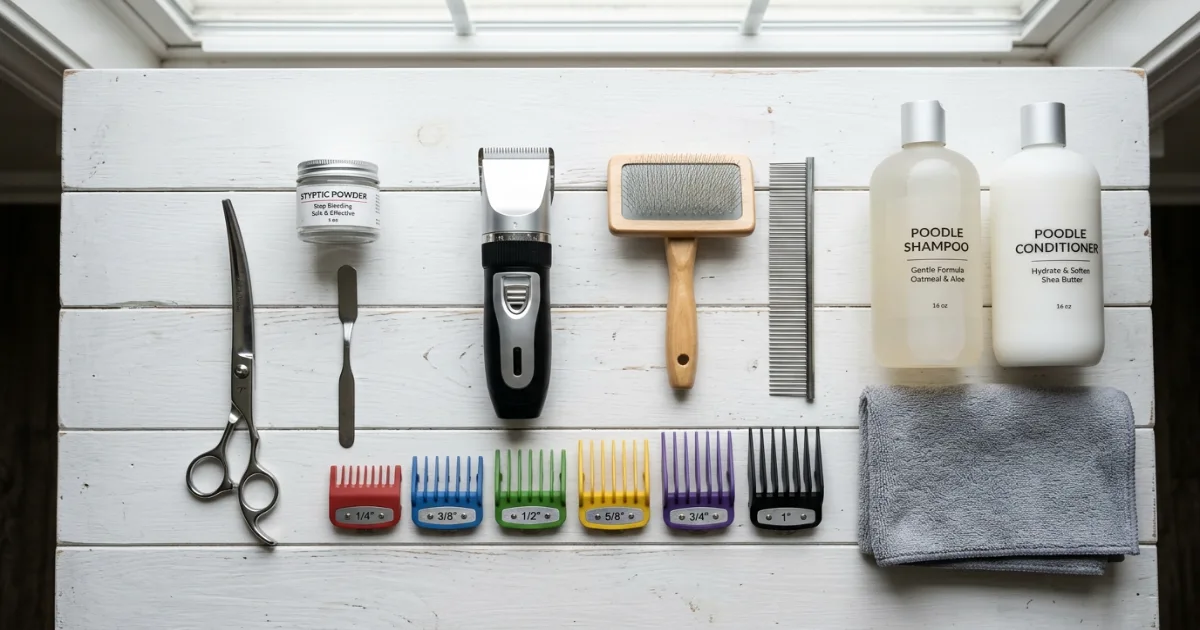
Half the battle of home grooming is having the right equipment. Cutting corners on tools leads to frustration, uneven cuts, and a stressed Poodle. This table separates the non-negotiables from the nice-to-haves.
| Tool | Purpose | Buying Tip |
|---|---|---|
| Slicker brush | Removes loose hair, prevents mats, pre-bath prep | Choose a soft-flex slicker with coated tips. Chris Christensen and Tuffer Than Tangles are favorites. |
| Metal comb | Detects hidden mats, fluffs coat, finishing work | A fine-tooth, long-pin comb. Must reach the skin. |
| Dog clippers | Body clipping and base trims | Invest in a reliable brand like Andis or Wahl. A #10 blade is essential for sanitary and face work. |
| Blades & guide combs | Different lengths for different body areas | Start with a #10, #7F, and a set of snap-on combs. Cool blades frequently. |
| Dog shampoo & conditioner | pH-balanced clean without stripping oils | Always dilute. Soap-free, Poodle-specific formulas work best. Conditioner is mandatory. |
| High-velocity dryer | Dries coat straight to prevent curl-tight matting | A stand dryer with heat control is ideal. Human hair dryers are too slow. |
| Grooming table & arm | Safe, ergonomic workspace | Foldable tables with a grooming loop save your back and keep your Poodle secure. |
| Styptic powder | Stops bleeding if you cut a nail too short | Keep it within arm’s reach. Never trim nails without it. |
Step 1: Pre-Grooming Brushing and Mat Check
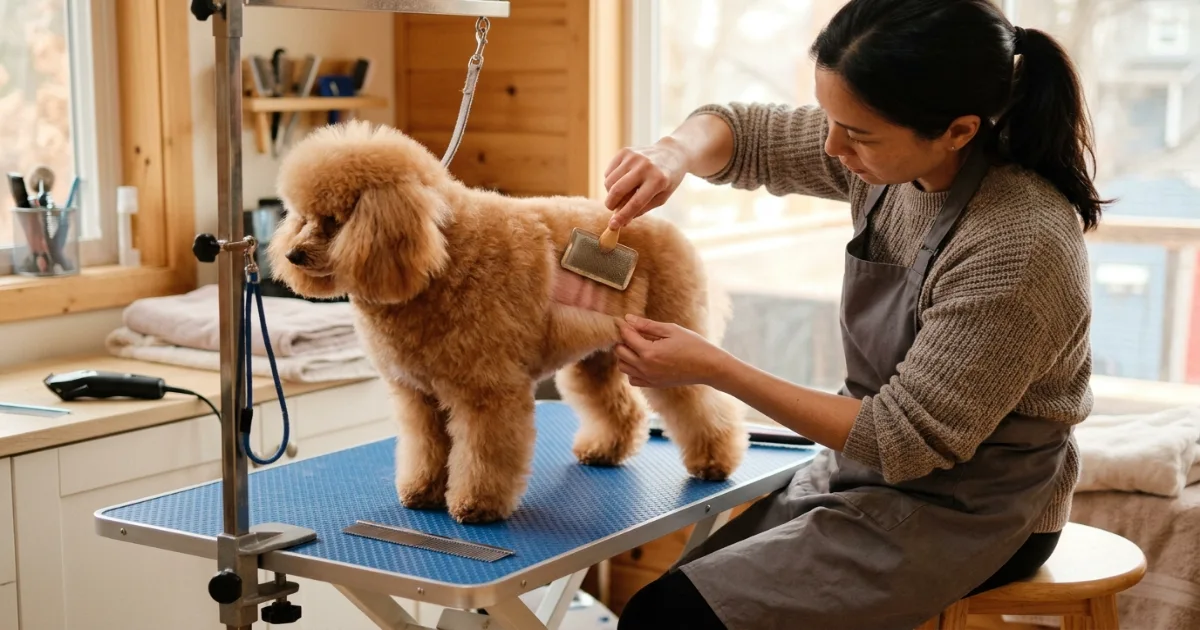
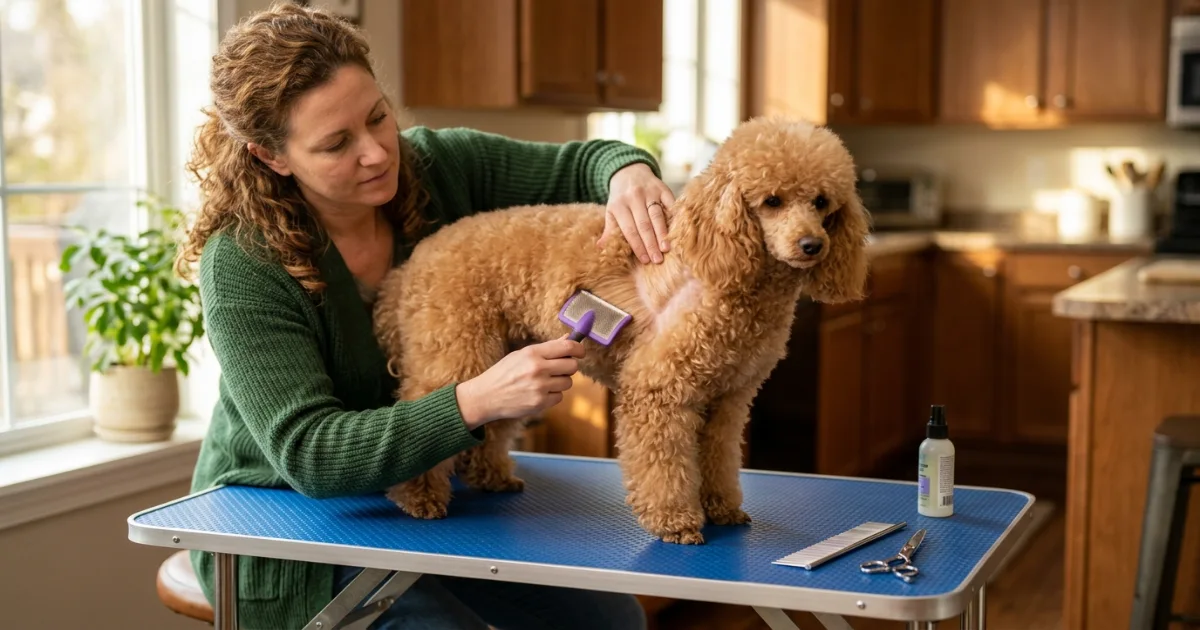
The most common home-grooming disaster starts with a matted coat. Water and clippers turn tangles into tight, painful knots that can only be cut out. Before anything else, set your Poodle on the grooming table, secure the loop gently, and work through the entire coat with a slicker brush followed by a metal comb. Use the line-brushing technique: part the hair in sections, brush from the skin outward, and listen for the comb hitting skin — not snagging.
If you find a mat, do not pull. Use a dematting spray or a small amount of cornstarch, and gently tease the mat apart with your fingers and a comb. If a mat is tight against the skin, it’s safer to learn proper mat removal techniques than to try brushing it out forcefully. This step alone can take 30–45 minutes on a Poodle with a longer coat. It’s the single biggest predictor of a smooth bath and a clean clip.
Step 2: Bathing the Poodle Correctly
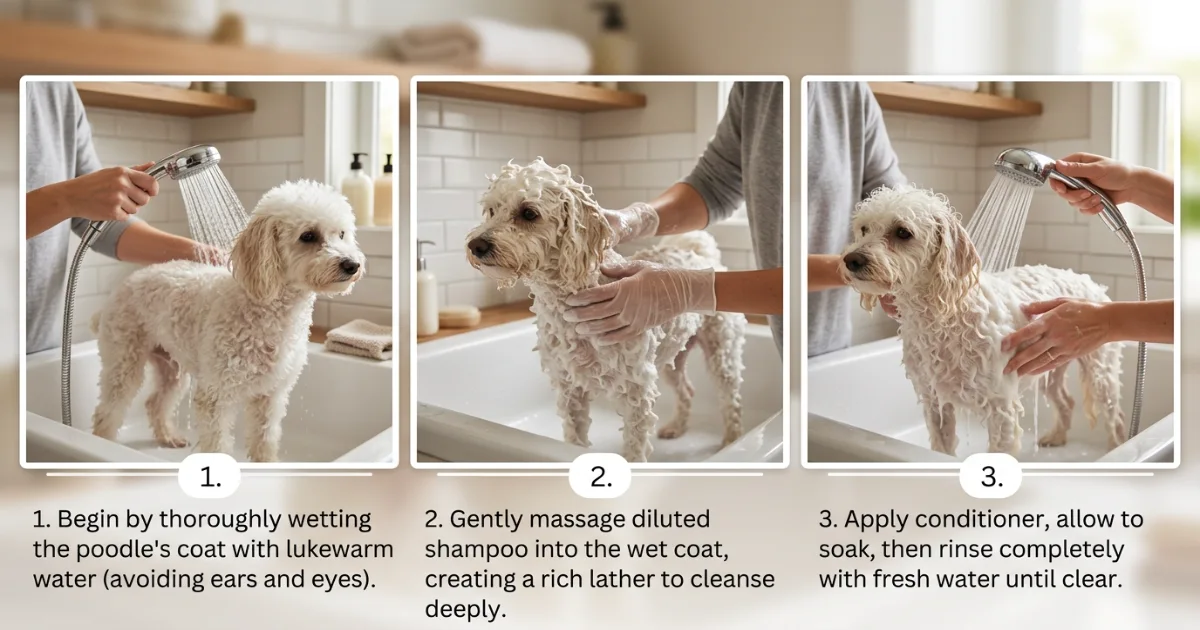
A clean coat cuts evenly. A dirty coat dulls blades, leaves track marks, and clogs clippers. Using lukewarm water and a handheld sprayer, wet your Poodle thoroughly — water must penetrate the dense curls to the skin. Apply diluted, soap-free dog shampoo and massage it down to the skin without scrubbing aggressively; gentle squeezing and kneading work better than circular rubbing, which can tangle hair. Rinse until the water runs absolutely clear. Then apply conditioner, leave it for 2–3 minutes, and rinse again. Any product left behind will make the coat sticky and attract dirt. For a deeper dive into bathing frequency and product selection, see our guide on how often you should bathe a Poodle.
Step 3: Drying Techniques That Prevent Matting
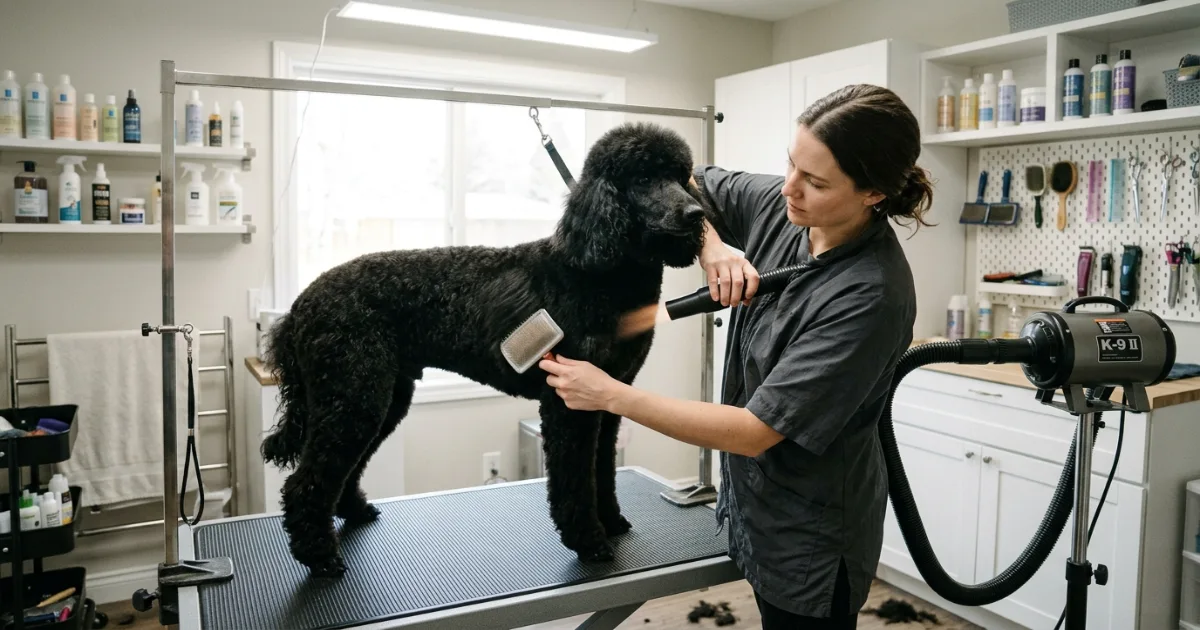
Air-drying a Poodle is the fastest way to create tight, dense mats that ruin your clipping efforts. Towel dry by pressing — never rubbing — with a microfiber towel. Then immediately move to a high-velocity dryer or a stand dryer on a warm (not hot) setting. Dry in sections, using a slicker brush to gently pull the hair straight as you dry. The goal is to stretch the curls into a smooth, straightened coat that clippers can glide through. A properly dried Poodle coat looks fluffy and feels cool to the touch. If the roots feel damp, keep drying. This step builds the canvas for everything that follows.
Step 4: Clipping and Trimming the Coat
Now comes the main event. With a clean, dry, brushed-out coat, attach the appropriate blade or snap-on guide comb for your desired length. For beginners, a #4F or #5F blade (or a ¼-inch to ½-inch guide comb) creates a manageable, even trim that leaves the coat soft and plush. Work from the back of the neck toward the tail in smooth, overlapping strokes. Move with the grain of the coat — not against it — to avoid clipper tracks. Keep the blade flat against the body, and let the clippers do the work; forcing them causes irritation. Check the blade temperature every few minutes by touching it to your wrist. If it’s too warm, switch blades or use cooling spray.
Poodles of different sizes require adjustments. A toy or miniature Poodle can be clipped on a grooming table with standard clippers. A Standard Poodle’s large frame demands patience and frequent blade changes. The leg hair is often scissored for a fuller, more natural look rather than closely clipped. Work in good light, and step back regularly to check for symmetry. Your first clips won’t be perfect — but they’ll be functional and comfortable, which is what matters most.
Step 5: Face, Feet, and Sanitary Trim
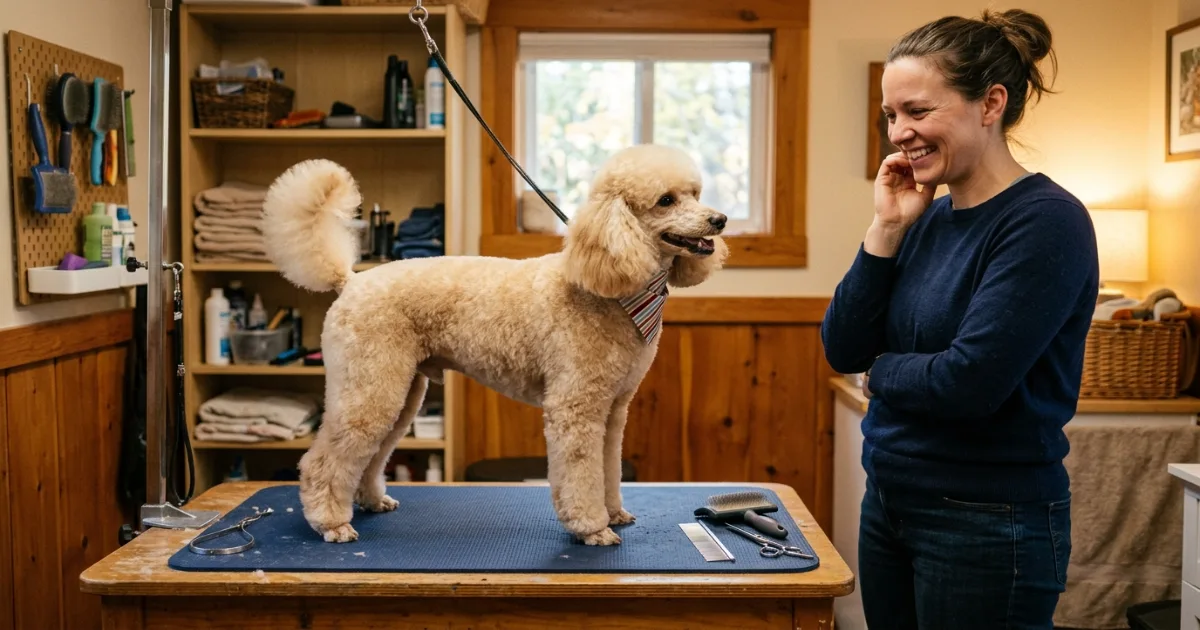
These three areas define the iconic Poodle look, but they’re also where most nicks happen. Use a #10 blade for all three — it’s short and safe when handled correctly.
Face: Gently hold the muzzle and clip from the ear down to the corner of the mouth, against the grain for a close smooth finish. Then clip from the outer eye to the ear, and carefully clean the bridge of the nose. Many owners work the throat area upward from the Adam’s apple to the jawline. Go slow. Your Poodle’s trust hinges on how you handle the face.
Feet: Spread the toes gently and clip between pads, then around the top of the foot. A #10 blade is ideal for that clean “poodle foot.” Scoop out the hair between the pads to prevent slipping and debris buildup.
Sanitary: Clip the groin and under-tail area with the #10 blade, moving outward from the center. Keep the skin taut but not stretched. Never rush this area — your Poodle will remember rough handling. The result should be clean and irritation-free.
Step 6: Nails, Ears, and Finishing Touches
After the coat is clipped, attend to nails and ears. Use a sharp guillotine or scissor-style nail trimmer, and trim just the hook of the nail — avoiding the quick, which is visible as a darker spot inside light-colored nails. If your Poodle has dark nails, trim conservatively, just the tip. Keep styptic powder right there. Trim dewclaws, too; they’re easily overlooked.
Ears need regular cleaning even outside of full grooming sessions. Use a veterinary-approved ear cleaner on a cotton ball — never push anything into the canal. Wipe the visible inner ear gently. If you notice redness, odor, or discharge, skip the home clean and consult your vet. Finally, do a last full-body comb-through to remove any clipped hair fragments. A spritz of light leave-in conditioning spray adds shine and a pleasant, clean scent. Stand back and admire your work — your Poodle is fresh, comfortable, and loved.
Common Mistakes First-Time Home Groomers Make
Skipping the Pre-Brush
Going straight to the bath with a matted coat is a mistake you’ll make only once. The water tightens mats against the skin, turning them into painful, unbrushable masses.
Using Human Products
Human shampoos disrupt the canine pH mantle. Always use a dog-specific, pH-balanced formula, and never skip the conditioner.
Clipping Over Damp Hair
Dampness causes hair to drag, leads to uneven clips, and puts extra strain on the clippers. The coat must be completely dry and straight before blades touch it.
Forcing the Clippers
Pressing too hard causes skin burns and clipper marks. Let the blade do the cutting. A light, steady hand produces a much smoother finish.
Neglecting Blade Cooling
A hot blade can burn skin in seconds. Change blades or spray with coolant every few minutes, especially on a thick-coated dog.
Scissoring Without Guard Combs
Freehand scissoring around ears, face, and tail can result in sharp, uneven lines. Until you’re comfortable, use clippers with guide combs for safety.
What Buyers and New Owners Often Misunderstand About Home Grooming
A surprisingly large number of first-time Poodle buyers assume the breed’s low shedding means low maintenance. The truth is the opposite. That non-shedding coat demands constant care, and many new owners feel blindsided by how quickly a Poodle matts if not brushed daily. They search for how to groom a poodle at home step by step thinking it will be a quick weekend project, only to discover the time, tools, and patience required. Setting realistic expectations upfront prevents frustration and keeps Poodles out of rescues.
Another common misunderstanding is that one set of clippers works for every coat length. Poodle hair is dense; cheap pet clippers overheat and jam within minutes. Investing in professional-grade tools from the start actually saves money and stress. New owners also frequently neglect the importance of the dry — skipping the dryer or using a human hair dryer prolongs the session and leads to poor results. A high-velocity dryer is the unsung hero of at-home grooming, and once you use one, you’ll understand why.
Finally, many buyers don’t realize that grooming is a training opportunity. A Poodle who learns to stand calmly on a table, accept handling, and trust your hands is a calmer, more confident dog in all areas of life. Home grooming isn’t just coat care; it’s relationship care.
Home Grooming vs Professional Grooming: When to DIY and When to Call a Pro
| Aspect | Home Grooming | Professional Grooming |
|---|---|---|
| Cost per session | $0 (after tool investment) + your time | $50–$200 depending on size and location |
| Convenience | Done on your schedule, no travel required | Drop-off/pick-up; may book weeks in advance |
| Skill level required | Moderate; improves with practice | High; experienced professionals |
| Result quality | Can be very good with repetition; often a softer, less sculpted look | Polished, show-quality finish achievable |
| Stress on dog | Lower for dogs who trust their owner; environment is familiar | Higher for anxious dogs; cage drying and loud dryers may be stressful |
| Best for | Maintenance trims, between-pro visits, budget-conscious owners, dogs with grooming anxiety | Complex clips, first puppy grooms, owners who lack physical ability, dogs needing medicated baths |
Many successful Poodle owners blend both approaches. They do every-other grooming session at home and rely on a professional for the intricate cuts or when life gets too busy. This hybrid model gives you the best of both worlds — consistent upkeep without burnout.
Practical Owner Insights: Time, Money, and Realistic Expectations
🐩 Pro Tip: The 15-Minute Maintenance Rule
Between full grooms, spend 15 minutes every other day line-brushing and spot-cleaning face and paws. This tiny habit prevents matting, reduces shedding of hair inside the coat, and keeps your Poodle looking freshly groomed for weeks longer. It also reinforces the calm grooming behavior you’ve worked so hard to build.
From a budget standpoint, a full set of quality home grooming tools runs between $180 and $350. If you’d otherwise pay $80 per groom twice a month, you’ll break even in about three months. The bigger cost is your time — but that time is also bonding time. Many owners describe their home grooming sessions as a form of moving meditation, a quiet moment with their dog that nothing else replaces. Enter it with curiosity, not pressure, and both you and your Poodle will be better for it.
Frequently Asked Questions
Can I really groom my Poodle at home without any training?
Yes, but start with modest goals. Follow a reliable guide, watch video tutorials, and begin with simple all-over clips rather than intricate styles. Many breeders trim their own dogs, and countless owners keep their Poodles comfortable and tidy with home grooming. Patience and the right tools are far more important than formal training.
How long does it take to groom a Poodle at home?
A first full groom on a Standard Poodle often takes 2.5–3.5 hours including drying. Miniatures and Toys take less time. After 4–6 sessions, many owners trim that down to 90–120 minutes. Never rush; a rushed groom is a stressed Poodle and a less even result.
What clippers do I need for a Poodle’s thick coat?
Professional-grade models like the Andis AGC2 or Wahl KM10 handle Poodle density without overheating. A corded, two-speed clipper with detachable blades offers the most versatility. Avoid budget pet clippers — they’ll stall in thick hair.
Should I bathe my Poodle before or after clipping?
Always bathe, condition, and fully dry before clipping. Clipping a dirty coat dulls blades, leaves visible track marks, and can cause skin irritation. The coat must be clean and fully dried to achieve an even, snag-free cut.
How do I trim my Poodle’s face and feet safely?
Use a #10 blade. Hold the muzzle gently and clip with smooth, confident strokes — hesitation makes the dog twitch. On feet, spread the toes to expose the webbing and clip between pads first, then around the top. Always reward and speak soothingly.
Why is my home-groomed Poodle’s coat not as smooth as a professional’s?
Professionals use high-end stand dryers and fluff-drying techniques that straighten the coat perfectly before clipping. With practice and a good dryer, your results will improve. Also, finishing with a cool air fluff and a light scissor blend over uneven areas creates a more polished look.
Do I need a grooming table?
Not absolutely necessary, but it dramatically improves safety and your back. A foldable grooming table with a non-slip surface and a grooming arm keeps your Poodle secure and at a comfortable working height. It’s one of the best investments for home grooming.
How often should I do a full home grooming session?
Every 3–4 weeks works well for most Poodles, with weekly face, feet, and sanitary touch-ups in between. Adjust based on coat length and lifestyle. Active outdoor dogs may need baths and trims more frequently; primarily indoor companions can stretch the interval.
Final Summary
Learning how to groom a poodle at home step by step is an investment that pays back in money, confidence, and a beautifully maintained coat. The rhythm is simple: brush thoroughly, bathe gently, dry completely, clip with care, and refine the details. Mistakes are part of the process — and they’re temporary. What’s permanent is the trust and calm you build each time you groom your Poodle yourself. Start slow, stay curious, and within a few months you’ll wonder why you ever hesitated.