Poodle Sebaceous Adenitis: Understanding This Complex Skin Condition
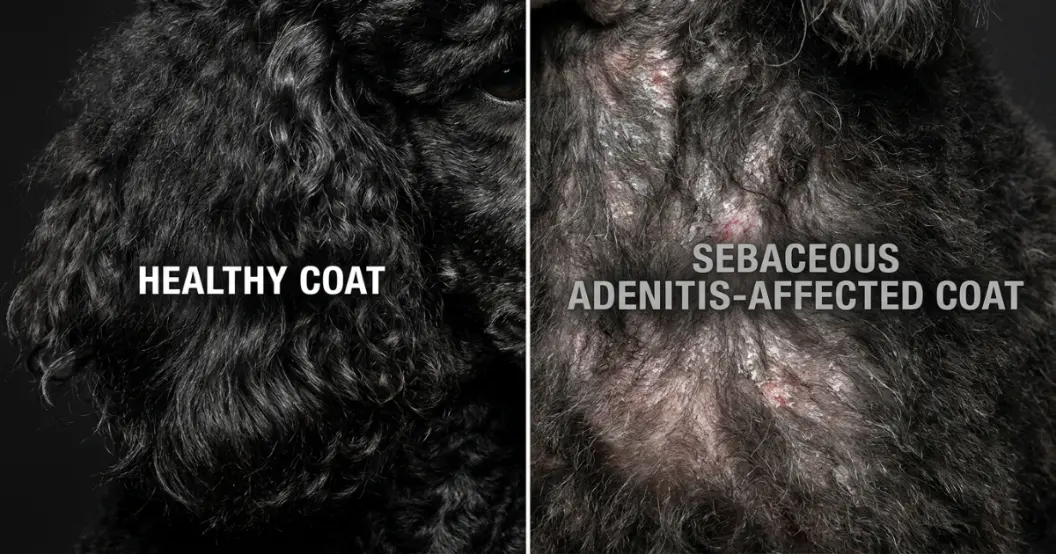
Poodle sebaceous adenitis (SA) is a hereditary autoimmune skin disease in which the immune system mistakenly attacks and destroys the sebaceous glands. These glands produce the oils that keep a poodle’s skin and coat healthy. Without them, dogs develop progressive hair loss, dry scaling, skin thickening, and a dull brittle coat. Standard Poodles are overrepresented, though the condition appears in Toys and Miniatures as well. There is no cure, but with early diagnosis and consistent management, many affected poodles live comfortable full lives.
If you have ever run your fingers through your poodle’s coat and noticed patchy thinning, silvery scaling, or a strange musty odor that no bath seems to fix, your mind probably jumped straight to allergies. That is what most owners assume. But for a meaningful subset of poodles, the real culprit is something fewer people talk about: sebaceous adenitis. It is not the most common skin condition in the breed, but it is one of the most misunderstood — and one that rewards early recognition more than almost any other.
Poodle sebaceous adenitis sits at an uncomfortable intersection of genetics, immunology, and day-to-day coat care. It can mimic mundane problems for months or years before anyone thinks to biopsy. And because it is invisible in young puppies and often subtle in its earliest stages, it slips past even conscientious breeders. This article unpacks everything current and prospective poodle owners need to know, from what SA actually does beneath the skin to what living with it looks like in a real home.
What Is Sebaceous Adenitis in Poodles?
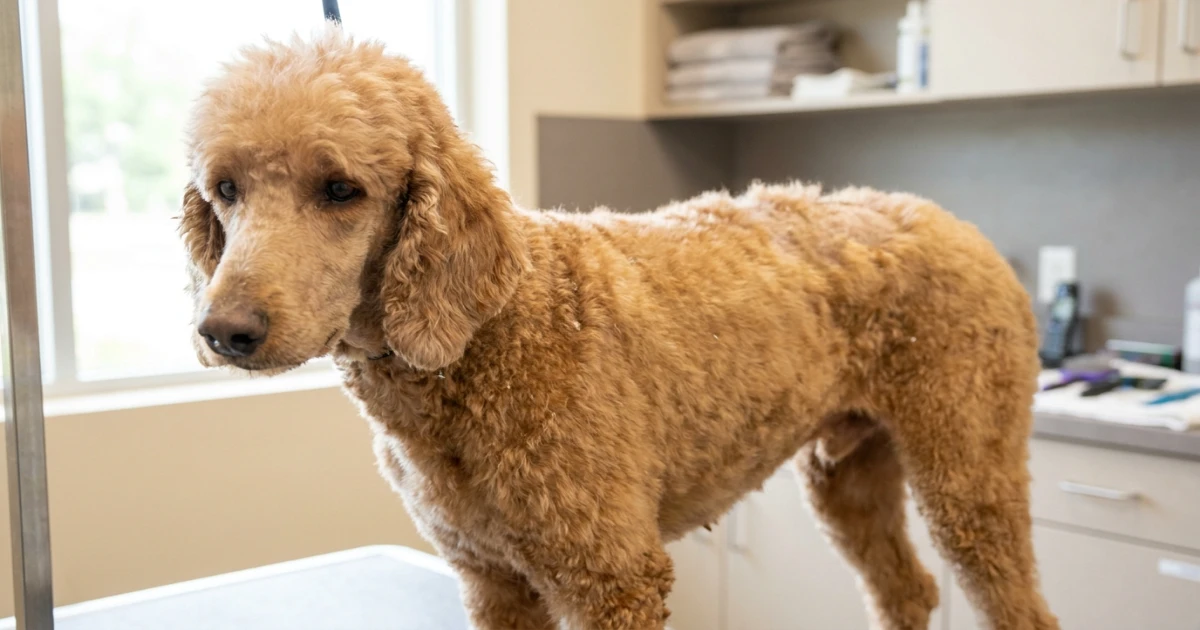
Sebaceous adenitis is an inflammatory condition that specifically targets the sebaceous glands — tiny microscopic structures nestled alongside each hair follicle. These glands produce sebum, the oily substance that waterproofs the skin, keeps the hair shaft flexible and glossy, and forms part of the skin’s immune barrier. In a dog with SA, the immune system mounts an inappropriate attack on these glands. Lymphocytes and other inflammatory cells infiltrate the glandular tissue, eventually destroying it completely.
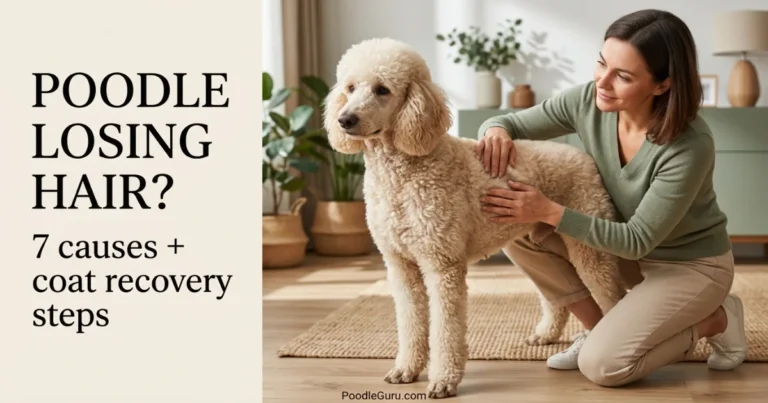
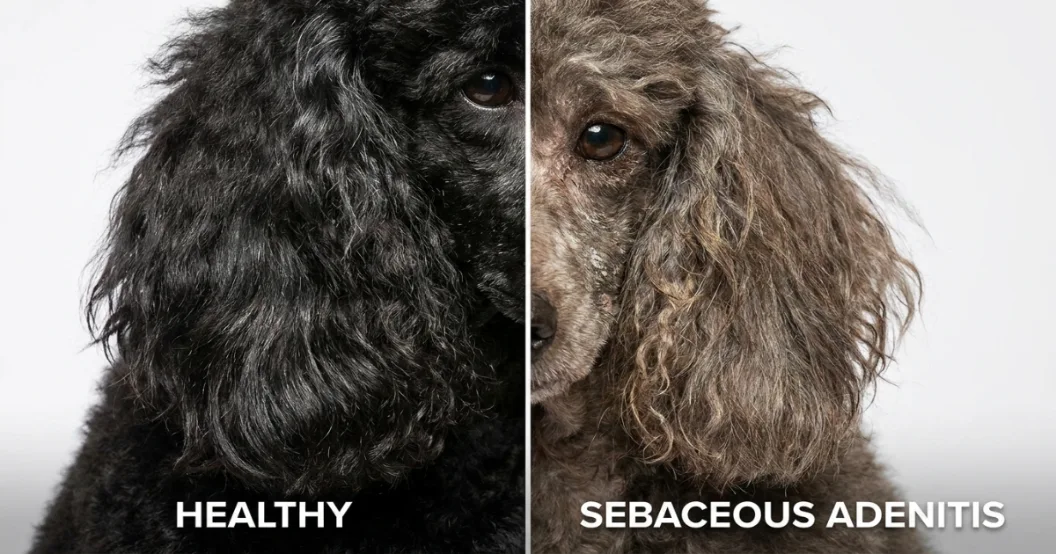
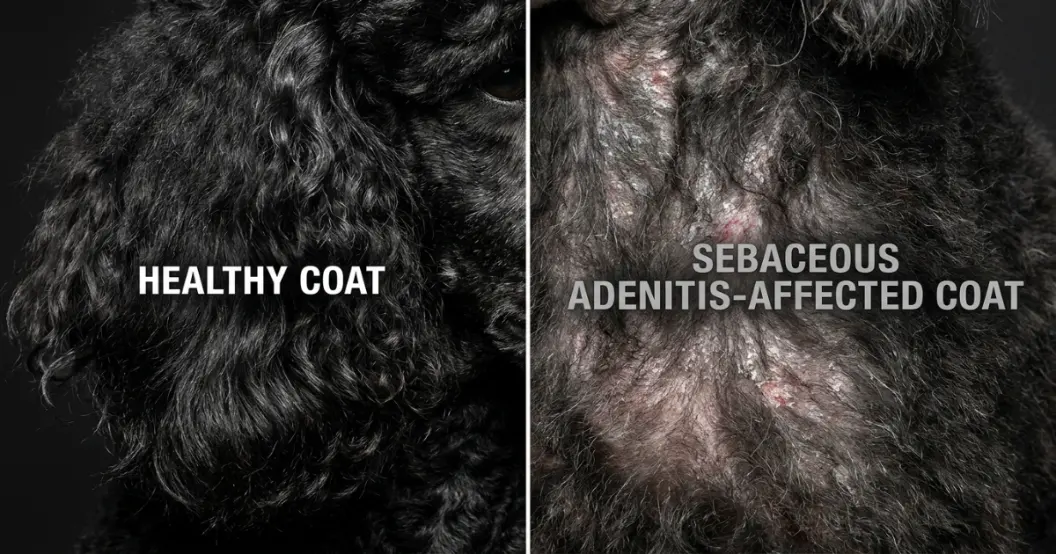
Once a sebaceous gland is gone, it does not regenerate. The affected hair follicle loses its lubricating support system. The hair becomes brittle, breaks easily, and eventually stops growing back. The skin, deprived of its natural oils, turns dry and flaky — sometimes dramatically so. Over months and years, what began as a small bald patch behind one ear can progress to widespread alopecia across the back, neck, flanks, and tail.
The condition was first described in veterinary literature in the late 1970s and has since been documented in several breeds, but poodles — particularly Standard Poodles — appear with disproportionate frequency. Estimates vary, but some studies suggest that up to 2–5% of Standard Poodles may be affected, with a strong familial pattern pointing squarely at genetics.
Why Poodle Owners Need to Take This Condition Seriously
On the surface, SA looks cosmetic. A bit of hair loss here, some dandruff there. But dismissing it as a vanity issue misses the bigger picture. The sebaceous glands are not decorative — they are functional immunological organs within the skin. Their loss compromises the skin barrier in ways that go beyond dryness. Affected dogs are more prone to secondary bacterial and yeast infections. The chronic low-grade inflammation can be uncomfortable, and in advanced cases, the skin thickens and develops a distinct odor that many owners describe as “mousey” or musty.
There is also a psychological dimension. Poodles are a breed defined by their coat. Owners who choose poodles often take deep pride in grooming, presentation, and the tactile pleasure of a well-maintained curly coat. Watching that coat deteriorate — and feeling powerless to stop it — carries an emotional weight that generic veterinary handouts rarely acknowledge. Understanding SA means understanding what you are up against, and that alone changes the experience from frightening to manageable.
Veterinary dermatologists consistently report that sebaceous adenitis is underdiagnosed in poodles, especially in the early hypotrichotic form. Many dogs are treated for “chronic allergies” for two or three years before a biopsy finally reveals SA. If your poodle has skin issues that do not respond convincingly to allergy management, push for a biopsy sooner rather than later.
The Genetics Behind Poodle Sebaceous Adenitis
SA is hereditary, but the inheritance pattern is not a simple one-gene, one-disease story. Researchers have identified genetic markers associated with increased risk, and a DNA test is commercially available. However, the test evaluates susceptibility — not destiny. A dog can carry risk alleles and never develop clinical disease. Another dog with a “clear” test result can still, in rare cases, develop SA through mechanisms the current test does not capture.
Research continues, and the genetic picture may sharpen in coming years. For now, the practical takeaway is this: SA can appear in well-bred lines and in dogs with no immediately affected relatives. It is not a mark of irresponsible breeding on its own, but transparency about it is.
Two Forms of SA: Hyperkeratotic vs. Hypotrichotic
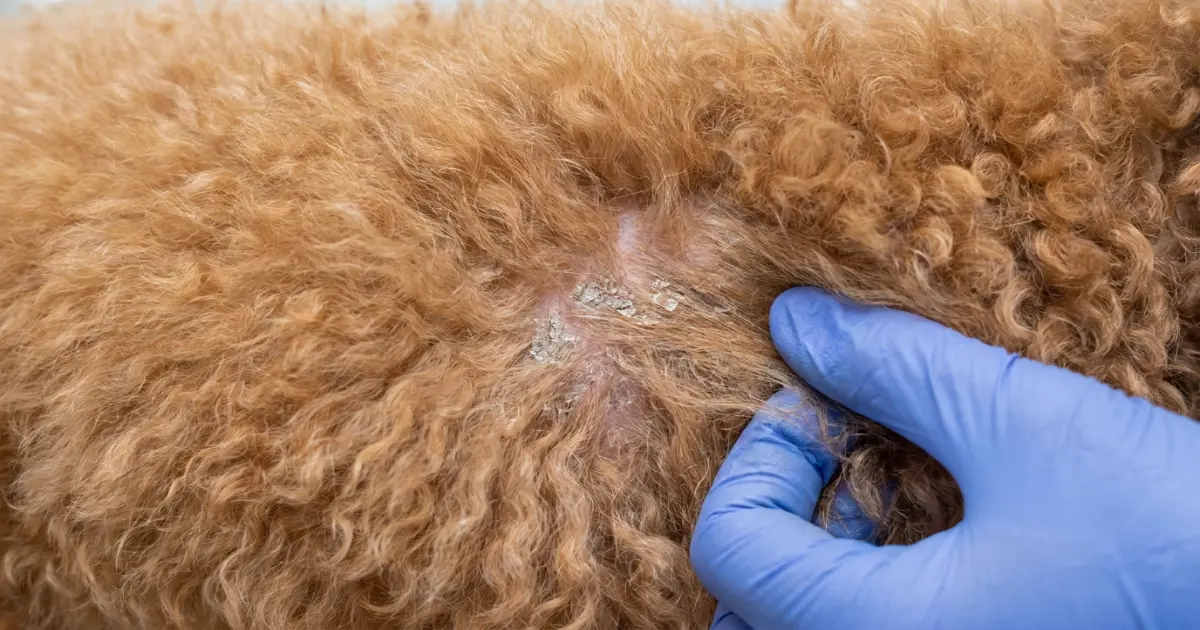
Sebaceous adenitis in poodles does not present the same way in every dog. Veterinary dermatologists generally describe two clinical forms, and understanding the difference helps owners recognize what they are seeing — and communicate more effectively with their vet.
| Feature | Hyperkeratotic Form | Hypotrichotic Form |
|---|---|---|
| Primary sign | Heavy scaling, crusting, thick adherent flakes | Progressive hair thinning and loss, minimal scaling |
| Skin appearance | Silver-gray scales; skin may feel rough or leathery | Skin looks bare but may remain relatively smooth early on |
| Odor | Often present — musty or “mousey” | Less common in early stages |
| Commonly confused with | Seborrhea, severe allergies, mange | Alopecia X, hypothyroidism, seasonal shedding |
| Progression pattern | Often symmetrical; back, neck, ears, tail | Patchy; may start behind ears or on flanks |
| Which poodles? | More commonly reported in Standards | Seen across all sizes |
Some dogs show features of both forms, and the presentation can shift over time. A dog that initially presents with subtle hair thinning may eventually develop scaling as the disease progresses. This variability is part of why SA is easy to miss — it does not read from a single script.
How Sebaceous Adenitis Differs From Other Poodle Skin Conditions
Poodles are prone to several skin issues, and SA shares symptoms with many of them. Misidentification is common, and the wrong diagnosis leads to months of ineffective treatment. Here is how SA stacks up against the conditions it is most often mistaken for.
SA vs. Allergic Dermatitis
Allergies typically cause intense itching, red skin, ear infections, and paw licking. SA, especially in its earlier stages, is often non-pruritic — meaning the dog is not especially itchy. The hair loss and scaling of SA can look like chronic allergy damage, but the absence of significant scratching is a major clue. If your poodle is losing coat but not constantly chewing its feet or rubbing its face, think beyond allergies.
SA vs. Hypothyroidism
Hypothyroidism causes symmetrical hair thinning, often on the trunk and tail (“rat tail”), and the skin may feel cool and thickened. It is diagnosed with a simple blood test. SA and hypothyroidism can coexist — one does not rule out the other — and both should be investigated when a poodle presents with unexplained coat loss. The key difference: thyroid-related hair loss usually resolves with hormone supplementation; SA hair loss does not.
SA vs. Seborrhea
Primary seborrhea is a keratinization disorder that produces greasy or dry scaling, often with a distinct rancid odor. It shares the scaling and odor features of hyperkeratotic SA, but the underlying mechanism is different. Seborrhea involves overproduction of skin cells and sebum; SA involves destruction of the glands that produce sebum. A biopsy distinguishes them definitively.
Signs and Symptoms Every Poodle Owner Should Know
Early recognition changes outcomes. The earlier SA is diagnosed, the more treatment options remain viable and the less permanent damage the skin sustains. Here are the signs worth watching for, in rough order of typical appearance:
- Patchy hair loss — often starting behind the ears, along the back, or on the flanks. The skin underneath may look normal at first.
- Dull, brittle coat texture — the coat loses its characteristic sheen and feels rough or straw-like to the touch.
- Silvery or white scaling — flakes that adhere to the hair shafts rather than dusting off easily. In hyperkeratotic cases, these scales can form dense sheets.
- Follicular casting — debris that clings to the base of hair shafts, visible when you part the coat.
- Skin darkening — over time, affected areas may become hyperpigmented, turning grayish or darker than surrounding skin.
- Subtle odor — a musty smell that is not resolved by bathing, caused by changes in the skin’s normal microbial balance.
How Is Poodle Sebaceous Adenitis Diagnosed?
A definitive diagnosis requires a skin biopsy — typically a 6mm punch biopsy taken from an affected but not yet completely bald area. The sample must be read by a veterinary pathologist familiar with SA, because the telltale signs (lymphocytic infiltration around and within sebaceous glands, glandular destruction, and eventual fibrosis) can be subtle in early cases.
Blood work, including thyroid panels, is often run concurrently to rule out metabolic causes of hair loss. A veterinarian may also perform skin scrapings and cytology to exclude mange, bacterial infections, and yeast overgrowth. The diagnostic process is one of elimination plus confirmation — you rule out the common mimics and then let the biopsy provide the answer.
Many prospective poodle buyers assume that a “health-tested” puppy cannot develop SA. This is a dangerous misunderstanding. Genetic testing for SA identifies risk alleles, not the disease itself. A puppy from tested parents has a lower probability of developing SA but is not guaranteed to be free of it. Conversely, some dogs with high-risk genotypes never become clinical. Buyers should understand that health testing reduces risk — it does not eliminate it — and that breeder transparency about any history of skin disease in the pedigree is as important as any lab report.
Treatment and Long-Term Management
There is no cure for sebaceous adenitis, but there is a well-established management toolkit. The goal of treatment is not to restore destroyed glands — that is not currently possible — but to control inflammation, support the skin barrier, and keep the dog comfortable and infection-free for life.
Topical Therapy: The Foundation
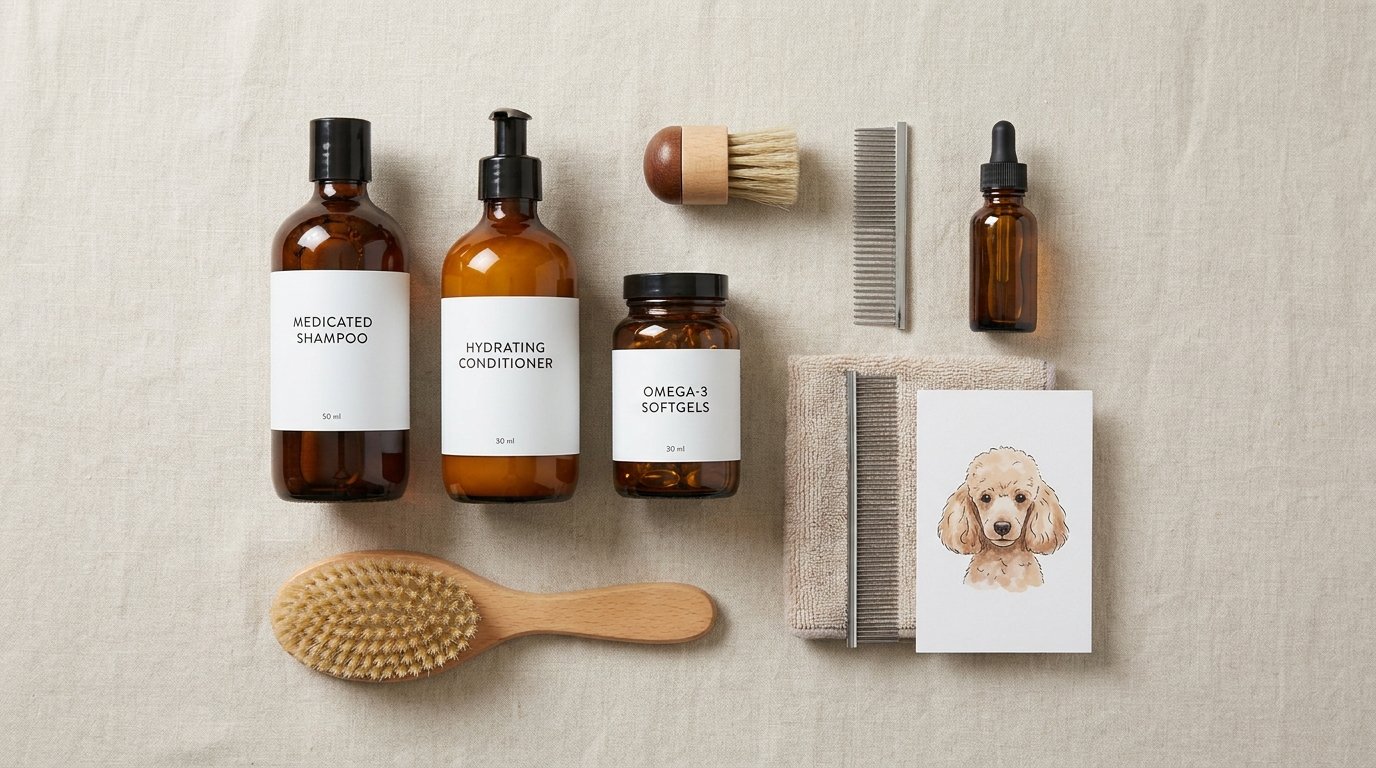
Regular bathing with keratolytic and moisturizing shampoos is the cornerstone of SA management. Ingredients like salicylic acid, sulfur, and benzoyl peroxide help break down scale and keep follicles open. Bathing frequency varies — some dogs need weekly baths during flare periods; others manage with biweekly or monthly bathing. After shampooing, a leave-in conditioning spray or oil rinse (often containing essential fatty acids) helps compensate for the missing sebum. This is hands-on, consistent work, and owners who embrace the routine generally see the best results.
Systemic Medications
For dogs with more active inflammation, veterinarians may prescribe oral cyclosporine (Atopica), which modulates the immune response and can slow or partially reverse the inflammatory attack on remaining glands. Oral essential fatty acid supplements — particularly those rich in omega-3s from fish oil — are a standard adjunct. In some cases, low-dose corticosteroids or vitamin A derivatives (retinoids) are used, though these come with their own risk profiles and require careful veterinary supervision.
What About Hair Regrowth?
Here is the honest truth: hair regrowth is unpredictable. If a follicle’s sebaceous gland has been completely destroyed and the follicle itself has atrophied, that hair is not coming back. But if treatment begins while some glandular function remains, partial regrowth is possible. Some dogs on cyclosporine regain significant coat. Others stabilize with topical care alone and keep enough hair to look essentially normal. Setting realistic expectations early prevents heartbreak later.
Living With a Poodle Diagnosed With SA: Practical Owner Insight
A diagnosis of sebaceous adenitis is not a tragedy, but it is a commitment. Owners who thrive with SA-affected poodles tend to share a few traits: they are consistent, they are observant, and they do not let perfect be the enemy of good. Your poodle may never have a show-quality coat again. It will still be the same dog — the same personality, the same loyalty, the same joy. The coat is just one part of the picture.
Practically speaking, SA management costs money. Medicated shampoos, conditioning sprays, fatty acid supplements, and — if prescribed — cyclosporine add up. A rough annual range for managing a moderately affected poodle is $600 to $2,500, depending on medication needs and bathing frequency. Pet insurance policies that cover chronic conditions can offset this significantly, but only if the policy is in place before diagnosis. SA is a pre-existing condition once documented.
Estimated Annual SA Management Costs (2026)
- Medicated shampoos & topicals: $200–$600
- Oral supplements (fish oil, vitamin E): $100–$300
- Cyclosporine (if prescribed): $600–$1,800+
- Veterinary monitoring & follow-up: $200–$500
- Total estimated range: $600–$2,500 per year
Pro Tips for Owners and Breeders
Owner Tips
- Start a photo journal the moment you notice unusual coat changes. Serial photos are invaluable for tracking progression and treatment response.
- Find a groomer who understands SA. Harsh brushing on dry, fragile skin can worsen irritation. Gentle handling and moisturizing products are non-negotiable.
- Do not skip baths. The instinct to bathe less when the coat looks dry is understandable, but SA-affected skin benefits from regular cleansing and moisturizing — not avoidance.
- Advocate for a biopsy early. If your vet has been treating “allergies” for a year with no real improvement, it is time to ask the question directly.
Breeder Tips
- Genetic testing is a floor, not a ceiling. Pair test results with pedigree knowledge and clinical history.
- Be honest with puppy buyers about what SA testing can and cannot tell them. Trust built at the point of sale lasts for the life of the dog.
- Consider biopsying any breeding dog with unexplained coat issues, even if the genetic test is clear. Clinical disease trumps genotype every time.
Frequently Asked Questions
Is Poodle sebaceous adenitis painful for the dog?
SA is not typically acutely painful, but the chronic skin inflammation can cause discomfort, tightness, and secondary infections that are uncomfortable. Most dogs with well-managed SA are not in significant pain, but neglected cases can become quite uncomfortable due to skin cracking and infection. The condition is more accurately described as a chronic nuisance than a source of sharp pain.
Can sebaceous adenitis in poodles be cured completely?
No. Once sebaceous glands are destroyed by the immune system, they do not regenerate with current therapies. Treatment focuses on managing inflammation, supporting remaining gland function, and maintaining skin health. Some dogs respond well enough to treatment that their coat appearance improves dramatically, but the underlying condition remains for life.
At what age does Poodle sebaceous adenitis typically appear?
Most cases are diagnosed between 1 and 5 years of age, though SA can appear later — sometimes in dogs aged 7 or 8. It is almost never present in young puppies under 6 months because the immune-mediated destruction takes time to produce visible effects. A poodle puppy with a normal coat at 10 weeks tells you nothing about its SA status.
Does a clear genetic test mean my poodle will never get SA?
Not quite. The commercially available genetic test evaluates known risk alleles, but it does not capture every possible genetic contributor to SA. A “clear” result means the dog has a significantly lower probability of developing the disease, but rare cases of SA in genetically clear dogs have been documented. The test is a valuable tool, not an absolute guarantee.
Can I breed a poodle that carries SA risk alleles?
This is a nuanced decision that responsible breeders approach carefully. Many breed advisors suggest that carriers can be bred to clear-tested mates to preserve genetic diversity while reducing the probability of producing affected offspring. The key is full disclosure to puppy buyers and a long-term commitment to selecting away from high-risk pairings. Breeding two carriers together is strongly discouraged.
Is sebaceous adenitis contagious to other dogs or humans?
No. SA is an autoimmune condition, not an infectious disease. It cannot be transmitted to other dogs, cats, or people. The scaling and odor might make an affected dog’s skin look unhealthy, but there is zero risk of contagion. This is worth emphasizing because some owners report being asked — awkwardly — whether their dog’s skin condition is catching.
Does diet affect sebaceous adenitis in poodles?
Diet is not a primary treatment for SA, but high-quality nutrition — particularly diets rich in omega-3 fatty acids — supports overall skin health and may reduce inflammation. Some owners report improvements when switching to fresh or raw diets, but the evidence is anecdotal. Dietary changes should complement, not replace, veterinary-directed treatment.
Summary: What Poodle Owners Need to Remember
Poodle sebaceous adenitis is a hereditary autoimmune condition that destroys the skin’s oil-producing glands, leading to hair loss, scaling, and coat deterioration. It cannot be cured, but it can be managed — often successfully — through consistent topical care, immune-modulating medications when appropriate, and a committed long-term routine. Early diagnosis via skin biopsy is the single most important factor in preserving coat and skin health. Genetic testing helps breeders make informed decisions but does not guarantee a puppy will never develop SA. For owners already navigating a diagnosis, the path forward involves realistic expectations, a good relationship with a knowledgeable veterinarian, and the understanding that a poodle’s worth has nothing to do with the perfection of its coat.
If you are researching SA because you are considering a poodle puppy, let this knowledge empower you — not scare you away. Ask breeders the right questions. Understand what testing can and cannot do. And know that even if SA appears in your dog’s life, you are equipped to handle it with clarity and confidence.