Poodle Paw Care Guide: Cracked Paws, Balm & Protection
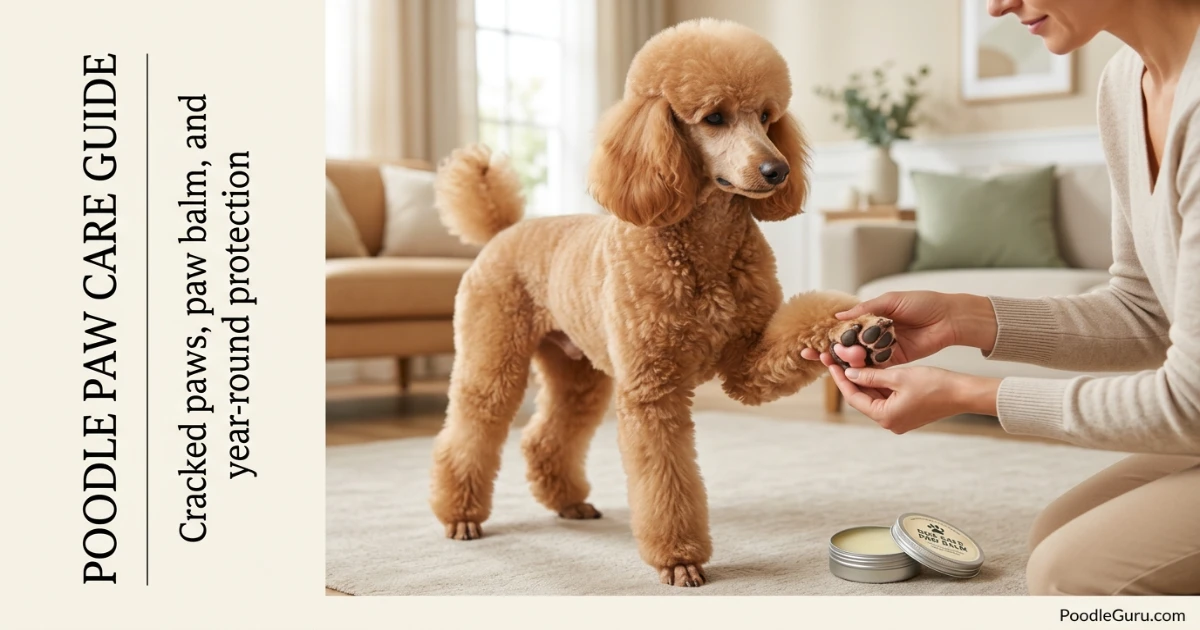
A poodle’s paws are marvels of athletic engineering: elastic pads that absorb shock, furry toes that protect against debris, and sensitive skin that tells your dog what is underfoot before her eyes register it. Yet most poodle owners do not think about paw care until they notice a crack, a limp, or constant licking after a walk. This poodle paw care guide goes far beyond “apply balm when dry.” It explains why cracks appear, how to choose and use paw balm safely, and which seasonal, grooming, and nutrition habits keep poodle paws comfortable all year.
Consistent poodle paw care means checking pads daily, keeping hair between the toes trimmed, using a dog-safe paw balm before cracks form, protecting paws from hot pavement and winter chemicals, and taking licking or limping seriously. Mild dryness can often improve with gentle cleaning, thorough drying, and a thin layer of balm. Deep, bleeding, swollen, smelly, or painful cracks need a veterinarian because they may involve infection, burns, or a lodged foreign body.
Why Poodle Paw Care Deserves a Permanent Spot in Your Routine
Poodles are active, intelligent dogs who often keep moving even when something hurts. By the time you see your poodle licking a paw obsessively or favoring one leg, irritation may already have been building for days. The breed’s paw pads are naturally tough, but they are not indestructible. Toy and Miniature Poodles may have softer pads from mostly indoor living, while Standard Poodles may put more pressure on their feet during long walks, hikes, and play.
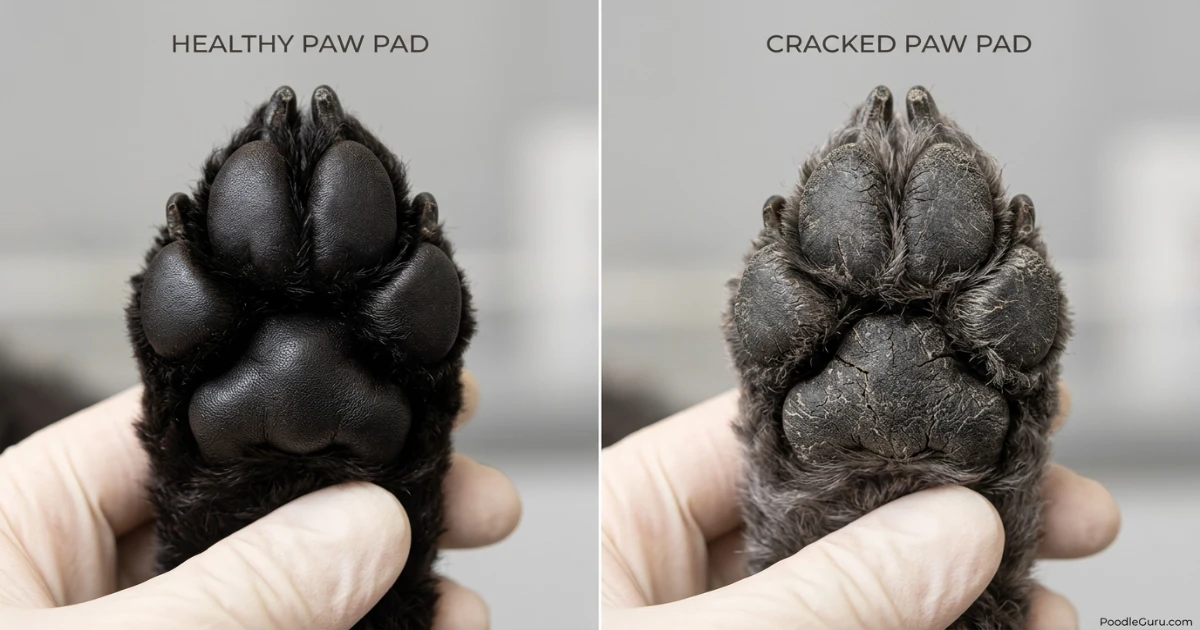
A cracked paw pad is not just a cosmetic problem. Small surface dryness is common, but a deeper split can become painful, collect dirt, and create a path for bacteria or yeast. Good poodle paw care is preventive medicine: trim the hair, keep paws clean and dry, use the right balm, and adjust protection when the weather or walking surface changes.
This guide is educational and does not replace veterinary care. If your poodle is limping, bleeding, chewing one paw constantly, has swelling, discharge, bad odor, or a wound that keeps reopening, book a vet check instead of treating it as normal dryness.
The Anatomy of a Crack: What’s Really Happening to Your Poodle’s Paws
Paw pads are made of thick, pigmented skin over a fatty, shock-absorbing layer. They help with traction, balance, and impact protection. When moisture and natural oils are disrupted by dry indoor air, hot pavement, rough ground, over-bathing, winter salt, or repeated licking, the outer pad layer loses flexibility and begins to split. In poodles, long hair between the toes can make the problem worse by trapping moisture, grit, plant material, and yeast-friendly warmth against the skin.
The most common causes behind cracked poodle paws include:
- Winter salt and chemical de-icers: These can irritate or burn pads and encourage licking after walks.
- Hot pavement: Asphalt, concrete, and artificial turf can become much hotter than the air. If the surface has not cooled, paws can burn quickly.
- Allergies: Environmental or food sensitivities can trigger paw chewing, which damages the skin barrier.
- Wet, matted paw hair: Moisture trapped between toes encourages odor, yeast, and irritation.
- Overgrown nails: Long nails change weight distribution and can increase uneven pressure on pads.
- Nutrition gaps or skin disease: Ongoing dry skin, brittle coat, or recurring cracks should be discussed with a veterinarian.
- Foreign objects: Foxtails, grass awns, glass, thorns, and tiny stones can lodge in the webbing and cause sudden licking or limping.
If your poodle’s paw cracks come with redness, swelling, heat, a foul odor, oozing discharge, repeated bleeding, or clear pain, do not just apply balm and hope for the best. Those signs may point to infection, burns, a torn pad, allergy flare, or a foreign body hidden between the toes.
The Balm Guide: How to Choose and Apply Paw Balm the Right Way
Not every product marketed for “dry paws” is ideal for poodles. The best paw balms soften the pad, support the skin barrier, and create light protection without strong fragrance, alcohol, essential oil overload, or messy residue. Choose products labeled safe for dogs, because anything you apply to the paws may be licked.
| Ingredient | Best For | What It Does | Watch Out For |
|---|---|---|---|
| Shea Butter | Dry pads needing deeper moisture | Softens rough skin and improves flexibility | Can feel greasy if over-applied |
| Beeswax | Winter walks, rough ground, and barrier protection | Creates a breathable layer that helps seal in moisture | Works best when combined with moisturizing oils or butters |
| Coconut Oil | Mild dryness and maintenance use | Adds light moisture | Many dogs lick it off quickly; too much can upset the stomach |
| Vitamin E Oil | Minor roughness and skin support | Often used as a soothing additive in dog balms | Better as part of a formula, not the only active ingredient |
| Dog-Safe Aloe Product | Mild heat irritation in products formulated for dogs | Can feel cooling and hydrating when properly formulated | Avoid fresh aloe plant or human aloe gels your dog may lick; aloe ingestion can upset dogs |
How to Apply Paw Balm Like a Pro
First, clean the paw with lukewarm water or a dog-safe paw wipe, then pat it completely dry, including between the toes. Take a pea-sized amount of balm and warm it between your fingers. Massage it into the pads, especially the pad edges where dryness often starts. Use only enough to leave a thin, even layer; a greasy paw can collect dirt and make your poodle slip on smooth floors.
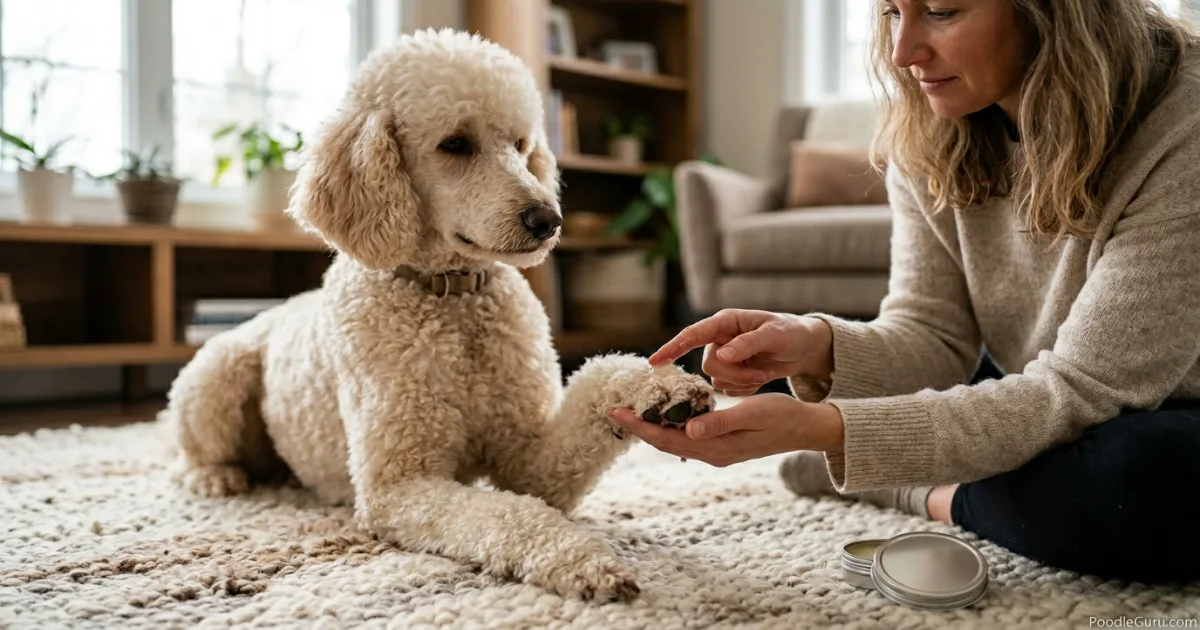
For nighttime maintenance, apply balm after the final walk so it has time to absorb. If you use a clean cotton sock to reduce licking, keep it loose, remove it once the balm has absorbed, and never wrap tape tightly around the foot or leg. Check the toes for swelling, coolness, or discomfort. If your poodle hates the sock, skip it and use distraction instead: a chew toy, puzzle feeder, or short calm training session.
Balm vs. Booties vs. Wax: What to Use and When
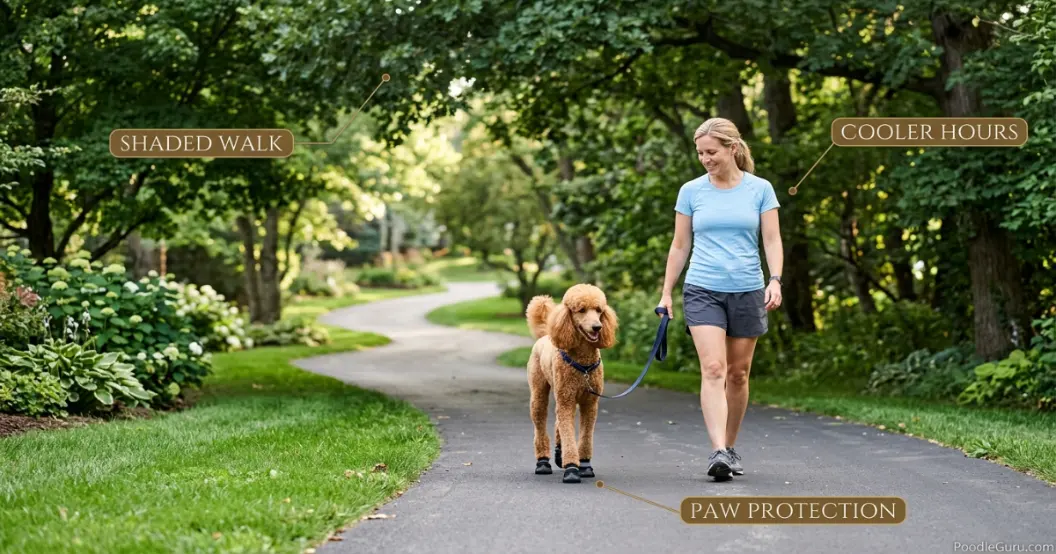
There is no single best paw protection for every poodle. The right choice depends on the weather, walking surface, and your dog’s tolerance. Balm is excellent for maintenance and mild dryness. Paw wax adds a temporary barrier for short walks on rough or salty surfaces. Booties are better for harsh winter salt, icy sidewalks, very hot ground, hiking trails, and any situation where direct pad contact is unsafe.
Most poodles need practice before they accept booties. Start indoors for one minute, reward calmly, and increase time slowly. Look for lightweight booties with secure closures and enough flexibility for natural movement. They should stay on without squeezing the paw. After any protected walk, remove the booties, check the pads, and dry between the toes.
Grooming the Poodley Paws: The Hidden Layer of Paw Care
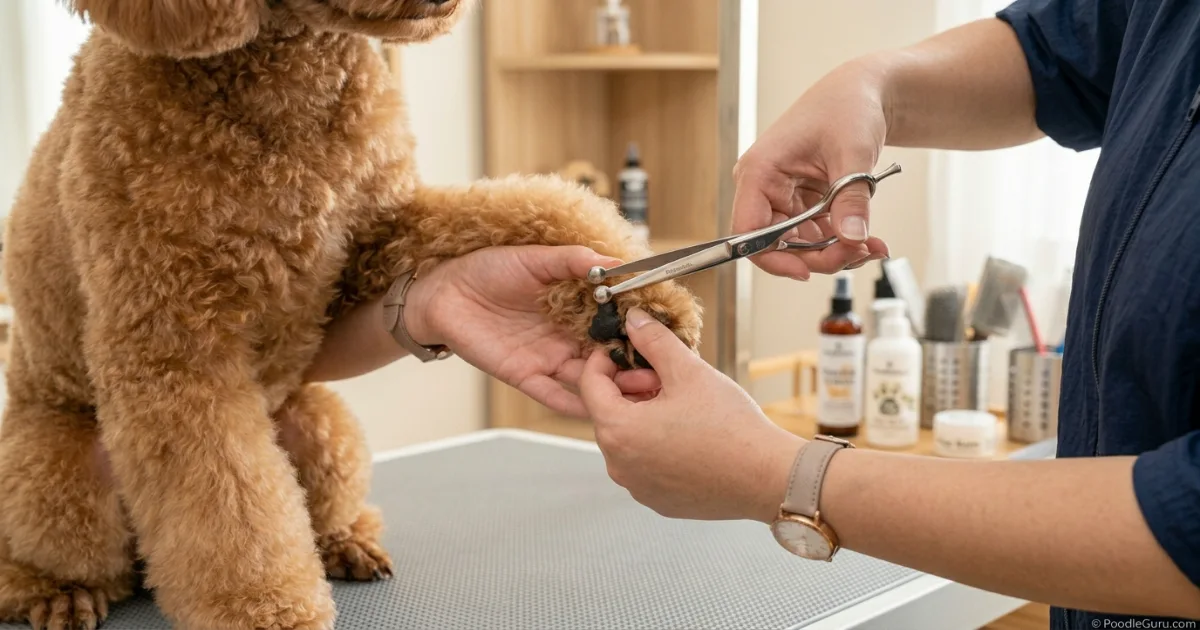
This is where poodle-specific knowledge matters. That curly coat does not stop at the ankle. Poodles grow hair between their toes and under the pads, and when that hair gets long, it can trap moisture, collect burrs, hide ticks, reduce traction, and encourage yeast odor. A clean, trimmed paw is a healthier paw.
During your weekly grooming session, lift each paw and check the webbing, nail beds, and pad edges. Use a small cordless trimmer or blunt-tipped shears to remove hair that protrudes between the toes or tufts out under the pads. The goal is a neat, practical paw where the pads make proper contact with the ground. Combine this with nail care because overgrown nails alter gait and can create uneven pad wear over time.
Seasonal Shifts That Wreck Poodle Paws
Winter Paw Care
Salt, ice melt, and frozen ground are the big winter enemies. Rinse paws with lukewarm water after walks, dry thoroughly, and use a beeswax-based dog balm or booties before exposure. Never let salt residue sit between the toes. If your poodle licks paws after winter walks, rinsing matters even more because some de-icing products can upset the stomach.
Summer Paw Care
Pavement can become much hotter than the air temperature. A practical rule is to place the back of your hand on the surface for about seven seconds; if it is too hot for your hand, it is too hot for your poodle’s paws. In warm climates or during heat waves, walk early in the morning or after sunset, choose grass or shaded paths, carry water, and avoid long stops on asphalt. Use dog-safe balm for moisture, but do not rely on balm alone to prevent burns.
Wet Spring and Fall Paw Care
Constant dampness softens pads and can make the skin between toes more vulnerable to irritation. Dry paws carefully after wet walks, keep toe hair trimmed, and speak with your vet if you notice recurring yeast odor, redness, or brown staining from licking. Dogs prone to yeast may need a vet-recommended cleanser rather than random powders or home remedies.
What New Owners Commonly Get Wrong About Poodle Paw Care
Many first-time poodle owners assume that because poodles are often indoor companions, their paws do not need much attention. That is false. Toy Poodles may develop dry pads from indoor heating and low humidity. Standard Poodles may crack pads after long walks on hard surfaces. Miniature Poodles may get matting between the toes that hides irritation until the dog starts licking.
Another common mistake is treating paw licking as a “poodle habit.” Occasional licking after a walk can be normal cleaning, but persistent paw chewing usually means something is wrong: allergies, yeast, pain, a small cut, a grass awn, or anxiety. Bitter sprays may stop the behavior temporarily, but they do not fix the cause. Owners also reach for human hand cream or strongly scented products, which can irritate skin or upset the stomach if licked. Keep the routine dog-safe and simple.
Pro Tips for a Rock-Solid Poodle Paw Care Routine
- Keep a paw station by the door: Use a towel, lukewarm water, paw wipes, and a small tin of balm for easy post-walk care.
- Teach “give paw” early: Pair the cue with treats so paw handling becomes normal, not stressful.
- Use omega-3s only with vet guidance: Fish oil may support skin health, but dosing should match your poodle’s size and medical history.
- Rotate protection seasonally: Heavier barrier balm or booties in winter; cooler walking times and shaded surfaces in summer.
- Check between toes after off-leash play: Foxtails, thorns, burrs, and ticks can hide in curly paw hair.
- Do not ignore one-paw licking: A single paw that gets constant attention deserves a closer inspection.
Practical Owner Insight: A Realistic Weekly Routine
A good routine does not need to be complicated. In the morning, do a quick visual check as your poodle stretches or comes in from the yard. After walks, wipe or rinse paws when surfaces were dirty, salty, hot, or wet, then dry between the toes. Two or three nights per week, apply a small amount of dog-safe balm. Once a week, inspect nails, toe webbing, pad edges, and paw hair. Every three to four weeks, trim paw hair and nails or book a groomer.
This five-minute habit prevents most minor problems from becoming painful ones. It also helps you notice what is normal for your individual poodle: the usual pad texture, nail length, smell, gait, and tolerance for paw handling. Once you know normal, you can spot early changes quickly.
Frequently Asked Questions About Poodle Paw Care
How can I tell if my poodle’s paw pad is cracked or just dry?
Dry pads look flaky or rough but the skin stays intact. A cracked pad has visible splits that may expose pink or red tissue. If the crack bleeds, smells bad, swells, or makes your poodle limp, treat it as more than simple dryness and call your vet.
Can I use coconut oil as paw balm for my poodle?
Coconut oil can provide light moisture in small amounts, but many dogs lick it off quickly and it is not enough for deep cracks. For regular care, a dog-safe balm with moisturizing and barrier ingredients is usually more practical.
How often should I trim the hair between my poodle’s toes?
Every three to four weeks works for most poodles. Fast-growing coats, matting, wet climates, or slippery floors may require more frequent trimming. Keep the hair flush with the pads so the paw can dry properly and grip the floor.
What should I do if my poodle licks off the paw balm right after I apply it?
Use a chew toy, puzzle feeder, or calm training session to distract your poodle for a few minutes. If you use a cotton sock, keep it loose, never tape tightly, remove it after absorption, and check that the toes are warm and not swollen.
Are poodle puppies’ paws more sensitive than adult poodle paws?
Yes. Puppy pads are softer while they gradually adapt to normal walking surfaces. Avoid hot pavement, harsh chemicals, long walks on rough ground, and overuse during early puppy months.
Can paw balm completely heal a deep, bleeding crack?
No. Balm is for prevention and mild dryness. A deep or bleeding crack may need proper cleaning, pain control, bandaging, protection from licking, and sometimes medication if infection is present. A veterinarian should assess open wounds.
Is it normal for my poodle’s paws to smell like corn chips?
A faint corn-chip smell can happen from normal skin microbes. A strong sour, yeasty, or foul odor—especially with redness, damp hair, licking, or brown staining—can signal yeast or bacterial overgrowth and should be checked if it persists.
Do poodles need different paw care in different climates?
Yes. Dry, cold climates need richer barrier protection and often booties. Hot climates need heat avoidance and cool walking surfaces. Humid climates need careful drying and mat prevention. Adjust the routine to what your poodle actually walks through.
Soft Paws, Happy Poodle, Worry-Free Walks
Poodle paw care is never just about a quick smear of balm. It is about noticing dryness before it turns into painful cracks, keeping the hair between the toes clipped short, and protecting the pads from the surfaces your poodle actually walks on. A dog-safe balm, sensible booties for extreme weather, clean grooming habits, and quick daily inspections can prevent most paw problems before they interrupt your dog’s comfort.
When your poodle gives you her paw calmly, walks without hesitation, and no longer spends evenings chewing sore toes, you will know the routine is working. Keep it simple, stay consistent, and call your vet when signs point beyond normal dryness.