Poodle Anal Gland Expression: 7 Critical Safety Tips
This article is for educational purposes only and is not a substitute for professional veterinary advice. Improper anal gland expression can cause pain, bruising, duct irritation, rupture, infection, or worse discomfort. Ask your veterinarian to examine your poodle and demonstrate the external method before you attempt anything at home. If you see blood, pus, swelling, heat, open wounds, severe pain, fever, lethargy, or persistent discomfort, do not express the glands. Seek veterinary care promptly.
This guide is aligned with veterinary information from VCA Hospitals, the MSD Veterinary Manual, and the AKC veterinary advice library. These sources describe common signs such as scooting, licking, fishy odor, painful sitting or defecation, swelling, infection, abscess risk, and when a veterinarian should examine the dog.
Poodle anal gland expression should be done only when there are clear signs of discomfort, such as scooting, persistent licking, a sudden fishy smell, or trouble sitting—not simply on a fixed grooming schedule. Owners should only consider the gentle external method after a vet demonstration. Internal expression, painful swelling, blood, pus, abscesses, or repeated problems belong with a veterinarian.
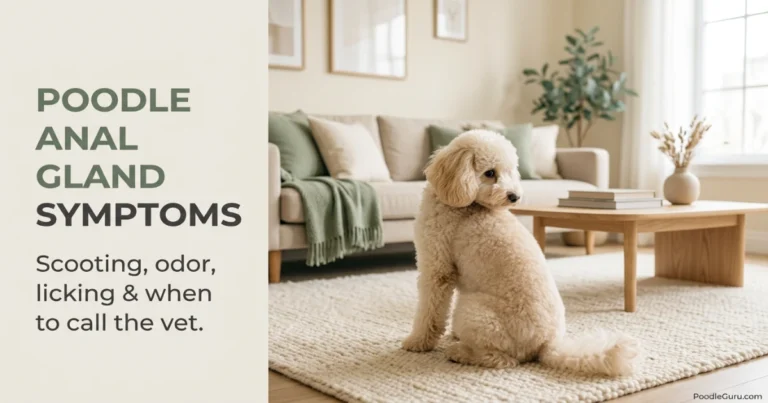
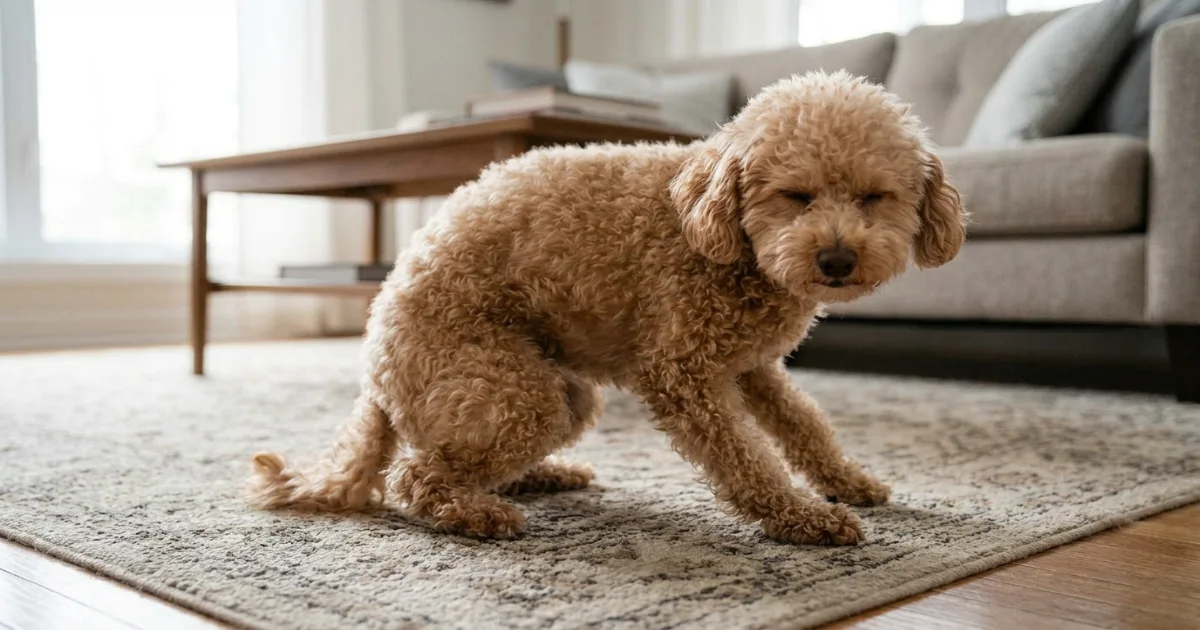
If you have caught your poodle dragging their bottom across the rug or suddenly twisting to lick near the base of the tail, you have met the anal gland problem every dog owner wishes they could avoid. The topic sounds awkward, but the bigger issue is comfort and safety. Poodles of every size—Toy, Miniature, Moyen, and Standard—have two small anal sacs that can fill, thicken, become impacted, or become infected when they do not empty normally.
The goal is not to turn owners into veterinary technicians. The goal is to know when mild fullness may need a gentle external check, when stool quality and diet may help, and when the situation has crossed into medical territory. The safest owner is not the one who squeezes the hardest; it is the one who knows when to stop and call the vet.
Healthy poodles with firm stools often empty anal sacs naturally. Unneeded squeezing can irritate the ducts.
Scooting, licking, fishy odor, sitting discomfort, or sudden rear-end attention deserves a closer look.
Blood, pus, swelling, heat, severe pain, or a visible wound means vet care—not home expression.
If expression is needed often, diet, stool consistency, allergies, weight, or inflammation may be involved.
What Are Anal Glands, and Why Do Poodles Have Them?
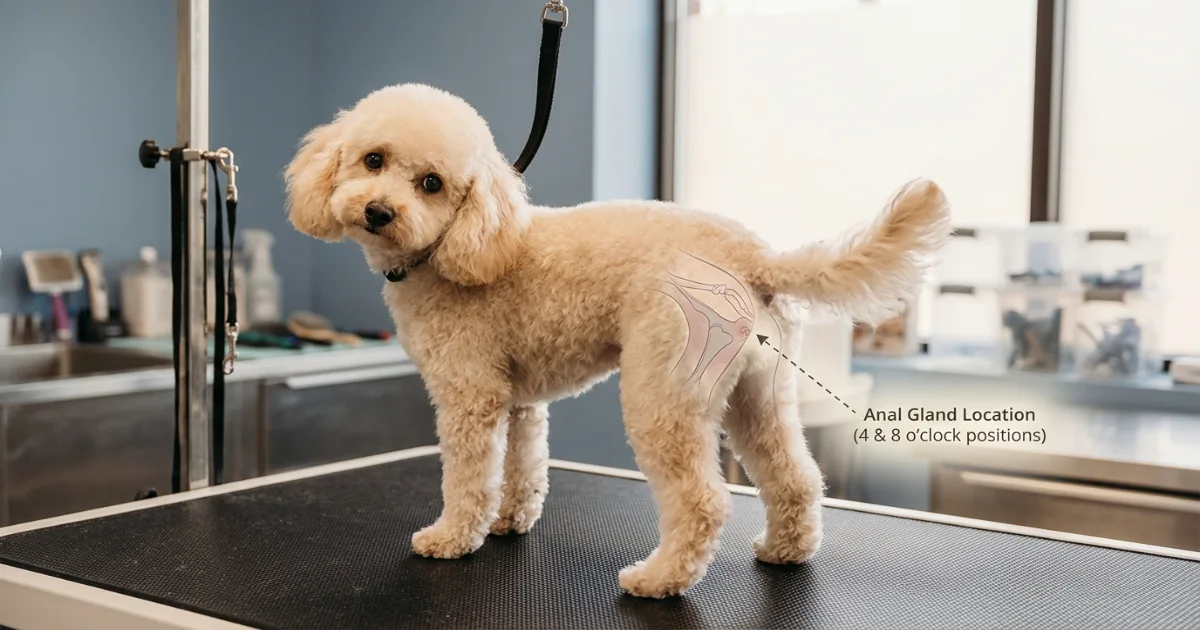
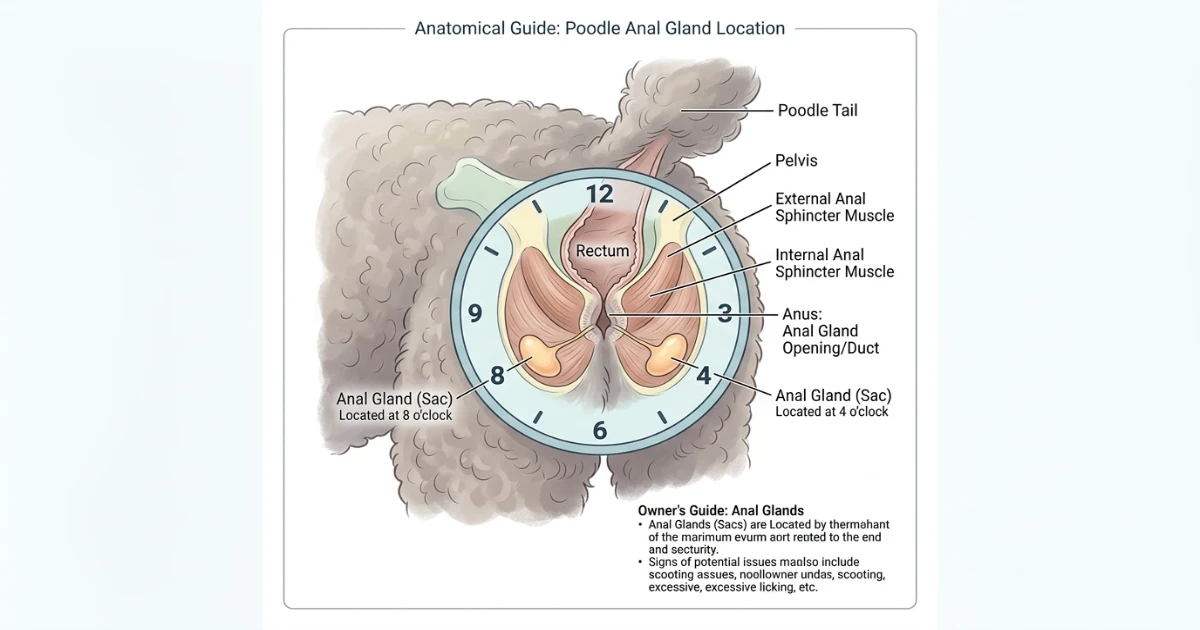
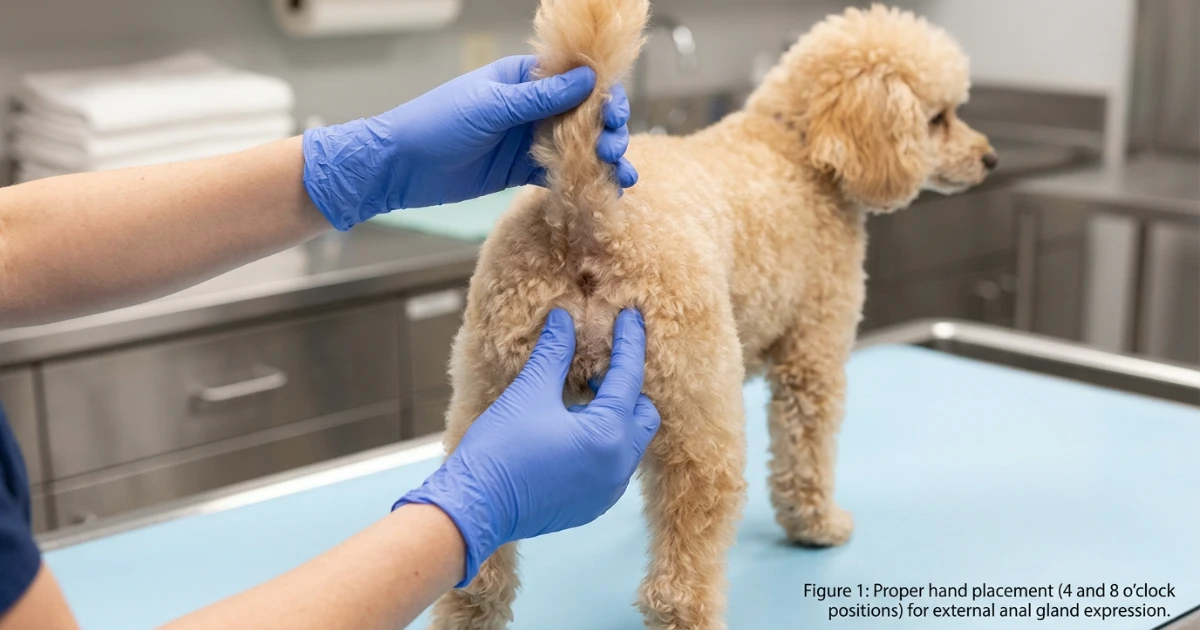
Anal glands, more accurately called anal sacs, sit at roughly the 4 o’clock and 8 o’clock positions near the anus. They produce a strong-smelling oily secretion. In many dogs, firm stool naturally presses on the sacs during a bowel movement and releases a tiny amount of fluid. When stools are soft, ducts become blocked, or inflammation thickens the fluid, the sacs can remain full and uncomfortable.
Toy and Miniature Poodles may be more noticeable sufferers because their bodies are small and owners quickly see scooting or licking. Standard Poodles can have the same problem after diarrhea, sudden diet changes, allergies, or weight gain. Anal sacs do not care about breed size as much as they care about stool pressure, duct health, inflammation, and comfort.
When Should You Check a Poodle’s Anal Glands?
The best approach is need-based, not calendar-based. Many poodles never need manual expression. Others need help after digestive upset, allergy flares, or repeated soft stools. The signs most often associated with anal sac discomfort include:
- Scooting or dragging the bottom: A classic sign, though worms, skin irritation, allergies, diarrhea, or matting can also cause it.
- Persistent licking or biting around the rear: Especially if it happens after bowel movements or interrupts rest.
- Sudden fishy odor: A strong metallic-fishy smell can be normal gland fluid leaking, but odor alone does not diagnose infection.
- Difficulty sitting or painful defecation: A dog may shift sideways, stand quickly, or strain.
- Swelling, redness, discharge, or a small opening near the anus: These are urgent vet signs and should not be squeezed at home.
Scooting is not automatically an anal gland problem. Parasites, allergies, diarrhea, skin infections, matted hair, rectal pain, and behavioral irritation can look similar. If signs persist or repeat often, a vet exam is smarter than repeated home expression.
How to Approach Poodle Anal Gland Expression Safely
The external method is the only method an owner should consider, and only after a veterinarian has shown you how to do it on your own dog. Do not attempt internal expression unless you are trained and authorized by a veterinary professional. Never express glands that are swollen, hot, bleeding, draining pus, extremely painful, or not releasing with very gentle pressure.
Prepare the area and keep your poodle calm
Use gloves, paper towels, warm water or a pet-safe wipe, and treats. Choose a washable surface such as a tub or grooming mat. Have a second person gently steady your poodle if needed. Anxiety makes the muscles tighten, so slow handling matters.
Lift the tail gently and inspect first
Look for swelling, redness, blood, pus, broken skin, heat, or obvious pain. If any of these are present, stop immediately and call your veterinarian. The goal is to check before touching, not after causing discomfort.
Use only external, gentle pressure
With a gloved hand and a paper towel covering the area, your vet may teach you to apply gentle pressure from outside the anus at the 4 and 8 o’clock positions. Pressure should be soft and steady, never forceful. Do not insert a finger internally.
Stop if nothing releases easily
If fluid does not release with light pressure, stop. Thick material, blockage, or impaction may need internal veterinary expression, flushing, medication, or pain control. Repeated squeezing can bruise the area or worsen inflammation.
Clean gently and observe for 24 hours
Wipe the area with warm water or a pet-safe wipe, reward your poodle, and watch for ongoing scooting, swelling, discharge, bleeding, or pain. If signs continue beyond a day, schedule a vet recheck.
External vs. Internal Anal Gland Expression for Poodles
The method matters. External expression may help mild fullness when the secretion is thin and the dog is not painful. Internal expression can empty the sac more completely, but it requires proper training and should be performed by veterinary staff or an appropriately trained professional working within safe boundaries.
| Factor | External Expression | Internal Expression |
|---|---|---|
| Who should do it | Owner only after vet demonstration, or trained groomer/vet staff | Veterinarian or trained veterinary technician |
| Where pressure is applied | Outside the anus over the sacs | One gloved, lubricated finger inside the rectum with external support |
| Best for | Mild fullness with thin fluid and no pain | Thicker secretion, partial impaction, or diagnostic assessment |
| Main risk | Bruising, discomfort, irritation, or incomplete emptying if done incorrectly | Rectal trauma or severe pain if done by an untrained person |
| When to avoid | Swelling, blood, pus, abscess, sharp pain, or no easy release | Never attempt at home |
7 Critical Safety Tips Before You Try Anything
- Do not express on a fixed schedule unless your veterinarian has recommended a plan for your individual poodle.
- Do not squeeze hard. Gentle pressure is the limit; force can injure inflamed tissue.
- Do not attempt internal expression at home. This should be handled by trained veterinary professionals.
- Stop if your poodle cries, snaps, trembles, or tries to sit suddenly. Pain is information.
- Do not express swollen or draining glands. These can be infected or abscessed.
- Do not keep repeating attempts. If nothing releases, the problem may require medical care.
- Track patterns. Frequent issues often point to stool consistency, allergies, weight, diet, or inflammation.
What Owners Often Get Wrong About Anal Glands
Myth 1: “All dogs need routine anal gland expression.” Many dogs naturally empty their anal sacs. Unneeded expression can irritate tissue and may create a cycle where the area becomes sensitive more often.
Myth 2: “Scooting always means worms.” Worms are possible, but anal sac discomfort, allergies, skin irritation, and matted hair can also cause scooting. Repeated deworming without diagnosis does not solve the real cause.
Myth 3: “Fishy smell means infection.” Normal anal sac fluid has a strong fishy odor. Infection is more concerning when odor comes with pain, swelling, pus, blood, fever, lethargy, or worsening discomfort.
Myth 4: “Groomers should always do it during baths.” If your poodle has no symptoms, routine expression may not be needed. For chronic cases, a veterinarian should help you build a plan rather than relying only on grooming visits.
Diet and Lifestyle Factors That Affect Poodle Anal Gland Health
Stool quality matters because firm, well-formed bowel movements help press the sacs naturally. Poodles with repeated soft stool, diarrhea, food sensitivities, sudden diet changes, or low-fiber diets may not get enough natural pressure during defecation. That can allow secretion to remain in the sacs and thicken over time.
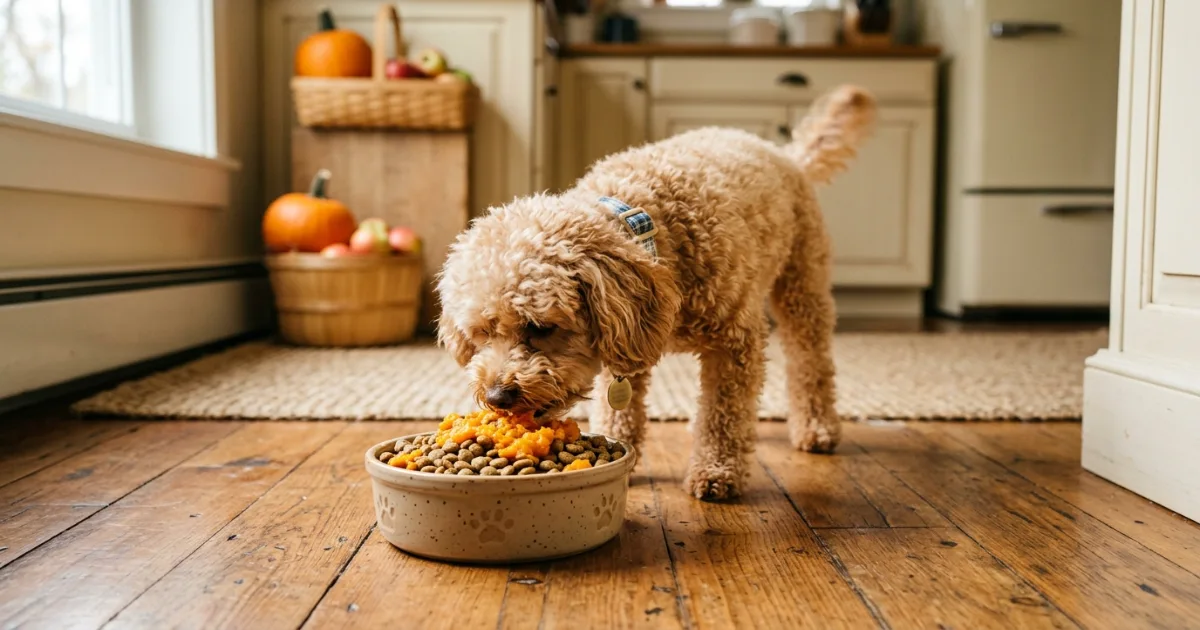
Ask your veterinarian before adding supplements, especially for Toy Poodles. Plain canned pumpkin, psyllium fiber, a higher-fiber diet, or a measured probiotic may help some dogs, but dosing should be tailored to your poodle’s size, stool pattern, medical history, and current food. Too much fiber can cause gas, diarrhea, constipation, or reduced appetite.
When Anal Glands Become a Vet Problem
Anal sac problems can progress from mild fullness to impaction, inflammation, infection, or abscess. A painful swelling beside the anus, thick discharge, blood, pus, a ruptured spot, fever, lethargy, or a dog that cannot sit comfortably is not a home-care situation. Your veterinarian may need to express or flush the sacs, prescribe pain relief, use antibiotics when infection is present, recommend warm compresses, or place an Elizabethan collar to stop licking.
In severe or repeated cases, surgery to remove the sacs may be discussed, but it is usually reserved for chronic, life-impacting problems because complications are possible. Most poodles do not need surgery; they need the underlying cause identified and managed.
Recurring anal gland issues in a poodle can be connected to allergies, chronic soft stool, obesity, or repeated inflammation. If the problem keeps coming back, ask your vet about food sensitivities, skin allergies, stool quality, body condition, and whether a medical workup is needed.
Why Repeated Poodle Anal Gland Expression Is a Warning Sign
If your poodle needs anal gland expression every few weeks, treat that pattern as a health clue rather than a normal grooming habit. Repeated fullness can be linked to chronically soft stool, food sensitivity, skin allergies, excess weight, narrow ducts, previous inflammation, or pain that makes your dog avoid normal bowel movements. Simply emptying the sacs again and again may give short-term relief, but it does not explain why they keep filling or becoming uncomfortable.
A practical plan starts with your veterinarian checking the anal sacs, skin, stool quality, body condition, and allergy history. Bring a short log of scooting episodes, diet changes, stool firmness, grooming dates, and any odor or discharge you noticed. That information helps your vet decide whether the next step is diet adjustment, parasite screening, allergy management, medication, or a different care schedule. For many poodles, solving the pattern is safer than repeatedly squeezing the symptom.
Practical Owner Insight: Make Necessary Care Less Stressful
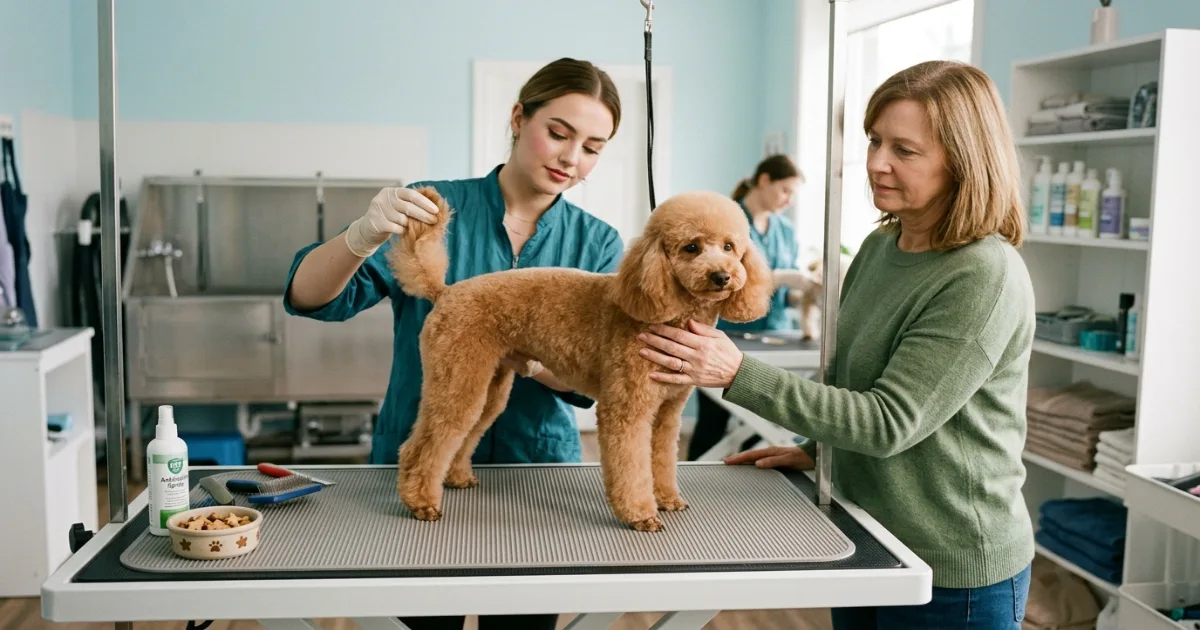
If your veterinarian confirms your poodle occasionally needs external expression, build a calm routine. Use a non-slip mat, keep sessions short, and choose one high-value treat that appears only during body-care checks. Teach “stand,” “tail,” and “all done” cues so your poodle knows what is happening. For very small dogs, do not force awkward positions; ask your vet or groomer to show a safe handling setup.
Keep a simple log with the date, signs you saw, stool quality, food changes, fluid appearance, and whether symptoms improved afterward. That log helps your veterinarian spot patterns that memory misses. It also prevents unnecessary expression when the real issue is diarrhea, allergies, or skin irritation.
Frequently Asked Questions About Poodle Anal Gland Expression
How do I know if my poodle’s anal glands are full?
Common signs include scooting, licking near the anus, a sudden fishy smell, trouble sitting, or discomfort after bowel movements. These signs can overlap with allergies, parasites, matting, or skin irritation, so ask your vet if symptoms persist.
Can I express my poodle’s anal glands at home?
Only the external method should be considered at home, and only after your veterinarian has demonstrated it. Do not attempt internal expression, and never express swollen, bleeding, draining, or painful glands.
How often do poodles need their anal glands expressed?
Only when symptoms appear or when your vet recommends a specific plan. Some poodles never need manual expression; others with soft stool, allergies, or chronic issues may need periodic care. Too much expression can irritate the area.
What does healthy anal gland fluid look like?
It is often thin to slightly oily and brownish or yellowish with a strong fishy odor. Thick paste, gritty material, blood, pus, severe pain, or swelling means your poodle needs veterinary attention.
Can diet prevent anal gland problems in poodles?
Diet can help some dogs by improving stool firmness. Your vet may suggest measured fiber, food changes, or allergy management. For Toy Poodles, dosing matters, so avoid guessing with supplements.
Why does my poodle still scoot after gland expression?
Possible reasons include incomplete emptying, irritation from the procedure, infection, allergies, parasites, matted hair, or a skin problem. If scooting continues for more than 24 hours or worsens, schedule a vet recheck.
Is anal gland expression painful for poodles?
Mild fullness may cause brief discomfort, but sharp pain is not normal. If your poodle cries, yelps, snaps, trembles, or reacts strongly, stop and contact your veterinarian.
Should groomers express anal glands during every bath?
Not automatically. If your poodle has no symptoms, routine expression may be unnecessary. Dogs with chronic or painful issues should be managed through a veterinarian rather than repeated grooming-only expression.
Knowledge, Not Force: The Safe Takeaway
Poodle anal gland expression is not a grooming trophy or a routine checkbox. It is a need-based response to discomfort, and it must be handled gently. The safest path is simple: know the warning signs, learn only the external method from your veterinarian, stop at the first sign of pain or abnormal discharge, and investigate the root cause if the problem keeps coming back.
Your poodle does not need you to be brave with pressure. They need you to be observant, careful, and willing to hand the problem to a vet when the signs point beyond mild fullness.