Poodle Ear Hair Removal: 7 Safe Vet-Aware Tips
This guide is educational and does not replace veterinary care. Poodle ear hair removal should be gentle, limited, and need-based. Do not pluck an ear that is red, swollen, painful, bleeding, hot, badly smelling, full of discharge, or suspected of infection. Ear infections can be painful and may require otoscopic examination, cytology, and prescription treatment. When in doubt, let your veterinarian or an experienced poodle groomer examine the ear first.
Poodle ear hair removal can help when excess hair is blocking airflow or trapping wax and moisture, but it should not be treated as a harsh routine for every poodle ear. The safest approach is to inspect weekly, remove only loose excess hair you can clearly see, use tiny amounts at a time, avoid deep plucking, and stop at pain, redness, discharge, or resistance. Many poodles do best with a groomer or veterinarian handling deeper ear work while owners focus on gentle checks, dry ears, and early infection signs.
Every poodle owner eventually notices it: soft, curly hair growing inside the ear opening, sometimes mixed with wax, moisture, or a mild musty smell. Because poodles have floppy ears and many lines grow hair in or near the ear canal, owners are often told to pluck on a fixed schedule. That advice is too simple. Ear hair can contribute to poor ventilation, but over-plucking can also irritate the ear canal and create inflammation.
The goal is not to make the canal perfectly bare. The goal is comfort, airflow, hygiene, and early detection of problems. This guide gives you a calmer, safer way to think about poodle ear hair removal: when it helps, when it should be skipped, what tools are safest, and when the ear belongs in a veterinary exam room instead of a grooming routine.
Not every poodle needs deep plucking. Remove excess hair only when it traps wax, moisture, or blocks airflow.
Yelping, snapping, bleeding, swelling, or strong resistance means stop and call a professional.
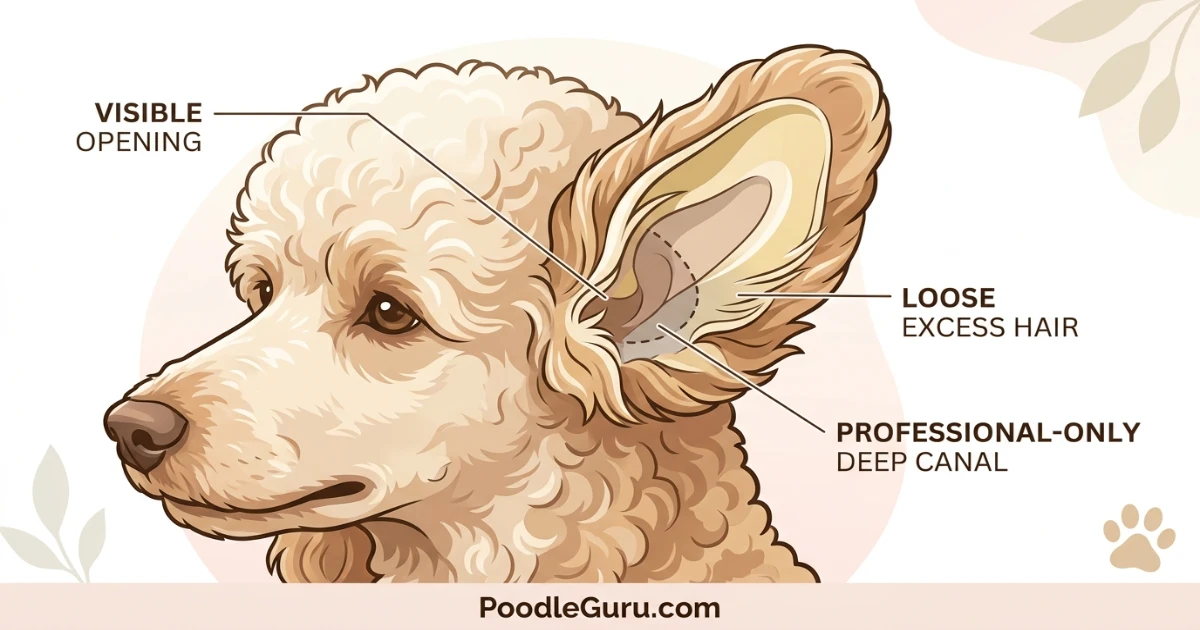
Owners should work only at the visible opening. Anything deeper is safer with a trained groomer or vet team.
Recurring odor or discharge often points to allergies, yeast, bacteria, moisture, or chronic otitis—not just hair.
Why Poodle Ear Hair Removal Needs a Balanced Approach
Poodles can be more prone to ear trouble because many have floppy ears, hair around the ear opening, and narrow or moisture-prone canals. A warm, damp, poorly ventilated ear can allow yeast and bacteria to overgrow. That is why many groomers and breeders carefully clear excess hair from the opening and from overly hairy canals.
But there is another side owners must understand. Routine removal from a normal, comfortable ear is not always needed. Pulling hair from an ear canal can create tiny irritation points, especially if the hair is grabbed in large clumps, the ear is already inflamed, or the owner works too deeply. The safest modern advice is simple: improve ventilation when hair is truly causing a problem, but do not aggressively strip a healthy ear just because the calendar says it is time.
MSD Veterinary Manual lists excessive hair in ear canals and moisture as predisposing factors for otitis externa, but it also notes that hair should not be routinely removed when it is not causing a problem because removal can trigger acute inflammation. VCA also lists hairy ears as a risk factor for ear infections and recommends veterinary diagnosis when pain, odor, discharge, or inflammation appear. Sources: MSD Veterinary Manual, VCA Animal Hospitals.
What You Are Actually Removing
Poodle ear hair grows in two practical zones. The first is the visible hair around the outside of the ear opening. This hair can usually be trimmed or tidied without pulling. The second is excess hair just inside the visible canal opening. This is the hair that may trap wax and reduce airflow if it becomes dense.
The deeper hair is not something most owners should chase. If you cannot clearly see the hair, you should not be reaching for it at home. A veterinarian or experienced poodle groomer can evaluate whether the canal is healthy enough for removal and whether the buildup is actually hair, wax, infection, mites, or inflammation.
Should You Do It Yourself or Use a Groomer?
DIY ear maintenance can be useful between grooming appointments, but it should stay conservative. If your poodle has a history of infections, allergies, painful ears, stenotic canals, heavy wax, or strong odor, a professional should guide the plan. A groomer may safely clear the visible opening, while a vet can diagnose infection and check whether the eardrum appears healthy before recommending cleaning products or medication.
| Care Option | Best For | Owner Boundary | When to Avoid |
|---|---|---|---|
| Owner check at home | Weekly inspection, odor check, light outer-ear wiping | Look, smell, and wipe only what is visible | If the ear is painful, swollen, red, or full of discharge |
| Light visible hair removal | Small, loose hair at the ear opening | Tiny amounts only; no deep tool use | If hair resists or your poodle reacts sharply |
| Professional groomer | Routine poodle grooming and excess canal hair management | Ask for gentle, need-based removal, not aggressive stripping | If infection signs are present; vet first |
| Veterinary care | Odor, discharge, head shaking, pain, recurring problems | Follow the diagnosis and treatment plan | Never delay when the ear is clearly uncomfortable |
Tools for Safer Poodle Ear Hair Removal
You do not need a complicated kit. You need clean tools, good light, and the discipline to stop early. The safest tools are the ones that help you avoid deep, blind, or forceful pulling.
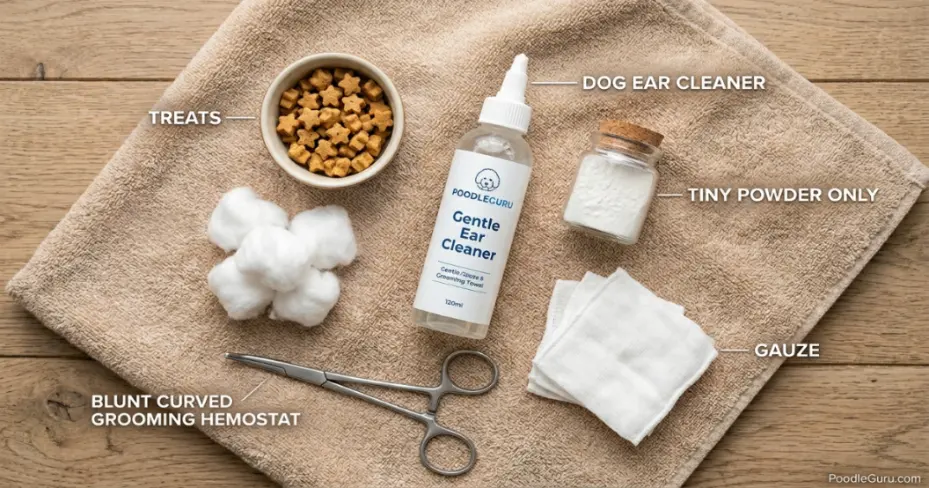
- Good lighting: A bright lamp or headlamp helps you see the ear opening clearly.
- Clean gauze or cotton balls: Use them to wipe visible outer-ear debris. Do not push cotton deep into the canal.
- Dog ear cleaner recommended by your vet: Different ears need different cleaners. Some are drying, some remove wax, and some contain medication-like ingredients.
- Ear powder, used lightly: Powder can improve grip, but too much can cake with wax. Use only a small amount and avoid packing it into the canal.
- Blunt grooming hemostat, optional: This is safer in trained hands. New owners may be better with the fingers-only method at the visible opening.
- Treats and a non-slip surface: The calmer your poodle stays, the safer the ear check becomes.
Safe DIY Method: Gentle Visible Hair Removal Only
Use this method only when the ear looks calm: pale pink skin, no swelling, no heat, no blood, no thick discharge, no strong sour smell, and no pain when you lift the ear flap. If the ear fails that check, skip grooming and call your veterinarian.
Settle your poodle first
Choose a calm time, such as after a walk or training session. Place your poodle on a non-slip surface, reward ear handling, and gently lift the ear flap without rushing.
Inspect before touching
Look for redness, swelling, scratches, discharge, crusting, heat, bad odor, or pain. These are medical signals. Do not pluck or clean aggressively if any are present.
Use a tiny amount of powder only if needed
If the hair is slippery, apply a very small amount of dog ear powder at the visible opening. Do not pour powder deep into the canal.
Remove only tiny, loose hairs
Use clean fingers or a blunt grooming hemostat to grasp a few visible hairs at a time. Pull gently outward in the direction the hair naturally releases. If it does not release easily, stop.
Clean only what you can see
Use gauze or a cotton ball to wipe visible debris from the outer ear. Do not use cotton swabs deep in the canal, because they can push wax deeper or damage the ear.
Use ear cleaner carefully
Use only a vet-recommended dog ear cleaner. For nervous poodles, soak a cotton ball, place it at the ear opening, and massage the base instead of suddenly pouring liquid into the canal.
Reward and watch for irritation
Reward generously, then monitor for 24 hours. If your poodle starts head shaking, scratching, crying, or developing redness or odor after removal, schedule a vet check.
Never use rubbing alcohol, hydrogen peroxide, vinegar mixtures, essential oils, or human ear drops unless your veterinarian specifically instructs you. Irritating home remedies can worsen inflammation and make infections more likely.
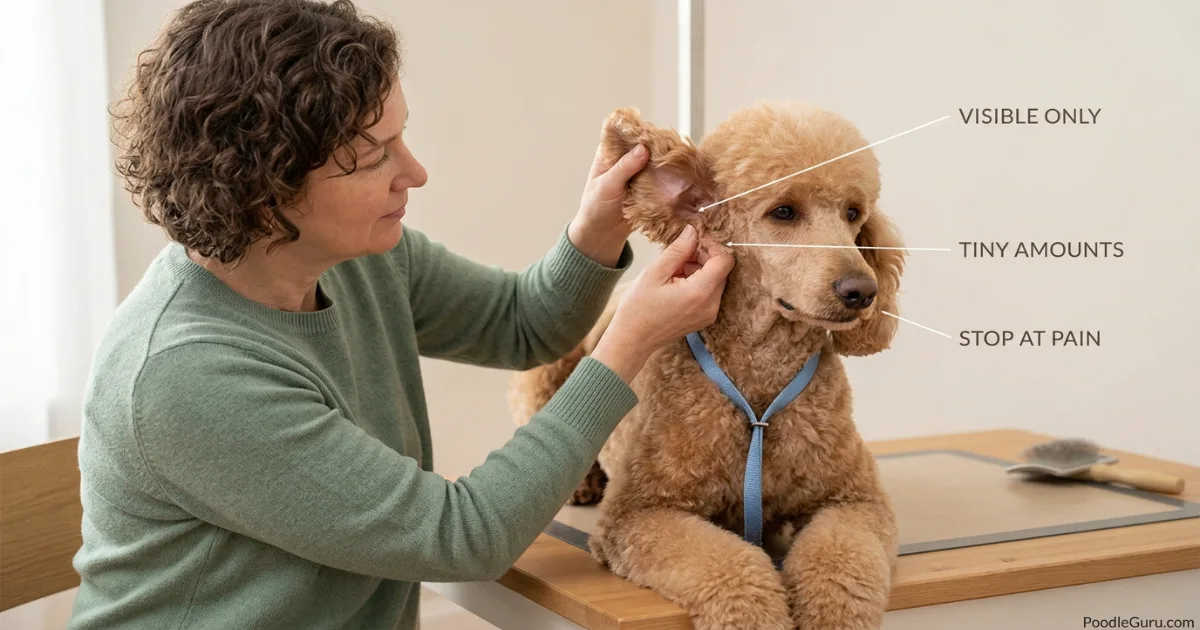
7 Safe Vet-Aware Tips Before You Try
Owner Safety Checklist
- Do not pluck a painful ear. Pain means inflammation, infection, injury, or another medical issue may already be present.
- Do not chase every hair. A perfectly bare canal is not the goal. Airflow and comfort are the goals.
- Do not work deeper than you can see. Blind tool use is where injuries and missed infections happen.
- Do not remove large clumps. Large pulls can inflame follicles and make the ear sore.
- Do not clean with Q-tips deep in the canal. Use cotton balls or gauze only on visible areas.
- Do not ignore odor or discharge. A musty, yeasty, sour, black, yellow, or pus-like ear needs diagnosis, not just grooming.
- Do not rely on plucking alone. Recurring ear issues often need allergy management, moisture control, cytology, or medication.
Common Mistakes That Make Ear Problems Worse
Mistake 1: Treating ear hair as the only cause. Hair can be a predisposing factor, but ear infections are often driven by allergies, yeast, bacteria, parasites, moisture, foreign bodies, or chronic inflammation. If you clear hair but the odor keeps returning, you have not solved the real problem.
Mistake 2: Plucking during an infection. If the ear is red, swollen, wet, painful, or full of debris, pulling hair can increase irritation. A vet exam is the safer first step because treatment depends on the cause.
Mistake 3: Using harsh home remedies. Vinegar, alcohol, peroxide, and essential oils can irritate the ear canal, especially if inflammation is already present. Use dog-specific products recommended for your poodle’s ear condition.
Mistake 4: Cleaning beyond what you can see. VCA’s ear-cleaning advice is clear: wipe visible wax with cotton balls or gauze and avoid cotton-tip applicators that can push debris deeper or damage the eardrum.
How Often Should Poodle Ear Hair Be Removed?
There is no universal schedule that fits every poodle. Some dogs need light clearing every few weeks because hair and wax build quickly. Others do better with trimming around the opening and only occasional professional removal. A better routine is to inspect the ears weekly and act on what you see and smell.
A healthy ear should look calm and smell neutral to mildly waxy. If the ear smells sour, yeasty, or unusually strong, or your poodle is shaking their head or scratching, do not simply pluck more hair. Those signs often mean the ear needs a veterinary look. For poodles with recurring ear trouble, ask your vet and groomer to agree on a plan instead of guessing session by session.
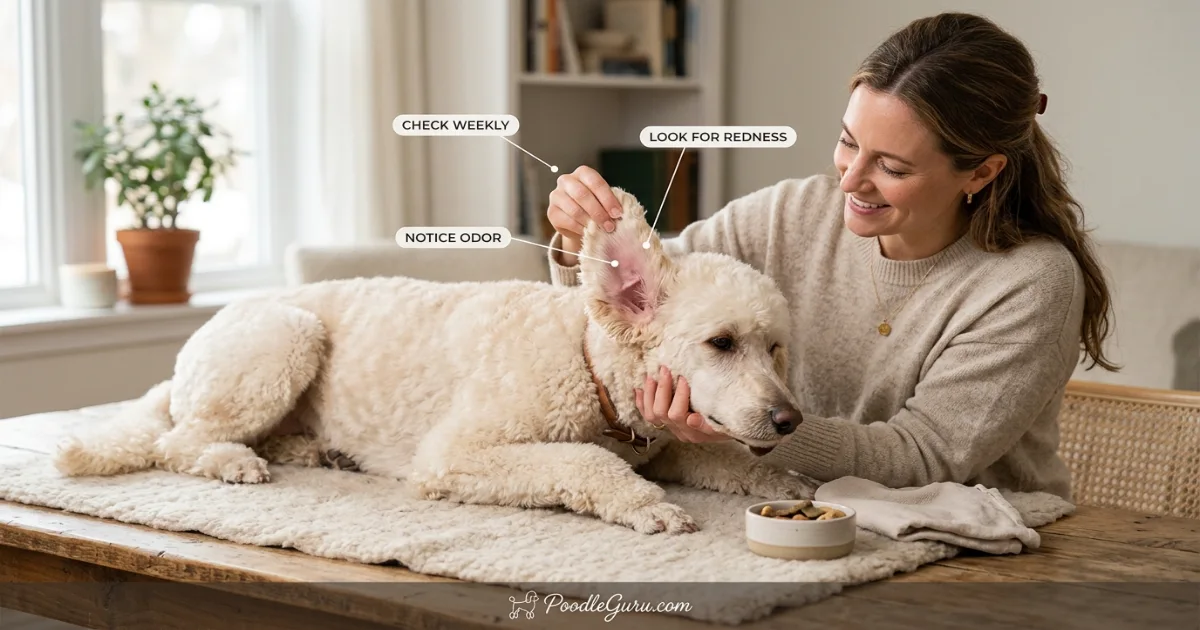
When to Stop and Call the Vet
Ear problems can become painful quickly. Stop home care and call your veterinarian if you notice any of the following:
- Head shaking, scratching, whining, or pawing at the ear
- Redness, heat, swelling, crusting, or bleeding
- Bad odor, sour smell, or strong yeasty smell
- Yellow, black, brown, green, or pus-like discharge
- Coffee-ground debris that could suggest mites
- Your poodle pulls away sharply, yelps, snaps, or cannot tolerate touching
- Recurring symptoms after grooming or cleaning
Vets diagnose ear disease by looking into the canal, checking the eardrum when possible, and often examining ear debris under a microscope. That matters because yeast, bacteria, mites, foreign material, allergy-driven inflammation, and chronic canal changes do not all need the same treatment.
Practical Owner Insight: Make Ear Handling Easier
If your poodle dislikes ear handling, do not start with plucking. Start with trust. Touch the ear flap, give a treat, and stop. Lift the ear, give a treat, and stop. Later, wipe the outer ear once, reward, and stop. This slow conditioning teaches your poodle that ear care is predictable and safe.
For puppies, early positive handling is more important than early hair removal. Practice gentle ear checks several times a week without doing anything uncomfortable. When actual grooming is needed, your poodle will already understand the routine.
Frequently Asked Questions About Poodle Ear Hair Removal
Does poodle ear hair removal hurt?
It should not be sharply painful. Some dogs feel a brief tug, but yelping, snapping, bleeding, or strong resistance means stop. Pain usually means the ear is inflamed, infected, or the technique is too forceful.
Should every poodle have ear hair plucked?
No. Excess hair that traps moisture or wax may need careful removal, but routine plucking from a healthy ear that is not causing problems can irritate the canal. Ask your vet or groomer what your specific poodle needs.
Can I use tweezers for poodle ear hair removal?
Household tweezers are not ideal because pointed tips can pinch or scrape the ear canal. Clean fingers or a blunt curved grooming hemostat are safer, but new owners should learn from a groomer or vet first.
How often should I check my poodle’s ears?
Check weekly. Look for redness, wax buildup, odor, discharge, and your poodle’s comfort level. Remove hair only when there is visible excess or when a professional recommends it.
Should I remove ear hair before or after a bath?
If removal is needed, it is usually better before bathing, followed by keeping the ears dry. Water trapped in the canal can worsen moisture problems, so use cotton balls carefully during bathing and dry the outer ear afterward.
What if my poodle’s ears smell after hair removal?
A persistent smell can indicate yeast, bacteria, wax buildup, trapped moisture, or inflammation. Do not keep plucking. Schedule a veterinary exam so the correct cause can be identified.
Can ear powder irritate poodle ears?
Yes, some dogs can react to powder, fragrance, or product buildup. Use only a tiny amount when needed for grip, and stop if you see redness, coughing, sneezing, irritation, or discomfort.
What is safer than deep DIY plucking?
Weekly inspection, trimming hair around the opening, keeping ears dry, using vet-recommended cleaners, and having an experienced poodle groomer or vet team handle deeper excess hair are safer than blind at-home plucking.
The Safe Takeaway
Poodle ear hair removal is not about making the ear canal perfectly bare. It is about keeping the ear comfortable, dry, ventilated, and free from trapped wax and moisture. The best owner approach is conservative: inspect weekly, remove only loose visible excess hair when needed, use safe cleaning habits, and stop at the first sign of pain or inflammation.
If your poodle’s ears smell bad, hurt, ooze discharge, or keep causing trouble, the answer is not more plucking. The answer is diagnosis. A healthy ear-care routine protects your poodle best when grooming and veterinary judgment work together.