Poodle Car Sickness: A Complete Prevention & Treatment Guide for Owners
Quick Answer: Poodle car sickness is caused by a mismatch between what your dog’s inner ear senses and what their eyes see, often heightened by anxiety or negative early experiences. Toy and Miniature Poodles are especially susceptible, but the condition can almost always be managed. The most effective strategy combines desensitization training, careful car setup, and – when needed – veterinarian-approved remedies such as ginger, anti-nausea medication, or calming aids. Most poodles show dramatic improvement with patient, consistent work.
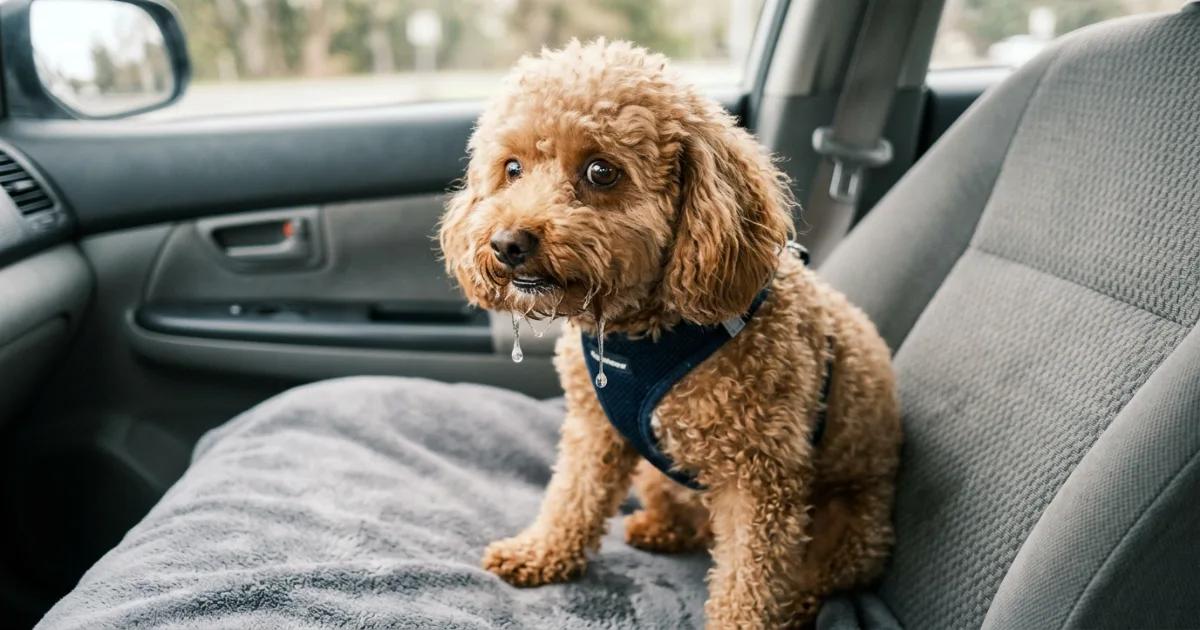
It starts innocently. You buckle up, your cream-colored Toy Poodle settles on the passenger seat, and ten minutes later you’re pulling over to clean up drool and vomit while your trembling pup presses against the door. Poodle car sickness is far more common than many new owners expect, and it can turn a simple vet visit or weekend trip into a distressing ordeal. But here’s what the top-ranking articles rarely say outright: poodle car sickness isn’t a personality flaw, and it’s not something you just have to live with. It’s a solvable, physiological and behavioral puzzle – and when you approach it with the right blend of empathy and method, you can rewrite your dog’s entire relationship with car travel.
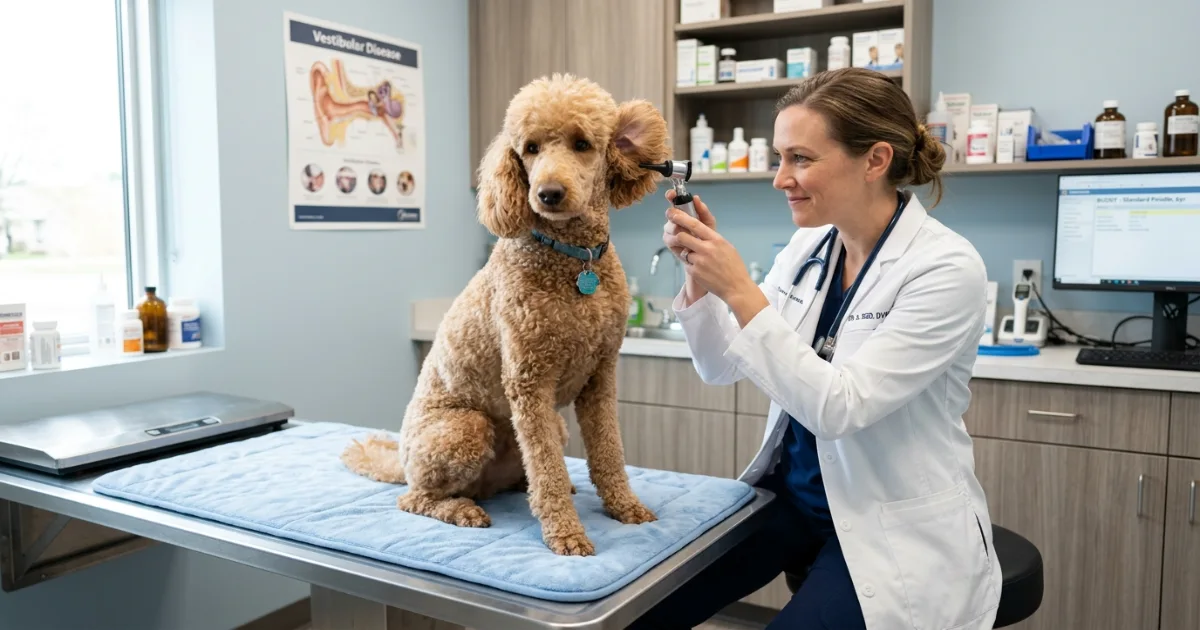
Most at Risk
Toy and Miniature Poodles, especially puppies under 1 year, have the highest rates of motion sickness. Their inner ear development and emotional sensitivity play a role.
Not Just “Anxiety”
Physiological motion sickness can exist with or without anxiety. True nausea originates in the vestibular system, not just the mind.
Preventable
With desensitization and the right environment, over 85% of poodles can travel without vomiting. Early intervention is key.
Why Do Poodles Get Car Sick? The Real Root Causes
Poodle car sickness typically stems from a clash between the vestibular system – the balance mechanism in the inner ear – and visual signals. When your poodle sits in a moving car, their inner ear detects motion, but if they’re in a crate facing a side wall or lying down unable to see the horizon, their eyes report a stationary world. This sensory mismatch triggers the vomiting center in the brain. It’s the same phenomenon that makes a person feel green on a boat below deck.
But poodles layer extra factors on top of this. Their alert, often emotionally attuned nature means they pick up on your driving tension, sudden noises, and the strangeness of the car’s hum. If the only car rides they ever experience end at the vet’s office for a vaccine, they build a negative emotional association that amplifies the physical response. A poodle’s intelligence works against them here; they remember unpleasant events sharply and can anticipate nausea, triggering drooling before the engine even starts.
Age matters deeply. Puppies’ inner ear structures aren’t fully mature until around 12 months. Many poodle owners see motion sickness fade as their dog moves from adolescence into adulthood, but that doesn’t mean you should wait it out without support. Early intervention prevents the condition from becoming a lifelong habit.
Is Car Sickness More Common in Toy, Miniature, or Standard Poodles?
The size of your poodle has a surprising influence. Toy and Miniature Poodles are disproportionately represented in veterinary discussions on motion sickness. Several reasons explain this. Smaller dogs are physically closer to the car floor, where vibrations are more intense and the visible horizon is often blocked by the dashboard or seat backs. They also tend to be carried more often, which reduces their exposure to gradually building tolerance. Standard Poodles, with their larger stature and easier visual access out of windows, often outgrow car sickness faster – but they are by no means immune.
A Standard Poodle puppy that only rides in a covered crate in the cargo area of an SUV is just as likely to develop car sickness as any other poodle deprived of a stable visual reference. The common denominator isn’t size; it’s the early travel environment and the owner’s proactive training.
🐩 Expert Insight
“Many poodle guardians mistake vomiting for a purely behavioral problem. In my practice, I often find that genuine vestibular nausea is the trigger. Once we treat the nausea, the behavioral anxiety often fades because the ride no longer predicts feeling terrible.” — Dr. Lena Marchetti, small-animal veterinarian specializing in canine travel stress.
Signs Your Poodle Experiences Motion Sickness, Not Just Excitement
Before the first splash of vomit, your poodle sends clear distress signals. Recognizing them early lets you interrupt the spiral. Watch for:
- Excessive lip licking and yawning – displacement behaviors that signal nausea.
- Heavy drooling – saliva production spikes before vomiting.
- Whining, panting, or trembling – physical signs of car sickness discomfort.
- Restlessness followed by sudden stillness – the poodle may freeze just before being sick.
- Looking at the floor or refusing to look out – an attempt to block conflicting visual input.
These signs differ from happy car excitement. A poodle eager for a ride might whine with anticipation, but they’ll have a relaxed body, bright eyes, and no drool. Nausea brings a hollow stare and a tight mouth.
Prevention Strategies That Actually Work
Prevention beats treatment every time, and with poodle car sickness you have a wealth of tools that don’t require a prescription. The goal is to rewire the brain and body simultaneously. You’re not just teaching “car equals good”; you’re physically reducing the inner ear conflict.
Desensitization: Rewriting the Car Story
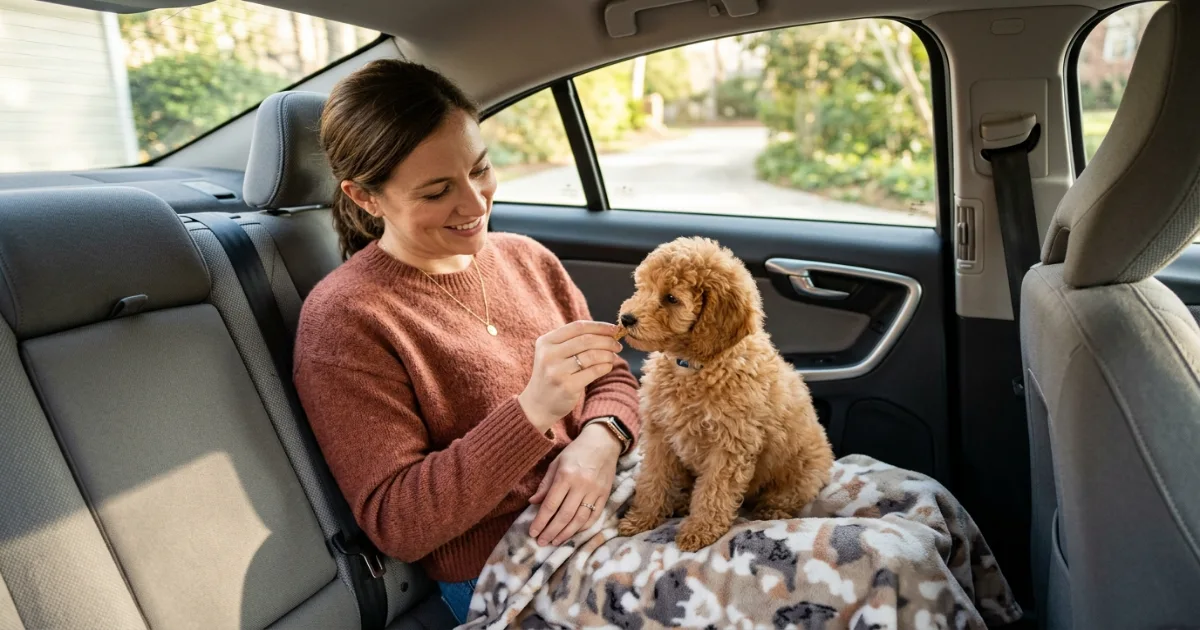
Start with the engine off. Sit in the back seat with your poodle, offer a few tiny high-value treats, and end the session after two minutes. The next day, repeat with the engine idling. Once that’s calm, add a one-minute drive up the street and back, then gradually stretch the time. If at any point the poodle shows stress, you’ve gone too fast. Scale back. This process can take two to four weeks for deep-seated cases, but the payoff is a dog who associates the car with predictability and reward.
The Right Travel Position: Seeing the Horizon
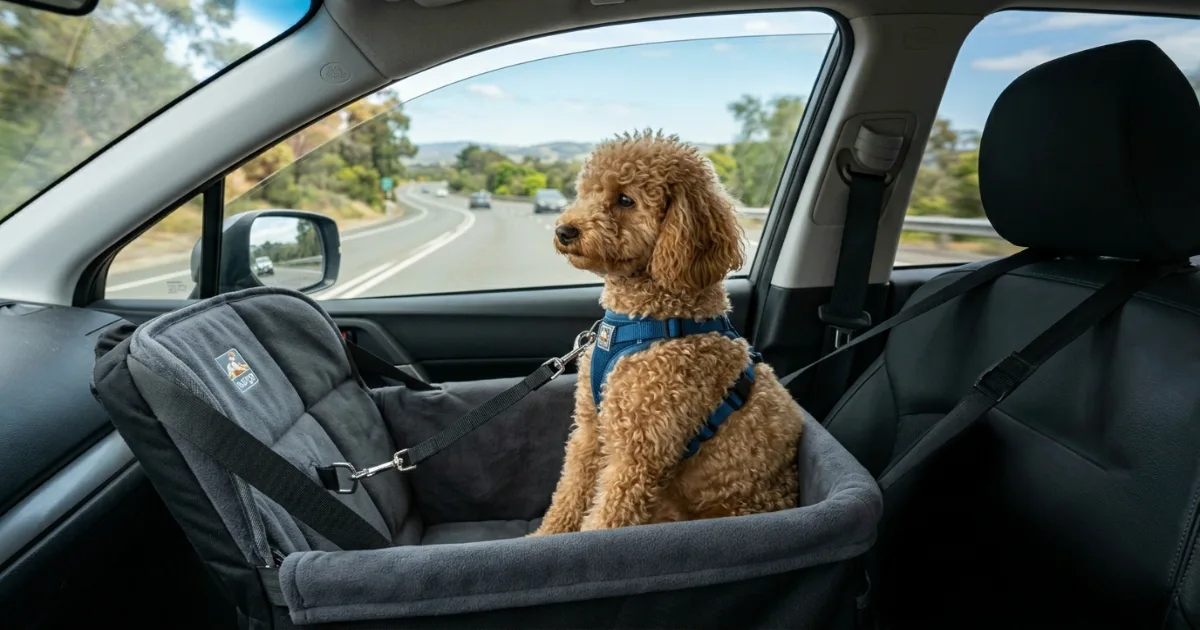
Elevating your poodle so they can see out a side or front window reduces the sensory mismatch dramatically. A crash-tested booster seat for Toy and Miniature Poodles is invaluable. Standard Poodles benefit from a back-seat hammock with an attached tether that lets them sit up comfortably. Avoid forcing your poodle to lie flat; a prone position with no view often worsens motion sickness.
Empty Stomach, But Not Too Empty
Feeding a dog right before a trip is a well-known mistake. But an absolutely empty stomach can also trigger bilious vomiting. The goldilocks zone: a light, bland snack about 60 to 90 minutes before travel. A spoonful of plain boiled chicken or a few dry biscuits can buffer stomach acid without overloading the gut.
The Car Setup: Creating a Safe, Calm Travel Environment
The interior of your car is an environment you can control. Soft, classical music or audiobooks have a scientifically supported calming effect on dogs. Conversely, loud talk radio or high-energy playlists can ramp up your poodle’s nervous system. Keep the temperature slightly cool; heat magnifies nausea. Crack a window for fresh airflow, which helps regulate pressure and prevents stuffiness.
Safety restraints are non-negotiable. A harness clipped into the seat belt buckle or a secured crate prevents your poodle from moving around unpredictably, which stabilizes their inner ear experience. For Toy Poodles, a well-ventilated travel carrier strapped securely with an open mesh door facing forward can become a cozy den rather than a prison if introduced with positive associations at home first.
Comparing Prevention and Treatment Approaches: What to Use When
Knowing when to lean on prevention alone and when to bring in treatment helps you avoid over-medicating or, conversely, letting your poodle suffer needlessly. The table below breaks down common interventions.
| Method | Type | Best For | Onset | Owner Ease |
|---|---|---|---|---|
| Desensitization training | Prevention | Puppies, mild cases, newly adopted poodles | 2–4 weeks | Requires consistency |
| Booster seat / window view | Prevention | Toy & Miniature Poodles, all ages | Immediate | Easy |
| Ginger supplement (vet-approved) | Natural remedy | Mild to moderate nausea | 30–60 min | Easy, but dosing critical |
| Calming pheromone collar / spray | Adjunct | Anxiety-driven component | Varies | Very easy |
| Cerenia (maropitant) prescription | Treatment | Moderate to severe vomiting, long trips | ~1 hour | Vet visit required |
| Anti-anxiety medication (trazodone etc.) | Treatment | Severe panic component, vet-guided | 1–1.5 hours | Prescription only |
Over-the-Counter and Natural Remedies That Deserve a Closer Look
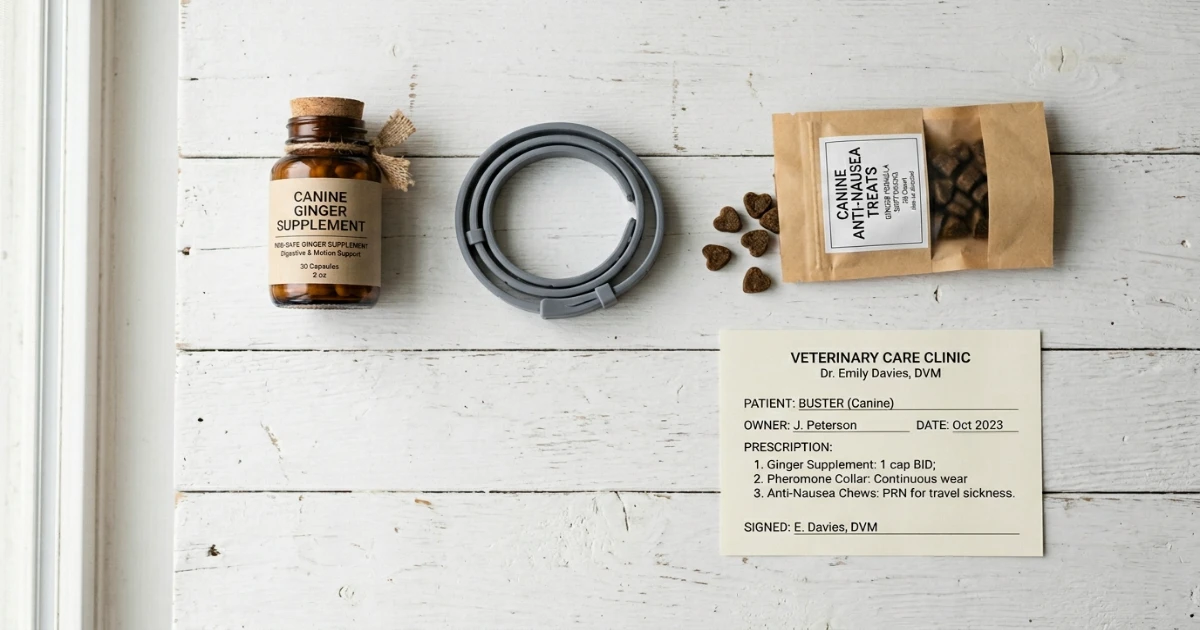
Ginger is the star natural antiemetic for poodles. A small dose of ginger powder or a canine ginger treat formulated for travel can soothe the stomach and calm the vomiting reflex. Never give raw ginger root without veterinary guidance, and always check for interactions if your poodle is on other medications. Many poodle owners swear by a few drops of dog-safe ginger tincture mixed into a small treat an hour before travel.
Adaptil or similar dog-appeasing pheromone collars can take the edge off travel anxiety, which reduces the psychological layer of car sickness. While they don’t stop vestibular nausea directly, they make the overall experience far less threatening. L-theanine or CBD-infused calming chews formulated specifically for dogs are gaining ground, but you must source them from reputable manufacturers with third-party testing. The supplement market is a wild west; your poodle’s safety depends on your discernment.
🐾 Pro Tips for Natural Remedy Use
- Test any new supplement at home first, not on a travel day.
- Keep a log: note g-tube timing, dose, and response for your vet.
- Never combine natural sedatives with prescription meds without asking your vet.
When to Consider a Vet Visit and Prescription Medication
If your poodle vomits on every car trip longer than ten minutes, or if the anxiety has become so anticipatory that they start drooling at the sight of car keys, it’s time to involve your veterinarian. The gold standard prescription is Cerenia (maropitant citrate), a once-daily tablet specifically designed to prevent vomiting due to motion sickness in dogs. It’s effective and safe for most poodles when dosed correctly. Unlike human motion sickness drugs, Cerenia works on the vomiting center without heavy sedation.
Some poodles need a two-pronged approach: an anti-nausea medication layered with a short-acting anti-anxiety medication for extreme cases. The choice between trazodone, gabapentin, or a benzodiazepine must come from your vet after a thorough physical exam. Never reach for human anti-nausea pills; some, like Pepto-Bismol, are toxic for dogs.
What Most Owners Get Wrong About Poodle Car Sickness
There’s a quiet list of misconceptions that keep poodles sick longer than they should be. One of the most harmful: “He’ll grow out of it.” While many puppies do experience improvement, waiting passively often cements a conditioned nausea response. Even after the inner ear matures, the dog has learned that the car equals vomiting, and that learned association can persist for years.
Another common error is confusing motion sickness with full-blown separation anxiety or general disobedience. A poodle that vomits in the car isn’t being stubborn or spiteful. They’re physiologically overwhelmed. Punishment or forcing them to “tough it out” can break trust and amplify the fear component. The fix is never dominance; it’s methodical exposure, physical comfort, and medical support when necessary.
Owners also frequently make the mistake of using crates incorrectly. A fully covered crate blocks all visual input, which can make nausea worse for some poodles. If you use a crate, secure it so your poodle can see out the front mesh panel toward the windshield, not a dark side wall. Every dog’s optimum differs, so watch your poodle’s drool cues and adjust.
How to Desensitize a Poodle Puppy to Car Rides (Step-by-Step)
This graduated plan works beautifully for poodles of any age, but it’s pure gold for puppies building their first travel impressions.
- Stationary car, engine off. Sit with your puppy in the back seat, offer a stuffed frozen Kong, and end on a positive note after 3–5 minutes. Repeat daily for three days.
- Engine idling, not moving. Same setup, but engine on. Keep sessions short. Give high-value treats only inside the car.
- Driveway to end of street. A 30-second drive. Return home calmly. No fuss, just a gentle experience. If no nausea signs, progress.
- Short 3-minute loop. Drive around a quiet block. After parking, give a treat and let the puppy out for a brief sniff walk. This breaks the “car only leads to vet” pattern.
- 5-10 minute trips with a happy destination. A nearby park or a friend’s house. The destination must be rewarding, reinforcing that car rides end in something wonderful.
If your puppy vomits at any stage, pause, go back two steps, and consider ginger or a vet consult before trying again. Pushing too fast is the single biggest sabotage of desensitization.
How Car Sickness Changes With Age and What to Expect
In most poodles, true vestibular motion sickness begins to ease between 12 and 18 months as the inner ear structure matures. However, the anxiety layer can persist unless actively addressed. A two-year-old Toy Poodle that has been vomiting in the car for a year needs both nausea management and a dedicated desensitization reboot. Good news: even senior poodles can be reconditioned. Their learning might be slower, but their brain’s plasticity is on your side if you keep sessions short and positive.
For Standard Poodles, many owners report a noticeable drop in car sickness episodes around 8 to 10 months, partly because they physically can see out more easily once they are tall enough to rest their chin on the window sill. You can accelerate that by using a raised platform or hammock that positions them higher earlier.
Health Considerations: When Car Sickness Might Signal Another Issue
Occasional vomiting in the car is usually benign, but certain patterns warrant a closer look. Ear infections, especially in floppy-eared poodles, disrupt the vestibular system and can mimic or worsen motion sickness. Hypothyroidism and some metabolic imbalances also lower the threshold for nausea. If your poodle suddenly develops car sickness after years of happy travel, or if the vomiting is accompanied by a head tilt, loss of balance at home, or eye flickering, see your vet promptly. These could be signs of inner ear disease or a neurological condition, not simple motion sickness.
A Realistic Buyer’s Insight: Considering a Poodle and Worried About Travel
If you’re researching poodles and stumbled onto this article, you’re probably wondering: “Are poodles really that travel-sensitive?” The truthful answer is nuanced. Poodles are among the most adaptable and trainable breeds, but they also wear their emotions close to the surface. You’re far less likely to have a severe car sickness problem if you plan for it from day one. Choose a breeder who introduces puppies to short, pleasant car rides before they leave. Ask how the puppies react to travel during their early socialization window. Some lines produce more resilient puppies; others need a bit more guidance.
The real takeaway: poodle car sickness is a manageable, often temporary condition. It doesn’t mean you’ll never enjoy road trips with your curly companion. It just means you’ll need to invest a few weeks of thoughtful training, a properly sized booster seat, and perhaps a pack of ginger treats. Thousands of poodle owners now drive across states with dogs who once couldn’t make it to the corner mailbox without incident. You can join them.
Frequently Asked Questions About Poodle Car Sickness
Can poodle car sickness be cured permanently?
Many poodles outgrow the vestibular component around 12–18 months, but permanent relief depends on breaking the nausea-anxiety cycle. With consistent desensitization and appropriate prevention measures, the vast majority of poodles become comfortable travelers for life. Some may still need a light ginger supplement before long trips as a precaution.
Why does my Toy Poodle only vomit on winding roads?
Curving roads create a more intense sensory mismatch between the inner ear and the eyes because the motion is multi-directional. Toy Poodles, being smaller and lower in the car, feel those lateral forces more acutely. Using a booster seat that stabilizes their view and keeps them looking forward often reduces winding-road sickness significantly.
Is it safe to use human motion sickness pills for my poodle?
No. Human medications like dimenhydrinate (Dramamine) may be used in dogs only under strict veterinary dosing, but the margin of safety in small poodles is narrow. Never give Pepto-Bismol or any human antiemetic without your vet’s explicit instruction. Cerenia is the FDA-approved motion sickness treatment for dogs and is far safer.
How early can I start car desensitization with a poodle puppy?
You can begin at 8 weeks, the day your puppy comes home, provided they’ve had their first vaccinations and you don’t expose them to unvaccinated dogs in public. Short, stationary car sessions and brief driveway idling are safe and highly beneficial for building early positive associations.
Does air conditioning or windows open help poodle car sickness?
Yes, fresh airflow makes a noticeable difference. A slightly cracked window reduces stuffiness, regulates air pressure, and provides diverting scents. Keep the temperature cool, as overheating amplifies nausea. Pair this with a window view for the best effect.
My poodle drools before even getting in the car. What can I do?
This is anticipatory nausea, a learned response. Break the cue cycle: spend time near the car without driving, serve meals near the car, and gradually re-associate the environment with calm. In severe cases, your vet may prescribe a short-term anti-anxiety medication to help interrupt the pattern while you retrain.
Are Standard Poodles less prone to car sickness than Toy Poodles?
Generally, yes. Standard Poodles’ larger size gives them better visual access through windows, and they feel fewer high-frequency vibrations. However, any poodle raised without early positive car experiences or with an existing inner ear issue can develop car sickness regardless of size.
Your Poodle Deserves Calm Car Rides
Poodle car sickness is not a life sentence. It’s a manageable combination of inner ear physiology and learned behavior that responds beautifully to patient desensitization, smart car setup, and – when necessary – targeted natural or prescription remedies. Toy and Miniature Poodles might need a little extra creativity with booster seats, while Standards thrive with a clear view and gentle conditioning. The key is to start where your poodle is today, not where you wish they were. Listen to the early drool and yawns, adjust your plan without shame, and celebrate every vomit-free block you drive. Your poodle’s world is about to get a whole lot bigger – and the next road trip can be the peaceful, connected experience you both deserve.