Why Do Poodles Lick So Much? 7 Reasons Explained (And When to Worry)
A behaviorally grounded, vet-informed guide to understanding your poodle’s licking — and what to do when it crosses a line.
If you’ve ever sat down on the sofa only to have your poodle immediately attach their tongue to your hand, your face, or your ankle, you’ve asked yourself the same question every poodle owner eventually asks: why do poodles lick so much? It’s one of the most common behavioral questions I hear from poodle owners, and the answer is almost always more layered than people expect.
Licking is one of the most natural behaviors in a dog’s repertoire — they’re born doing it and they never really stop. But poodles, with their sensitivity, emotional intelligence, and intense attachment to their people, have a particular reputation for being enthusiastic lickers. Sometimes that’s pure affection. Sometimes it’s anxiety. Sometimes it’s your sunscreen. And occasionally, it’s a sign that something physical needs attention.
In this guide, we’ll break down the seven most common reasons for poodle licking behavior — from the completely normal to the worth-a-vet-visit — and give you practical, actionable steps for managing licking when it becomes excessive. By the end, you’ll be able to look at your poodle’s licking and actually understand what they’re communicating.
7 Reasons Why Poodles Lick So Much
Before you try to stop the licking, it helps to understand what’s driving it. Most licking falls into one of these seven categories — and identifying which one applies to your dog is the first step toward an appropriate response.
- Affection and Social Bonding
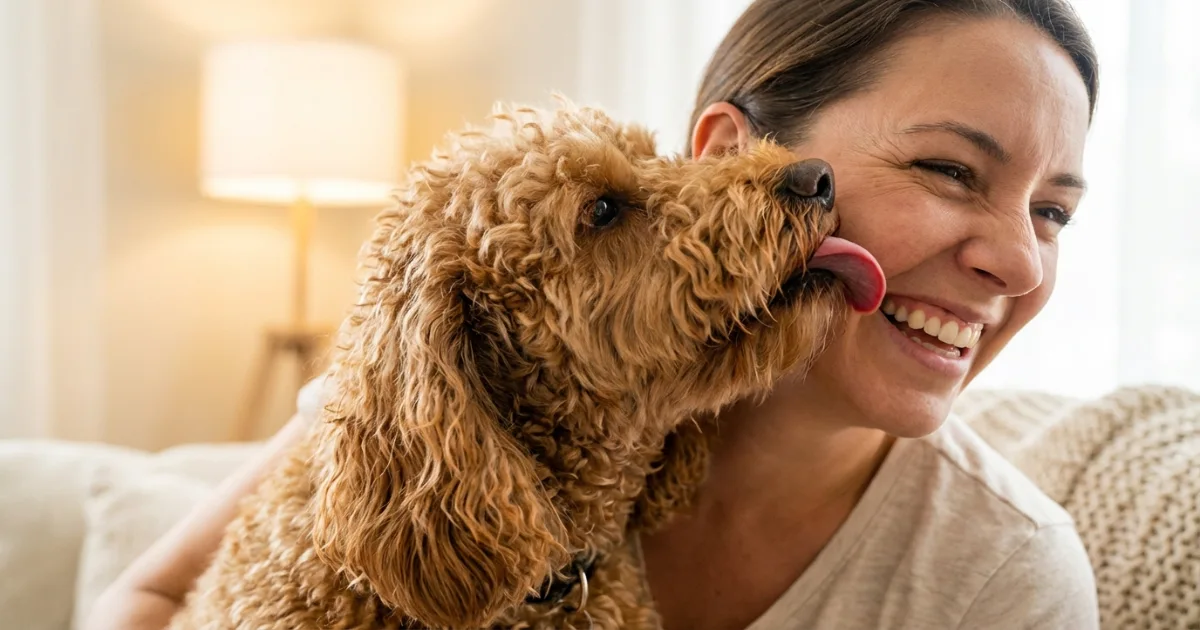
This is the most common reason by a wide margin, and it starts in puppyhood. Mother dogs lick their puppies constantly — to stimulate them, clean them, and comfort them. Poodle puppies carry that association into adulthood, and licking their humans becomes one of their primary languages for saying “I love you” and “I feel safe with you.” A poodle that licks your hands when you come home, your face when you sit beside them, or your arm while you’re watching TV is almost certainly expressing genuine poodle affection behavior. It’s social bonding in its most instinctive form.
- Stress, Anxiety, and Self-Soothing
Poodles are emotionally sensitive dogs, and they feel stress acutely. Poodle anxiety licking is different from affectionate licking in that it tends to be more compulsive — the dog licks themselves (particularly their paws or legs), licks the same surface repeatedly, or licks you with an intensity that seems driven rather than relaxed. Licking releases endorphins in dogs, which is why it functions as a self-soothing mechanism. Common triggers include separation from their owner, loud noises, changes in household routine, new people or animals in the home, or prolonged under-stimulation.
- Grooming Behavior
Poodles are fastidious creatures. They lick themselves to clean their coat, paws, and face — and they often extend this instinct to their owners and other pets in the household. Poodle grooming licking is typically methodical and focused on a specific body part. You’ll notice it most often after mealtimes, after outdoor walks, or when something foreign lands on the coat. This type of licking is generally healthy and doesn’t require intervention unless it becomes obsessive or causes skin irritation.
- Taste and Scent Attraction
Dogs experience the world through smell and taste in ways we genuinely can’t comprehend — their olfactory system is roughly 10,000 to 100,000 times more sensitive than ours. Your skin carries a constantly changing cocktail of salt, natural oils, residual food, lotion, sunscreen, sweat, and environmental scents that your poodle finds genuinely interesting and often irresistible. If your poodle targets your hands after meals, your legs after exercise, or your arms after you’ve applied moisturiser, taste and scent attraction is almost certainly what’s happening. It’s not weird — it’s chemistry.
- Attention-Seeking Behavior
Poodles are intelligent enough to quickly learn which behaviors get a reaction from their owners — and licking almost always gets one. Even a negative reaction (pushing the dog away, saying “no”) is still attention, and a stimulus-hungry poodle will take that trade repeatedly. If your poodle licks you most persistently when you’re distracted — working, on your phone, talking to someone — there’s a good chance it’s a deliberate attention-seeking strategy that has been inadvertently reinforced over time. The solution isn’t punishment; it’s restructuring how and when attention is given.
- Compulsive or Boredom-Driven Licking
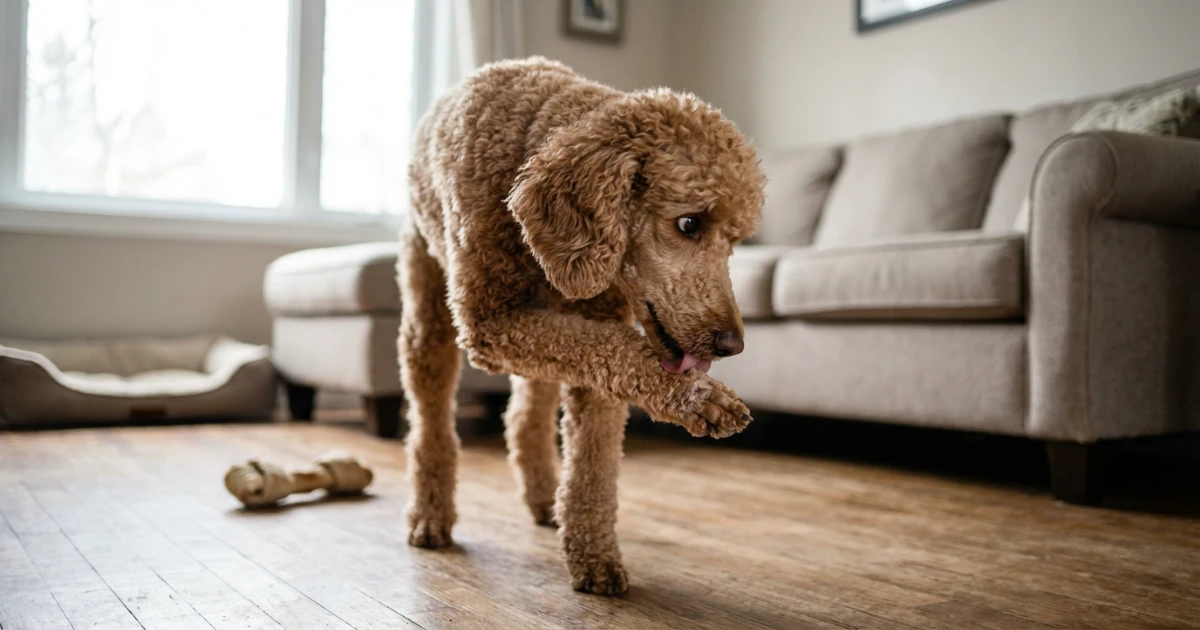
A poodle with insufficient mental or physical stimulation will find ways to occupy themselves, and repetitive licking is a common outlet. This is particularly relevant for the Standard Poodle, which was bred for demanding working roles and has a high need for cognitive engagement. Compulsive licking often targets specific surfaces — the same spot on the floor, the same patch of their own leg, the same corner of the sofa. Unlike affectionate licking, compulsive licking has a driven, almost trance-like quality to it, and the dog can be difficult to redirect. If this describes what you’re observing, increasing daily mental enrichment and exercise should be your first intervention.
- Medical Causes
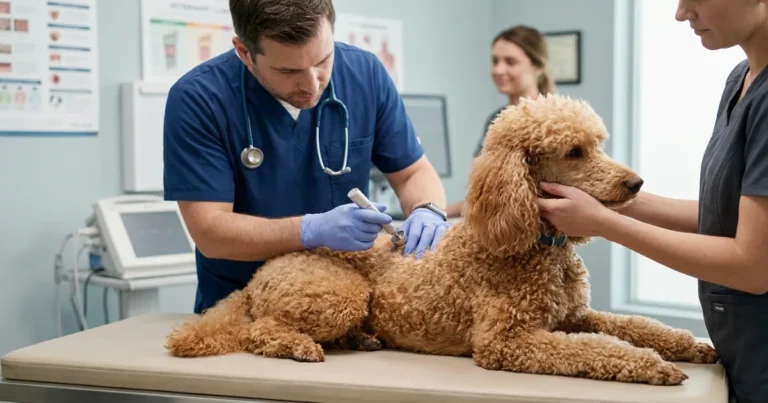
When licking is persistent, focused on one body area, and doesn’t resolve with behavioral interventions, an underlying physical cause needs to be considered. Allergies — environmental, dietary, or contact — are the most common medical driver of excessive licking in poodles. Other causes include pain (a dog licking a joint may be communicating discomfort), gastrointestinal distress (excessive face or lip licking is often a nausea signal), skin infections, wounds, or parasite irritation. Poodles are particularly prone to certain skin conditions — our detailed guide to poodle skin problems covers the most common conditions to be aware of.
Normal Licking vs. Excessive Licking: How to Tell the Difference
Not all licking is a problem — in fact, most of it isn’t. The key is understanding where normal, healthy licking ends and where compulsive or medically driven licking begins. The table below gives you a quick-reference framework.
| Licking Pattern | Likely Cause | Action Needed |
|---|---|---|
| Licks you when you arrive home | Affection / greeting ritual | Normal |
| Licks own paws occasionally after walks | Grooming — cleaning paws | Normal |
| Licks your hands or arms briefly | Taste / scent / affection | Normal |
| Licks persistently when you’re distracted | Attention-seeking | Monitor / Redirect |
| Licks same spot on own body repeatedly | Anxiety, boredom, or skin issue | Investigate |
| Licks surfaces (floors, walls) obsessively | Nausea, GI distress, or anxiety | Vet Consult |
| Licks one joint or area causing hair loss or redness | Pain, allergy, or infection | Vet Consult |
| Sudden increase in all licking behavior | Pain, illness, or stress change | Vet Consult |
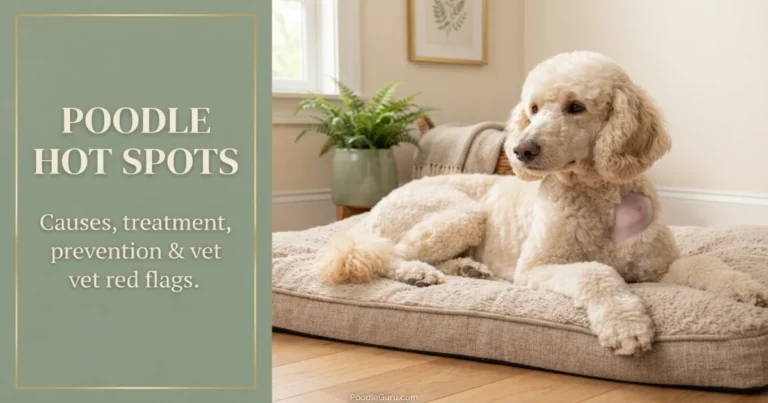
If your poodle is licking a single spot to the point of raw skin, redness, or hair loss — known as an acral lick granuloma — veterinary care is essential. Left untreated, these wounds deepen, become infected, and can be very difficult to heal. Similarly, if excessive licking appears suddenly with no behavioral explanation, always rule out pain or illness before addressing it as a behavioral issue. Poodles with allergies frequently present with intense paw and face licking — see our guide on poodle skin problems for the full picture on allergy-related skin conditions.
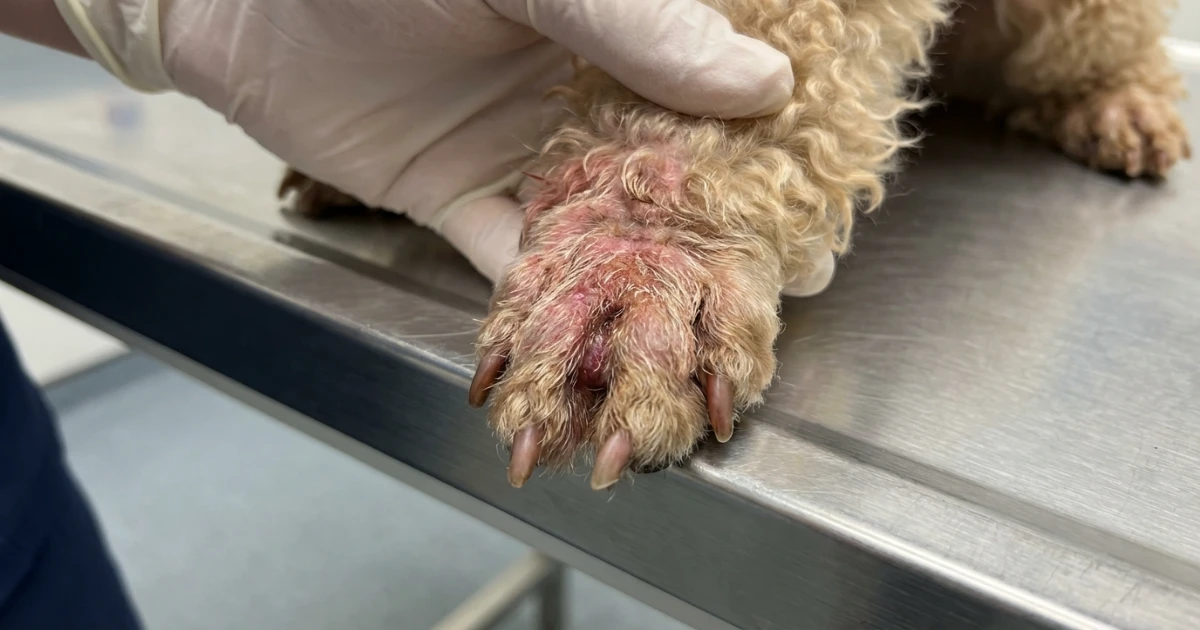
Medical Reasons Behind Poodle Licking Behavior
It’s worth going deeper on the medical side, because this is where owners most often miss important signals. Poodles can’t tell you when something hurts or itches — licking is one of their most reliable ways of communicating physical discomfort.
Allergies — the most common medical culprit
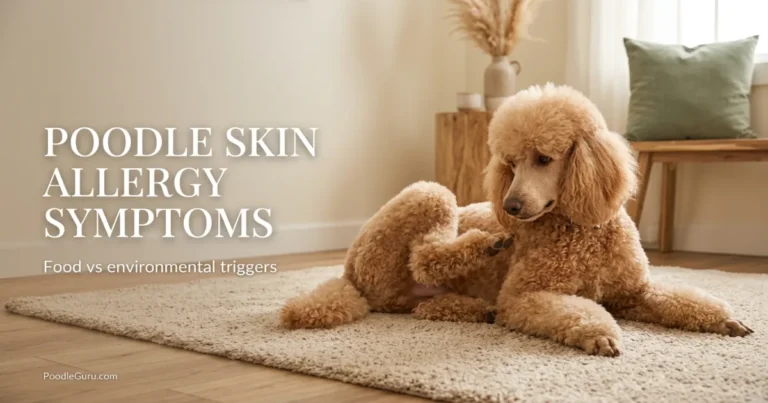
Poodles have sensitive skin, and environmental allergies (grass pollen, dust mites, mold) and food allergies are both well-documented in the breed. The most common presentation is obsessive paw licking, face rubbing, and generalized skin irritation — often accompanied by redness between the toes, around the eyes, or in the groin area. If your poodle’s licking is seasonal or worsens after certain outdoor exposures, environmental allergies are the most likely driver. Dietary allergies tend to be year-round and often include digestive symptoms alongside the licking. Your vet can guide you through elimination diet trials or allergy testing.
Gastrointestinal distress
A lesser-known but well-researched trigger for excessive licking — particularly licking of lips, floors, or carpet — is nausea or GI upset. Studies have confirmed that dogs experiencing stomach discomfort frequently engage in excessive licking of surfaces as a response. If your poodle is licking the floor, their lips, or unusual surfaces repeatedly, especially around mealtimes or in the morning before eating, digestive issues should be on your radar. Pancreatitis, inflammatory bowel conditions, and acid reflux have all been associated with this presentation.
Pain and joint discomfort
A poodle that licks persistently at a single joint — a knee, an elbow, or a wrist — may be experiencing localized pain. Older Standard Poodles are particularly susceptible to hip dysplasia and arthritis, and licking the affected joint is a common early signal. Don’t dismiss targeted licking in an older dog as grooming. It may be the clearest communication they’re capable of giving you that something hurts.
💡 Coat and Skin Connection: Healthy skin produces less irritation-driven licking. Regular grooming — including brushing to remove allergens trapped in the coat — is one of the most underrated preventive measures for licking issues. Learn about the best tools for maintaining your poodle’s coat in our poodle shedding and coat care guide.
How to Stop Excessive Poodle Licking: 7 Practical Strategies
Once you’ve identified the likely cause of your poodle’s licking, you can choose the right intervention. There’s no one-size-fits-all approach here — a dog licking out of anxiety needs a very different response than a dog licking for attention. Work through the strategies that match your specific situation.
- Rule out medical causes first. Before any behavioral intervention, schedule a vet check if the licking is focused on a single body part, is causing visible skin damage, has started suddenly, or is accompanied by any other changes in behavior or health. Treating the symptom without addressing an underlying condition wastes time and leaves your dog uncomfortable.
- Stop inadvertently reinforcing the behavior. If your poodle licks you and you respond — even to push them away or say “stop” — you’ve given them attention. For attention-driven licking, the most effective response is complete removal of attention: stand up calmly, turn your back, and walk away. Consistency is everything here. Every person in the household must respond the same way, every time.
- Increase mental and physical enrichment significantly. Boredom and under-stimulation are two of the most overlooked drivers of excessive licking. Add a puzzle feeder to mealtimes, introduce sniff walks (where your poodle leads by nose rather than pace), schedule a dedicated 10-minute training session daily, and rotate toys to maintain novelty. A mentally tired poodle simply licks less.
- Address anxiety at its root. If your poodle’s licking is anxiety-driven, identify and address the specific trigger. Separation anxiety requires a structured desensitisation program — gradual, calm departures and arrivals, safe confinement training, and for severe cases, consultation with a veterinary behaviourist. For situational anxiety (thunderstorms, visitors), management tools like white noise, safe spaces, and pheromone diffusers can provide meaningful relief.
- Redirect to an appropriate behavior. When you catch your poodle beginning to lick compulsively, redirect them before it escalates — offer a chew toy, a Kong stuffed with food, or ask for a trained behavior (sit, down, touch) and reward compliance. You’re teaching them that there are other, better options for self-soothing and engagement.
- Investigate and manage allergies. If paw and skin licking correlates with seasons, outdoor exposure, or specific foods, work with your vet to identify and manage the allergen load. This may include dietary changes, antihistamines, medicated wipes for paws after outdoor walks, regular bathing with hypoallergenic shampoo, and in some cases, prescription allergy medications or immunotherapy.
- Use a deterrent spray for wound licking. If your poodle is licking a specific wound or skin lesion and creating a cycle of irritation, a bitter-tasting deterrent spray applied around (never directly into) the affected area can interrupt the cycle while healing progresses. An Elizabethan collar (cone) may be necessary in more severe cases to allow skin to heal completely before the licking behavior resets.
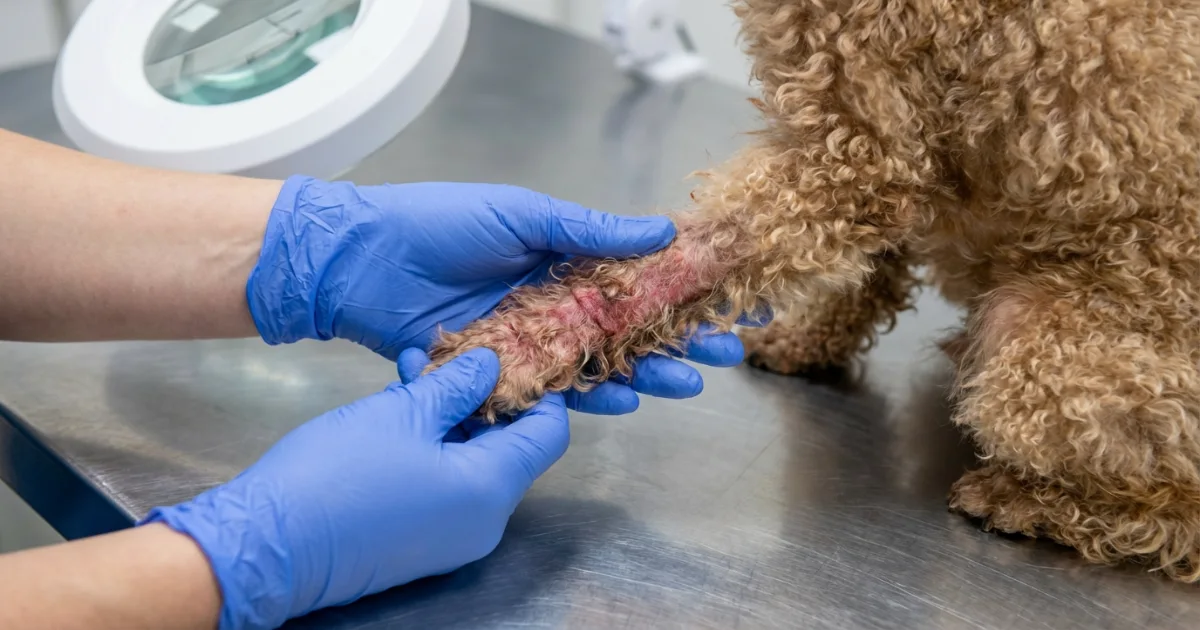
Understanding Licking Is Understanding Your Poodle
Poodles lick because they are communicative, emotionally intelligent, and deeply bonded animals. Most of the time, licking is simply their way of saying they love you, they’re curious about you, or they want your attention. When it becomes excessive or compulsive, it’s almost always telling you something important — about their emotional state, their health, or their environment. Learn to read the signals, respond appropriately, and address the root cause rather than just the symptom. That’s not just good training — it’s good partnership with your dog.
People Also Ask: Poodle Licking FAQs
Yes — poodles are naturally communicative, emotionally expressive dogs, and licking is one of their primary forms of interaction. Affection licking, grooming licking, and taste-driven licking are all completely normal and healthy behaviors. What isn’t normal is licking that is obsessive, targets a specific body part causing skin damage, occurs alongside changes in mood or health, or begins suddenly with no behavioral explanation. In those cases, the licking is a signal that warrants investigation rather than a behavior quirk to simply manage.
Face licking in poodles is almost always an expression of affection, social bonding, and submission. It traces directly back to puppyhood behavior — wolf and dog pups lick the faces of adult pack members as a greeting and bonding ritual. Your poodle licking your face is saying they feel safe, connected, and happy with you. Your face also carries concentrated scent information and frequently residual taste from food or drink, which adds a sensory dimension to the behavior. If face licking is excessive or frenzied rather than gentle and intermittent, anxiety or over-arousal may be contributing.
Obsessive paw licking in poodles is one of the most reliable signs of an allergic reaction — either environmental (grass, pollen, dust mites) or dietary. Allergens that contact the paws during outdoor walks or that trigger an immune response systemically often cause intense itching and irritation between the toes and on the paw pads. Other causes include contact irritants (road salt, cleaning products on floors), a minor wound or foreign object embedded in the paw, anxiety, or a yeast infection between the toes. If paw licking is causing redness, darkened fur staining, or swelling, a veterinary examination and allergy investigation is strongly recommended.
Yes, absolutely — and poodles are exceptionally well-suited to training-based behavioral modification given their intelligence and responsiveness. The most effective approach combines three elements: removing reinforcement (don’t react to the licking with attention of any kind), consistently redirecting to an incompatible behavior (asking for a sit, offering a chew toy, or stepping away), and addressing whatever is driving the licking in the first place. Punishment-based approaches — scolding, spraying water, or pushing the dog away forcefully — tend to create confusion or anxiety and often worsen the behavior over time. Positive redirection and consistency produce the best long-term results.
Licking floors, carpets, and furniture is a behavior veterinarians refer to as Excessive Licking of Surfaces (ELS), and research has consistently linked it to gastrointestinal issues — particularly nausea, acid reflux, and intestinal discomfort. It can also be driven by anxiety, boredom, or residual food smells. If your poodle is licking surfaces in prolonged, repetitive sessions — especially in the morning before eating or after meals — a digestive evaluation is worth pursuing with your vet. Surface licking that occurs only occasionally and briefly around areas where food has fallen is generally just scent-following behavior and is not a concern.