This article contains affiliate links. PoodleGuru may earn a small commission if you purchase through our links, at no extra cost to you.
Best Slow Feeder Bowls for Poodles (2026 Guide)
The best slow feeder bowls for poodles are not just cute dishes — they are practical mealtime tools that can slow fast eating, reduce swallowed air, support better digestion, and turn dinner into gentle brain work. The right bowl depends on your poodle’s size, muzzle shape, eating speed, and cleaning needs. This guide makes that choice clear.
Quick Answer: Best Slow Feeder Bowls for Poodles
The best slow feeder bowls for poodles depend on size, muzzle comfort, material, and eating speed. For many Standard Poodles, a large stainless steel maze bowl is the safest starting point because it is durable, hygienic, and difficult to flip. Miniature and Toy Poodles often do better with a smaller ceramic or food-grade silicone puzzle feeder that is gentle on narrow muzzles. Choose a pattern that slows eating without causing frustration, and remember that no bowl can guarantee prevention of gastric dilatation-volvulus (GDV).
Why Poodles Need Slow Feeder Bowls
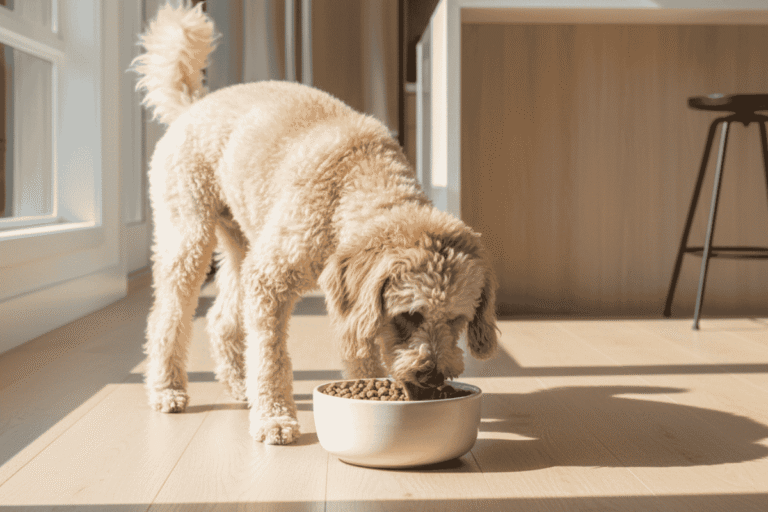
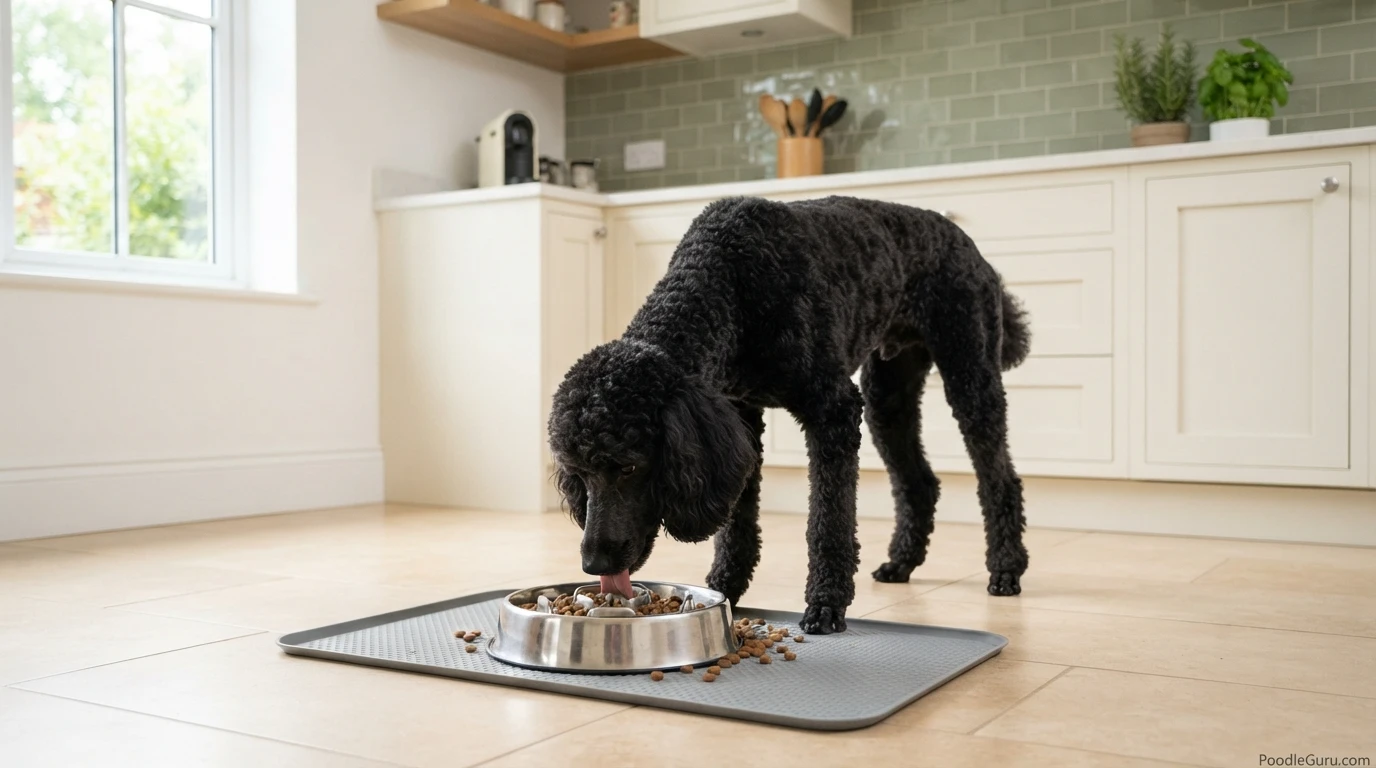
Poodles, especially Standard Poodles, have a deep, narrow chest — the classic body shape linked to a higher risk of gastric dilatation-volvulus (GDV), or bloat. Fast eating can also mean more swallowed air, discomfort, gas, and regurgitation. A slow feeder cannot guarantee bloat prevention, but it can slow the meal, reduce gulping, and make it easier to manage one risk factor in a sensible feeding routine.
But the benefits run deeper. Poodles are brilliant, and a puzzle-style bowl gives their brain a workout. It turns a mindless routine into a problem-solving session. For dogs that wolf their food in seconds and then stare at you expectantly, a slow feeder provides much-needed mental stimulation. It also helps with portion control — especially useful if your poodle is on a poodle weight loss plan.
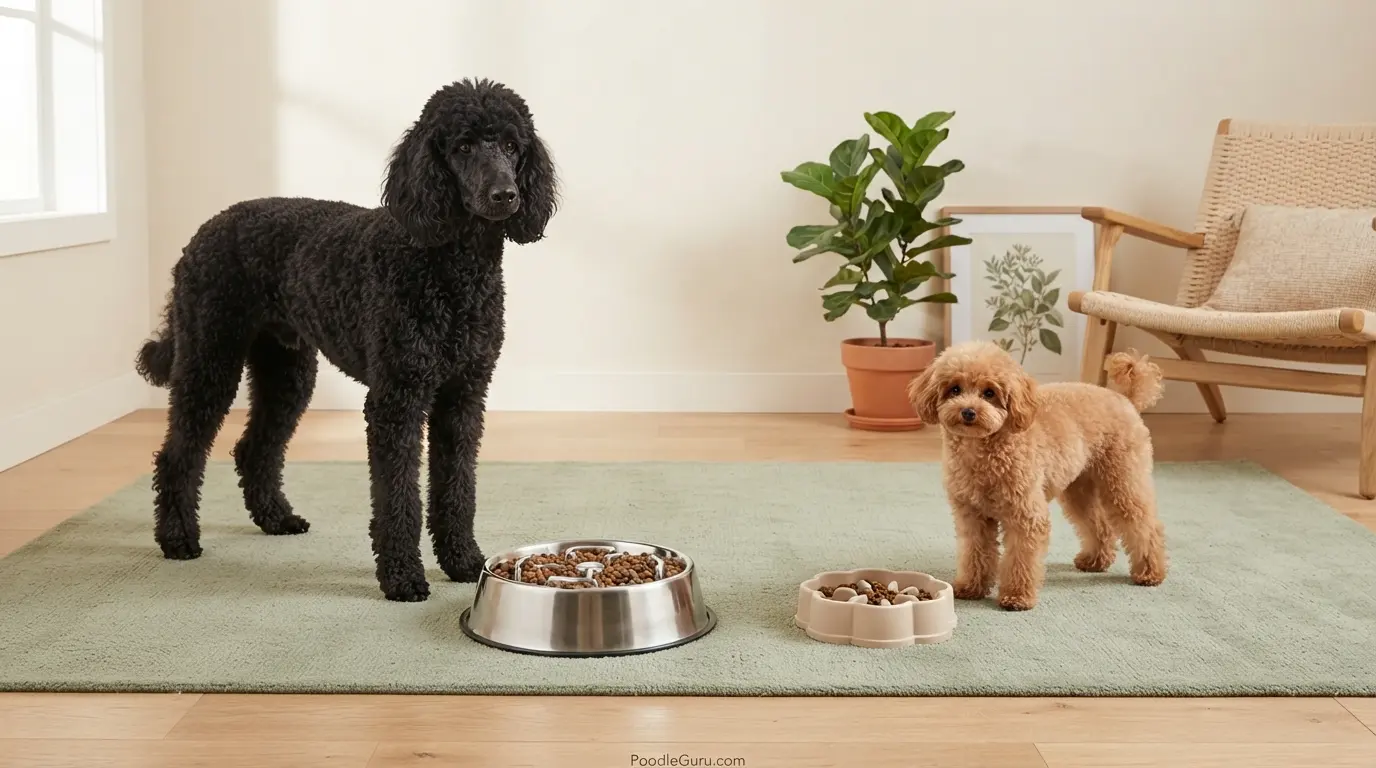
Size matters enormously here. A standard slow feeder bowl with wide gaps might barely slow down a determined Standard Poodle. Meanwhile, a deep, complicated maze could frustrate a tiny Toy Poodle into giving up. Matching the bowl to your specific poodle’s measurements is non-negotiable.
The PoodleGuru SLOW Feeder Selection Framework
At PoodleGuru, we evaluate every slow feeder bowl through a poodle-specific lens. We call it the PoodleGuru SLOW Framework — a four-point system that cuts through marketing claims and focuses on what actually matters for this breed.
Size & Snout Compatibility
Measure your poodle’s muzzle length. A bowl with deep, narrow ridges can be uncomfortable for a long poodle snout. Toy and Miniature Poodles need patterns scaled to their smaller mouths so they can actually access the food. The bowl’s diameter should be at least 1.5 times the width of your dog’s face.
Level of Difficulty
Match the complexity to your poodle’s persistence. A beginner poodle may need a simple spiral or raised-center design. An experienced gulper requires a maze with multiple tight turns. If your poodle gets frustrated and walks away, the difficulty is too high.
Odor & Bacteria Resistance
Poodles can be prone to chin acne and skin sensitivities. Porous materials like scratched plastic can harbor bacteria. Stainless steel and glazed ceramic are non-porous and dishwasher-safe — the most hygienic options. Avoid any bowl that retains an oily film after washing.
Washability
If the bowl can’t go in the dishwasher or be easily scrubbed by hand, skip it. Food residue trapped in tiny crevices is a breeding ground for bacteria. Silicone mats that flip inside out for cleaning score high here; complex fixed plastic patterns often fail.
By running any potential slow feeder through these four filters, you eliminate most options that look cute in an ad but frustrate your poodle or compromise their health.
Material & Design: What Matters for Poodles
Three materials dominate the slow feeder market, and each has distinct pros and cons for poodle owners. For any bowl that touches food daily, choose a smooth, washable surface and avoid damaged plastic, because scratches can trap residue and make cleaning harder.
| Material | Pros for Poodles | Cons for Poodles | Best For |
|---|---|---|---|
| Stainless Steel | Non-porous, dishwasher-safe, doesn’t absorb odors, extremely durable | Limited pattern complexity compared to molded plastic; can be noisy if your poodle pushes it | Hygiene-conscious owners, aggressive chewers, raw feeders |
| Food-Grade Silicone | Flexible, easy to clean, gentle on teeth and gums, often foldable for travel | Some determined poodles can flip it; less pattern variety | Toy & Miniature Poodles, dogs with dental issues, travel |
| Glazed Ceramic | Non-porous, heavy (won’t slide), attractive, excellent hygiene | Breakable if dropped; limited to moderate pattern complexity | Calm eaters, smaller poodles, home use only |
| Plastic (Food-Grade) | Wide variety of intricate patterns, inexpensive, lightweight | Can scratch and harbor bacteria; some poodles chew the edges; not always dishwasher-safe | Budget-conscious buyers, dogs that need very complex patterns |
For most poodle households, stainless steel offers the best balance of safety, durability, and cleanliness. If you choose plastic, select a clearly food-contact-safe product, inspect it weekly for scratches, and replace it as soon as any surface damage appears — your poodle’s chin will thank you.
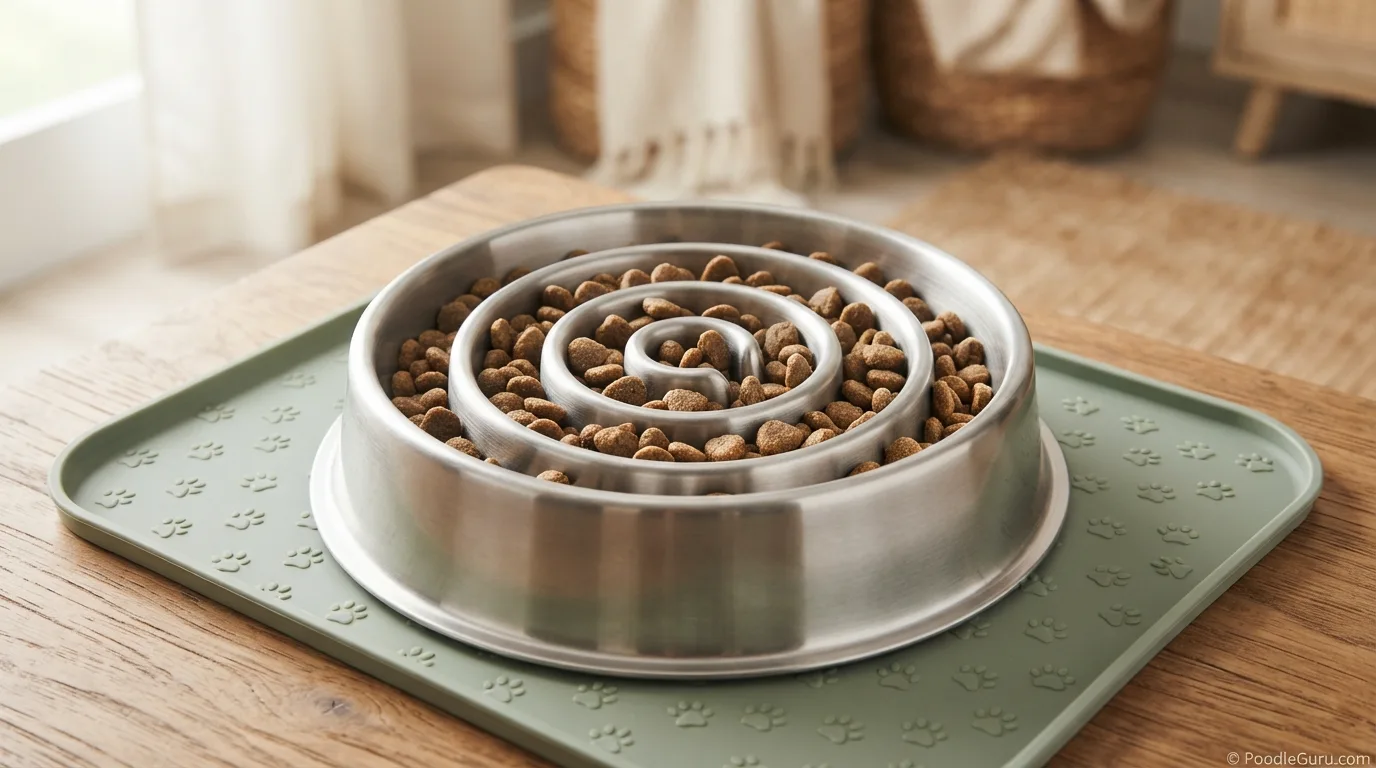
Comparison Table: Best Slow Feeder Bowls for Poodles (2026)
We’ve mapped the most effective bowl types against poodle size, material, and key features. These are recommended criteria, not hands-on test results, based on what we know about poodle anatomy and eating behavior.
| Bowl Type | Material | Best Poodle Size | Difficulty Level | Price Range (2026) | Notable Feature |
|---|---|---|---|---|---|
| Stainless Steel Maze Bowl | Stainless steel | Standard | Moderate | $25–$45 | Large capacity, dishwasher-safe, heavy base prevents sliding |
| Silicone Snuffle Bowl Mat | Food-grade silicone | Toy, Miniature | Moderate–Hard | $15–$30 | Folds flat for storage, gentle on tiny muzzles, can be used for wet food |
| Ceramic Puzzle Bowl | Glazed ceramic | Miniature, Toy | Easy–Moderate | $20–$40 | Beautiful design, weight keeps it stationary, non-porous |
| Plastic Spiral / Maze Bowl | BPA-free plastic | Standard (large), Miniature (small) | Hard | $10–$20 | Widest variety of intricate patterns, budget-friendly |
| Raised Center Slow Feeder (Steel) | Stainless steel | Standard | Easy | $30–$50 | Simple central dome forces licking, good for beginners |
For most Standard Poodle owners, we recommend starting with a stainless steel maze bowl — it’s tough enough for a powerful dog and won’t harbor bacteria. Toy and Miniature Poodles often thrive with a silicone snuffle mat that rewards their cleverness without hurting their tiny jaws.
How to Introduce a Slow Feeder Bowl to Your Poodle
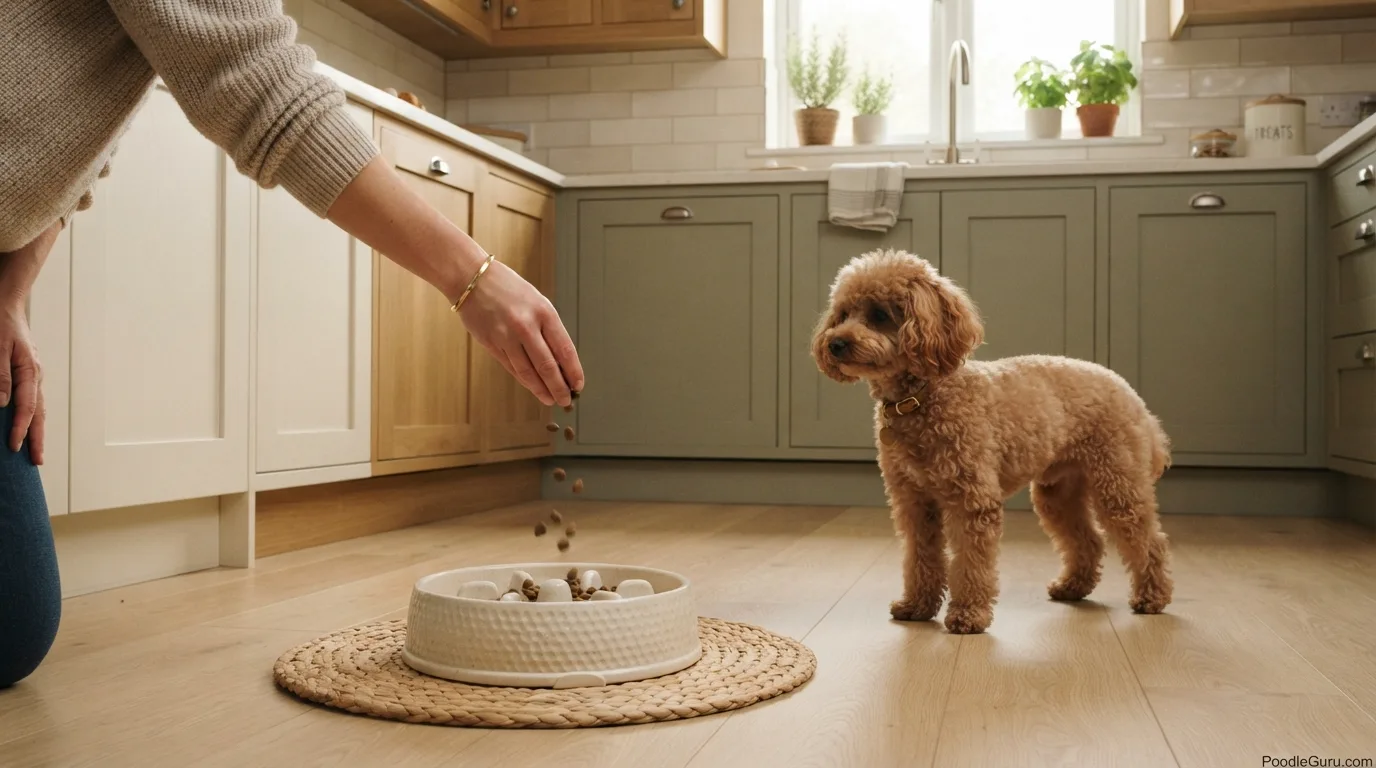
Not every poodle greets a new bowl with enthusiasm. Some approach it like a puzzle, while others stare at you as if you’ve forgotten how to serve dinner. Follow this five-step method to build a positive association quickly.
Place the Empty Bowl on the Floor
Let your poodle sniff it for a few minutes. Toss a few treats near it, then inside it. This step tells your dog the new object is safe and rewarding.
Start with High-Value Soft Food
For the first meal, use a small amount of wet food or soaked kibble smeared lightly across the pattern. The strong smell and easy access build confidence. You want your poodle to think, “This strange dish is a treasure chest.”
Stay Nearby, Don’t Hover
Sit at a distance and do your own thing. If your poodle pauses to look at you, offer calm, quiet praise. Avoid the urge to point at the food — let them figure it out.
Increase Kibble Gradually Over 3–5 Days
Once your poodle is happily licking, start filling the crevices with their regular kibble. Begin with a partial meal in the slow feeder and the rest in a normal bowl if needed, then transition to the full meal over several days.
Never Leave a Frustrated Poodle to “Work It Out”
If your poodle paws at the bowl, whines, or walks away repeatedly, the difficulty is too high. Remove the bowl after a few minutes and try an easier pattern or material. Frustration teaches your poodle to hate mealtime, not slow down.
Common Mistakes to Avoid with Poodle Slow Feeders
- Choosing a bowl with a single large obstacle. Poodles are clever enough to push food around a single lump. You need multiple ridges, spirals, or compartments to truly slow them down.
- Using a plastic bowl for a poodle with chin acne. Scratched plastic harbors bacteria that can worsen skin issues. If your poodle gets bumps on their chin, switch to stainless steel immediately.
- Forgetting to clean the bowl after every meal. Saliva and food particles build up fast. A quick rinse isn’t enough — at minimum, scrub with hot soapy water daily, and run through the dishwasher weekly if possible.
- Going too hard, too fast. A dog that gulped food for years needs time to adjust. Start with an easy pattern and work up. The goal is slower eating, not a canine IQ test every meal.
- Not securing a lightweight bowl. Silicone and plastic bowls can slide across the floor or be flipped. Place them on a non-slip mat or choose a heavier stainless steel base.
Expert Insight: When to Skip the Bowl Entirely
If your poodle has a flat face (not typical, but mixed breeds can) or is recovering from dental surgery, skip the bowl and scatter-feed on a clean kitchen floor or snuffle mat. The goal is always comfort first.
2026 Price Guide: What to Expect
Slow feeder prices in 2026 range from about $10 for a basic plastic puzzle to $50 for a heavy-duty stainless steel maze. Here’s what drives the cost and what’s worth paying for.
Budget Tier: $10–$18
Typical product: BPA-free plastic spiral or basic maze bowl. Suitable as a starter bowl to test your poodle’s response. Replace every 6–12 months as scratches appear.
Mid-Range: $20–$35
Typical product: Stainless steel raised-center bowl, silicone snuffle mat, or glazed ceramic puzzle. The sweet spot for most poodle owners — good hygiene, durability, and effective slowing.
Premium: $40–$50+
Typical product: Large stainless steel maze bowls with non-skid bases, or veterinarian-designed puzzle feeders. Worth it if you plan to use the bowl for years and want the easiest cleaning experience.
Prices based on major pet retailers in 2026. Expect to pay 10–15% less when on sale or bundled with a non-slip mat.
Avoid the cheapest no-name plastic bowls sold through unverified sellers — you have no clear assurance that the material is food-contact-safe or durable enough for daily use. Saving $5 is not worth a bowl that scratches, smells, or becomes hard to clean.
Frequently Asked Questions
Do slow feeder bowls actually help prevent bloat in poodles?
Slower eating may reduce gulping and swallowed air, which are sensible goals in a poodle feeding routine. No bowl can guarantee bloat prevention, so Standard Poodle owners should also know GDV warning signs and discuss risk-reduction steps with a veterinarian. It is especially relevant for Standard Poodles, whose deeper chest shape makes careful feeding habits important.
What size slow feeder bowl does my Toy Poodle need?
Look for a bowl labeled for small breeds or cats. The capacity should match your Toy’s meal size (about ½ cup). Crucially, the ridges should be low and widely spaced enough that your poodle’s tiny tongue can navigate them without frustration. Silicone mats with shallow bumps often work best.
Can I put wet food in a slow feeder dog bowl?
Yes, but choose a bowl with a smooth, non-porous surface like stainless steel, glazed ceramic, or food-grade silicone. Wet food sticks to porous plastic and becomes impossible to fully clean. Silicone snuffle mats are excellent for spreading wet food thinly across the surface.
My poodle refuses to eat from the slow feeder. What should I do?
First, make sure the difficulty level matches your dog’s persistence. Try an easier pattern with a single central ridge. Sprinkle a few high-value treats (like freeze-dried chicken) on top to motivate them. If refusal continues for more than three meals, remove the bowl and consult a professional trainer — some poodles need desensitization to the texture or smell.
Are plastic slow feeders safe for poodles?
BPA-free, food-grade plastic bowls are safe when new, but they must be replaced as soon as scratches appear. Bacteria can thrive in those tiny grooves and contribute to poodle chin acne. Stainless steel or ceramic is a safer long-term choice. If you use plastic, inspect it under bright light weekly.
How do I clean a slow feeder bowl properly?
Rinse immediately after each meal to loosen debris. Scrub with a bottle brush or designated sponge to reach into the crevices, using hot soapy water. If the bowl is dishwasher-safe, run it through a full cycle at least once a week. For silicone mats, you can flip them inside out to scrub every nook. Sanitize monthly by soaking in a dilute vinegar solution (1:1 water and white vinegar) for 10 minutes, then rinse thoroughly.
Final Summary: The Right Bowl Changes Mealtime
The best slow feeder bowls for poodles make mealtime slower, cleaner, and more mentally engaging. They may help reduce fast-eating problems such as gulping, swallowed air, regurgitation, and digestive discomfort, but they should be used as part of a complete feeding routine rather than treated as a GDV guarantee. Match the material to your dog’s hygiene needs and the pattern to their persistence, and you’ll wonder why you didn’t switch sooner.
Key Takeaways
- Fast eating can contribute to gulping, swallowed air, regurgitation, and digestive discomfort — a slow feeder bowl helps by making meals last longer.
- Stainless steel and glazed ceramic are the most hygienic materials for poodles because they resist bacterial buildup and are dishwasher-safe.
- Match bowl size and pattern complexity to your poodle’s muzzle length and persistence; a Toy Poodle needs a vastly different feeder than a Standard.
- The PoodleGuru SLOW Framework (Size, Level of difficulty, Odor resistance, Washability) helps you evaluate any bowl on the market through a poodle-specific lens.
- Introduce the bowl gradually with high-value food and never force a frustrated dog to “figure it out” — the goal is slower eating, not a stressful experience.
- Expect to spend $20–$35 for a quality stainless steel or silicone slow feeder that will last years with proper care.