Poodle vs Spanish Water Dog: Corded Coat Breeds Compared
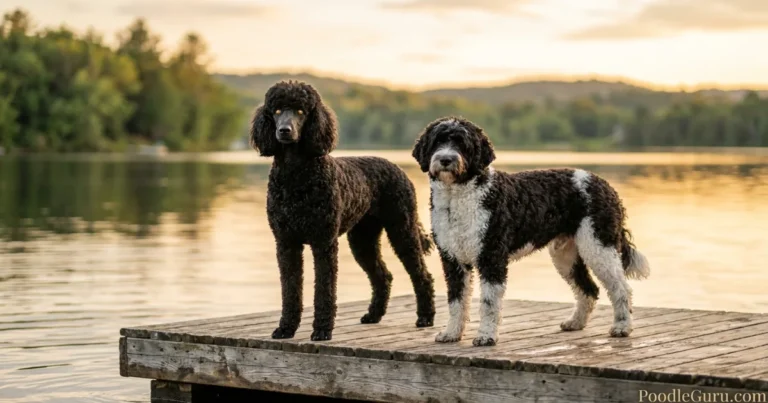
Poodle vs Spanish Water Dog is a real lifestyle decision, not just a curly-coat comparison. Both the Poodle and the Spanish Water Dog turn heads with their textured coats — but beneath the surface, they’re vastly different dogs. Choosing between them isn’t about which one looks cooler in a corded cut. It’s about temperament, lifestyle, and the daily commitment you’ll make to that coat. Here’s the honest, side-by-side comparison you won’t find in generic “best curly-haired dogs” listicles.
Quick Answer
The Poodle vs Spanish Water Dog decision hinges on your tolerance for grooming and your desired energy level. Poodles come in three versatile sizes, are famously intelligent and highly trainable, and can be kept in a low-maintenance short trim or a high-fashion corded coat. Spanish Water Dogs are a single, medium-sized, higher-drive herding breed whose rustic corded coat must form naturally and never be brushed — or you’ll ruin its signature texture. If you want polish and predictability, choose the Poodle. If you prefer a rugged, independent partner with a lower-maintenance (but very specific) coat, the Spanish Water Dog may be your match.
What Is a Corded Coat Breed?
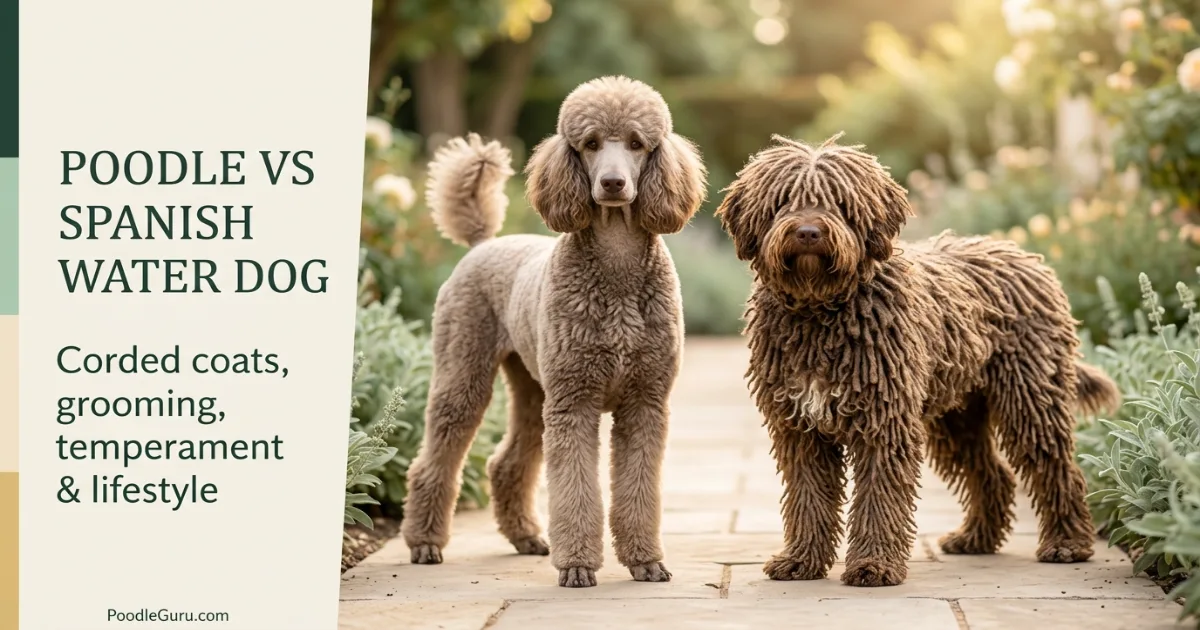
A corded coat is a deliberate coat state where the hair is allowed to twist and mat naturally into distinct, rope-like cords rather than being brushed out into a fluffy or flat shape. For Poodle owners, this means the corded look is a high-maintenance styling choice — the coat must be sectioned and cared for meticulously to prevent mildew and skin problems. For Spanish Water Dog owners, cording is not optional; the breed standard calls for a rustic, naturally forming corded coat that should never be brushed. The most important thing to understand is that a Poodle in a corded cut requires more work than a Poodle in a traditional continental clip, while a Spanish Water Dog’s corded coat is relatively low-maintenance once it’s formed — but it looks shaggy, not refined.
Quick Facts at a Glance
Available Sizes
Poodle: Toy, Miniature, Moyen (not AKC), Standard. Spanish Water Dog: One size — medium.
Coat Philosophy
Poodle corded coat is a styling choice; the dog can be shaved. SWD corded coat is the breed standard — never brush it.
Temperament Core
Poodles are highly biddable and people-focused. SWDs are independent, alert, and have strong herding/guarding instincts.
Grooming Commitment
Both breeds’ corded coats require frequent baths, drying, and cord separation. A Poodle corded coat is more labor-intensive to maintain neatly.
Exercise Requirement
Poodles: moderate to high, depending on size. SWD: high — bred for all-day work, needs significant daily mental and physical activity.
Lifespan
Poodles: 12–15+ years. Spanish Water Dog: 12–14 years on average.
Origins & Original Purpose: Why It Matters
A dog’s original job shapes its modern temperament far more than its coat does. The Poodle originated as a water retriever in Germany and France — the iconic continental clip was functional, not decorative. The shaved areas reduced drag in the water while the hair left on the chest and joints provided insulation. This retrieving heritage explains the Poodle’s intense drive to fetch, swim, and work closely with humans. In contrast, the Spanish Water Dog (Perro de Agua Español) was an all-purpose farm dog in Spain, herding livestock, guarding property, and retrieving from water. This multi-role background produced a dog with strong problem-solving skills and a naturally protective, sometimes reserved nature — far more independent than the typically outgoing Poodle.
Appearance & Coat Types: More Than Just Curls
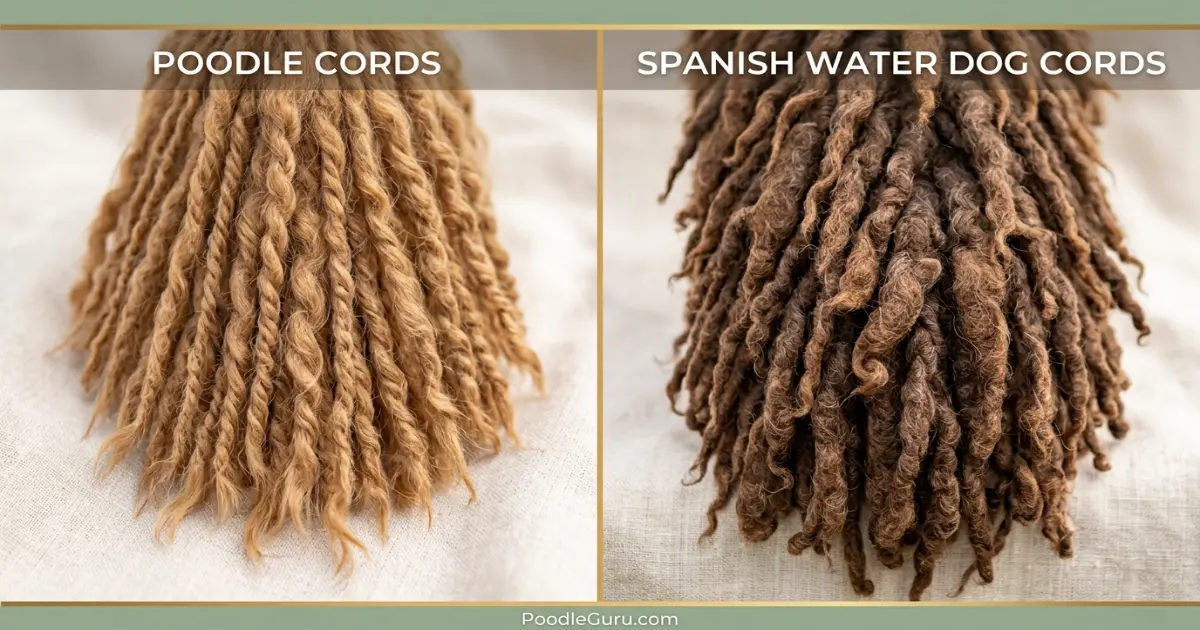
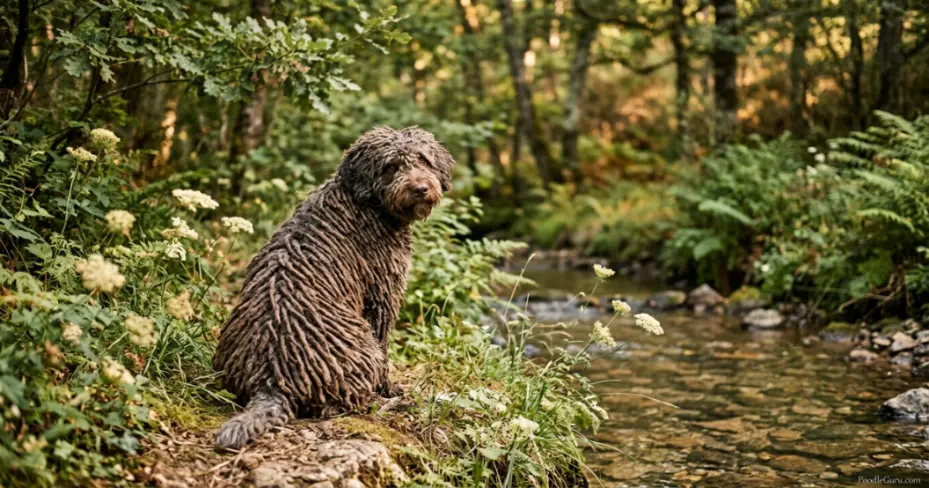
At first glance, both breeds look similar when in full corded coat — but the hair itself is different. Poodle hair is a single coat of dense, curly hairs that grow continuously, similar to human hair. It can be styled into tight, uniform cords with careful sectioning. Spanish Water Dog hair, however, has a unique mixed texture that forms naturally into looser, flatter, sometimes felt-like cords. The breed standard explicitly states the coat should not be trimmed too evenly, and the dog should look rustic, never sculpted. When a Spanish Water Dog is clipped too short, the distinctive corded texture can be permanently altered, and many show breeders will not sell to owners who plan to shave the coat.
Size & Weight Comparison
One of the most decisive factors in the Poodle vs Spanish Water Dog debate is size. Poodles offer a range; the Spanish Water Dog does not. You can find a Poodle that matches your living situation — from a lap-sized Toy to a large Standard — while a Spanish Water Dog is always a medium-sized, athletic dog weighing 30–50 pounds.
| Breed | Height (at shoulder) | Weight (healthy adult) | Apartment-Friendly? |
|---|---|---|---|
| Poodle — Toy | Under 10 inches | 4–6 lbs | Excellent — minimal exercise space needed |
| Poodle — Miniature | 10–15 inches | 10–15 lbs | Good — needs daily walks, flexible |
| Poodle — Moyen | 15–18 inches | 20–30 lbs | Moderate — active indoors, still manageable |
| Poodle — Standard | Over 15 inches (typically 22–25) | 45–70 lbs | Possible with sufficient outdoor exercise |
| Spanish Water Dog | 16–20 inches | 30–50 lbs | Rarely — high energy, needs space and a job |
Temperament & Trainability: People-Pleaser vs. Independent Thinker
The Poodle is often ranked among the most intelligent dog breeds, but what truly sets them apart is their eagerness to work with you. They thrive on positive reinforcement, quickly learn routines, and are famously sensitive — they won’t tolerate harsh corrections. This makes them an outstanding choice for first-time owners willing to invest in training. However, their sensitivity means they can develop separation anxiety if left alone for long hours.
The Spanish Water Dog is equally intelligent but uses it differently. Bred to work independently on farms, they’re natural problem-solvers who don’t wait for instructions. This can manifest as resource guarding, wariness of strangers, or a tendency to herd children and other pets. Socialization from puppyhood is non-negotiable. SWDs form intense bonds with their people but are not the gregarious, everyone-is-my-friend dogs that well-socialized Poodles often are. For an owner who enjoys a “velcro” dog that follows them everywhere but doesn’t necessarily want to please everyone, the SWD is a rewarding challenge.
Poodle vs Spanish Water Dog Grooming Demands: The Real Cost of a Corded Coat
This is where the Poodle vs Spanish Water Dog debate gets real. A Poodle in a pet clip (not corded) needs professional grooming every 4–6 weeks, at a cost of $60–$150 per session depending on size and location. A Poodle in a full corded show coat, however, requires near-daily maintenance: bathing, drying each cord to the skin with a high-velocity dryer, separating cords by hand, and checking for mildew. It’s a lifestyle for someone who enjoys the process.
The Spanish Water Dog’s corded coat, by contrast, is lower-maintenance once it’s established — but it must be formed correctly. The coat should never be brushed; instead, the dog is bathed and allowed to air-dry, with cords separated by hand as they form. Striking that balance between “formed cords” and “a matted mess” requires an experienced eye. Many new SWD owners make the mistake of brushing the coat, which destroys the texture. A professional groomer unfamiliar with the breed can also ruin the coat. Annual or twice-yearly clipping (for working or pet SWDs) is common, but show dogs remain in full cord.
When to Ask a Professional Groomer
- If you’re starting a Poodle corded coat — a groomer experienced with show Poodles should establish the initial cord pattern.
- If your SWD’s cords feel matted at the skin or smell musty — this is a skin health issue, and a groomer or vet should assess.
- Never let an untrained groomer brush out a Spanish Water Dog’s coat; this can permanently damage the hair texture.
Poodle vs Spanish Water Dog Exercise & Living Needs
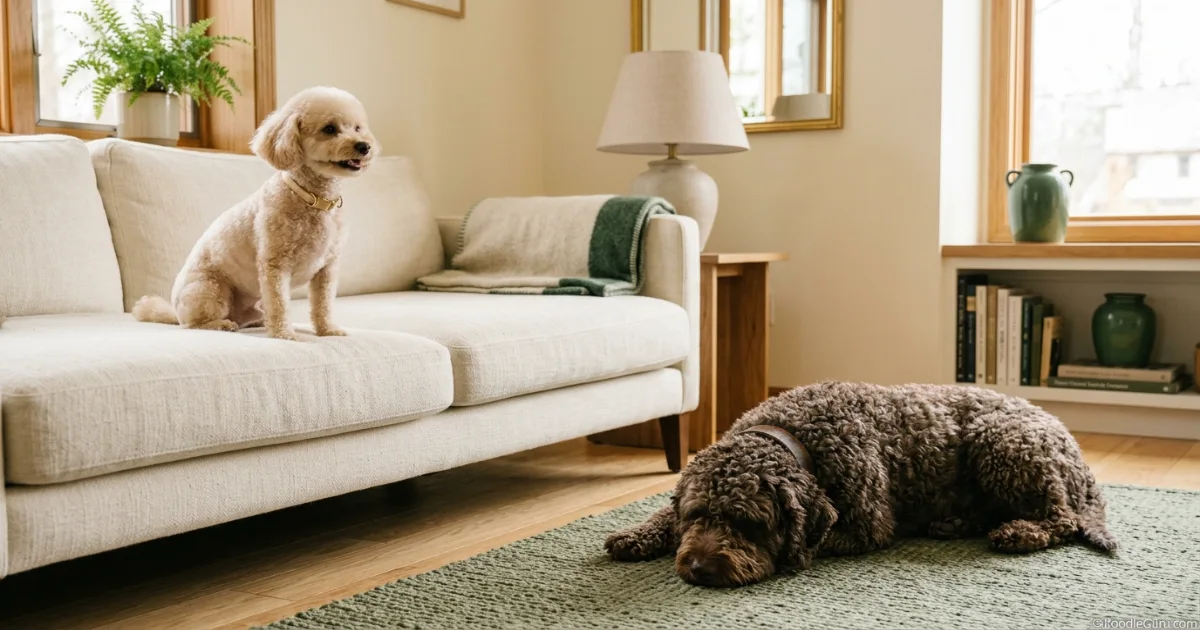
Poodles are athletic dogs, but they adapt to their owner’s lifestyle. A Toy or Miniature Poodle can meet their exercise needs with indoor play, short walks, and mental stimulation. A Standard Poodle needs 45–60 minutes of activity daily — fetch, swimming, or agility. They settle well indoors when their needs are met.
A Spanish Water Dog, on the other hand, rarely settles into a low-key routine. They were bred to work all day, and a couple of short walks won’t cut it. They excel at dog sports like herding, dock diving, and advanced obedience. Without a job — or at least intense daily exercise and training — they can become destructive and anxious. If you want a dog that’s equally happy with a lazy Sunday and a hiking Saturday, the Poodle is the safer bet.
Health & Lifespan: What to Watch For
Both breeds are generally healthy, but each has known predispositions. Poodles can be prone to Addison’s disease, hip dysplasia, progressive retinal atrophy (PRA), and bloat (in Standards). Responsible breeders screen for these conditions, and the AKC Poodle breed page lists recommended health tests.
Spanish Water Dogs may face hip dysplasia, PRA, and a neurological condition called neuroaxonal dystrophy. The breed is also known for a higher incidence of hypothyroidism and allergies. Because the breed is less common, it’s critical to find a breeder who participates in the OFA (Orthopedic Foundation for Animals) or equivalent health registries. The AKC Spanish Water Dog page outlines the official standard and health considerations.
For both breeds, a corded coat carries additional skin health risks — any coat that holds moisture against the skin can develop hot spots or fungal infections if not dried properly after swimming or bathing.
Price, Breeders & Red Flags (2026)
2026 Price Guide
Poodle Puppy: $1,500–$3,500 for a well-bred Toy or Miniature; $2,000–$4,000+ for a Standard from health-tested parents. Corded show prospects may cost more. Rare colors like red or parti can push prices higher, but color should never be the only priority.
Spanish Water Dog Puppy: $2,500–$4,500 on average, reflecting the breed’s relative rarity in North America. Waitlists are common. Expect breeders to ask detailed questions about your lifestyle and experience with independent breeds.
Breeder Red Flags for Both Breeds
- Cannot provide OFA or equivalent health clearances for both parents.
- Offers to ship a puppy without a conversation about your home and experience.
- Makes claims like “hypoallergenic” without nuance — both breeds are low-shedding, but no dog is 100% allergen-free.
- For Poodles: charges a premium exclusively for “teacup” or “micro” size — these are not recognized varieties and often come with severe health problems.
The PoodleGuru Corded Coat Breed Decision Framework
At PoodleGuru, we evaluate a breed match by looking beyond the coat and into the daily reality of living with the dog. Use this five-step framework to decide which breed genuinely fits your life.
Assess Your Grooming Realism
Ask yourself: Do I have the time and budget for professional grooming every 4–6 weeks (Poodle in a pet clip), or am I prepared to learn a complex hands-on cord care routine (both breeds)? If the answer is no, consider a Poodle in a very short pet trim — that’s the lowest-maintenance option of all.
Outcome: A clear picture of the ongoing coat commitment you’ll actually keep up with, not just aspire to.
Match Your Activity Level Honestly
If your ideal weekend involves a long hike followed by a nap, a Standard Poodle can match that energy. If you’re a daily runner, biker, or want a dog for herding or dock diving, the Spanish Water Dog will keep up. If your exercise is mostly short walks, a Toy or Miniature Poodle is the safest, most content companion.
Outcome: A breed and size match that prevents the frustration of an under-exercised working dog or an overwhelmed lap dog.
Evaluate Your Training Style
Poodles thrive with positive, reward-based training and are forgiving of novice handlers who are consistent. Spanish Water Dogs respond best to an experienced owner who understands that “independent” doesn’t mean “stubborn” — it means the dog needs a clear reason to comply, and early socialization is critical to prevent wariness.
Outcome: A realistic expectation of the training journey ahead, reducing the risk of rehoming due to behavior challenges.
Consider Your Living Space
Toy and Miniature Poodles adapt beautifully to apartments. Standards need room to stretch. Spanish Water Dogs are not ideal for small spaces — they can be vocal, highly active indoors, and prone to alert barking, which may not suit close neighbors.
Outcome: A home environment that allows your dog to settle comfortably without constant stress.
Research Breeders Thoroughly
For both breeds, join national breed clubs, attend dog shows, and interview multiple breeders. A responsible breeder will ask you as many questions as you ask them. Be prepared for waitlists — a puppy from health-tested parents is worth the wait.
Outcome: A healthy, well-socialized puppy from a breeder who provides a lifelong support network.
Which Breed Is Right for You? A Quick Owner Action Plan
Your Next Steps:
- Spend time with both breeds in person. Attend a dog show, contact a breed club, or visit a reputable breeder to meet adult dogs.
- Bookmark PoodleGuru’s Complete Poodle Grooming Guide — even if you lean toward the SWD, understanding corded coat care will prepare you.
- Calculate the true cost: Factor in grooming, insurance, training classes, and the puppy price. A Poodle in a simple pet clip is often the most budget-friendly corded-coat option.
- Assess your noise tolerance: Spanish Water Dogs can be vocal. If you have thin walls, a Toy or Miniature Poodle may be a better neighbor.
Frequently Asked Questions About Poodle vs Spanish Water Dog
Which is easier to groom, a Poodle or a Spanish Water Dog?
A Poodle in a short pet trim is the easiest — regular cuts every 4–6 weeks, minimal daily work. A Poodle in a corded coat is the most labor-intensive. A Spanish Water Dog’s natural corded coat requires less frequent grooming but very specific knowledge to form and maintain correctly.
Do both breeds have the same type of curly coat?
No. Poodle hair is a single, dense coat of curly hair that grows continuously. Spanish Water Dog hair has a unique mixed texture that felts into cords naturally. Poodle curls can be brushed out; SWD cords should never be brushed.
What is the price difference between a Poodle and a Spanish Water Dog?
In 2026, a well-bred Poodle puppy typically costs $1,500–$4,000 depending on size and color. Spanish Water Dog puppies range from $2,500–$4,500 due to the breed’s rarity. Always prioritize health testing over price.
Which breed is better for a family with children?
A well-socialized Poodle — especially a Standard — is often an excellent family dog, patient and playful. Spanish Water Dogs can do well with older, respectful children but may try to herd or nip at running kids due to strong herding instincts. Early socialization is critical for both.
Can both Poodles and Spanish Water Dogs have a corded coat?
Yes, but it’s a styling choice for the Poodle and the natural state for the SWD. A Poodle can be corded, clipped short, or kept in a fancy show trim. An SWD’s corded coat is part of the breed identity — shaving it permanently changes the texture and may disqualify it from the show ring.
Are both breeds hypoallergenic?
Both breeds are low-shedding and produce less dander than heavy-shedding breeds, making them often tolerated by allergy sufferers. However, no dog is completely allergen-free. Spend time with the specific breed before committing.
Which breed is more independent?
The Spanish Water Dog is significantly more independent and naturally protective. They bond deeply but don’t seek approval from strangers. Poodles, while intelligent, are more people-focused and typically friendlier with strangers when properly socialized.
Key Takeaways: Choosing Between a Poodle and a Spanish Water Dog
Both breeds are remarkable, but they suit fundamentally different owners. The right choice comes down to whether you want a highly trainable, adaptable companion in multiple sizes, or a rugged, independent partner with a rustic corded coat and a drive to work.
- The Poodle offers three size varieties (Toy, Miniature, Standard) and versatile coat styling — from a low-maintenance shave to an elaborate corded show coat. The Spanish Water Dog is a single, medium-sized breed with a rustic, naturally forming corded coat that must never be brushed.
- Poodles are biddable, sensitive, and thrive on positive training; Spanish Water Dogs are intelligent, independent herders that require an experienced owner committed to early and ongoing socialization.
- Corded coat care for a Poodle is a high-effort, high-cost styling commitment; for an SWD, it’s a lower-maintenance but breed-specific process that, if mishandled, can ruin the coat permanently.
- In 2026, both breeds cost $1,500–$4,500 from a responsible breeder. Prioritize health clearances (OFA or equivalent) over rare colors or availability.
- The PoodleGuru Corded Breed Decision Framework — evaluating your grooming realism, activity level, training style, living space, and breeder research — ensures you choose the dog that matches your actual life, not just your aesthetic preference.
- If you’re still uncertain, spend time with adult dogs of both breeds and explore PoodleGuru’s Poodle Size Chart to narrow down which size of Poodle might fit, or connect with the Spanish Water Dog Club of America for breed referrals.
Your next step is clear: get hands-on experience with both breeds, review our Complete Poodle Grooming Guide, and decide which lifestyle — not just which coat — you’re ready to commit to for the next 12–15 years.