Poodle vs Havanese: Complete Family Dog Comparison
Poodle vs Havanese is one of the most useful comparisons for families who want a small, affectionate, low-shedding companion without choosing the wrong daily routine. Both breeds can bond beautifully with children, fit apartment or family-home life, and offer years of cheerful companionship — but their grooming, barking, training style, and emotional needs are very different. This guide unpacks temperament, coat care, noise, size, health, and long-term costs so you can pick the breed that actually matches your family’s rhythm.
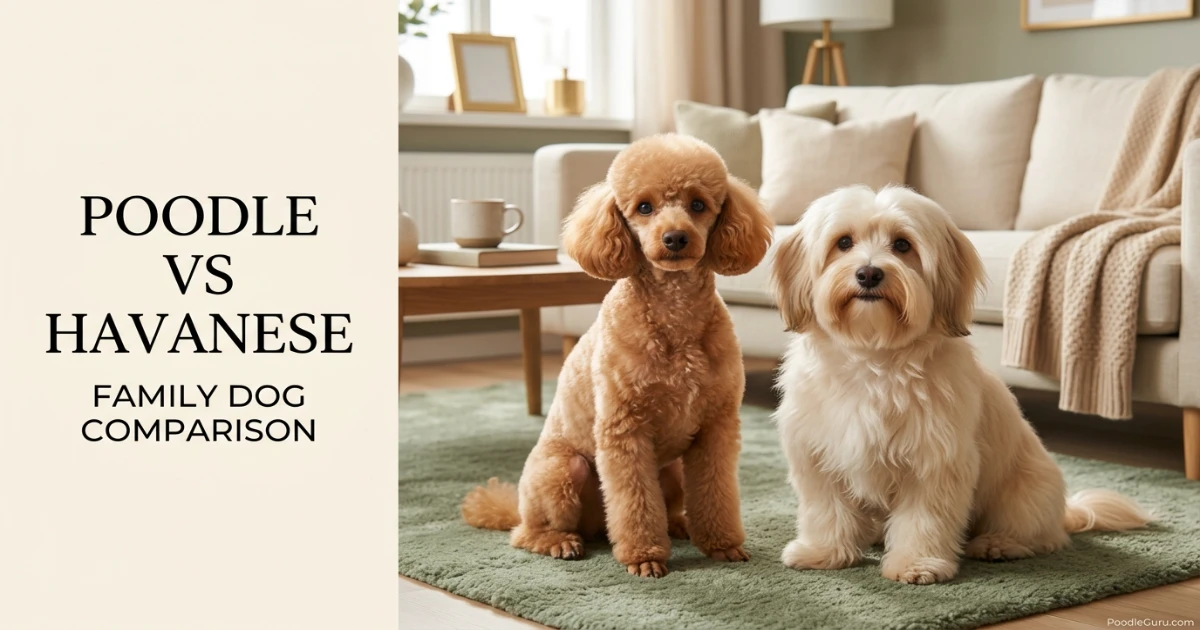
Quick Answer: Poodle vs Havanese for Families
The Poodle (Miniature or Toy) wins for families wanting a highly trainable, very low-shedding dog that thrives on learning, structure, and active play. The Havanese wins for families craving a cheerful, sturdy little shadow that excels at snuggling and adapts with slightly less intense exercise needs. The real choice is not which breed is “better” — it is whether your home is better suited to the Poodle’s sharp, athletic brain or the Havanese’s affectionate, people-focused velcro temperament.
Quick Facts: Poodle vs Havanese
Poodle (Miniature/Toy)
- Weight: Toy 4–6 lbs, Miniature 10–15 lbs
- Coat: dense, curly, single layer
- Shedding: extremely low
- Temperament: intelligent, eager to please, playful
- Kid-friendly: best with gentle, older children
- Lifespan: commonly 10–18 years, depending on size and health
Havanese
- Weight: 7–13 lbs
- Coat: long, silky, wavy, double coat
- Shedding: low, but loose hair can tangle
- Temperament: affectionate, social, playful, sturdy
- Kid-friendly: good with children when socialized
- Lifespan: 14–16 years
Key Difference
- Trainability: Poodle excels; Havanese is bright but distractible.
- Barking: Havanese tends to alert bark more often.
- Grooming: both high-maintenance, but Havanese coat can mat faster if not combed daily.
- Size range: Poodle offers more size options (Toy to Standard).
Poodle vs Havanese: Side-by-Side Comparison Table
| Trait | Poodle (Miniature) | Havanese |
|---|---|---|
| Typical Weight | 10–15 lbs | 7–13 lbs |
| Coat Type | Single-layer curly; continuously growing | Double coat; long, silky, wavy |
| Shedding & Dander | Very low; dander trapped | Low; tangles trap hair |
| Grooming Needs | Daily brushing; clip every 4–6 weeks | Daily combing; trim every 6–8 weeks |
| Trainability | Exceptionally high; loves obedience work | High; responds to upbeat, positive methods |
| Energy Level | Moderate to high; needs mental challenges | Moderate; short walks and playtime |
| Barking Tendency | Low to moderate | Moderate to high; alert barker |
| Good with Kids | Yes, with supervision for small size | Yes, sturdy and patient with gentle kids |
| Common Health Issues | Patellar luxation, PRA, dental problems, epilepsy | Patellar luxation, hip dysplasia, heart murmurs, eye disorders |
| Average Lifespan | 12–15 years | 14–16 years |
| 2026 Price Range | $1,500–$3,000+ | $1,500–$2,800 |

Why This Comparison Matters for Families
The Poodle and Havanese share enough traits that many families put both on their shortlist: they’re small, affectionate, generally good-natured, and don’t fill your house with fur. But a Poodle’s mind works differently than a Havanese’s heart. Poodles think; Havanese feel. That distinction shapes everything from how they respond to a chaotic after-school rush to how much training you’ll need to invest. This isn’t about one being “better”—it’s about which one blends into your specific family’s noise level, activity schedule, and tolerance for coat care.
First-time family dog buyers often assume that all small companion breeds are interchangeable lap warmers. They’re not. A Poodle will solve puzzle toys and ace obedience class; a Havanese will greet every guest as a long-lost friend and may not come when called if a treat isn’t involved. Understanding that gap can prevent rehoming heartbreak.
The Poodle as a Family Dog
Whether you choose a Toy or Miniature Poodle, you’re bringing home a highly intelligent athlete packed into a curly package. The AKC Miniature Poodle breed profile describes the Poodle as an elegant athlete and companion with a curly, low-allergen coat. In real family life, that means a Miniature Poodle will learn your household rules fast — but will also notice if you’re inconsistent. Poodles thrive on positive reinforcement and can become anxious under harsh correction.
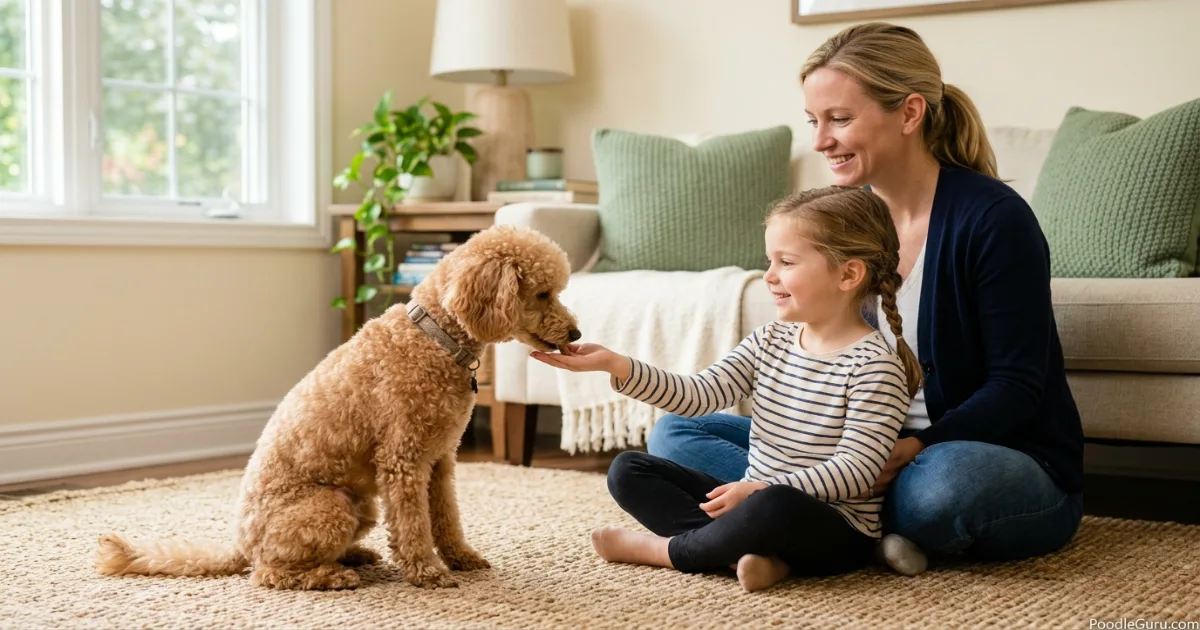
For families, the Poodle’s size range is a major advantage. A Toy Poodle suits quieter homes with older, gentle children; a Miniature Poodle can handle a bit more activity and makes a fine walking buddy. Both need daily mental exercise — puzzle feeders, hide-and-seek, trick training — or they’ll find their own entertainment, which may involve chewing, barking, or pestering the family. Their very low-shedding curly coat is a blessing for allergy-aware households, but it demands a structured grooming routine. If you’re ready to brush regularly and schedule a groomer every 4–6 weeks, the Poodle rewards you with a clean, elegant, highly responsive companion. Dive deeper into coat management with our complete Poodle grooming guide.
The Havanese as a Family Dog
The Havanese is Cuba’s only native breed, and it was bred purely for companionship. That means a Havanese’s primary goal is to be with you—on the couch, in the kitchen, at your feet while you work. The breed is sturdier than its size suggests, often bouncing back from a toddler’s clumsy pat with a wag. Unlike many toy breeds, Havanese tend to love everyone, making them poor guard dogs but wonderful social butterflies.
Their coat is stunning: long, wavy, and silky, but it’s also the breed’s biggest daily commitment. Without daily combing down to the skin, that gorgeous coat mats into tight, painful knots that may require shaving. Many families keep their Havanese in a shorter “puppy cut” for practicality. Havanese are moderately active — they’ll enjoy a short walk and a romp in the yard, but they won’t demand a jogging partner. They’re usually easygoing at home, but many will alert-bark when someone arrives. According to the AKC Havanese breed page, the Havanese is Cuba’s only native dog breed and is known as a cheerful, sociable companion.
The PoodleGuru Family Fit Assessment
At PoodleGuru, we evaluate family compatibility through four practical steps. Use this framework to see past the puppy cuteness and into daily life.
Coat Care Commitment
Be honest: can your family commit to 15–20 minutes of daily grooming and a professional appointment every 4–6 weeks? A Poodle’s dense curls mat fast; a Havanese’s silk tangles into felt-like clumps. If you can’t keep up, both breeds will suffer. A Poodle kept in a short clip with a standing 5-week appointment is often easier to maintain than a Havanese in full coat.
Trainability & Daily Engagement
Do you have time for structured training and brain games? Poodles need them. A bored Poodle can become neurotic. Havanese love learning too, but they’re more forgiving if you skip a training session and just snuggle. If you want a dog that excels in family obedience, go Poodle. If you want a happy-go-lucky learner, the Havanese is a joy.
Household Noise & Kid Dynamics
Young children and high noise levels? The Havanese often handles chaos better, bouncing back from unexpected hugs. Poodles are more sensitive; they do best with children who understand gentle handling. And if you live in an apartment with thin walls, a Havanese’s alert barking can become an issue—Poodles are generally quieter.
Long-Term Health & Financial Planning
Both breeds can live into their mid-teens, accumulating chronic conditions like dental disease, patellar luxation, and eye issues. A higher purchase price from a breeder who screens parents through OFA or CERF reduces surprise vet bills. Plan for annual dentals, quality food, and a grooming line item. Small dogs can rack up big bills if health is ignored.
Grooming: Where the Breeds Diverge
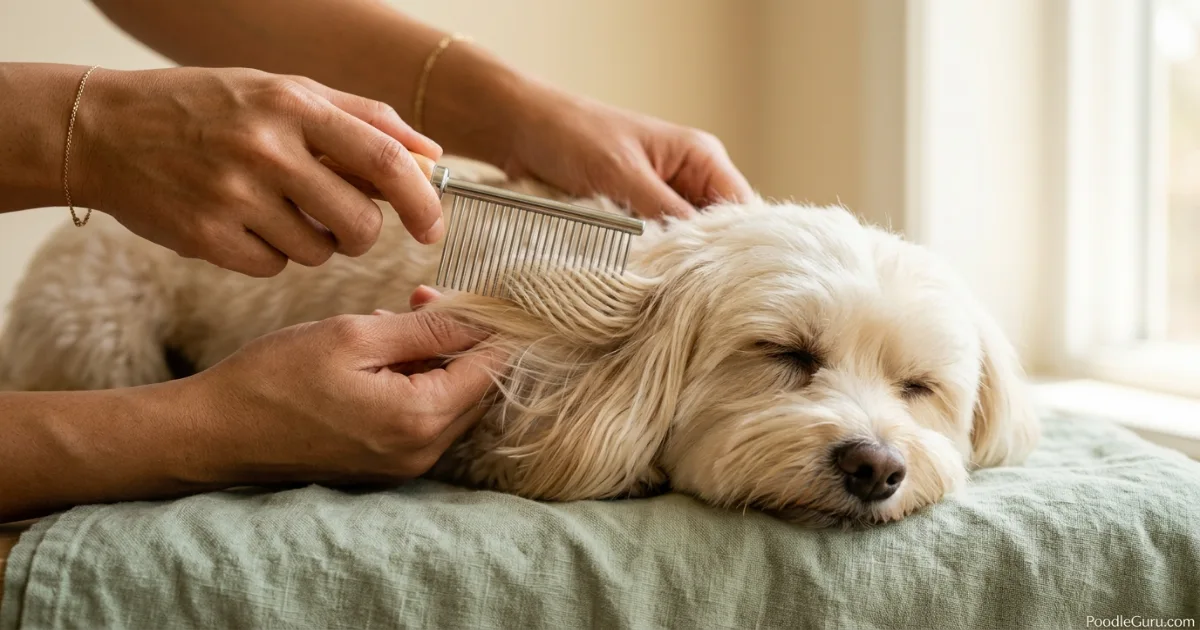
While both breeds require significant coat care, the experience differs. A Poodle’s curly coat traps dead hair and dander, so daily brushing with a slicker and comb prevents solid mats. The coat doesn’t drop hair around the house, making Poodles a top choice for cleanliness-focused families. A Havanese’s double coat, especially when kept long, must be combed section by section; otherwise, the undercoat tangles and mats against the skin, a painful condition that can lead to hot spots.
Professional Groomer’s Insight
“A Poodle in a sport clip can go 5 weeks between grooms if you brush diligently. A Havanese with that same frequency may need a complete shave-down if you missed a few days of combing. For busy families, the Poodle’s coat can be more predictable. For Havanese, I often recommend a shorter all-over trim to simplify life.”
Tool-wise, you’ll need a slicker brush, metal comb, and detangling spray for a Poodle. For a Havanese, a pin brush and wide-tooth comb are gentler on the silk. Both need their face and paws cleaned regularly to prevent tear staining and debris buildup.
Temperament & Daily Family Life
Here’s where the rubber meets the road. A Miniature Poodle will thrive in a household that enrolls in puppy class, practices tricks after dinner, and takes weekend hikes. They have a serious side: they’ll watch your face for cues and can become wary of strangers without early socialization. A Havanese, by contrast, thrives on laughter and laps. They’re natural clowns, always ready to play or nap with equal enthusiasm, and they rarely meet a person they don’t like.
Both breeds are affectionate, but their expressions differ. A Poodle shows love by learning your routines and following quietly. A Havanese shows love by leaning against your leg, sighing contentedly, and following you from room to room like a tiny, devoted shadow. That velcro nature can tip into separation anxiety if not managed, so alone-time training is essential for both—but especially the Havanese.
Health Considerations for Kids & Longevity
Both breeds share some common toy-dog vulnerabilities: dental overcrowding, luxating patellas, and a risk of injury from falls. Veterinary guidance generally recommends that families with young children supervise interactions to prevent the dog from being dropped or stepped on. For Poodles, eye conditions like progressive retinal atrophy (PRA) are a concern; reputable breeders screen for this. Havanese may have a higher incidence of heart murmurs and hip dysplasia for their size, so checking parent health clearances is non-negotiable.
For Miniature Poodles, the Poodle Club of America/OFA recommended testing includes PRA DNA testing, a CAER eye exam, patella evaluation, and hip evaluation. For Havanese, the Havanese Club of America recommends three core CHIC health tests: an annual CAER eye exam, a hip x-ray, and patella certification. A breeder who cannot show these clearances is cutting corners.

Cost and Value in 2026
Both breeds are similarly priced from ethical breeders: $1,500–$3,000 for a well-bred Poodle and $1,500–$2,800 for a Havanese. Beware of any breeder offering “teacup” versions at a premium; this usually means unhealthy miniaturization. A lower price tag under $800 often signals a puppy mill where health and early socialization were sacrificed.
2026 Buyer Alert
After purchase, budget $70–$120 per 4–6 weeks for professional grooming, plus quality nutrition and annual vet care that includes dental cleanings. Over a 14-year lifespan, grooming alone can cost $10,000–$15,000. Don’t let that sticker shock blindside you—plan it into the decision.
Which is the better long-term value? That depends on which temperament and coat your family can truly maintain. A dog that fits your lifestyle and doesn’t end up surrendered is always the best investment.
Common Family Buyer Mistakes
Ignoring Coat Differences
Thinking all “hypoallergenic” coats are equal leads to surprise matting. A Poodle’s curls behave differently than a Havanese’s silk; the grooming tools and time differ.
Underestimating Energy Needs
A Miniature Poodle isn’t a couch potato—it needs daily brain work. Families who only want a calm lap dog may find the Poodle demands more interaction than expected.
Skipping Socialization
Both breeds can develop nervousness or excessive barking without early, positive exposure to children, visitors, and everyday sounds. Puppy kindergarten is a must.
Owner Action Plan: Ready for a Family Companion?
Quick Checklist
- Research breeders on the AKC marketplace or breed club referrals; demand health test documentation.
- Set up a grooming budget and locate a trusted groomer before bringing the puppy home.
- Child-proof the puppy’s area—no unsupervised handling by kids under 6.
- Enroll in a positive-reinforcement puppy class the first month home.
- Practice short daily alone-time sessions to prevent separation anxiety.
- Stock up on breed-appropriate grooming tools: slicker + comb for Poodle; pin brush + wide-tooth comb for Havanese.
Frequently Asked Questions About Poodle vs Havanese
Which breed is better with children?
Both can be wonderful with gentle, respectful children. Havanese are slightly sturdier and more forgiving of clumsy handling, while Poodles are more sensitive and suit homes with older kids who understand gentle play.
Do Poodles or Havanese shed less?
Both are low-shedding, but a Poodle’s curly coat traps dander and loose hair more effectively, making it a top choice for allergy-aware families. Havanese shed minimally but may release more fine hair when brushed.
Are Havanese easier to train than Poodles?
Poodles are generally easier to train because of their intense focus and eagerness to work. Havanese are clever but more independent; they respond well to upbeat, short sessions but may lose interest if training feels repetitive.
Which breed barks less?
Poodles tend to bark less overall. Havanese have a natural alert-barking instinct and will announce visitors, passersby, and delivery trucks. Consistent training can manage, but not eliminate, this trait.
Can both breeds live in apartments?
Yes, both adapt well to apartment living provided they get daily exercise and mental stimulation. Consider the Havanese’s alert barking if you have noise-sensitive neighbors.
What’s the difference in grooming costs?
Grooming costs are similar: expect $70–$120 per session every 4–6 weeks for a Poodle and every 6–8 weeks for a Havanese in a shorter trim. Over a year, budget $700–$1,500 depending on your location and coat length.
Which breed is healthier long-term?
Both can be long-lived when well-bred and well cared for. Havanese commonly live into the mid-teens, while Toy and Miniature Poodles often have a broad 10–18 year range. Health-tested parents are the key to reducing inherited risks such as eye disease, patellar luxation, hip issues, and other breed-linked concerns.
Can I leave a Havanese alone during the day?
Havanese are velcro dogs and can develop separation anxiety if left alone for long hours. They do best in families where someone is home most of the day, or with careful alone-time training from puppyhood.
Key Takeaways: Poodle vs Havanese for Families
Your family’s daily rhythm, patience for grooming, and training goals decide which breed truly wins.
- A Miniature Poodle weighs 10–15 lbs and needs daily brushing plus a clip every 4–6 weeks to prevent mats.
- The Havanese weighs 7–13 lbs and requires daily combing to stop its silky double coat from tangling painfully.
- Poodles rank among the most trainable breeds; Havanese are bright but more independent and distractible.
- Havanese are generally sturdier and more tolerant of young children’s unpredictable movements.
- Both breeds can be long-lived companions, and grooming alone may cost thousands of dollars across their lifetime.
- A Poodle fits families wanting an active, obedient companion; a Havanese fits families craving a gentle, ever-present snuggle bug.
Your next move? Meet both breeds in person—visit a reputable breeder or a breed meet-up. Grooming, temperament, and that special click can’t be found on a screen. And if you’re leaning Poodle, explore our full Poodle temperament & family life guide to see exactly what daily life looks like.