Poodle Recall Training: The Complete Off-Leash Reliability Guide
Poodle recall training is the systematic process of teaching your poodle to come back to you immediately and joyfully when called, regardless of distractions. Poodles are brilliant, sensitive dogs with a surprising independent streak. Their recall isn’t automatic — it’s built through trust, high-value reinforcement, and a refusal to poison the “come” cue with anything unpleasant. A truly reliable off-leash poodle is the result of months of layered proofing, not a single training class.
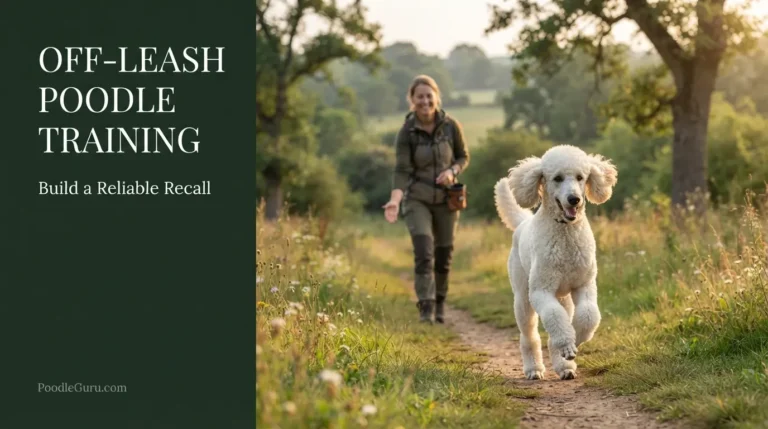
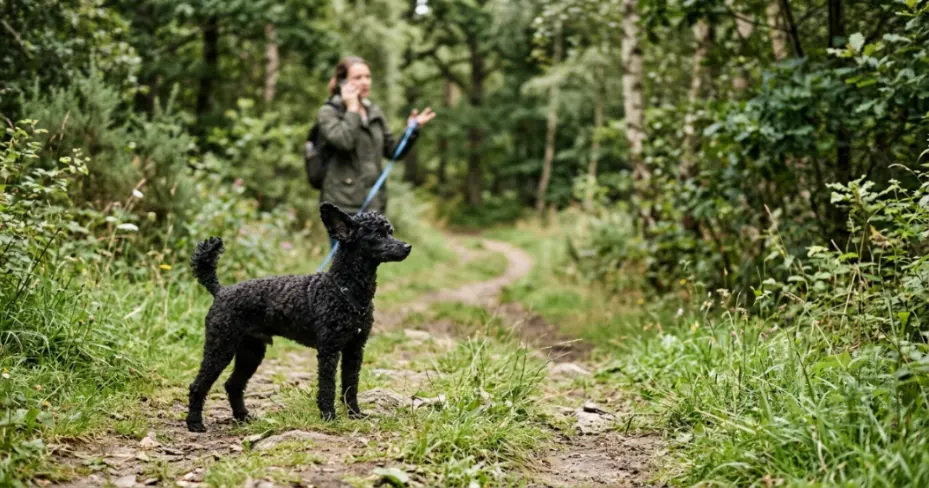
There is a particular kind of freedom that comes with walking a poodle off leash through a quiet woodland trail or across a wide-open field, watching those elegant legs eat up the ground while the dog circles back to check in with nothing more than a light verbal cue. That picture is what many poodle owners chase when they first type “poodle recall training” into a search bar. But the gap between the dream and the daily reality can feel enormous — especially when your clever poodle has just spotted a squirrel, completely ignored your call, and left you standing there holding a leash that suddenly feels like a symbol of failure.
Poodle recall training is not a quick fix. It is a relationship built on thousands of small interactions where your dog learns that coming when called is always, always the best option on the table. This guide is for owners who want the real process — the nuanced, layered approach that accounts for the poodle’s specific intelligence, sensitivity, and occasional selective hearing. Whether you’re starting with a puppy or rehabilitating an older dog who has learned that recall is optional, everything you need is here.
What Is Poodle Recall Training, Exactly?
At its simplest, recall training means teaching your dog that a specific cue — usually “come” or a whistle — means “stop whatever you’re doing and return to me right now.” But for poodles, that surface-level definition doesn’t capture the real challenge. A poodle will not simply obey because you asked. This is a breed that thinks, evaluates, and sometimes decides that what they’re currently sniffing is more interesting than what you’re offering.
True poodle recall training is about becoming more rewarding than the environment. It’s about building such a deep reinforcement history that the cue triggers an almost reflexive turn toward you, no matter what else is happening. It’s also about understanding that recall is not a single skill — it’s a cluster of skills that includes attention, impulse control, and the emotional self-regulation to disengage from something thrilling and choose you instead.
Why Off-Leash Reliability Matters Specifically for Poodles
Every dog benefits from a solid recall for safety, but poodles carry a unique combination of traits that make off-leash reliability simultaneously more critical and more achievable than in many other breeds. They are lean, fast, and possess surprising prey drive — a poodle that takes off after a rabbit can cover a terrifying amount of ground in seconds. That same poodle also has the cognitive horsepower to understand complex training concepts and the deep desire for human connection that, when properly harnessed, makes recall training a profoundly bonding experience.
Poodles were not bred to work at a distance in the way herding or retrieving breeds were; they were developed as water retrievers and companions, which means their natural inclination is to stay relatively close. But “relatively” doesn’t mean “reliably,” and without intentional training, that inclination crumbles the moment a stronger motivator appears. Off-leash reliability also opens up a world of enrichment — the chance to run, explore, and engage with the environment in ways a six-foot leash can never allow.
Veteran poodle trainers often say the breed learns recall cues faster than almost any other, but they also learn when ignoring those cues is worth it just as quickly. A poodle that discovers you’ll call “come” three times before anything happens has already been trained — just not to the behavior you wanted. The first rule of poodle recall: never give a cue you aren’t in a position to reinforce.
The Poodle Mind: Why Intelligence Can Help and Hinder Recall
There is a widespread assumption that smart dogs are easier to train. In reality, intelligence and biddability are not the same thing. Poodles are undeniably intelligent — they score near the top of canine cognition rankings — but they are also independent problem-solvers. A less clever dog might simply comply because it doesn’t occur to them not to. A poodle will look at you, calculate whether coming is worth leaving whatever they’re currently enjoying, and make a decision. That decision is shaped entirely by the reinforcement history you’ve built.
This is not a flaw. It’s a design feature of a breed that was asked to think independently in the field. Your job in recall training is to make sure the mental math always works out in your favor. If coming when called has consistently led to delicious food, joyful play, and the continuation of fun, your poodle’s calculus will lean toward recalling. If coming when called has ever meant the end of fun, a nail trim, or being scolded, the math shifts — and the poodle will notice.
Myths About Poodle Recall That Derail Training Before It Starts
Several persistent myths sabotage poodle owners before they even begin recall work. The first is that poodles “want to please” so much that they’ll naturally stick close without formal training. This confuses a social temperament with a trained behavior. Poodles enjoy being near their people, but enjoyment is not the same as a conditioned emergency recall that works under distraction.
The second myth is that a fenced yard eliminates the need for recall training. A fence keeps a dog in; it doesn’t teach a dog to respond when there’s an open gate, a broken latch, or a situation away from home. The third — and perhaps most damaging — is the idea that recall, once trained, is permanent. Like any high-level skill, recall degrades without maintenance. A poodle who was off-leash reliable last summer may not be this spring if no practice has happened in between.
How Poodle Recall Compares to Other Breeds
Understanding where poodles sit on the recall spectrum helps owners calibrate expectations. The table below compares key recall-relevant traits across breed groups.
| Trait | Poodle | Retriever (Lab, Golden) | Herding (Border Collie) | Hound (Beagle, Dachshund) |
|---|---|---|---|---|
| Biddability | High, but with independent filter | Very high — often eager to please | Extremely high — work-focused | Low — scent-driven, less handler-oriented |
| Prey Drive | Moderate to high (varies by line) | Moderate (bred for soft mouths) | Moderate, often channeled into work | Very high — hardwired to follow scent |
| Distractability | Medium — notice everything, quick to disengage if bored | Lower — focused on handler | Low when given a job | Extremely high — nose overrides ears |
| Initial Recall Speed | Fast learner, but discriminates whether reward is worth it | Fast and enthusiastic | Very fast — natural desire to circle back | Slow — instinct to follow trail overrides |
| Long-Term Reliability | Requires ongoing maintenance; can become selective | Generally stable with intermittent reinforcement | Very stable with continued work | Often unreliable off-leash without extensive training | < /tr>
The poodle sits in an interesting position: easier than hounds, more complex than retrievers. The breed’s intelligence allows them to grasp recall concepts rapidly, but their independent decision-making means proofing must be thorough and reinforcement genuinely compelling. You cannot bore a poodle into a reliable recall.
The Core Components of a Truly Reliable Poodle Recall
Breaking recall down into its components makes the training process feel less overwhelming. Reliable recall rests on four pillars:
1. Engagement and Attention
Before a poodle comes when called, they must be willing to pay attention to you in the first place. Engagement games — where the dog learns that checking in with you is highly rewarding — lay the foundation. Name recognition, offered eye contact, and spontaneous check-ins on walks are early signs that engagement is building.
2. A Crystal-Clear Cue
Your recall cue must be distinct, consistent, and never diluted by repetition. If you say “come, come, come” like a chant, you have three cues, not one. Choose one word — or a whistle — and protect it fiercely. Every time that cue leaves your mouth, a high-value reward should follow.
3. Graduated Distance and Distraction
Recall does not generalize automatically. A poodle that comes perfectly in your living room may not even hear you in a field with birds flushing. Training must progress systematically through distance, then low-level distractions, then increasingly challenging environments. The long line is your safety net during this entire phase.
4. A Reward History That Makes Turning Away Worth It
Rewards for recall must be exceptional — not just a dry biscuit, but real meat, cheese, or a beloved tug toy. They must also be delivered with genuine enthusiasm. A poodle is exquisitely sensitive to your emotional tone; a flat “good dog” will not compete with a sprinting rabbit. Celebrate every recall like it’s the winning goal in a championship game.

Step-by-Step Poodle Recall Training Plan
This framework can be adapted for puppies or adult dogs, though adults with a history of ignoring recall may need more patience at the early stages. The guiding principle: never set your poodle up to practice ignoring the cue.
Phase 1: Indoors, No Distractions
Start in a boring room. Say your cue once in a bright, happy voice when your poodle is already moving toward you. Reward lavishly when they reach you. Do not use the cue to call them away from something fun yet. Repeat until the dog whips around at the sound.
Phase 2: Add Distance and Light Distractions
Move to a hallway or yard, still with minimal distractions. Call from slightly farther away. Add a family member walking by or a toy on the ground — something mildly interesting but not overwhelming. Reward with high-value treats every single time.
Phase 3: The Long Line Outdoors
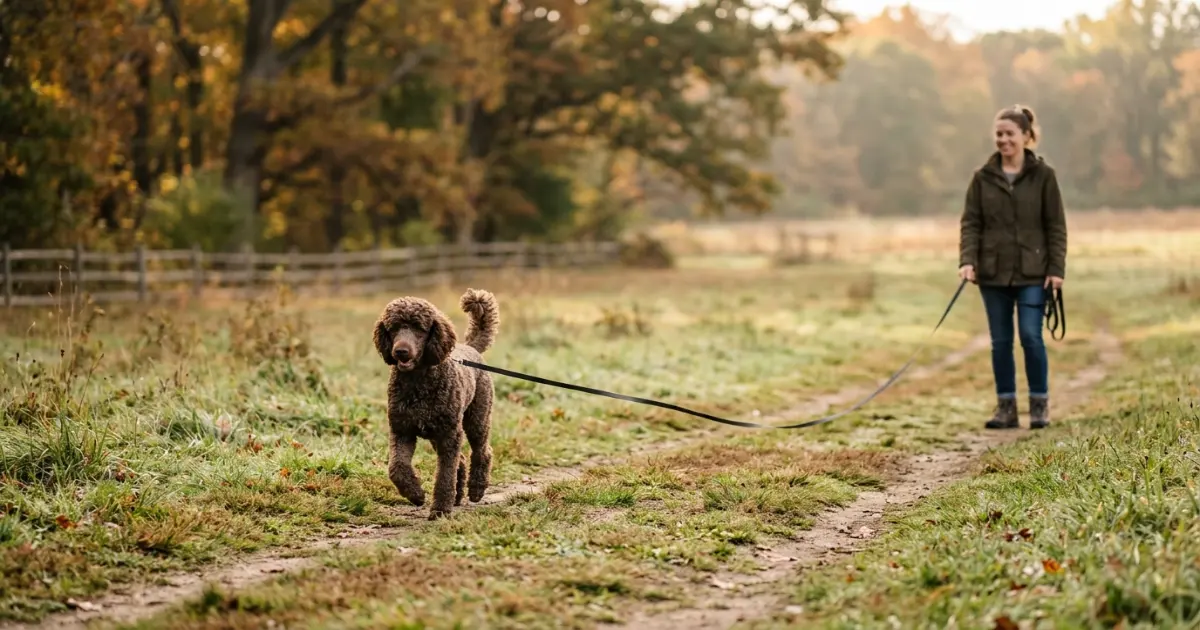
Attach a 15–30 foot long line and practice in a quiet park or open space. Let the dog wander, then call. If they don’t respond within one second, gently guide them in with the line while still praising. The line ensures the recall always works, preventing practice of ignoring the cue.
Phase 4: Environmental Proofing
Gradually introduce more challenging environments — busier parks, wooded areas with wildlife scent, beaches. Keep the long line on until the recall is near-perfect in multiple locations across multiple sessions. The moment you drop the line, you’re gambling on all that reinforcement history. Don’t rush.
Phase 5: Maintenance for Life
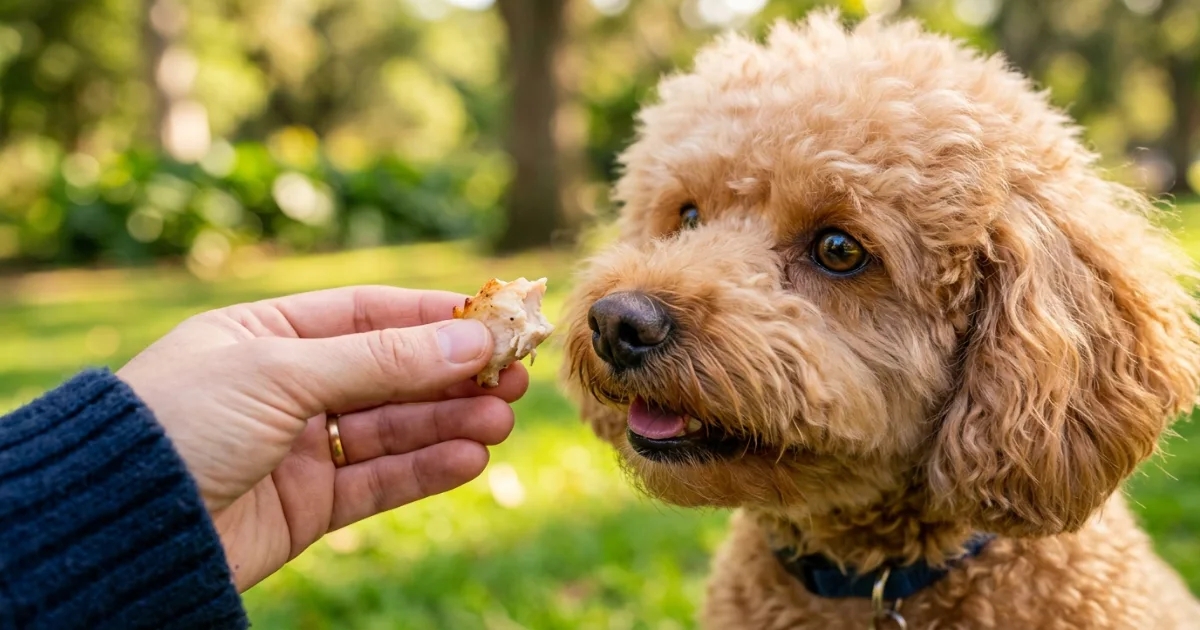
Even after off-leash reliability is achieved, continue to reward recalls intermittently with high-value jackpots. A random piece of rotisserie chicken on a Tuesday walk can keep the recall sharp for months. Never stop celebrating the fact that your brilliant, independent poodle chose to come back to you.
Common Mistakes That Unravel Poodle Recall
Some of the most heartbreaking recall failures stem from well-meaning but counterproductive habits. First among them is poisoning the cue — using your recall word to call the dog for something they dislike. If “come” every so often means bath time, being crated, or the end of a play session, the cue becomes a predictor of unpleasant outcomes. Use a different word or simply go get the dog for those things.
Another mistake is repeating the cue. If you say “come” and the poodle ignores you, saying it louder or more times only teaches that the cue is optional. The better response is to change the situation — run in the opposite direction, squeak a toy, or use the long line — to make the recall happen. Nagging destroys recall. A third common error is under-rewarding. A poodle that returns to you and gets a pat on the head has just been told their choice was not particularly valuable. Pay your dog well.
What Buyers Usually Get Wrong About Poodle Recall
Prospective poodle owners frequently enter the relationship with a quiet but unrealistic expectation: this dog is so smart, training will be easy. They picture a dog that naturally heels, glances back constantly, and comes trotting back at the merest whisper. The reality is that a poodle’s intelligence makes them a more thoughtful, and sometimes more stubborn, training partner. They learn quickly — including learning which behaviors pay and which don’t. If a buyer doesn’t understand the need for consistent, high-value reinforcement and gradual proofing, they end up frustrated. The dog isn’t “stubborn” or “disobedient”; the training approach simply didn’t account for the way a poodle’s mind works.
Buyers also often underestimate the time commitment. A poodle puppy can learn the mechanics of recall in a few weeks, but off-leash reliability in real-world conditions takes months of daily short sessions. This is not a weekend project. It’s a lifestyle adjustment — one that pays dividends in freedom and safety for the dog’s entire life.
When choosing a poodle puppy, ask the breeder about the parents’ temperaments and trainability, not just their health clearances. A puppy from lines that are particularly independent or high-strung may require extra dedication to recall training. A breeder who honestly describes the parents’ recall tendencies is one worth trusting.
Practical Owner Insight: Living With an Off-Leash Reliable Poodle
Owning a poodle with a rock-solid recall changes the texture of daily life. You can walk confidently, knowing your dog will check in when called. You can allow more freedom, more running, more of the natural behaviors that make a poodle’s life rich. But it also comes with ongoing responsibility. You learn which environments are simply too high-risk — busy roads, wildlife-heavy areas, places where your dog’s training hasn’t been proofed — and you don’t test the recall there. A reliable recall is not a license to be careless; it’s an insurance policy you hope to never need but maintain religiously.
Many owners report that their poodle’s recall actually improves with age, as the dog matures and the reinforcement history deepens. A seven-year-old poodle with years of positive recall experiences is often steadier than a two-year-old in the throes of adolescent boundary-testing. This long arc is encouraging: the work you put in during the challenging early years does not disappear. It compounds.
Pro Tips for Advanced Poodle Recall
Scaling Up Your Training
- Build an emergency recall cue. Use a distinct word or whistle that is reserved exclusively for life-or-death situations and rewarded with a jackpot of unprecedented value (a whole handful of steak, a special toy). Practice it once a month with that massive reward so the dog never forgets.
- Practice the “stop” in motion. Teach your poodle to freeze on cue from a distance. A dog that will stop mid-run is safer than one that must complete the return arc to be safe. This pairs beautifully with recall.
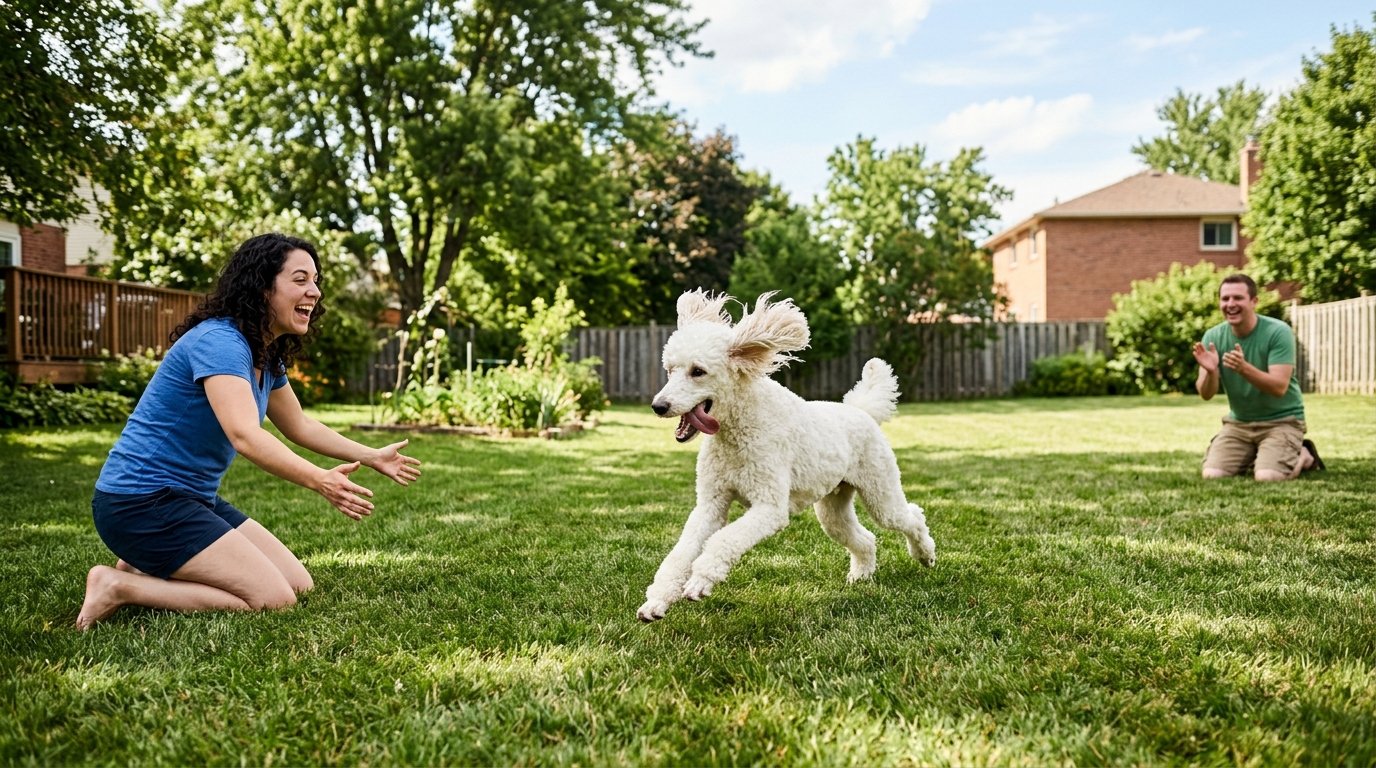
- Use recall races. Have two people stand apart in a safe area and call the dog back and forth with rewards. It builds speed, enthusiasm, and turns recall into a game rather than a demand.
- Never call if you can’t make it happen. If your dog is in full chase mode and you don’t have a long line or a reliable emergency recall, stay silent. Running toward the dog while making excited noises can sometimes draw them back better than a cue they’re about to ignore.
- Keep a training journal. Note environments, distractions, and success rates. Poodles are pattern-sensitive; a journal helps you spot gaps in proofing before they become failures.
Frequently Asked Questions About Poodle Recall Training
What is the best age to start poodle recall training?
You can start the foundations of recall the day your poodle puppy comes home, usually around 8 weeks. Keep sessions short, fun, and reward every spontaneous check-in. Formal distance work waits until after basic engagement is solid, but the earlier you start building a positive association with the recall cue, the better. Adult poodles can absolutely learn reliable recall — it simply may require more patience to overwrite any history of ignoring the cue.
Can you train an older poodle who has never had reliable recall?
Yes, absolutely. The process is the same — clear cue, high-value rewards, long line proofing — but you may need to move more slowly through the early phases. An older dog who has been practicing selective hearing for years has a well-established habit to break. The key is to prevent future rehearsal of the old behavior while building a new, stronger reinforcement history. Age is not a barrier; prior learning history is the real factor.
What should I do if my poodle runs away from me instead of coming?
Stop actively calling. Running toward a dog who is already moving away often triggers a chase game where you are the one being pursued. Instead, try running in the opposite direction while making excited, happy sounds — many dogs cannot resist chasing a moving person. You can also drop to the ground, squeak a toy, or open a treat bag noisily. Once the dog is close, do not scold; reward the return regardless of how long it took. Punishing a slow recall teaches the dog that coming to you is unsafe.
What are the best treats for poodle recall training?
The best treat is whatever your individual poodle finds irresistible. Real meat — boiled chicken, roast beef, liverwurst, or freeze-dried organ meats — usually outperforms commercial biscuits. The treat should be soft, small, and highly aromatic. Rotate rewards so the dog never knows what the jackpot will be. For some poodles, a high-energy tug toy or a ball is more reinforcing than food; use whatever makes your dog’s eyes light up.
Are e-collars necessary for poodle recall training?
For the vast majority of poodles, no. Positive reinforcement methods combined with a long line are sufficient to build reliable recall without aversive tools. Poodles are sensitive dogs; harsh corrections can damage trust and create anxiety around the recall cue. Some professional trainers use e-collars set to very low “tone” or “vibrate” modes as a remote communication tool, but this should only be done under expert guidance and is not a shortcut. The breed’s intelligence and food motivation make force-based training unnecessary in almost all cases.
How do I practice poodle recall safely when I don’t have a fenced yard?
A long line — 15, 20, or even 30 feet — is your safest training tool. Use it in open parks, fields, or quiet trails. Let the line drag on the ground so the dog experiences a sense of freedom, but keep the end accessible so you can step on it if necessary. Sniffspots (rented private dog areas) and fenced tennis courts during off-hours are also excellent options for practicing off-leash recall in a controlled, safe environment.
Will neutering or spaying improve my poodle’s recall?
Neutering or spaying does not directly affect recall training, but it can reduce roaming behavior driven by hormones, especially in intact males who may wander in search of a female in heat. Training is the primary factor; surgery is not a substitute for it. Discuss timing with your veterinarian and breeder, but do not expect it to fix a recall problem on its own.
Summary: The Heart of Poodle Recall Training
Poodle recall training is a long game built on trust, clarity, and rewards that genuinely compete with the world’s distractions. Your poodle is brilliant enough to learn the cue rapidly, but independent enough to ignore it if the math doesn’t add up. The path to off-leash reliability runs through consistent, joyful reinforcement, systematic proofing with a long line, and an unwavering commitment to never poisoning the cue. Buyers and new owners should enter the journey with realistic expectations: this is not a weekend project, but a relationship-defining skill that deepens over years. A poodle who rockets back to you with ears flying and eyes bright is not just obedient — they’re showing you that, out of all the choices in that moment, you were the best one. That’s worth every bit of the work.