Poodle Agility Training: The Complete Getting Started Guide
Quick Answer: Poodle agility training is the process of teaching a poodle to navigate obstacle courses with speed, accuracy, and joy. To get started, focus on core foundation skills—engagement, body awareness, and impulse control—before introducing any equipment. Poodles of all sizes can shine in agility, but the training approach should be tailored to the dog’s age, physical maturity, and temperament. The best results come from positive reinforcement, patience, and an understanding of what makes poodles tick.
You’ve watched a Standard Poodle sail over a jump with athletic grace, or a toy-sized dynamo dart through a tunnel. And you thought, My poodle could do that. You’re probably right. Poodle agility training isn’t just reserved for Border Collies or shelties—this breed has a surprising blend of intelligence, eagerness, and physical ability that can make them quietly formidable competitors. But starting out the right way matters enormously.
I’ve guided many poodle owners through their first agility steps, and the gap between those who rush into equipment and those who patiently build a foundation is staggering. This guide is for the owner who wants to do it properly—whether you aim for weekend fun or the top of the podium.
🏁 Best Age to Start
Flatwork and body awareness can begin at 10–12 weeks. Full-height jumps and weaves after growth plates close (around 12–18 months for Standards, slightly earlier for mini/toys).
🧬 Poodle Strengths
Exceptional problem-solving, agile movement, strong handler focus, and a desire to collaborate—making them highly trainable agility dogs.
⚠️ Common Pitfall
Moving too fast toward full courses before the poodle learns to think independently on obstacles. Also, overlooking the need for calm focus breaks.
💰 Starter Cost
Home starter kits range from $150–$400. Group classes typically $120–$250 for a 6-week session. Competition entry fees are modest.
What Exactly Is Poodle Agility Training?
Agility is a dog sport where a handler directs a dog through an obstacle course against the clock. The obstacles include jumps, tunnels, weave poles, a seesaw (teeter), an A-frame, and a dog walk. Poodle agility training specifically refers to preparing a poodle—whether Toy, Miniature, or Standard—to perform these obstacles safely, fluidly, and with confidence. It’s equal parts physical conditioning, mental puzzle, and relationship sport.
Unlike basic obedience, agility demands that the dog learn to read the handler’s body language from a distance, make split-second decisions, and manage their own body at speed. For poodles, this taps directly into their historical retrieving and performing instincts—these dogs were bred to work closely with humans and respond to subtle cues.
Why Poodles Were Practically Built for Agility
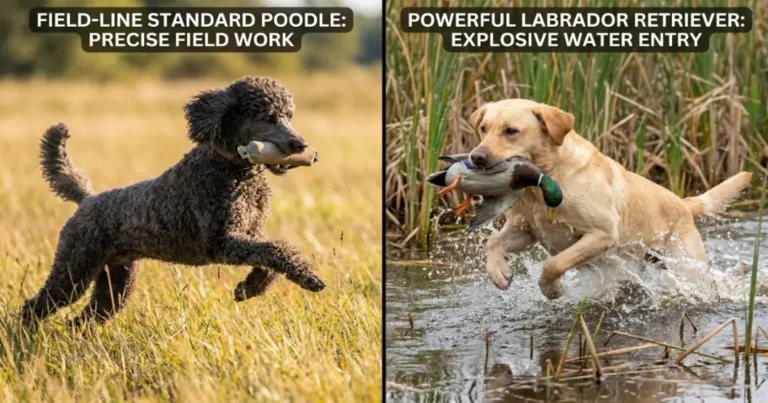
It surprises some people to discover that poodles have a working dog pedigree. Beneath that iconic coat lies an athlete. The breed’s light, springy gait and powerful hindquarters give them excellent jumping form. Their high cognitive ability means they can learn complex sequences faster than many breeds. And crucially, they want to work. A poodle left without mental challenges will find their own—often to an owner’s dismay. Agility channels that mental hunger into a structured, joyful outlet.
What’s often underappreciated is the poodle’s emotional sensitivity. They feel handler frustration acutely, which means training must be encouraging and clear, never harsh. When this partnership is respected, the poodle responds with an almost intuitive connection on course.
Agility by Poodle Size: How Toy, Miniature, and Standard Compare
Not all poodles experience agility the same way. While the sport is open to all sizes, each variety brings its own advantages and practical considerations. Understanding these differences helps you set realistic goals from day one.
| Factor | Toy Poodle | Miniature Poodle | Standard Poodle |
|---|---|---|---|
| Typical jump height | 4–8 inches | 8–12 inches | 16–22 inches (or higher in some organizations) |
| Main strength | Quickness, tight turns, often fearless | Agility-lite versatility, good stamina for size | Long stride, covers ground efficiently, powerful jumping |
| Challenge to watch | Can be easily overlooked in trials; requires attentive handling | May tire if course is long; groom coat to avoid overheating | Heavier impact on joints; must wait for growth plates to close |
| Ideal handler | Patient, detail-focused; loves tiny triumphs | All-around sport home, family active participant | Athletic handler, enjoys bigger movement and powerful runs |
This doesn’t mean a Toy cannot run with the big dogs in spirit—many excel in small-dog-specific events. And lots of handlers have switched from other breeds to Standards and found them to be hidden gems with unmatched rhythm.
Getting Started: A Step-by-Step Poodle Agility Training Plan
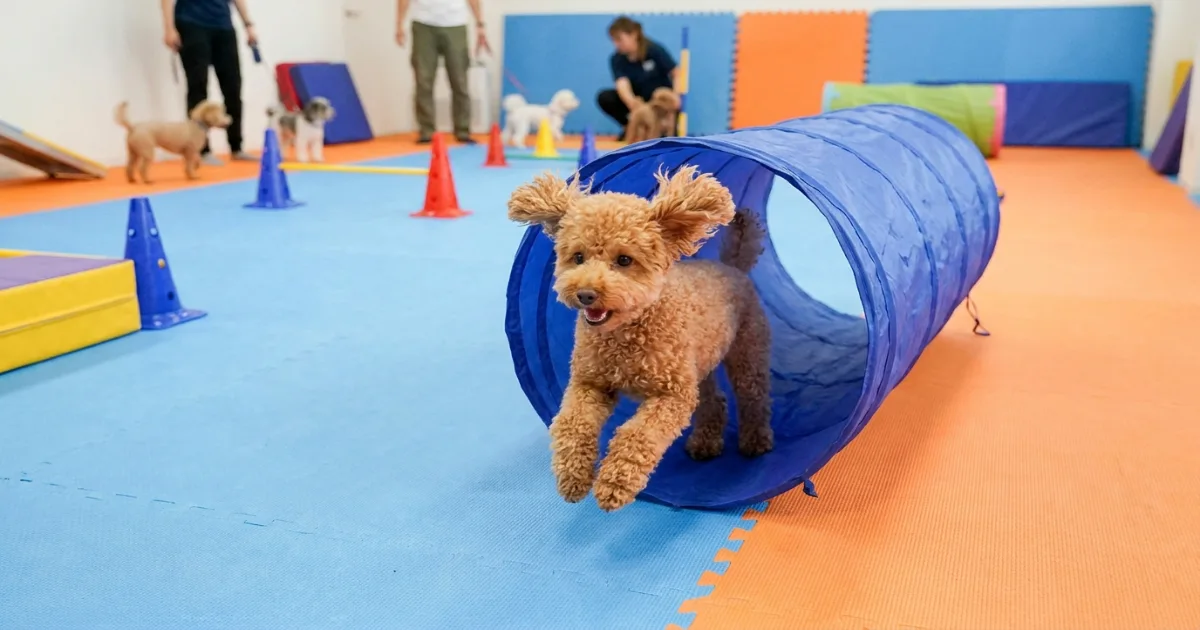
One of the gravest mistakes new handlers make is buying a full set of equipment the day they bring a puppy home, then immediately trying to run the dog over the A-frame. Agility is built from the ground up. Here’s the progression that produces a confident, physically ready poodle.
1. Health and Structural Check First
Before any jumping or tight weaving, your veterinarian should assess hips, elbows, patellas, and overall conformation. For Standards, a preliminary hip evaluation is wise. Agility places repetitive stress on joints; starting with a structurally sound poodle prevents heartbreak later. If your poodle is a puppy, you’ll be doing only low-impact foundation work until growth plates close—typically between 12 and 18 months for Standard Poodles, a bit earlier for Minis and Toys.
2. Build a Bombproof Foundation of Focus and Impulse Control
Agility isn’t chaos. It’s controlled speed. Teach a reliable “watch me,” a strong stay, and the ability to settle on a mat even with distractions. Games like “It’s Yer Choice” (from Susan Garrett) are phenomenal for poodles because they teach the dog to think before acting. A poodle that learns to offer calmness gets rewarded rather than constantly buzzing with unfiltered energy.
3. Develop Body Awareness Through Flatwork
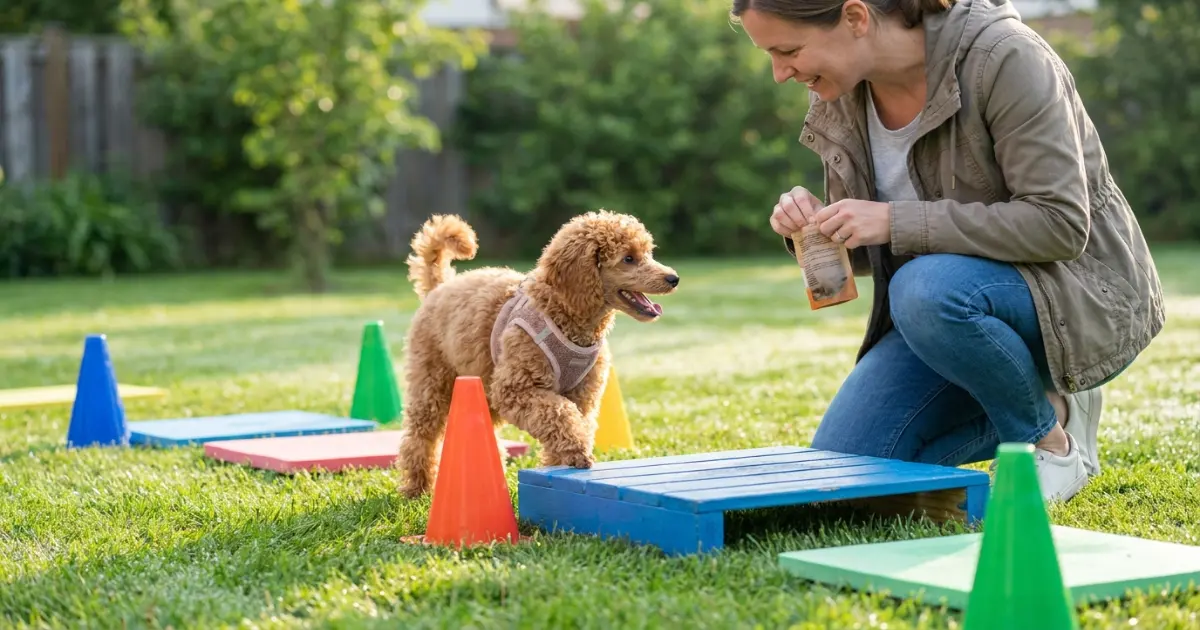
Flatwork means handling exercises without obstacles. Practice sending your poodle around a cone, backing up, spinning left and right, and learning to move away from you laterally. Poodles, especially the Standards, can be a bit clumsy as adolescents; these exercises give them proprioception—knowing where their feet are. Use a low platform or a Klimb board to teach rear-foot awareness, a skill that directly translates to contacts on the dog walk and teeter.
4. Introduce Low, Safe Equipment Gradually
Start with a tunnel compressed to just a few feet. Make it a game. Use a jump bar set on the ground or just a few inches high—no actual jumping yet, just step-over exercises. Introduce a very low wobble board to mimic the movement of a teeter without height. The dog must learn that equipment moves and makes sounds without being frightened. For poodles, who can be sound-sensitive, slow desensitization builds lifelong confidence.
5. Teach Weave Poles with Patience
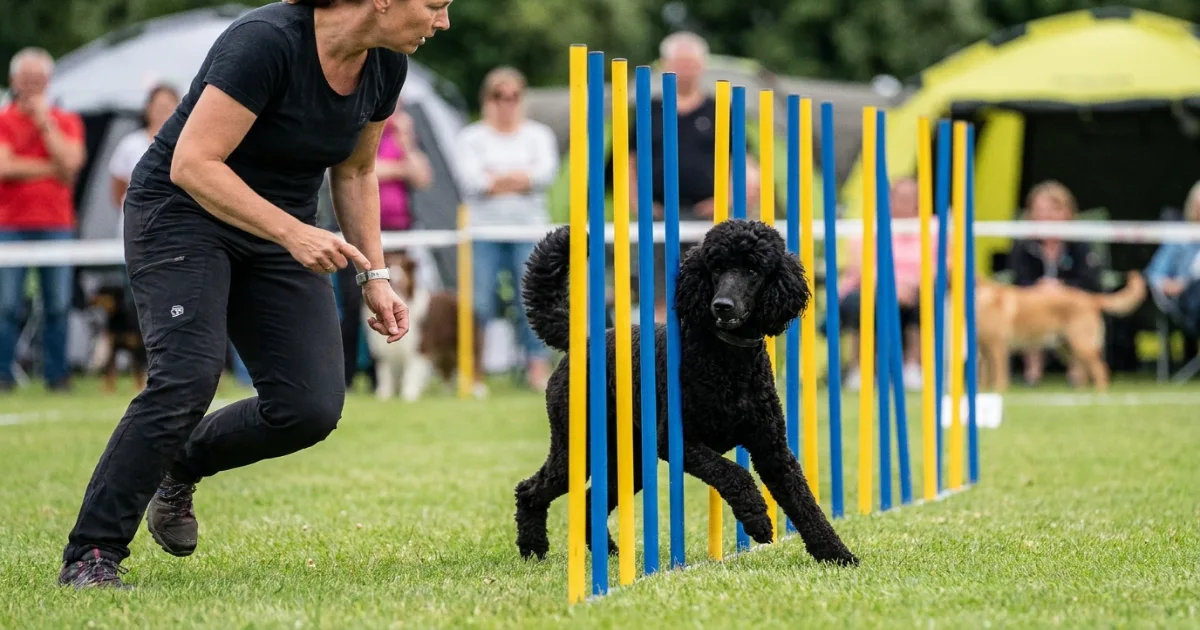
Weaves are often the hardest obstacle for poodles, not because they lack ability but because they require independent entry and rhythm. Methods like 2×2 or channel weaves work beautifully. Teach the entry angle and independent weaving before adding speed. Rushed weave training is the number one cause of frustration and shut-down in otherwise brilliant poodles.
6. Sequence Two or Three Obstacles
Once individual obstacles are fluent, link a jump to a tunnel or a jump to another jump. Keep handling cues clear. Use a single word and body motion. Poodles read human movement exquisitely; if you’re inconsistent, they’ll learn your patterns—both good and sloppy ones.
Essential Equipment for At-Home Practice (and What It Costs in 2026)
You don’t need an entire course in your backyard on day one, but a few basic pieces will transform your training between classes. Here’s a realistic breakdown.
Agility Starter Kit: Real-World Price Ranges
| Item | Price Range | Notes |
|---|---|---|
| One or two practice jumps (adjustable) | $35–$90 each | Look for lightweight, portable designs with safe cups. |
| Open tunnel (10–15 ft) | $45–$120 | Start with short, straight tunnels; they can be scrunched. |
| Set of 6 weave poles (stick-in-ground or base) | $40–$150 | A channel-style base is more expensive but worth it for poodles. |
| Pause table or platform | $60–$180 | Helps with body awareness and contact training. |
| Wobble board (DIY or buy) | $25–$80 | You can make one with plywood and a tennis ball; commercial ones are sturdier. |
| Group agility class (6-week session) | $120–$250 | Often the best investment; includes instructor feedback. |
Prices reflect typical 2026 U.S. market ranges. Building homemade equipment is common and safe if done with guidance.
If you’re just testing the waters, a good class membership and a tunnel might be all you need for months. Many clubs have equipment you can use during practice times for a small fee.
Why Poodles Are Sometimes Misunderstood in Agility Circles
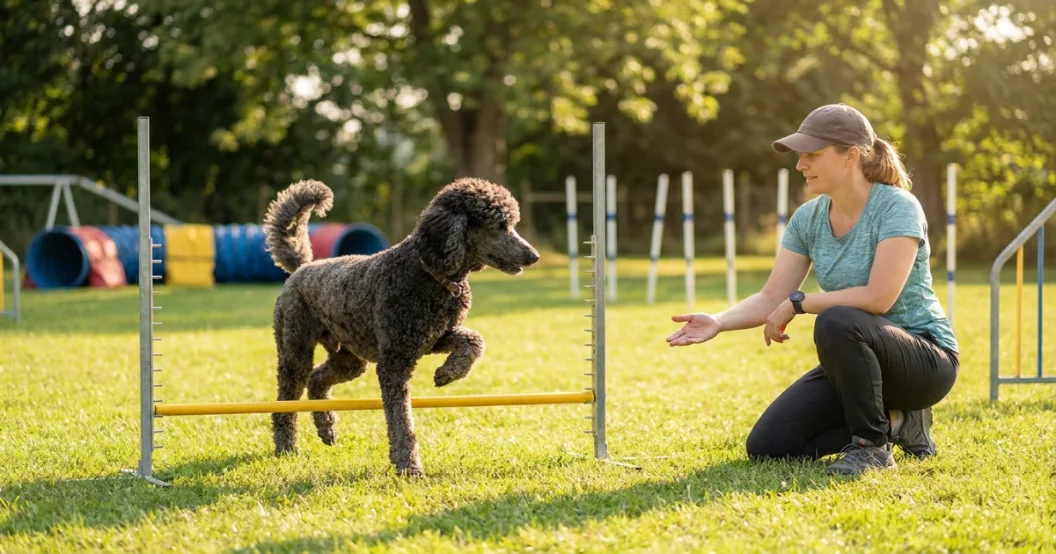
Walk into an agility trial and you’ll still hear murmurs: “A poodle? Really?” The breed carries a strange baggage of being seen as a froo-froo show dog, not a serious working athlete. This misunderstanding does a disservice to the breed and often causes new poodle handlers to feel they need to prove something. The truth is, poodles have been earning agility championships for decades—often quietly, without the fanfare that follows a Border Collie.
Another layer of misunderstanding comes from the poodle’s learning style. They are not push-button dogs. A poodle may refuse an obstacle not because they can’t do it, but because they’re thinking, “I’m not sure that’s what you wanted.” This makes them appear stubborn or unmotivated to handlers used to more go-go-go breeds. In reality, they’re processing. Once they’re confident, they’re unstoppable.
What Most New Handlers Get Wrong About Poodle Agility
I’ve seen it over and over: well-intentioned owners accidentally sabotage their poodle’s agility journey through a handful of completely avoidable missteps. Here are the big ones.
- Moving too fast too soon. They see the poodle’s intelligence and assume physical readiness. Jumping before growth plates close is a long-term injury risk.
- Using too much verbal chatter. Poodles listen to everything, but on course they need crisp, minimal cues. A constant stream of “good boy, yes, here, come on” muddies the water.
- Adding distance before proximity skills are solid. Handlers try to send their poodle from across the yard while the dog is still learning to read subtle shoulder turns up close.
- Skimping on recall and focus under distraction. Agility environments are chaotic. A poodle who hasn’t practiced focus around barking dogs and ringing gates will struggle.
- Believing the poodle isn’t “drivey” enough. Poodle drive often looks different—quiet intensity rather than frantic motion. Don’t mistake calm focus for lack of motivation.
🐩 Pro Tips for Poodle Agility Success
- Train the dog in front of you, not the breed stereotype. Some poodles are cautious; some are firecrackers. Adjust your pace accordingly.
- Keep sessions short and end on a win. Three 8-minute sessions beat one 25-minute slog.
- Use high-value rewards that match the distraction level. Real meat or a special tug toy often trumps kibble in a busy class.
- Practice relaxed body language. Your poodle will mirror your tension. Breathe, soften your shoulders, and smile before you start a sequence.
- Prioritize fitness for both of you. A handler who can’t move smoothly limits the team. Cross-training your own agility—footwork drills, cardio—pays off.
Is Agility Right for Your Poodle? Health and Temperament Checkpoints
Agility isn’t for every poodle, and that’s okay. Before investing emotionally or financially, honestly assess the following.
Physical readiness: A poodle with luxating patellas (common in Toys), hip dysplasia, or early arthritis should not do high-impact agility. Swimming and low-impact conditioning might be a better alternative. Your vet’s clearance is non-negotiable.
Temperament fit: The ideal agility poodle is confident enough to work away from you but connected enough to check in. Extreme noise sensitivity, severe separation anxiety, or a tendency to shut down under pressure doesn’t rule out agility forever, but it means the training path must be much slower and more therapeutic.
Your own goals: Are you happy with a casual weekend course for fun, or do you dream of nationals? Both are valid, but the time commitment and training intensity differ vastly. A toy poodle may thrive in a laid-back approach; a driven Standard might demand more.
From Backyard to Trial: Taking the Next Step
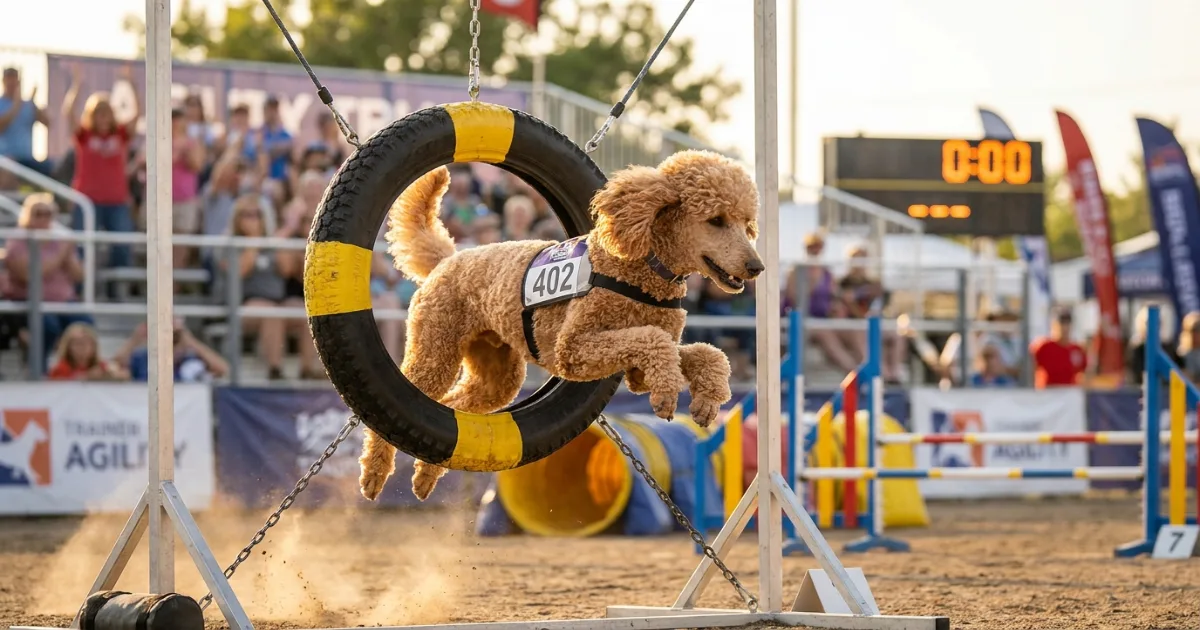
Once your poodle reliably sequences 8–10 obstacles and can work with you off-leash in a controlled environment, you might be ready for a fun match or a beginner trial. Organizations like AKC, USDAA, and UKI offer different styles. AKC’s courses tend to be flowing; USDAA includes more technical challenges. Start with a “Intro” or “Novice” level, and remember the first trial is about surviving the environment, not winning.
Many poodle owners find the camaraderie in the agility community deeply rewarding. The same dog that sprawls on your couch can become a focused teammate on course—and that transformation is something I think every poodle person should witness at least once.
Frequently Asked Questions About Poodle Agility Training
- Can all poodle sizes do agility?
- Absolutely. Toy, Miniature, and Standard Poodles all compete successfully. Organizations adjust jump heights and course times to accommodate size. Toy Poodles often compete in the 4- or 8-inch divisions, and their quickness can be a serious advantage.
- At what age can I start poodle agility training?
- You can begin foundation skills—flatwork, focus games, body awareness—as early as 10–12 weeks. Full-height jumping and weaving should wait until growth plates are closed, typically 12–18 months for Standards and around 10–14 months for Minis and Toys, with veterinary approval.
- Is poodle agility training hard on their joints?
- It can be if started too young or if the dog has undiagnosed structural issues. That’s why health screening and gradual conditioning are essential. Properly conditioned adult poodles with good conformation handle agility remarkably well.
- Do poodles need a special diet for agility?
- They don’t need a specialized “agility diet,” but they benefit from high-quality protein, joint-supporting nutrients like omega-3 fatty acids, and maintaining a lean body weight. Some owners add glucosamine and chondroitin supplements after consulting a vet.
- Can a poodle with a show coat do agility?
- Yes, but the coat requires management. Long cords or voluminous continental clips can be a tripping hazard and trap heat. Many performance poodle owners keep their dogs in a shorter sport clip, like a kennel or puppy cut, which is practical and still stylish. You can find more coat-care tips in our Poodle Grooming Guide.
- How do I find a good agility class for my poodle?
- Look for instructors who emphasize positive reinforcement and foundation skills over rushing to full courses. Visit a class without your dog first, and watch how they handle sensitive breeds. Word of mouth from local poodle or agility groups is golden.
- Will agility make my poodle hyper at home?
- Typically the opposite. When a poodle’s brain and body get a proper workout, they’re more settled indoors. Agility provides the mental engagement that prevents boredom-driven mischief.
- Do poodles compete well against border collies and shelties?
- They can and they do. While herding breeds often dominate the top tiers, poodles consistently earn MACH and ADCH titles. Their precision and willingness to work as a team often close the speed gap.
Your Poodle on the Agility Course: A Partner, Not a Project
Poodle agility training done right is never about pushing a dog through tunnels and over jumps to collect ribbons. It’s about building a language between you and your dog that most owners never touch. Start slow. Respect your poodle’s physical development and emotional sensitivity. Build that foundation of focus, body awareness, and trust. The obstacles will come, and when they do, you’ll have a teammate who reads your every breath—and runs like the wind because they want to, not because they have to. That’s the real win.