Editorial note: This PoodleGuru guide is for coat-care education only. If your puppy has painful mats, red skin, sores, hair loss patches, or sudden coat changes, speak with a licensed veterinarian or a professional groomer.
When Do Poodles Lose Their Puppy Coat? 7 Vital Signs
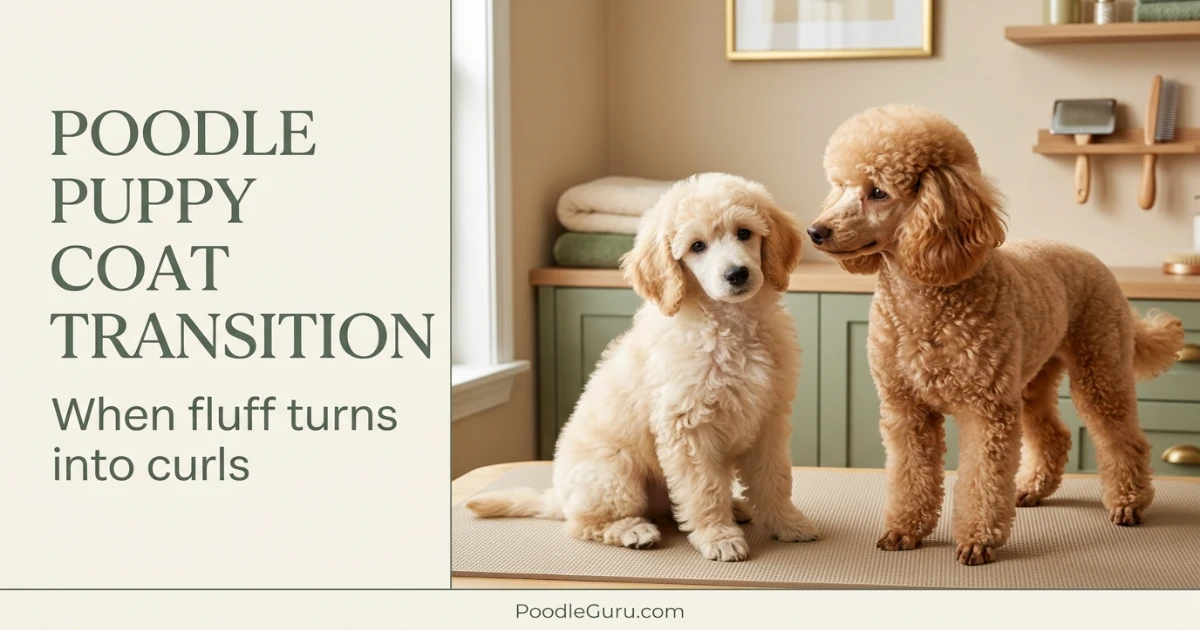
That soft, fluffy Poodle puppy coat feels like a cloud at first. Then, somewhere between early puppyhood and adolescence, it starts changing. If you are wondering when do Poodles lose their puppy coat, the simple answer is usually between 4 and 8 months of age — but the grooming challenge can last much longer.
Quick Answer: When Do Poodles Lose Their Puppy Coat?
Most Poodles start losing their puppy coat between 4 and 8 months old. The active transition usually lasts 2 to 4 months, but the adult coat may continue maturing until about 18 to 24 months. Toy Poodles often start earlier, Standard Poodles often start later, and every dog’s curl pattern and coat density can make the process look slightly different.
This is not a heavy seasonal shed like you see in double-coated breeds. Poodles shed loose puppy hairs into their own curls, which is why matting risk becomes very high during the transition.
Quick Facts About the Poodle Puppy Coat Transition
📅 Typical Start
Most Poodles begin changing coat texture between 4 and 8 months of age.
⏳ Main Duration
The most active puppy-to-adult coat change often lasts around 2 to 4 months.
⚠️ Biggest Risk
Loose puppy hair gets trapped in new adult curls, creating mats close to the skin.
🧼 Best Routine
During peak transition, brush daily or every other day and book grooming every 4 to 6 weeks.
What a Poodle Puppy Coat Really Is
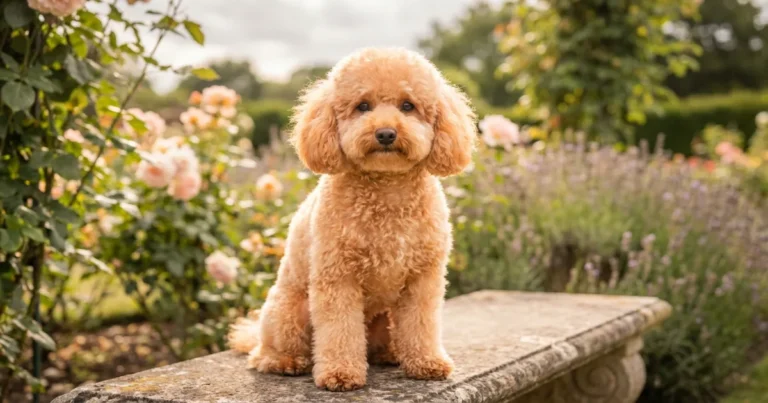
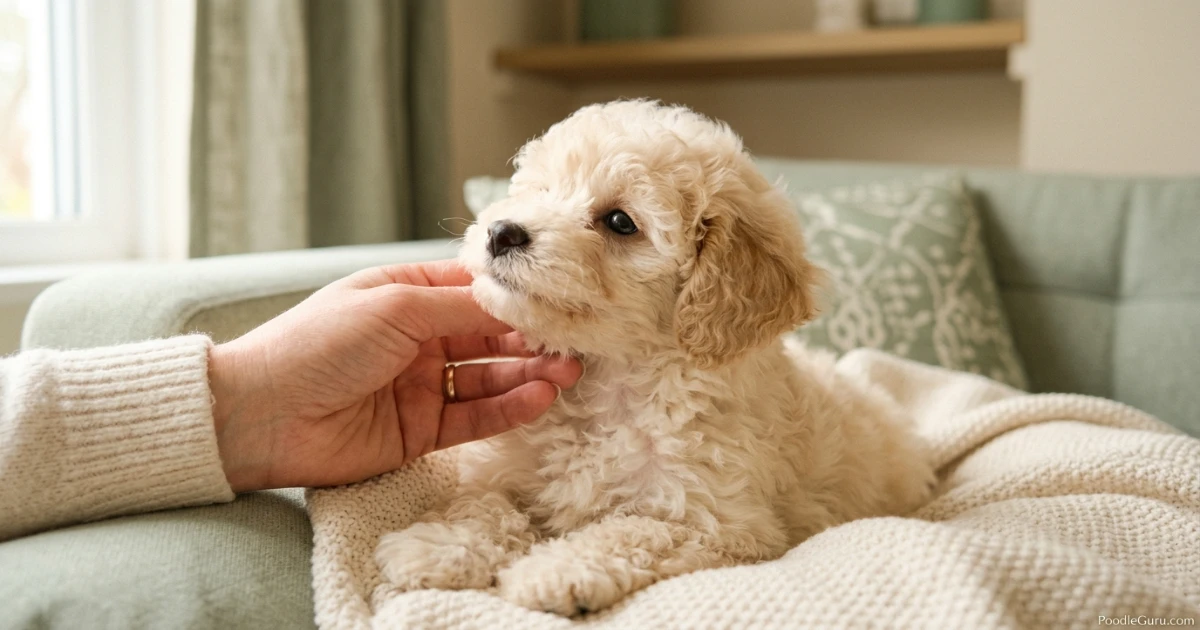
A Poodle puppy coat is the first soft coat your dog grows before the adult coat develops. It is usually finer, fluffier, and less tightly curled than the mature coat. This is why young Poodles often have a teddy-bear look even before any special trim.
Adult Poodle coat is different. Breed standards describe the correct Poodle coat as dense and curly, with a naturally harsher texture than puppy fluff. That denser adult texture is beautiful, but it also needs consistent grooming because loose hair can stay trapped inside the curls instead of falling away cleanly.
That is the key difference many new owners miss. A low-shedding Poodle is not a low-maintenance dog. The coat may not cover your sofa in fur, but it still needs brushing, combing, trimming, bathing, drying, and professional maintenance.
The Simple Genetics Behind the Change
Poodle coat traits are influenced by genes connected with curl, coat length, and furnishings. Commonly discussed dog-coat genes include KRT71, FGF5, and RSPO2. Those genes do not mean every Poodle coat will feel identical. Density, curl tightness, color, grooming habits, hormones, and individual lineage all affect how dramatic the transition looks.
The practical owner takeaway is simple: you cannot stop the puppy coat from changing. Your job is to manage the transition so loose puppy hair does not turn into painful mats.
The Real Timeline: When Do Poodles Lose Their Puppy Coat?
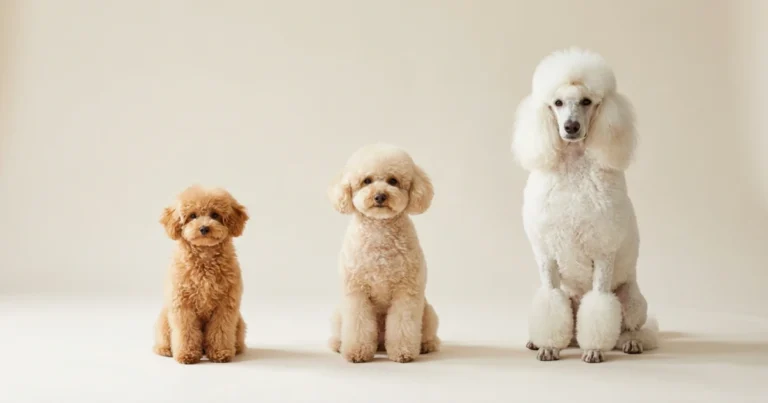
There is no exact day when the puppy coat disappears. Most Poodles begin the transition between 4 and 8 months, but size and genetics matter. Toy Poodles may show texture changes earlier, while Standard Poodles may not show obvious signs until closer to 6 or 7 months.
| Age Range | What Is Happening | What Owners Usually Notice |
|---|---|---|
| 8–16 weeks | Full puppy coat stage. | Very soft texture, minimal tangling, fluffy shape, easy brushing. |
| 4–6 months | Early transition may begin, especially in Toy and Miniature Poodles. | Roots feel thicker, small tangles appear, coat may look puffier but comb less smoothly. |
| 6–8 months | Many Poodles enter active coat change. | More hair in the brush, more knots behind ears and under legs, mixed soft and curly texture. |
| 8–12 months | Peak transition for many puppies. | Highest matting risk. Coat may look uneven, sticky, patchy, or hard to comb from skin to tip. |
| 12–18 months | Main transition usually settles. | Adult curls become more consistent. Grooming routine becomes easier to predict. |
| 18–24 months | Final adult coat maturity continues. | Full adult density, curl pattern, and texture are usually established. |
Use this table as a planning guide, not a strict deadline. A 5-month Toy Poodle with early tangling may be completely normal. A 7-month Standard Poodle just beginning the change may also be completely normal. The warning sign is not the exact age — it is unmanaged matting, skin irritation, sudden hair loss, or pain.
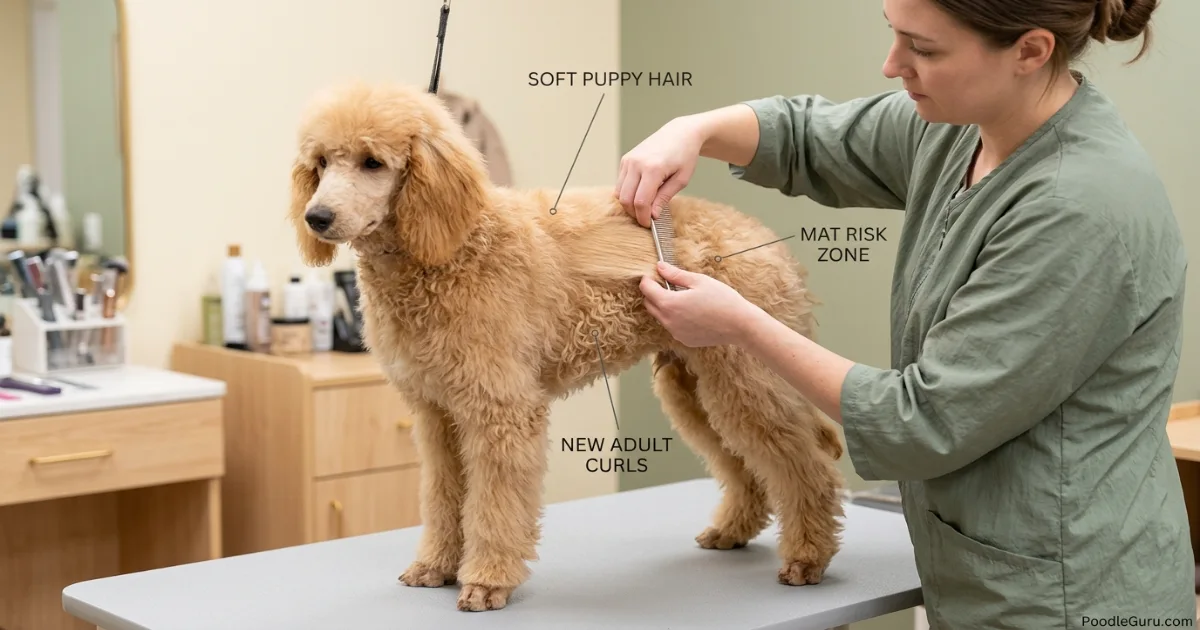
7 Vital Signs the Poodle Puppy Coat Transition Has Started
The coat change is usually subtle at first. You probably will not see piles of hair around the house. Instead, you will notice the coat acting differently during normal handling and brushing.
The roots feel thicker than the ends.
Part the coat gently and feel near the skin. If the hair at the roots feels denser, springier, or more resistant than the fluffy tips, adult coat is coming in.
Tangles appear faster than before.
A puppy that used to brush out easily may suddenly develop knots overnight, especially behind the ears, under the collar, in the armpits, around the groin, and at the base of the tail.
Your brush collects more loose hair.
Poodles do shed loose puppy hairs during this stage, but those hairs often stay inside the curls until your brush or comb removes them.
The coat looks uneven.
One area may be curly and adult-looking while another area still has soft puppy fluff. This patchy stage is normal and does not mean the coat is damaged.
The coat feels “sticky” or Velcro-like.
Loose puppy hair can catch inside adult curls, making the coat grab onto itself, clothing, grass seeds, and debris more easily.
The comb no longer glides from skin to tip.
This is the best test. If a metal comb cannot pass through the coat after brushing, there are still hidden tangles near the skin.
Your puppy starts resisting brushing.
Some puppies resist because mats are pulling the skin. Go slower, use detangling spray if appropriate, keep sessions positive, and book a groomer before the coat becomes painful.
Why Matting Gets So Bad During This Stage
The puppy coat transition is the highest-risk matting period in many Poodles’ lives. The reason is simple: soft loose puppy hairs are leaving the coat while tighter adult curls are arriving underneath. Instead of dropping out cleanly, those loose hairs get trapped and wrap around the new curls.
Small tangles can become firm mats within days, especially in friction zones. Collars, harnesses, ears, legs, belly areas, damp coats, rough towel drying, and skipped brushing sessions all make the problem worse.
⚠️ Matting Is a Comfort and Health Issue
Mats are not only a style problem. They can pull on the skin, trap moisture and debris, hide irritation, and make grooming painful. When tangles are severe or close to the skin, it is safer to ask a professional groomer or veterinarian for help instead of trying to cut them out at home.
Poodle Coat Change vs. Normal Shedding Breeds
If you have owned a Golden Retriever, Husky, German Shepherd, or Labrador, you may expect dramatic seasonal shedding. Poodles are different because their loose hairs are more likely to stay in the coat until removed by grooming.
| Feature | Poodle Coat Transition | Double-Coated Breed Shedding |
|---|---|---|
| Where loose hair goes | Often trapped inside curls. | Often falls onto floors, clothing, and furniture. |
| What owners notice | More tangles, harder brushing, more hair in the brush. | Visible clumps, hair on surfaces, seasonal coat blow. |
| Main risk | Mats close to the skin. | Heavy shedding and undercoat buildup. |
| Best response | Line-brushing, comb checks, shorter transition trim if needed. | Deshedding tools, baths, blow drying, undercoat removal. |
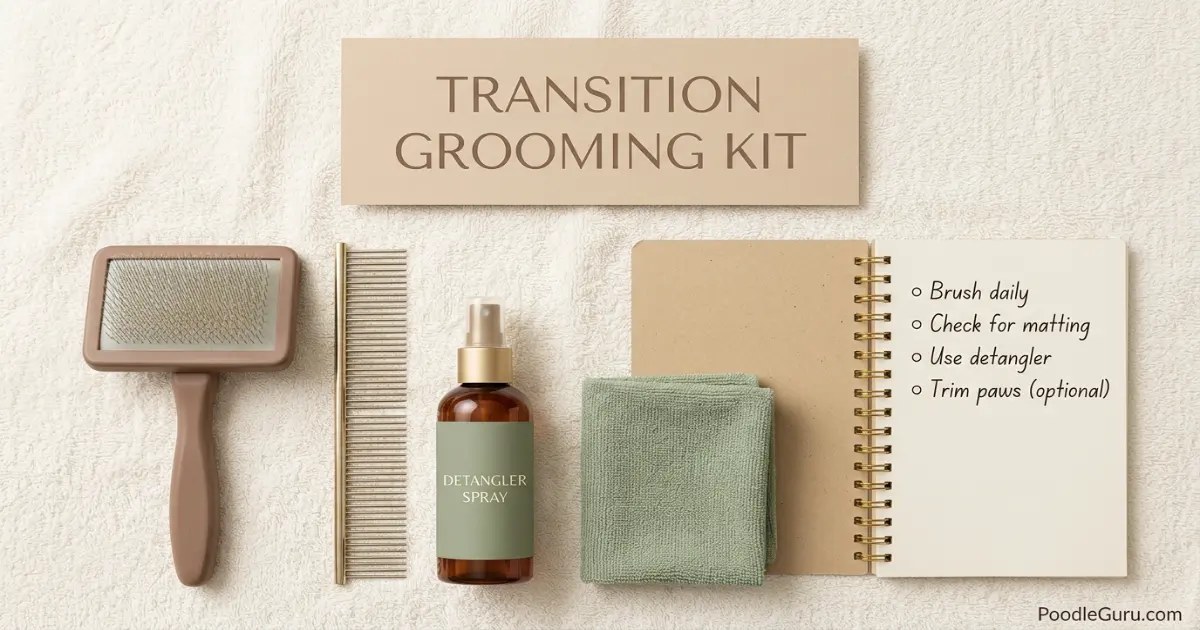
How to Groom Through the Puppy Coat Transition
Knowing when do Poodles lose their puppy coat is only useful if your grooming routine changes at the right time. The casual brushing that worked at 12 weeks may not be enough at 7 months.
1. Brush Daily During Peak Transition
Daily brushing is ideal during the hardest stage. Every other day is the realistic minimum for many puppies. Do not only brush the surface. Part the coat and brush from the skin outward in small sections.
2. Always Finish With a Metal Comb
A slicker brush can make the coat look neat on top while hidden tangles remain underneath. The metal comb is your truth test. If the comb catches, return to that section gently and keep working until it glides through without snagging.
3. Use the Right Tools in the Right Order
Start with a quality slicker brush. Use a detangling spray if the coat is dry or grabby. Then follow with a greyhound-style metal comb. Avoid relying on soft pin brushes alone because they often skim over the surface without reaching the skin.
4. Book Professional Grooming Every 4–6 Weeks
During the transition, professional grooming every 4 to 6 weeks can prevent a small problem from becoming a shave-down. A groomer can also keep ears, paw pads, sanitary areas, and friction zones shorter and easier to maintain.
5. Consider a Shorter Transition Trim
A shorter all-over trim is not failure. It is often the kindest choice if the coat is matting faster than you can brush it. A half-inch or three-quarter-inch trim can reduce daily maintenance while the adult coat settles.
Pro Groomer-Style Tip
Do not try to preserve puppy fluff at all costs. The puppy coat is temporary. Comfort matters more than length. A clean, shorter trim during months 6 through 12 often prevents painful mats and makes the adult coat easier to grow out later.
Do Poodles Change Color When They Lose Their Puppy Coat?
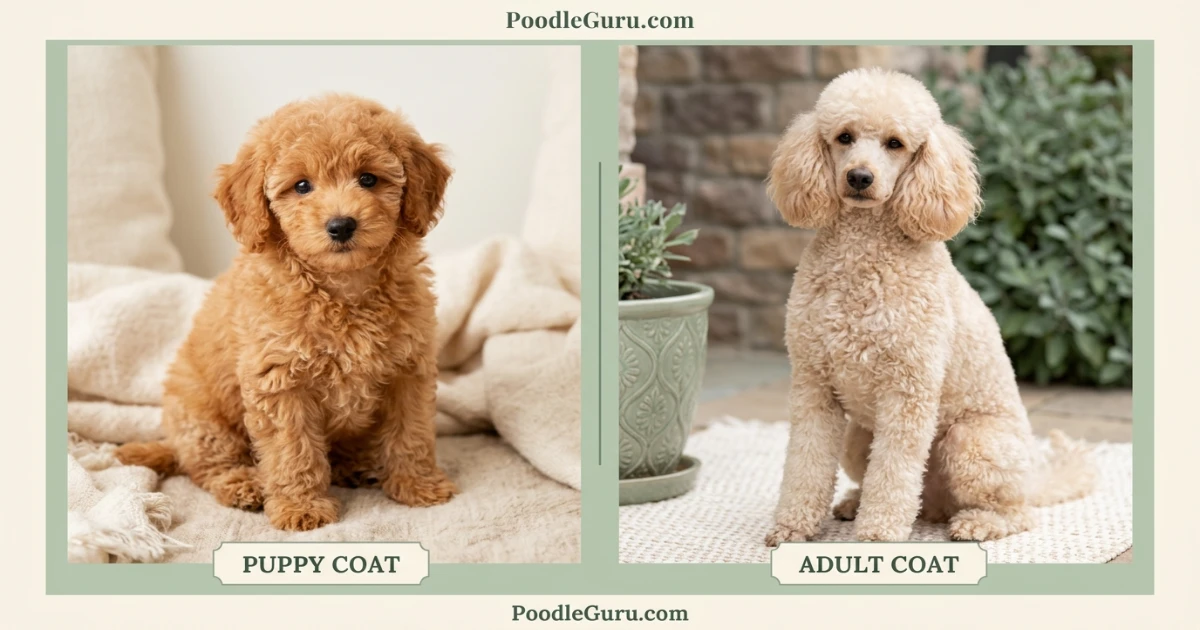
Yes, many Poodles appear to change color during the first 12 to 24 months. This can happen at the same time as the puppy coat transition, so owners often connect the two. A deep red puppy may become apricot. A brown puppy may lighten. A black puppy may show silver or blue tones depending on genetics.
Texture change and color clearing are not the same process, but they often overlap. That is why a Poodle can look surprisingly different at 18 months than it did at 10 weeks.
Practical Owner Costs During Months 4–14
The puppy coat transition can cost more than early puppyhood because grooming needs increase. Planning ahead prevents emergency dematting fees and keeps the dog comfortable.
Estimated Grooming Budget
| Item or Service | Suggested Timing | Typical U.S. Cost Range |
|---|---|---|
| Professional grooming or transition trim | Every 4–6 weeks | $65–$120+ per visit depending on size and coat condition |
| Quality slicker brush | One-time purchase | $25–$55 |
| Greyhound-style metal comb | One-time purchase | $15–$35 |
| Detangling spray | As needed | $12–$25 per bottle |
| Dematting surcharge | Only if mats develop | $40–$100+ extra depending on severity |
Costs vary by region, groomer skill, Poodle size, coat length, and matting severity. A maintained coat is almost always cheaper than a neglected coat.
Common Mistakes Owners Make During the Puppy Coat Transition
Mistake 1: Waiting Until Mats Are Visible
By the time mats are obvious on the surface, they may already be tight near the skin. Use your comb, not your eyes, to check whether the coat is truly clear.
Mistake 2: Surface Brushing Only
Surface brushing makes the outer fluff look neat but leaves tangles underneath. Line-brushing is slower, but it is the correct method for Poodle coats.
Mistake 3: Bathing Before Removing Tangles
Water can tighten existing tangles. Always brush and comb the coat before bathing, then dry thoroughly. Damp curls left unbrushed can mat quickly.
Mistake 4: Trying to Keep a Long Puppy Look Too Long
Many owners want to preserve the fluffy teddy-bear puppy look. That is understandable, but comfort comes first. If the coat is matting faster than you can maintain it, choose a shorter trim.
Mistake 5: Blaming the Groomer for a Needed Shave-Down
A groomer cannot safely brush out every mat. If mats are tight, painful, or close to the skin, clipping shorter may be the safest and most humane option.
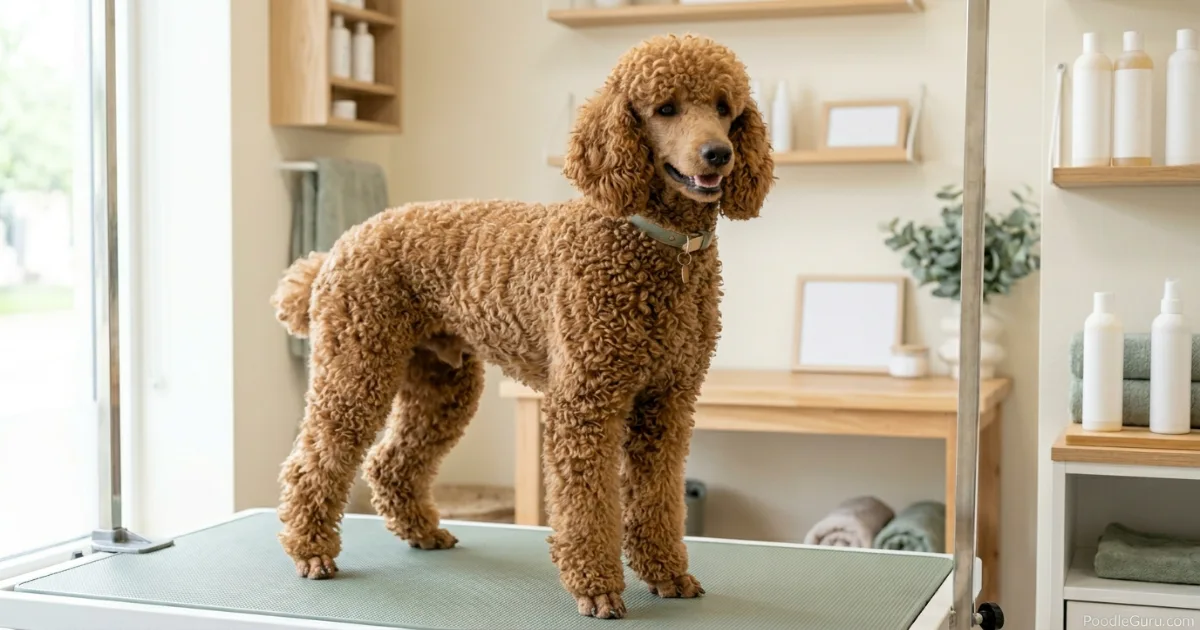
7 Things Experienced Poodle Owners Do Differently
- They start grooming practice early. Puppies introduced to brushing, combing, nail care, and grooming tables before 16 weeks usually handle transition grooming better.
- They use a comb after every brushing session. The comb finds hidden tangles that a brush can miss.
- They keep friction zones shorter. Ears, neck, armpits, groin, paw pads, and tail base are kept tidy to reduce matting.
- They book groomer visits before the coat is desperate. Preventive grooming is easier, cheaper, and kinder.
- They do not panic over patchy texture. Uneven coat during transition is normal and temporary.
- They avoid scissors on mats. Skin can hide inside mats. Clippers and professional handling are safer for tight mats.
- They choose comfort over length. A shorter trim during transition can protect the skin and make future coat growth healthier.
Frequently Asked Questions
At what age do Poodles start losing their puppy coat?
Most Poodles start losing their puppy coat between 4 and 8 months old. Toy Poodles may begin earlier, while Standard Poodles may show clearer signs closer to 6 or 7 months.
How long does the Poodle coat transition take?
The active transition usually lasts 2 to 4 months. However, the adult coat may continue becoming denser, curlier, and more stable until about 18 to 24 months.
Do Poodles shed when they lose their puppy coat?
Yes, Poodles shed loose puppy hairs during the transition. The difference is that those hairs often stay trapped inside the curls instead of falling all over the floor.
Why does my Poodle mat so much during coat change?
Matting increases because loose soft puppy hairs catch inside the tighter adult curls. Friction areas such as ears, armpits, collar lines, groin, and tail base mat fastest.
Should I shave my Poodle during the puppy coat transition?
You do not need to shave every Poodle, but a shorter trim can be very helpful if the coat is matting faster than you can maintain it. If mats are tight or painful, professional clipping may be safer than brushing them out.
Can a Poodle’s color change when the puppy coat changes?
Yes. Many Poodles lighten or clear in color during the first 12 to 24 months. This often overlaps with the puppy-to-adult coat transition, although texture change and color change are separate processes.
How often should I brush my Poodle during coat transition?
During peak transition, daily brushing is ideal. Every other day is the minimum for many puppies. Always finish with a metal comb to check for hidden tangles near the skin.
When should I call a groomer or vet?
Call a groomer if tangles are spreading, the comb cannot pass through, or brushing is becoming stressful. Call a vet if you see red skin, sores, swelling, odor, sudden bald patches, pain, or signs of infection.
Key Takeaways: Poodle Puppy Coat Transition
Your Poodle will usually lose its puppy coat between 4 and 8 months old, but the important part is how you manage the transition.
- The focus keyword answer: when do Poodles lose their puppy coat? Usually between 4 and 8 months, with the active transition lasting 2 to 4 months.
- Poodles do shed puppy hair, but loose hairs often stay trapped inside the coat instead of falling to the floor.
- The highest matting risk usually happens between 6 and 12 months.
- Brush daily or every other day during peak transition and always finish with a metal comb.
- A shorter transition trim is often kinder than fighting mats to preserve length.
- Color changes can happen during the same months, especially in red, apricot, brown, blue, silver, and café-au-lait lines.
- Professional grooming every 4 to 6 weeks can prevent pain, skin problems, and emergency shave-downs.