Poodle Exercise Needs by Age + Size: A Living, Interactive Guide for Owners Who Want to Get It Right
Quick Answer: Poodle exercise needs shift dramatically across puppyhood, adolescence, adulthood, and senior years — and they vary significantly between Toy, Miniature, and Standard sizes. A Standard Poodle adolescent may need 90+ minutes of vigorous daily activity, while a senior Toy Poodle might thrive on two 15-minute sniff walks and a puzzle toy. The chart below gives you an interactive mental model to adjust based on your dog’s real energy, not just numbers on a page.
If you have just brought home a bouncy ball of curls, or if your elegant companion is starting to grey around the muzzle, you are probably asking a question that almost every thoughtful Poodle owner asks: Am I giving my dog enough exercise — or too much? Poodle exercise needs by age and size form a living, breathing framework, not a static prescription. Standard Poodles descend from working water retrievers with serious endurance. Toy and Miniature Poodles were bred down from those same lines, keeping the athletic brain but wrapping it in a smaller, more portable body. That tension between working drive and modern companion lifestyle is exactly why getting exercise right matters so much. It affects behaviour, joint health, cognitive sharpness, and the calm, contented Poodle presence everyone hopes for at home.
In this guide, we move beyond the “30 minutes a day” cliché that still circulates on generic pet sites. We break down exercise by life stage and size, explain why adolescent Poodles often get mislabeled as hyperactive when they are simply under-exercised and under-enriched, and give you a mental checklist you can revisit as your dog ages. Throughout, we treat exercise as a blend of physical movement, mental work, and sensory input — because for a breed as intelligent as the Poodle, a walk around the block is rarely enough by itself.
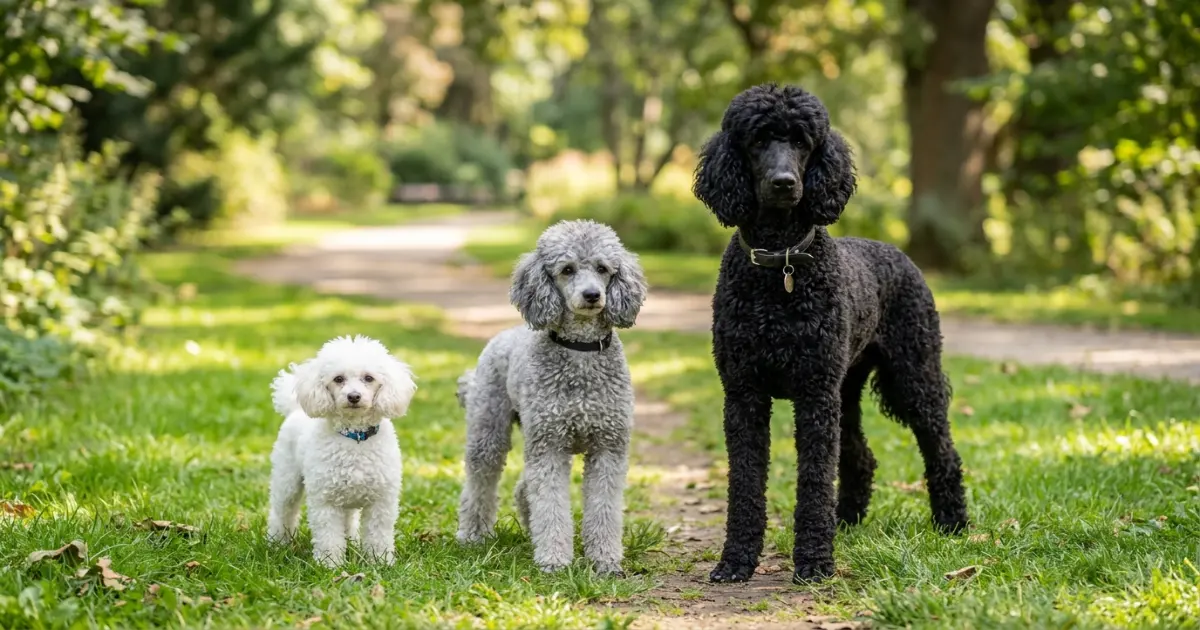
Toy Poodle
Up to 10 inches
4–6 lbs
Miniature Poodle
10–15 inches
10–15 lbs
Standard Poodle
Over 15 inches
40–70 lbs
Why Generic Exercise Charts Fail Poodle Owners
Most online advice treats “Poodle exercise” as one bucket. That is like giving the same workout plan to a marathoner and a ballet dancer. Standards carry the genetic memory of swimming through cold water to retrieve waterfowl; their shoulders and hindquarters are built for power and endurance. Toys and Miniatures share the same ancestral brain but live in a body that physically cannot sustain the same output without risking patellar luxation or joint strain. Add in the fact that Poodles often mask fatigue to keep engaging with their people, and you have a recipe for overuse injuries if you are not careful. The principle we follow at PoodleGuru: match the duration and impact to the frame, match the complexity to the mind.
Poodle Puppy Exercise: The Foundation That Shapes a Lifetime
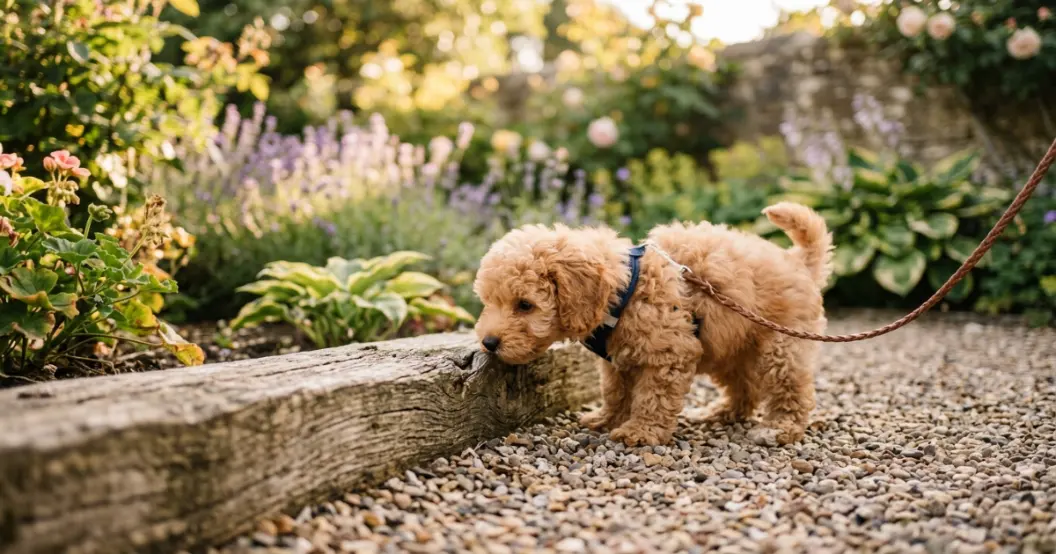
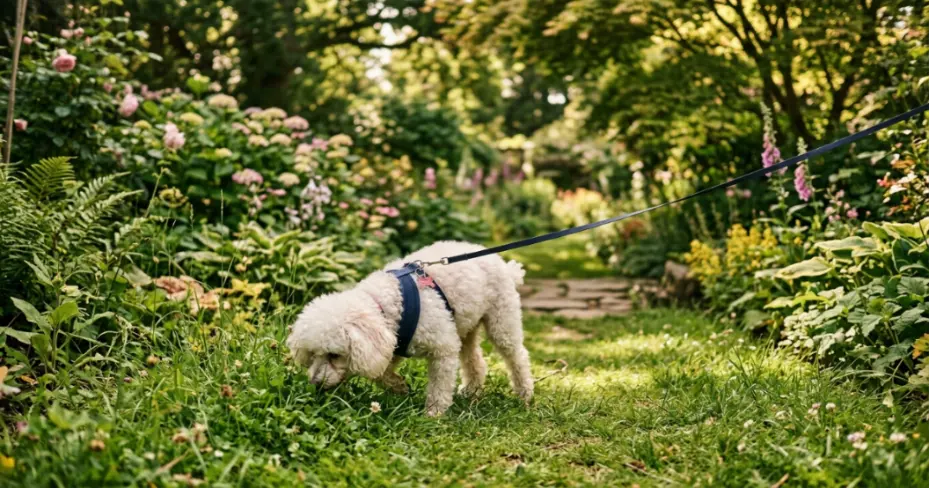
Poodle puppies do not come with an off switch. They will run until they literally collapse if allowed, which makes structured exercise boundaries one of the most important gifts you can give a young Poodle. The rule of thumb that responsible breeders share — roughly 5 minutes of structured exercise per month of age, up to twice a day — works well as a starting point, but it applies mostly to leash walking and repetitive movement. Free play on non-slip surfaces, sniffing in the garden, and short training sessions can happen more frequently because the puppy controls her own pace and stops naturally.
8 Weeks to 4 Months: The World Is Enough
For a Toy or Miniature puppy, three to four 10-minute sessions of gentle exploration — perhaps carrying her to a quiet park bench and letting her watch the world — is often more exhausting and developmentally valuable than a long walk. Standards can handle slightly longer, but the focus here is not mileage; it is sensory exposure. Puppies build resilience through gentle novelty: different surfaces underfoot, the sound of traffic at a distance, a friendly calm older dog. Mental fatigue from processing new stimuli often produces a deeper, more restorative rest than physical fatigue alone.
4 to 12 Months: The Age of Big Feelings and Bigger Energy
Adolescence hits Poodles with intensity. A 7-month-old Standard can easily walk 4 miles and still ricochet off the furniture. People search for “Poodle exercise needs by age + size” most urgently during this phase because the dog suddenly seems insatiable. Here is what we wish every owner understood: adolescence is when mental enrichment stops being optional. You cannot physically exhaust a young Standard Poodle into calmness without risking growth plate damage. Instead, layer in nose work, puzzle feeders, short retrieve sessions on soft ground, and impulse-control games. Two 30-minute off-leash sniff walks combined with three 5-minute clicker training sessions will do more for household peace than an hour of mindless fetch.
Adult Poodle Exercise by Size: The Settled Years
Once growth plates close — typically between 12 and 18 months for Standards, slightly earlier for smaller sizes — you can safely build cardiovascular fitness. But adult Poodles do not automatically calm down just because the skeleton matures. The energy is now channeled into a capable, athletic body, and this is the phase where exercise preferences become personality-driven. Some Standards are aloof athletes who live for a morning run; others are thoughtful watchers who prefer two long sniff walks and a job to do indoors.
| Poodle Size | Daily Exercise Target | Ideal Mix | Caution |
|---|---|---|---|
| Toy | 30–45 minutes | 2 short walks + indoor puzzle | Patella stress from jumping off furniture |
| Miniature | 45–60 minutes | Brisk walk + fetch + nose work | Overheating in warm weather |
| Standard | 60–90+ minutes | Long walk/hike + off-leash running + brain games | Bloat risk; no exercise right after meals |
What Makes Standards Different: The Retriever Inheritance
Standard Poodles were not originally ornamental. They were water dogs retrieving downed birds in sometimes challenging conditions. That means a well-bred Standard has a natural desire to carry objects, swim, and work cooperatively with a handler. If your Standard Poodle seems restless despite long walks, add water retrieval (even in a kiddie pool), hide-and-seek with a favorite toy, or structured field games. These satisfy a genetic itch that pure aerobic exercise does not touch. Conversely, Toys and Miniatures were refined more for companionship and performance in smaller spaces; their instinct leans toward agility, trick work, and close partnership. Ignoring these inherited differences is the root of many behaviour complaints.
Senior Poodle Exercise: Graceful Adaptation Without Withdrawal
The transition to senior status creeps in quietly. You might notice your Poodle takes longer to rise, pauses on a walk that used to be easy, or sleeps more deeply afterward. Senior exercise is not about stopping; it is about shifting currency from impact to maintenance. For senior Toys and Miniatures, focus moves to joint-friendly movement — grass walks, gentle stair avoidance, and balance work on a wobble cushion. Senior Standards benefit from swimming (non-weight-bearing and wonderful for arthritis) and shorter, more frequent outings rather than one long march. Watching cognition decline is a real fear; exercise that includes scent discrimination and gentle problem-solving preserves mental sharpness well into the teens.
What Buyers and New Owners Usually Get Wrong About Poodle Exercise
If we could place one insight into every Poodle inquiry, it would be this: Poodles are not high-energy in the way a Border Collie is; they are high-engagement. A Poodle who is under-exercised often does not just get destructive — she gets demanding, vocal, and pushy. People misinterpret this as separation anxiety or hyperactivity when the dog is actually saying, “I need a job and a thinking partner.” The second common mistake is buying a Toy or Miniature Poodle expecting a low-exercise purse dog. Small size does not equate to small needs; a Miniature Poodle can easily outlast a larger, lower-drive breed. Under-exercised small Poodles become notorious barkers and house-soilers, which is heartbreaking because the fix is often just a more creatively structured day.
Building Your Interactive Poodle Exercise Schedule
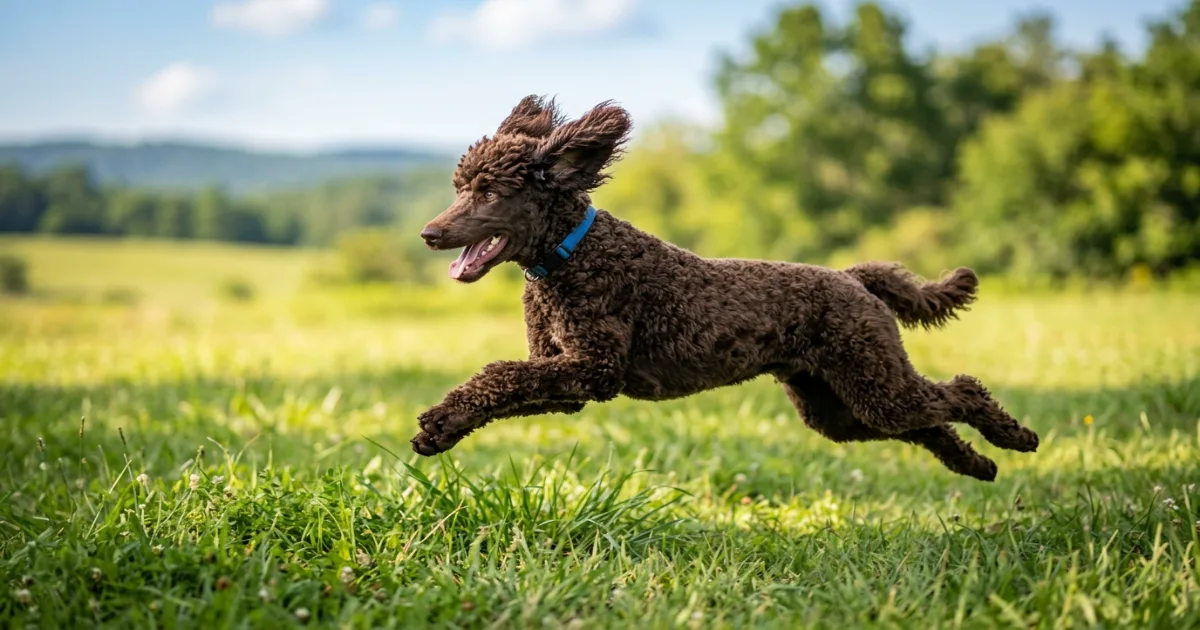
Instead of a one-size-fits-all chart you glance at once and forget, here is a framework you can return to as your Poodle ages. Think of it as four dials you adjust: duration, intensity, mental load, and impact. For a young adult Standard, you might have duration high, intensity moderate, mental load high, and impact moderate (running on grass, not pavement). For a senior Toy, duration is low, intensity low, mental load high, and impact minimal. When you notice behaviour changes — restlessness, weight gain, stiffness, irritability — adjust the dials rather than simply reaching for more miles. Nine times out of ten, the missing ingredient is mental load or sensory richness, not raw distance.
The Comparison Nobody Makes: Poodle vs. Other “Active” Breeds
Poodles are often compared to Doodles — a comparison that misses the structural differences that affect exercise tolerance. A Standard Poodle has a square build with a deep chest and efficient gait; many Doodles inherit a heavier, sometimes less coordinated frame. A purebred Poodle’s athleticism is more predictable, which means you can plan exercise progression with greater confidence. Compared to a Labrador, a Standard Poodle tends to be more environmentally aware during exercise; Labs often plunge forward with joyful disregard, while Poodles scan, process, and respond. That mental processing is part of the exercise for a Poodle. For small varieties, comparing a Miniature Poodle to a Cavalier King Charles Spaniel highlights the difference: Cavaliers often adapt to a quieter rhythm naturally, while Miniature Poodles need intentional enrichment to feel settled.
Weather, Seasons, and the Indoor Poodle Athlete
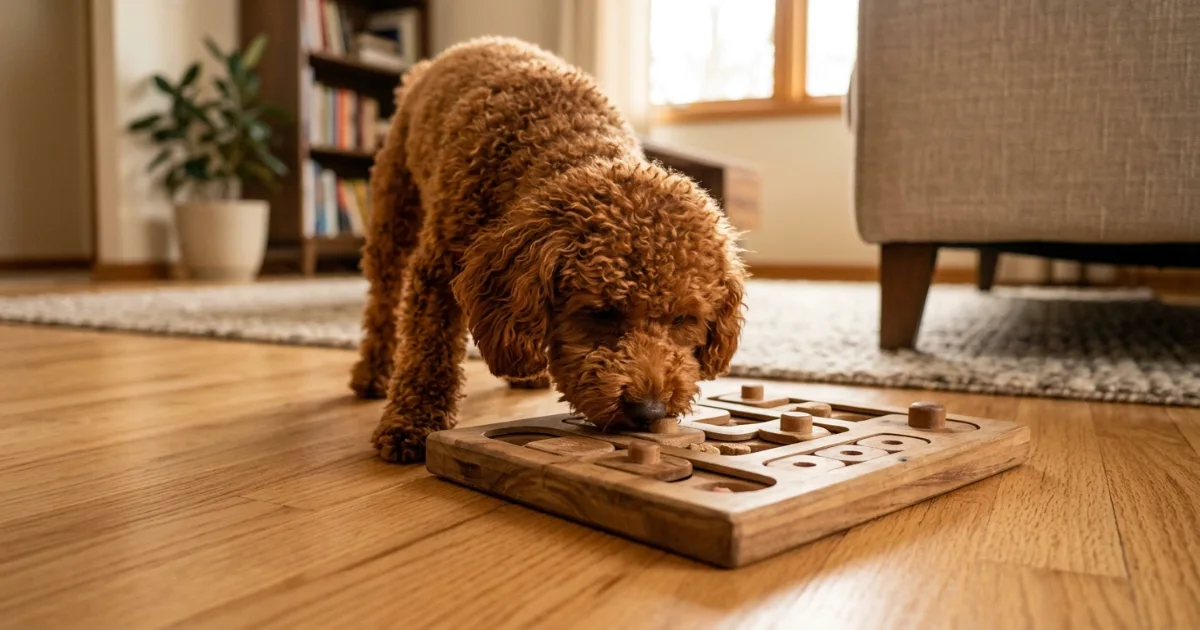
Poodles in full coat can overheat faster than their clipped counterparts, especially dark-colored dogs exercising in direct sun. In summer, shift walks to early morning and use water play as a cooling alternative. In winter, Standards with a longer clip often adore snow, but Toys and Miniatures lose body heat quickly; a waterproof coat and shorter, more frequent outings work better than one long freezing walk. For indoor days — and every Poodle owner needs an indoor game plan — nose work games, hide-and-seek, and teaching a new trick sequence can genuinely tire a Poodle. A 15-minute shaping session where your dog figures out how to put a toy in a box is worth a 30-minute walk in mental energy expenditure.
Why “Poodle Exercise Needs by Age + Size” Deserves an Interactive Mindset
We titled this guide with “interactive” because no static chart can capture the feedback loop between you and your individual dog. Your Poodle will tell you, daily, whether the exercise mix is working. A dog who settles readily after activity, maintains a healthy weight, greets you with bright engagement rather than frantic demand, and shows no destructive behaviour is likely in the sweet spot. A dog who is gaining weight, pacing, barking at every sound, or suddenly stiff in the mornings is sending a clear signal to adjust the dials. The most effective Poodle owners become students of their own dog, using age-and-size guidelines as scaffolding, not a cage.
Frequently Asked Questions About Poodle Exercise
- How much exercise does a Standard Poodle need daily?
- A healthy adult Standard Poodle typically needs 60 to 90 minutes of physical activity combined with multiple short mental enrichment sessions. One long walk plus off-leash running or swimming, supplemented by puzzle toys or training, is the gold standard. Ignoring the mental component often results in a dog that seems physically tired but still restless.
- Can you over-exercise a Toy Poodle puppy?
- Yes, and it is a common mistake. Toy Poodle puppies have delicate growth plates and small joints. Long forced walks or repeated jumping from furniture can set the stage for patellar luxation and early arthritis. Prioritize short, puppy-paced play and sensory exploration over distance. Exhaustion does not equal proper development.
- What is the best exercise for a senior Miniature Poodle with arthritis?
- Swimming or wading is ideal because it removes impact while maintaining muscle tone. Short, frequent, slow sniff walks on soft ground preserve mobility and mental health. Combine with indoor balance exercises on a non-slip surface and work closely with your vet on pain management to keep movement comfortable and joyful.
- How do I know if my Poodle is getting enough mental exercise?
- Look for a dog who can settle calmly after activity, does not demand attention incessantly, and shows healthy curiosity rather than frantic reactivity. A mentally under-stimulated Poodle often becomes vocal, destructive, or pushy — shadowing you relentlessly or barking at every small environmental change.
- Do Miniature Poodles need less exercise than Standards?
- They need shorter duration but not necessarily lower intensity of engagement. A Miniature Poodle still requires a full 45–60 minutes of daily activity, plus brain work. Without it, they are prone to nuisance barking and hyper-vigilance. The difference is in joint impact capacity, not in drive or intelligence.
- When can I start running with my Standard Poodle?
- Wait until growth plates have closed, usually between 12 and 18 months, and get your vet’s clearance. Then build distance gradually on soft surfaces. Avoid repetitive pavement pounding in the first two years, and never run a Standard immediately after a meal due to bloat risk. A slow, conditioned build is safer than a sudden weekend-warrior approach.
- Why does my Poodle go crazy even after a long walk?
- The walk likely provided physical exertion but insufficient mental engagement. Poodles process the world through their brains as much as their bodies. Add a 10-minute scent game, trick training, or a puzzle feeder after the walk. You will often see a dramatic difference in calmness within days.
The Takeaway: Your Poodle’s Exercise Is a Conversation, Not a Checklist
Poodle exercise needs by age and size form a responsive framework that honors the breed’s working intelligence and athletic build, whether wrapped in a 5-pound Toy body or a 60-pound Standard frame. Puppies need boundaries and sensory richness. Adolescents need mental challenge layered onto physical activity. Adults thrive on a blend of endurance and brain work that reflects their retriever ancestry. Seniors need joint-smart adaptation without withdrawal from the world. Across every life stage, the Poodle asks not just for movement, but for partnership — for an owner who watches, adjusts, and understands that a tired mind creates a peaceful dog more reliably than exhausted legs alone. Return to this page as your dog ages, adjust your four dials, and trust the feedback your individual Poodle gives you. She is the most reliable guide you will ever have.