White Poodle Care: The Complete Guide to Tear Stains and Coat Maintenance
A well-kept white poodle is one of the most visually striking dogs you’ll ever see — coat gleaming, posture elegant, expression bright. But that pristine appearance doesn’t arrive effortlessly. White poodle care is genuinely more demanding than caring for a darker-coated poodle, and owners who go in underprepared often end up frustrated with staining, dingy coats, and grooming challenges that feel endless.
This guide covers everything: the real causes of tear stains, why they’re harder to manage on white coats, what the grooming routine actually needs to look like week to week, what doesn’t work despite widespread recommendations, and how to keep a white poodle looking genuinely spectacular through every stage of life.
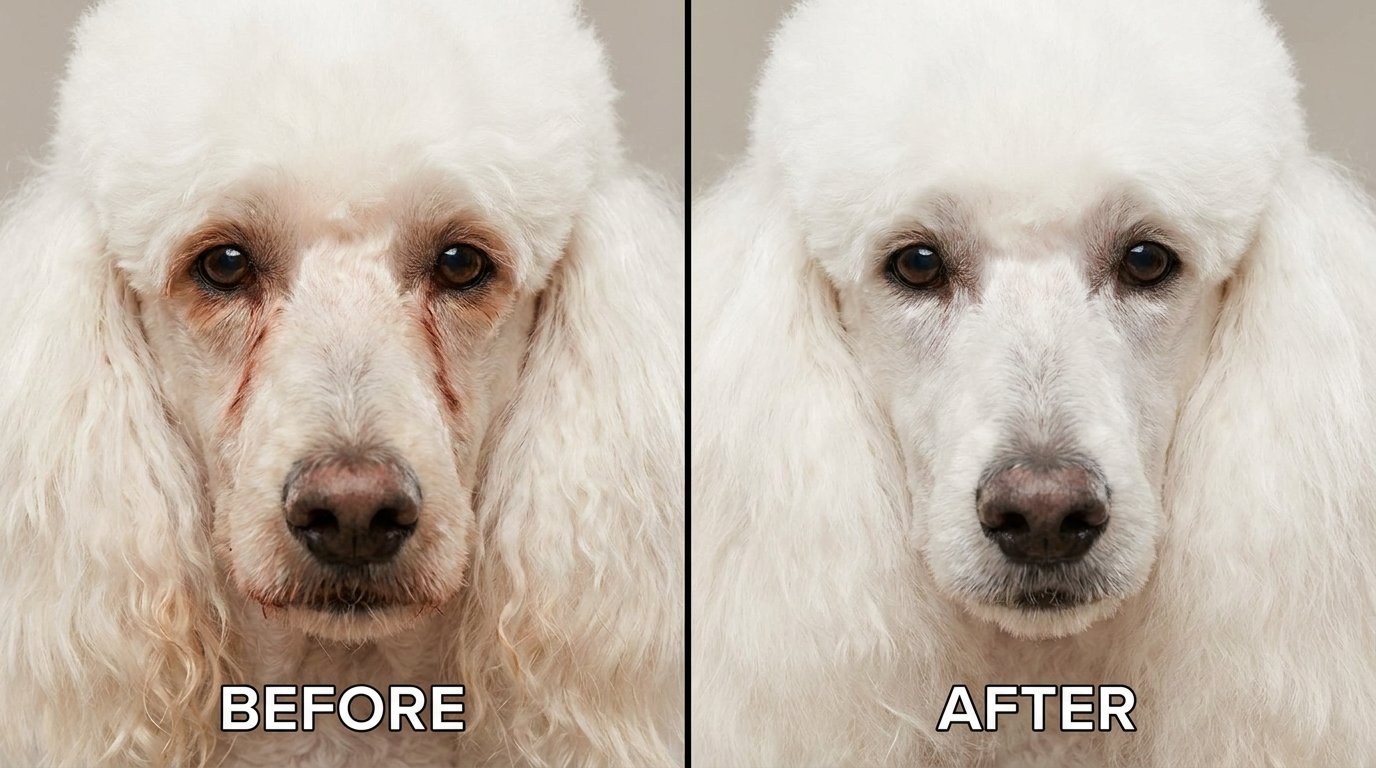
White poodle care requires daily face wiping to prevent tear stain buildup, regular brushing (minimum three to four times per week), professional grooming every five to six weeks, and careful attention to diet, water quality, and eye health. Tear stains on white poodles are caused by porphyrin — an iron-containing compound in tears — that oxidizes and leaves a rust-brown mark. They can be managed effectively with consistent routine and the right products, but rarely eliminated entirely without addressing the underlying cause.
Why White Poodle Care Is a Different Category Entirely
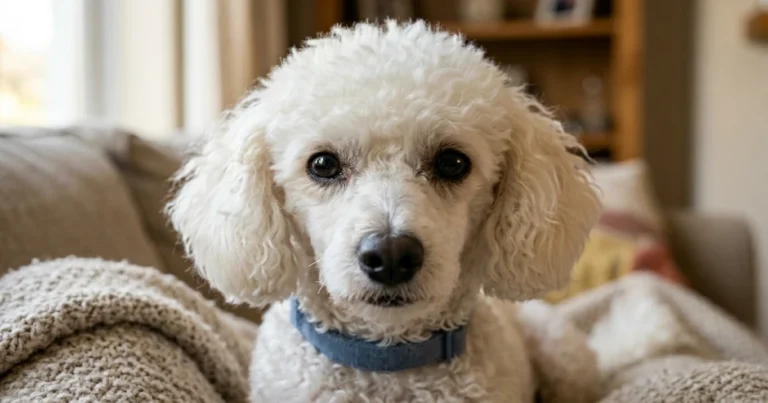
This is the thing most first-time white poodle owners don’t fully appreciate before buying: a white coat shows everything. Moisture, debris, food residue, saliva — all of it leaves a mark that would simply disappear on a brown or black coat. The poodle’s curly, dense coat texture compounds this further, trapping particles close to the skin rather than shedding them away.
Every poodle — regardless of color — produces the same biological secretions. Every poodle has ear discharge, tear production, and saliva. The difference is purely visual. On a black poodle, reddish-brown tear staining is nearly invisible. On a white poodle, it announces itself immediately and prominently. This isn’t a health problem unique to white dogs; it’s a grooming visibility problem that demands a higher-effort maintenance response.
Understanding this from the start changes how you approach the commitment. White poodle care isn’t about fixing something that’s wrong — it’s about managing something that’s normal, just more visible.
Tear Stains: What’s Actually Causing Them
The rust-colored staining around a white poodle’s eyes is caused by a molecule called porphyrin. Porphyrins are iron-containing compounds produced when the body breaks down red blood cells. They’re excreted through saliva, tears, and other secretions — and on their own, they’re entirely harmless.
The problem is oxidation. When porphyrin-rich tears sit on the fur and are exposed to air and light, they oxidize and turn a distinctive reddish-brown. On white fur, this color is starkly visible. The longer the staining sits without being cleaned, the more it bonds to the hair shaft and the harder it becomes to remove.
Porphyrin is measured in a unit called the “uroporphyrin level” in tears. All dogs produce it. Factors that increase porphyrin concentration include blocked or narrow tear ducts (epiphora), certain dietary ingredients, and in some cases, low-grade ear infections or food sensitivities. Elevated porphyrin output means more staining — even with perfect cleaning habits. Addressing the root cause is always more effective than surface treatments alone.
Factors That Worsen Tear Staining
Not all white poodles stain equally. Some owners manage near-pristine faces with modest daily effort. Others battle persistent staining despite rigorous routines. The variables that drive severity include:
- Epiphora (excessive tearing): Tear ducts that are narrow, partially blocked, or shaped in a way that causes overflow. Common in Toy and Miniature poodles due to facial anatomy.
- Diet: Diets high in corn, wheat, artificial colorings, or certain preservatives have been associated with elevated porphyrin output in anecdotal reports. Filtered or purified water instead of tap water may also help — tap water minerals can worsen staining around the mouth.
- Chronic ear or eye infections: Subtle, recurring infections increase tear production and alter its composition.
- Teething in puppies: Porphyrin output temporarily spikes during teething. Many white poodle owners see dramatic improvement once a puppy passes this phase.
- Stress and immune function: Dogs under chronic stress or with compromised immune systems tend to show heavier staining.
The Daily Cleaning Routine That Actually Works
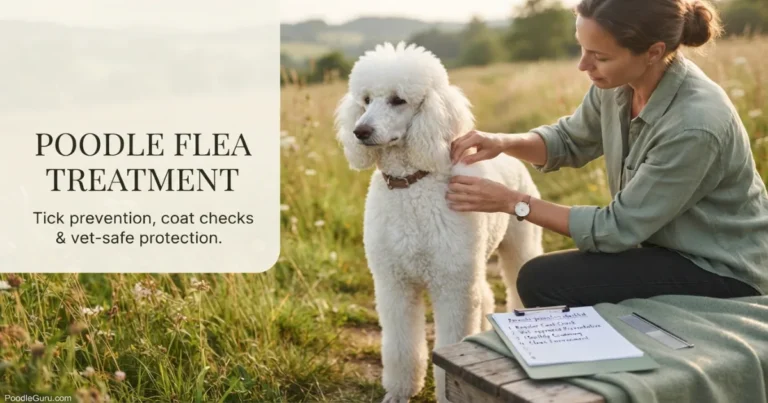
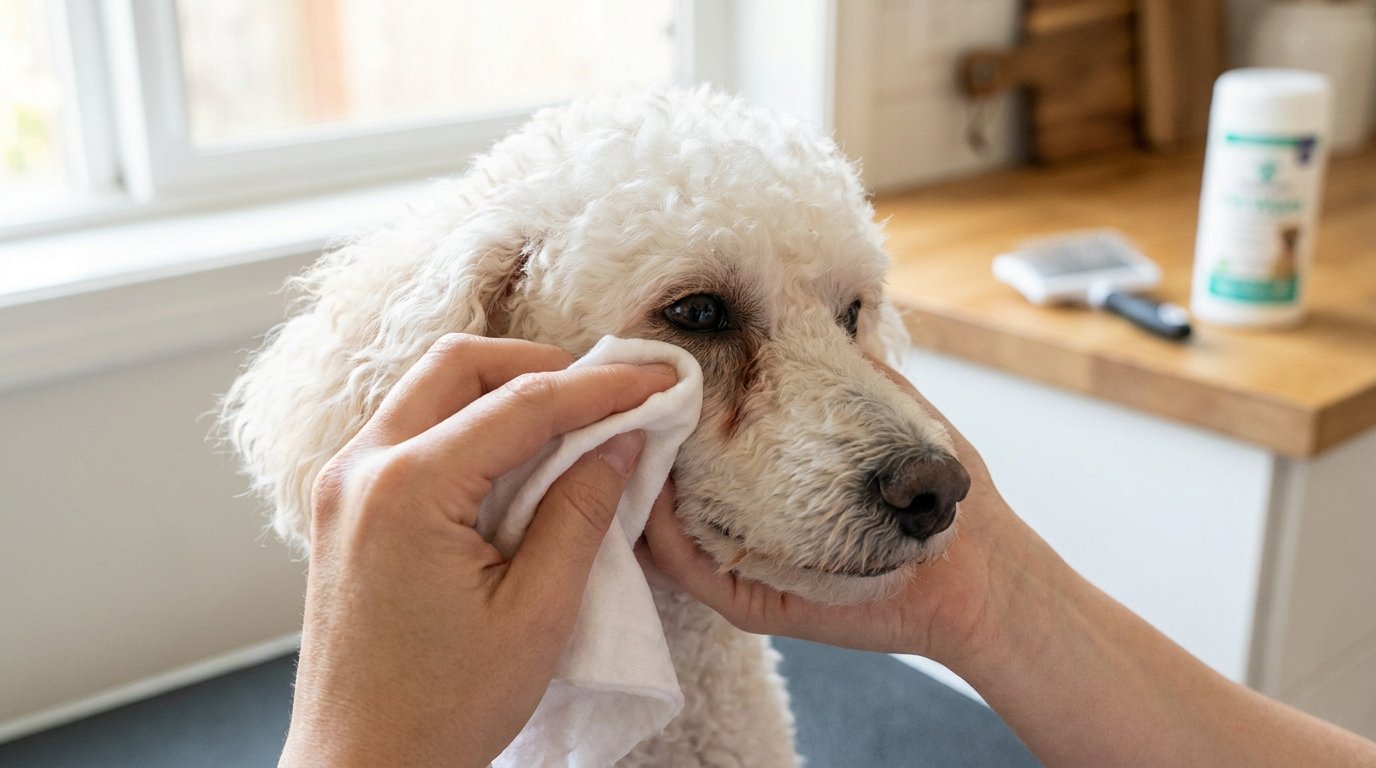
There’s no shortcut here. The owners with the cleanest white poodles share one thing in common: they clean the face every single day, without exception. The technique matters as much as the frequency.
Step-by-Step Daily Face Care
- Use a dedicated eye wipe or damp cloth. Purpose-formulated pet eye wipes (free of alcohol and fragrance) work best. Alternatively, a soft cloth dampened with saline solution or cooled chamomile tea is gentle and effective for daily use.
- Wipe from the inner corner of the eye outward. Always move away from the eye, not toward it. Use a fresh section of cloth or a new wipe for each eye to avoid transferring bacteria.
- Dry the fur completely. Moisture left in the fur around the eyes accelerates porphyrin oxidation and creates an environment for yeast growth. After wiping, gently pat the area with a dry cloth.
- Comb the under-eye area. A fine-toothed metal comb separates the hairs and removes any dried residue that wiping alone doesn’t lift.
- Clean the muzzle crease. Saliva staining along the lower lip and chin follows the same chemistry as tear staining. The muzzle needs the same daily attention as the eyes.
Drying the face thoroughly after every water bowl interaction is one of the most overlooked yet impactful habits for white poodle owners. Many dogs drink messily, leaving moisture in the muzzle fur for hours. A small microfibre cloth kept near the water bowl makes this easy to do consistently.
White Poodle Coat Maintenance: The Full Routine
Tear stain management is only one dimension of white poodle care. The coat itself — across the entire body — requires structured attention to stay clean, tangle-free, and genuinely white rather than yellowing to a dingy cream.
| Frequency | Task | Notes |
|---|---|---|
| Daily | Face cleaning (eyes + muzzle) | Wipe, dry, comb. Non-negotiable. |
| Daily | Dry muzzle after drinking | Prevents saliva stain accumulation |
| 3–4× per week | Full body brushing | Line-brush to skin; check for mats |
| Weekly | Ear cleaning | Dry ear canals reduce infection risk |
| Every 5–6 weeks | Professional bath + trim | Use whitening shampoo; blueberry enzyme shampoos help |
| Every 5–6 weeks | Nail trim | Often done alongside professional groom |
| Monthly | Coat condition check | Look for yellowing, dryness, texture change |
Brushing Technique for White Coats
The poodle’s single-layer, curly coat is prone to matting from the root outward — meaning surface brushing that skips the base of the coat creates the illusion of maintenance without preventing the mats that form close to the skin. Line brushing, where sections of coat are systematically worked through layer by layer, is the only method that genuinely addresses this.
For white coats specifically, brushing also redistributes the natural coat oils that help keep the fur flexible and bright. A coat that isn’t brushed adequately goes dull and develops a greasy base that attracts dirt — making yellowing worse over time, not better.
Essential tools for white poodle coat care: a quality slicker brush (medium pin density, with flexible pins that don’t scratch the skin), a metal greyhound-style comb for finishing and mat detection, and a detangling spray to use before brushing on dry coats.
Bathing and Whitening Shampoos
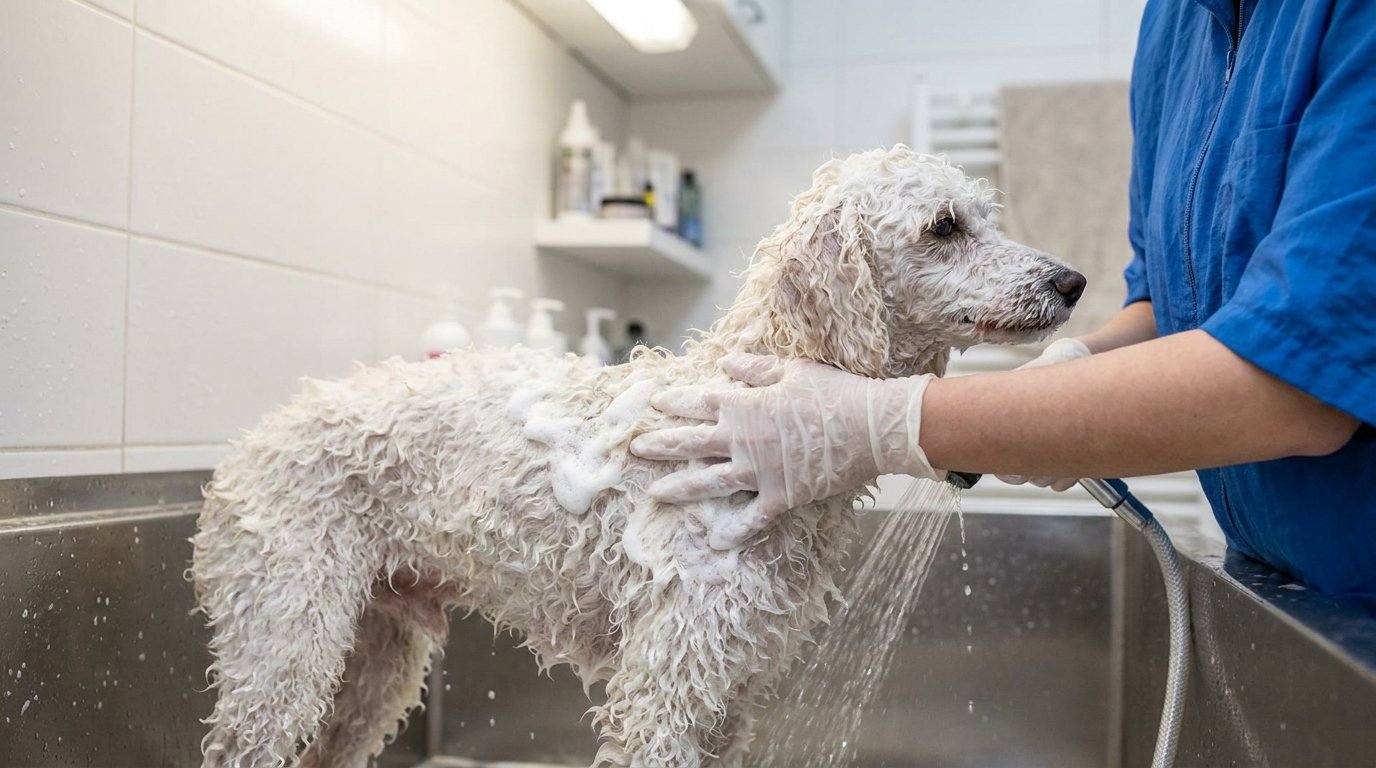
Whitening shampoos formulated for dogs use optical brighteners or mild enzyme action to counteract yellowing and lift surface staining. They are not bleach — they work by reflecting light differently in the coat fiber, creating the appearance of greater brightness. Used every four to six weeks as part of a professional groom or home bath, they make a visible difference.
Look for shampoos with blueberry extract, violet pigments, or enzyme formulations. Avoid products with harsh sulfates or those intended for human use — the pH difference between human and dog skin is significant, and human whitening shampoos can cause dryness and coat damage over time.
Never use hydrogen peroxide on a dog’s coat or face, regardless of what you read in older forum posts or DIY blogs. It can cause chemical burns on skin, is toxic if ingested through grooming, and damages the hair shaft irreversibly. The same applies to human contact lens solution used directly on staining. There are safe, effective options — there’s no reason to use anything caustic near your dog’s face.
Comparing Tear Stain Treatments: What Works and What Doesn’t
| Treatment / Method | Effectiveness | Safety | Notes |
|---|---|---|---|
| Daily face wiping + drying | High — prevents buildup | Excellent | The most effective single habit |
| Filtered / purified water | Moderate | Excellent | Reduces mineral staining around mouth |
| Dietary change (grain-free, no artificial dyes) | Moderate — varies by dog | Excellent with quality food | Worth trialing for 8–12 weeks to assess |
| Whitening shampoo (dog-safe) | Moderate — cosmetic improvement | Good when pH-correct | Lifts surface staining; not a cure |
| Veterinary eye wipes (commercial) | Good for maintenance | Excellent | Convenient; use daily around eyes |
| Antibiotics (e.g., low-dose tylosin) | High — but controversial | Questionable long-term | Not recommended for cosmetic use; discuss with vet |
| Hydrogen peroxide on fur | Works cosmetically | Unsafe — avoid entirely | Chemical burn risk; never use |
| Tear stain powders / additives in food | Variable — often marginal | Check ingredients carefully | Many contain low-dose antibiotics; verify before use |
Health Issues That Drive Staining — and When to See a Vet
Persistent, heavy tear staining that doesn’t respond to consistent care deserves a veterinary conversation. In some cases, staining is a symptom rather than just a cosmetic issue. Conditions worth ruling out include:
- Entropion: Inward-rolling eyelids that constantly irritate the eye surface, causing chronic tearing. Surgically correctable.
- Distichiasis: Extra eyelashes growing from abnormal positions, common in poodles, that rub against the cornea and stimulate tearing.
- Blocked tear ducts (nasolacrimal obstruction): Tears that cannot drain properly overflow onto the face. A vet can flush the ducts or recommend correction.
- Chronic eye infections: Low-grade conjunctivitis that is never fully treated. The discharge changes composition and stains more aggressively than normal tears.
- Ear infections: The anatomy of the ear, eye, and nasal cavity is interconnected. Recurring ear infections in poodles — especially in the curly-coated ear canal — can elevate overall porphyrin production.
If staining suddenly worsens in a dog that previously had a clean face, or if the discharge changes color (yellow-green signals infection, not just porphyrin), see a vet promptly. These aren’t grooming problems — they’re medical ones that happen to have a visible manifestation on a white coat.
What Owners Get Wrong About White Poodle Care
After years of reader questions and forum discussions within the poodle community, a few mistakes come up repeatedly. Knowing them in advance saves a lot of frustration.
Treating staining as purely cosmetic from the start. Many owners spend months rotating products without ever having the eyes or ears examined. If there’s an anatomical or low-grade infection issue driving the staining, no product will solve it — it requires diagnosis.
Expecting results in weeks when the timeline is months. Even with a perfect routine, already-stained fur takes time to grow out. The stained hairs need to either be trimmed away or replaced by new growth. Don’t judge your routine by the appearance of already-stained fur — judge it by whether new fur growing in at the inner corner of the eye is staying clean.
Using human grooming products. This is one of the most common errors among new dog owners regardless of breed. Human shampoos, makeup wipes, and eye drops have completely different formulations from what’s safe for dogs. Even “gentle” or “natural” human products can disrupt skin pH and cause reactions around the delicate eye area.
Inconsistency. Skipping face cleaning for a few days — especially on a dog with active tearing — lets staining deepen and bond to the hair shaft. A routine that’s 70% consistent produces far worse results than one that’s 100% consistent, even if individual sessions are brief.
Practical Owner Insight: Living With a White Poodle Long-Term
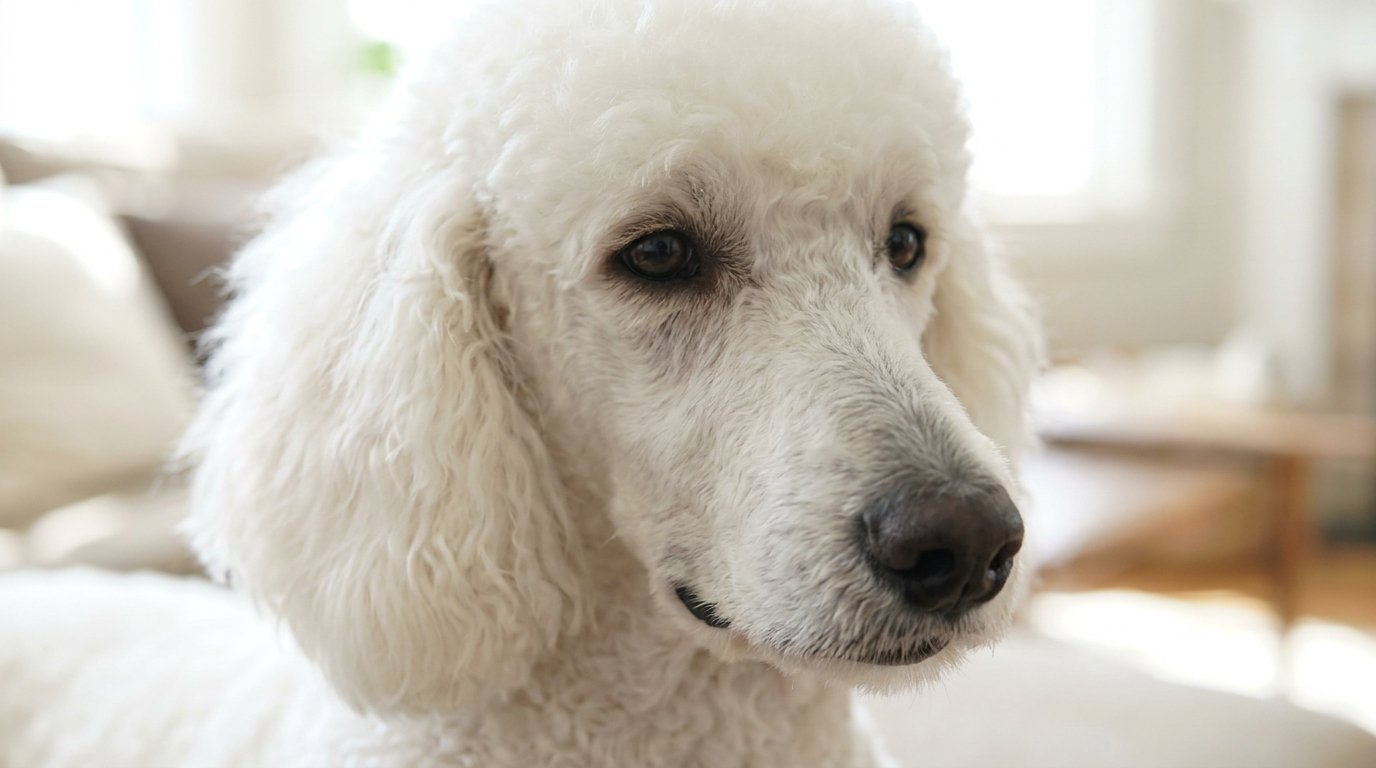
The owners who thrive with white poodles are the ones who stop seeing the daily routine as a burden and start seeing it as part of the relationship. Five minutes of face care in the morning, a quick dry after the water bowl, a brush session three or four times a week — none of these are individually demanding. Together, they produce a dog that looks exceptional and feels comfortable.
Budget realistically for professional grooming. At roughly every five weeks, that’s about ten visits per year. For a white poodle, professional grooming isn’t optional — it’s the reset that keeps the coat manageable between home sessions. Groomers who specialize in poodles or who work with show coats will know how to handle whitening treatments and stain removal far more effectively than generalist grooming salons.
It’s also worth building a relationship with a veterinarian who is familiar with poodle-specific issues. Epiphora, ear infections, and skin sensitivities are all breed-common concerns. Having a vet who can distinguish between normal porphyrin staining and something that needs treatment makes white poodle ownership substantially less stressful.
Pro Tips for White Poodle Owners
- Keep a small stash of pet eye wipes near every water and food station — accessibility makes the daily habit easier to maintain
- Switch to filtered or bottled water for drinking if tap water in your area is mineral-heavy; the difference in mouth and beard staining can be striking within weeks
- Ask your groomer to do a “teddy bear trim” or keep the facial hair shorter if staining is a persistent challenge — shorter fur stains less visibly and is easier to clean
- Photograph the face monthly in consistent lighting — progress with staining management is gradual and easy to underestimate without comparison photos
- Never trim or shave the hair around the eyes yourself without specific training — the skin around the eye is delicate and the margin for error is minimal
- If a diet change is part of your stain management plan, give it a full eight to twelve weeks before assessing — coat and staining response to diet changes is slow
Frequently Asked Questions
How do I get rid of tear stains on my white poodle?
Start with daily face cleaning using pet-safe eye wipes, followed by thorough drying of the fur around the eyes and muzzle. Use a fine comb to remove dried residue. For already-stained fur, whitening shampoo used at bath time will reduce the appearance over several washes. Already-stained hairs need to grow out or be trimmed — no product removes deep staining instantly. If staining is heavy or worsening despite consistent care, have a vet check for blocked tear ducts, epiphora, or chronic eye irritation.
Why does my white poodle have brown stains under the eyes?
The brown or rust-colored staining is caused by porphyrin — an iron-containing compound in tears that oxidizes when exposed to air and light. All dogs produce it, but on white fur the reddish-brown color is clearly visible. It’s not a sign of illness on its own, though elevated staining can indicate excessive tearing from blocked ducts, eye irritation, or other manageable conditions.
How often should a white poodle be groomed?
Professional grooming every five to six weeks, with home brushing three to four times per week. Daily face care (eye cleaning, muzzle drying) is also essential for white coats. White poodles require more frequent professional appointments than darker-coated poodles because yellowing and staining are much more visible between grooms.
Can diet changes reduce tear stains in white poodles?
For some dogs, yes — significantly. Diets high in artificial colorings, corn, wheat, or certain preservatives have been associated with increased porphyrin output in anecdotal and limited clinical reports. Switching to a high-quality food with minimal additives, and replacing tap water with filtered water, is worth trialing for eight to twelve weeks. Results vary by individual dog.
Is it safe to use human eye wipes on a white poodle’s face?
No — human eye wipes often contain preservatives, fragrance, or alcohol that are irritating to canine eyes and skin. Use wipes specifically formulated for pet eye care, or a soft cloth dampened with sterile saline. The skin around a dog’s eyes has different pH and sensitivity than human skin.
Why is my white poodle’s coat turning yellow?
Yellowing in white poodle coats is usually caused by a combination of accumulated saliva, urine contact (in smaller dogs or during self-grooming), environmental pollutants, and insufficient bathing. Whitening shampoos used regularly during baths can reverse mild to moderate yellowing. For severe cases, a professional groom with whitening treatments and a thorough detoxifying bath often produces dramatic improvement.
Do white poodle puppies have worse tear stains than adults?
Often yes — temporarily. Teething between 3 and 6 months causes a spike in porphyrin production that worsens staining noticeably. Most owners see significant natural improvement once the puppy clears the teething phase. Establishing the daily cleaning habit during puppyhood still matters, both for immediate management and to get the puppy comfortable with face handling.
The Bottom Line on White Poodle Care
White poodle care is not fundamentally different from caring for any poodle — the coat still needs brushing, the ears still need cleaning, and professional grooming is still non-negotiable. What changes is the margin for error. On a white coat, everything is visible: every stain, every tangle, every skipped day of face care.
Tear stains are the defining challenge, and they respond best to consistency and addressing the root cause rather than surface treatments alone. Daily face cleaning, a quality diet, filtered water, and regular veterinary checks for eye and ear health will do more than any single product ever will.
The reward for staying consistent is real. A white poodle with a clean, bright coat and stain-free face is genuinely one of the most elegant dogs in the world. The routine that gets you there takes about five to ten minutes a day — a worthwhile investment for a dog that may share your home for fifteen years.