This article contains affiliate links. PoodleGuru may earn a small commission if you purchase through our links, at no extra cost to you. This guide is educational and does not replace advice from a licensed veterinarian.
Best Hypoallergenic Dog Food for Poodles (2026 Guide)
Best hypoallergenic dog food for poodles is not one magic brand. For an itchy, sensitive poodle, the safest choice is usually a vet-guided hydrolyzed protein diet or a carefully chosen novel-protein limited-ingredient food used during a strict elimination trial. This guide explains how to spot likely food triggers, read labels properly, transition safely, and avoid the mistakes that keep poodles scratching.
Quick Answer: Best Hypoallergenic Dog Food for Poodles
For a poodle with suspected food allergies, the most reliable first step is not random food switching. Veterinarians commonly use either a prescription hydrolyzed protein diet or a strict novel-protein diet that contains ingredients your poodle has never eaten before. The trial food must be fed exclusively for 8–12 weeks, with no table scraps, flavored medications, dental chews, or regular treats unless your vet approves them. If your poodle improves and symptoms return after a supervised rechallenge, the food allergy is much clearer.

Understanding Food Allergies in Poodles
A food allergy is an immune reaction to a specific ingredient, most often a protein source. In poodles, owners often notice year-round itching, repeated ear problems, paw licking, skin redness, or digestive upset. These signs are frustrating because they can also overlap with fleas, yeast, bacterial skin infections, and environmental allergies.
The coat matters too. A poodle’s dense curls do not cause food allergies, but they can trap moisture close to the skin. When itching begins, secondary yeast or bacterial infections can make the whole problem look worse than the original trigger. That is why a poodle with itchy ears or paws often needs both skin care and diet investigation, not just a new bag of food.
Veterinary guidance generally recommends ruling out parasites, infections, and environmental triggers before blaming food alone. VCA explains that food allergies in dogs can develop at almost any age, even after a dog has eaten the same food for years. So yes, a familiar food can become a problem — but the diagnosis still needs a proper trial.
Common Food Allergens for Poodles
The most likely trigger is usually an ingredient your poodle eats often. In everyday dog foods and treats, that commonly means chicken, beef, dairy, egg, wheat, soy, or mixed animal proteins. The exact trigger is individual, so the goal is not to fear every ingredient — it is to identify what your poodle personally reacts to.
Chicken
Chicken appears in many kibbles, canned foods, treats, toppers, and flavored supplements. If your poodle has eaten chicken daily for years, it becomes an obvious ingredient to review during a diet history.
Beef
Beef can appear in food, chews, gravies, training treats, and “meaty” flavorings. Owners often miss it because it is not always the main protein on the front of the bag.
Dairy
Cheese, yogurt, milk-based treats, and dairy-flavored snacks may cause digestive upset or true reactions in some dogs. Lactose intolerance can look similar but is not the same as allergy.
Wheat or Gluten
Grain reactions are possible, but animal proteins are often more important suspects. Do not assume “grain-free” automatically means allergy-safe.
Egg
Egg can hide in baked treats and some formulas. It is worth checking if your poodle keeps reacting despite avoiding the obvious meat proteins.
Soy or Mixed Proteins
Some sensitive dogs react to plant proteins or formulas that combine several protein sources. Mixed formulas are harder to use for a clean elimination trial.
The PoodleGuru SAFE Food Selection Framework
At PoodleGuru, we use the SAFE Framework to judge whether a food is actually useful for a sensitive poodle, instead of relying on front-label marketing.
Single Novel Protein
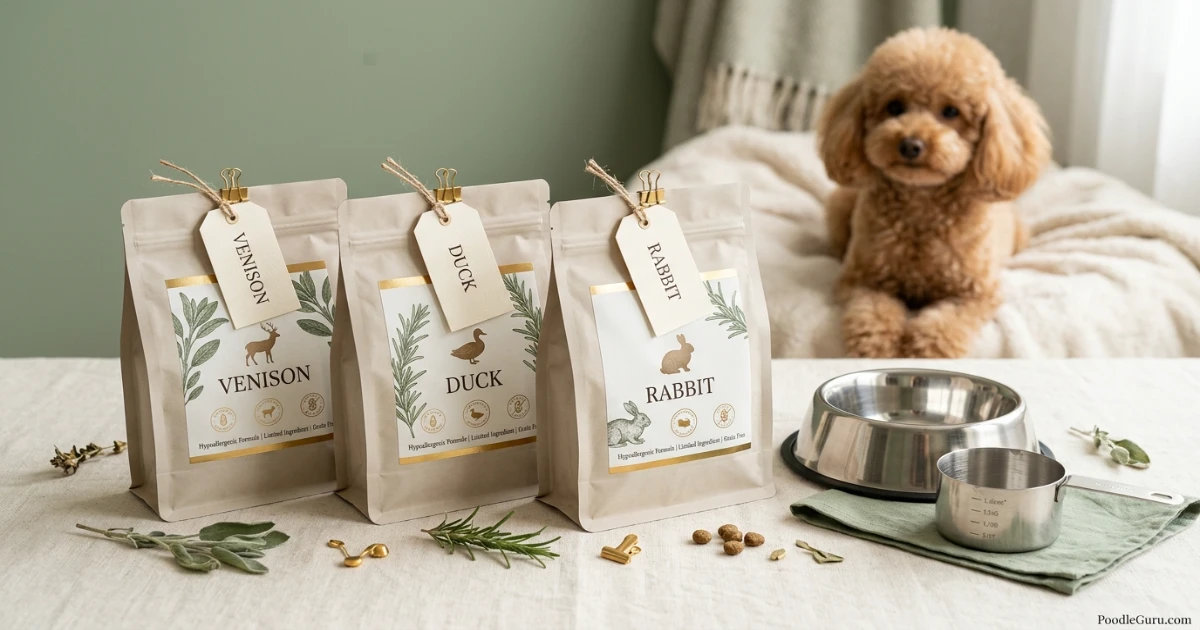
Choose one protein your poodle has truly never eaten before, such as rabbit, venison, duck, or another vet-approved option. If your poodle has had duck treats before, duck is no longer a perfect novel protein.
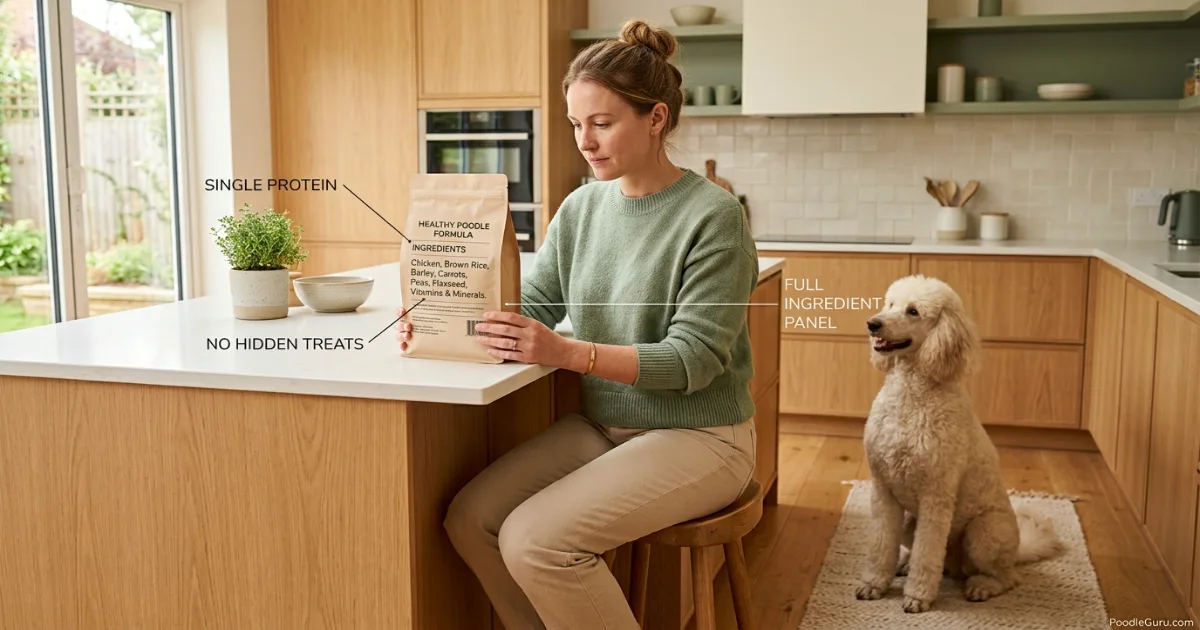
Assess the Full Ingredient Panel
Ignore the front label first. Read the full ingredient list for hidden proteins, mixed animal meals, flavorings, broths, or animal digest. The cleanest trial foods are simple and transparent.
Fewer Extras, Fewer Questions
Limited-ingredient diets usually work best when they avoid unnecessary colors, flavors, and complicated add-ons. The simpler the formula, the easier it is to interpret your poodle’s response.
Evaluate Cross-Contamination Risk
If your poodle has severe signs, ask whether the food is made on shared equipment with common allergens. Veterinary therapeutic diets often have stricter controls than many over-the-counter foods.
Best Hypoallergenic Dog Food for Poodles by Type
There are three practical categories to understand. Merck Veterinary Manual describes elimination trials using novel protein diets, hydrolyzed diets, or similar controlled diet options. Your veterinarian can help match the type to your poodle’s symptoms and history.
| Food Type | How It Works | Best For | Access & Reliability |
|---|---|---|---|
| Hydrolyzed Protein Diet | Proteins are broken into smaller fragments so the immune system is less likely to recognize them. | Severe itching, repeated failures on regular diets, or a diagnostic elimination trial. | Usually veterinary/prescription; often most reliable for strict trials. |
| Novel Protein Limited-Ingredient Diet | Uses one protein and one carbohydrate your poodle has not eaten before. | Mild to moderate suspected food allergy with a clear diet history. | Can be prescription or OTC; quality control varies by manufacturer. |
| Maintenance Limited-Ingredient Food | Keeps the diet simple after a trigger has already been identified. | Long-term feeding after your vet confirms what your poodle tolerates. | May be easier to buy, but not always strict enough for diagnosis. |
PoodleGuru Note
No food can honestly guarantee “allergy-free” for every dog. A formula is only hypoallergenic for your poodle if it avoids your poodle’s personal trigger and is fed consistently enough to test the response.
Recommended Hypoallergenic Food Types for Poodles
Use this table as a selection guide, not as a diagnosis. The right choice depends on your poodle’s full food history, symptoms, age, size, and veterinary recommendations.
| Approach | Protein Example | Carbohydrate Example | Best Poodle Fit | Important Notes |
|---|---|---|---|---|
| Veterinary Hydrolyzed Diet | Hydrolyzed soy, poultry, or other protein source | Starch source selected by the formula | All poodle sizes | Often the strongest diagnostic option because it reduces hidden-protein and cross-contamination problems. |
| Rabbit Limited Ingredient | Rabbit | Potato or quinoa | Toy and Miniature Poodles | Useful only if rabbit is truly new to your dog. Check treats and toppers before choosing it. |
| Venison Limited Ingredient | Venison | Sweet potato or potato | Miniature and Standard Poodles | A common novel-protein choice, but not ideal if your poodle has already eaten venison snacks. |
| Duck Limited Ingredient | Duck | Pea, potato, or oats | Toy and Miniature Poodles | Palatable for picky poodles, but some formulas include extra poultry ingredients, so read carefully. |
| Home-Cooked Trial Diet | Vet-selected novel protein | Vet-selected carbohydrate | Short-term trial only unless balanced by a nutritionist | Can be helpful for strict testing, but long-term feeding should be formulated by a veterinary nutritionist. |
For the cleanest trial, the selected food must be your poodle’s only nutrition source. That includes treats, chews, flavored medications, pill pockets, toppers, table scraps, and even “just one bite” from family members.
How to Conduct an Elimination Diet Trial for Your Poodle
A diet trial is the clearest way to confirm a food reaction. Tufts Petfoodology notes that many veterinary specialists recommend 8–12 weeks for skin signs, because itching can take time to settle even after the trigger is removed.
Choose the Trial Food with Your Vet
Bring your poodle’s diet history: every kibble, canned food, treat, chew, topper, supplement, and flavored medicine. Your vet can then choose a hydrolyzed diet or a truly novel protein diet.
Feed Only the Trial Food
For 8–12 weeks, your poodle gets only the trial diet and water unless your vet approves something else. Use the trial kibble as treats. One chicken treat can invalidate weeks of effort.
Track Symptoms Daily
Log itching, ear redness, paw licking, stool quality, vomiting, skin odor, and sleep quality. Photos help you compare week one with week six without relying on memory.
Rechallenge Under Vet Guidance
If your poodle improves, your vet may recommend reintroducing the old diet or individual ingredients. If symptoms return, the trigger becomes more convincing. Do not rechallenge severe reactions without veterinary direction.
How to Transition to a New Hypoallergenic Diet
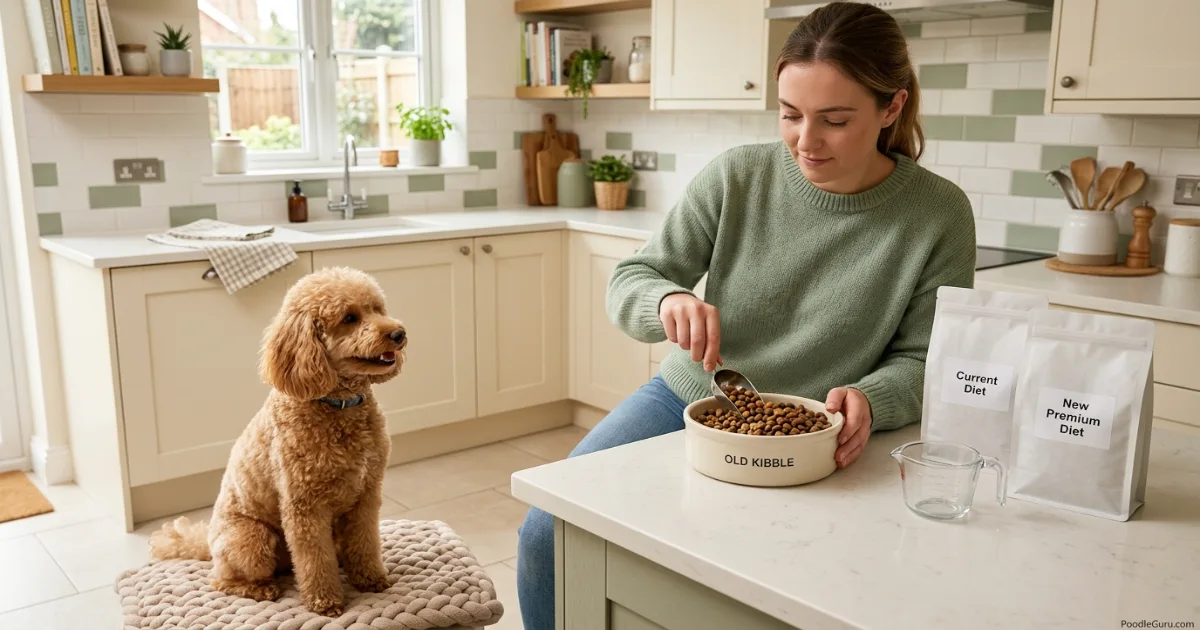
For routine food changes, a gradual 7–10 day transition is gentle on digestion. For a diagnostic elimination trial, some veterinarians prefer a faster switch so the old trigger is removed immediately. Follow your vet’s plan, especially if your poodle has vomiting, diarrhea, pancreatitis history, or severe skin inflammation.
| Day | Old Food | New Food | What to Watch |
|---|---|---|---|
| Days 1–2 | 75% | 25% | Gas, stool softness, appetite, and itching level. |
| Days 3–4 | 50% | 50% | Ear redness, paw licking, stool quality, and energy. |
| Days 5–6 | 25% | 75% | Any vomiting, worsening diarrhea, or refusal to eat. |
| Days 7–10 | 0% | 100% | Start the strict trial clock once only the new food is being fed. |
If your veterinarian recommends an immediate switch, temporary stool changes can happen. Do not add random toppers to “help” unless your vet approves them, because toppers can contaminate the trial.
Mistakes That Prolong Allergic Reactions
- Switching foods every few weeks. Constant changes make it impossible to know what helped or harmed your poodle.
- Forgetting treats and chews. Dental chews, bully sticks, biscuits, pill pockets, and training treats may contain the very protein you are trying to avoid.
- Trusting “hypoallergenic” marketing alone. The label is not the diagnosis. The ingredient panel, manufacturing control, and your poodle’s response matter more.
- Choosing a protein that is not truly novel. If your poodle has already eaten duck, a duck diet is not the cleanest trial option.
- Stopping at week three. Digestive signs may improve earlier, but skin and ear signs can take longer. Finish the timeline your vet gives you.
- Ignoring other allergies. A poodle can have both food allergy and environmental allergy, so partial improvement does not always mean the food trial failed.
When to Call a Veterinarian
Important: Signs You Need Professional Help Immediately
Call your veterinarian promptly if your poodle develops facial swelling, hives, breathing difficulty, repeated vomiting, diarrhea lasting more than 24 hours, weight loss, severe ear pain, pus, strong skin odor, or rapidly worsening redness. These signs need medical care, not only a food change.
Also call your vet if the trial food causes refusal to eat, significant stool changes, or weight loss. Growing puppies, senior poodles, pregnant dogs, and poodles with pancreatitis, kidney disease, diabetes, or other chronic conditions need extra diet supervision.

Frequently Asked Questions
What is the best hypoallergenic dog food for poodles?
The best hypoallergenic dog food for poodles is usually a vet-guided hydrolyzed protein diet or a true novel-protein limited-ingredient diet that avoids every ingredient your poodle has eaten before. The best option depends on your poodle’s diet history and symptoms.
How do I know if my poodle has a food allergy or environmental allergy?
Food allergies often cause year-round itching, repeated ear problems, paw licking, and sometimes digestive signs. Environmental allergies may be seasonal, but they can also become year-round. A strict elimination trial is the main way to confirm a food reaction.
Can I just buy grain-free food for my allergic poodle?
No. Grain-free does not automatically mean hypoallergenic. Many grain-free foods still contain chicken, beef, dairy, or mixed animal proteins. If your poodle reacts to a protein source, removing grains alone will not solve the problem.
Are raw diets better for poodles with allergies?
Raw diets are not automatically better for allergies and can create food-safety and balance concerns. If you want to use a home-prepared or raw-style trial, work with your veterinarian or a board-certified veterinary nutritionist.
Can poodles be allergic to chicken fat?
Most food allergies involve proteins, and properly purified fats contain little to no protein. However, severe cases need individualized advice because manufacturing and contamination risks vary. Ask your vet before allowing any questionable ingredient during a strict trial.
My poodle seems better on the new food. Can I stop the trial early?
No. Early improvement is encouraging, but it does not complete the diagnosis. Finish the full trial length recommended by your veterinarian, then discuss whether a rechallenge is needed to confirm the trigger.
Does hypoallergenic dog food have to be prescription?
Not always. Some mild cases can do well with a high-quality limited-ingredient novel-protein food. For severe symptoms, unclear triggers, or diagnostic certainty, prescription hydrolyzed diets are often more dependable.
Final Summary: Finding the Right Food for Your Allergic Poodle
The best hypoallergenic dog food for poodles is the one that removes your individual poodle’s trigger while still providing complete, balanced nutrition. For diagnosis, that usually means a strict vet-guided elimination trial using a hydrolyzed protein diet or a truly novel protein limited-ingredient diet.
Key Takeaways
- The best hypoallergenic dog food for poodles should be chosen based on diet history, symptoms, and veterinary guidance — not front-label marketing.
- Hydrolyzed protein diets are often the most reliable option for strict diagnostic trials.
- Novel proteins like rabbit, venison, duck, or other less familiar proteins only work when they are genuinely new to your poodle.
- A valid elimination diet usually requires 8–12 weeks with no extra treats, chews, flavored medications, or table food.
- Grain-free food is not automatically hypoallergenic because many reactions involve protein sources.
- Call your veterinarian if symptoms are severe, your poodle loses weight, or vomiting/diarrhea continues.