Poodle vs Goldendoodle is one of the most searched curly-dog comparisons for families who want intelligence, affection, and lower shedding. One is a purebred water retriever with centuries of refinement and a formal kennel-club standard. The other is a modern Golden Retriever–Poodle cross popularized for its friendly, teddy-bear look. Here is what actually separates them — and what no one tells you until you are already living with one.
Quick Answer: Poodle vs Goldendoodle
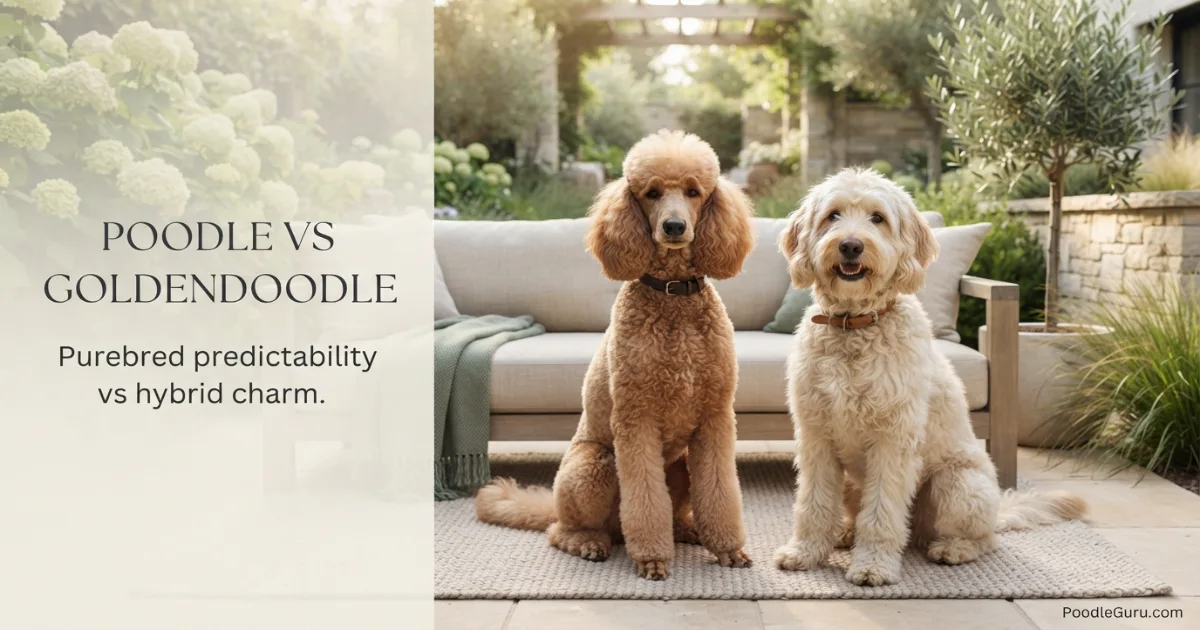
Poodle vs Goldendoodle comes down to predictability. The Poodle is a purebred dog with a more predictable coat, temperament structure, and adult size because it follows a formal breed standard. The Goldendoodle is a Golden Retriever–Poodle cross — a hybrid that is not AKC-recognized as its own breed and can vary widely in coat, shedding, size, and temperament. If you want the clearer choice for coat type, known adult size, and established health screening expectations, choose the Poodle. If you want a softer-faced, often goofier companion and you are comfortable with genetic variation, a carefully bred Goldendoodle can be wonderful.
Poodle vs Goldendoodle Quick Facts at a Glance
Poodle
Type: Purebred
Sizes: Toy, Miniature, Standard
Coat: Single-layer, dense curls
Shedding: Extremely low
Lifespan: 12–15+ years
Breed standard: Yes (AKC)
Goldendoodle
Type: Hybrid (Golden Retriever × Poodle)
Sizes: Mini, Medium, Standard
Coat: Wavy to curly, may shed
Shedding: Low to moderate (varies)
Lifespan: 10–14 years
Breed standard: No AKC breed standard; GANA guidance exists
Key Difference
Predictability. Poodles follow a formal breed standard, so size, coat behavior, and structure are easier to forecast. Goldendoodles do not have AKC breed recognition, so coats can range from nearly Poodle-like curls to loose, shedding waves — even within the same litter.
What Is a Poodle?
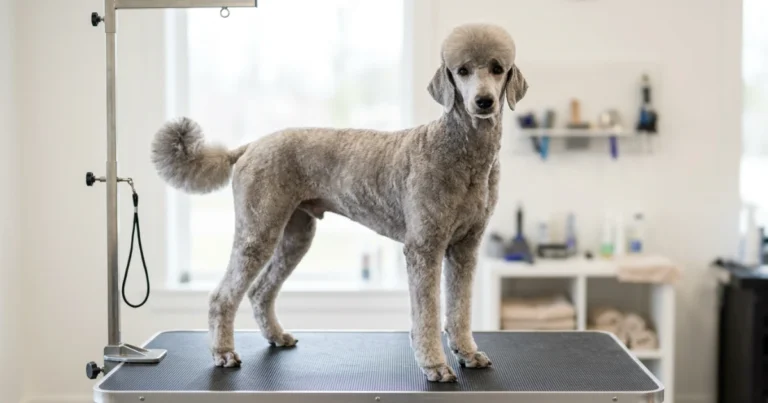
A Poodle is a purebred dog that belongs to one of the most extensively documented breeds in canine history. For poodle owners, this means you can look at a written breed standard and know — with remarkable accuracy — what your dog will look like, how large it will grow, and how its coat will behave.
The most important thing to understand is that Poodles are not just “the dog with the fancy haircut.” They’re working retrievers at their core. The same intelligence that makes them shine in obedience trials also means they notice everything you do. They read patterns. They remember. That’s either the best thing about owning one or the thing that humbles you daily — sometimes both.
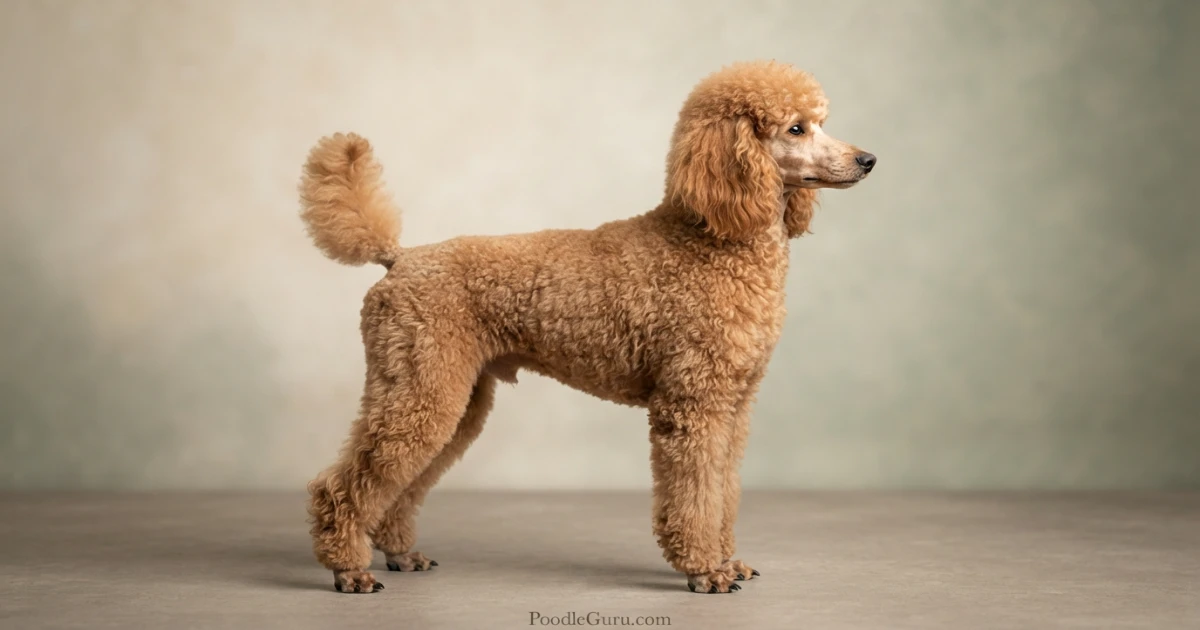
The AKC recognizes three official Poodle varieties — Toy, Miniature, and Standard — with clear height limits. All three share the same balanced athletic silhouette, and the AKC standard describes the curly coat as dense and naturally harsh in texture while also allowing corded presentation.
What Is a Goldendoodle?
A Goldendoodle is a crossbreed — specifically a Golden Retriever bred to a Poodle. For poodle-curious buyers, this means you’re looking at a dog that borrows traits from two distinct gene pools, and the results vary far more than most listings suggest.
The most important thing to understand is that “Goldendoodle” describes a hybrid type, not an AKC-recognized breed. The Goldendoodle Association of North America publishes breeder guidance and a developing breed standard, but there is no single kennel-club standard or universal health-testing requirement that every Goldendoodle breeder must follow. A first-generation cross (F1) can produce puppies with completely different coat types in the same litter.
That unpredictability isn’t a flaw — but it is a reality. Some Goldendoodles inherit mostly Poodle traits and are nearly non-shedding with tight curls. Others take after the Golden Retriever side with a thick double coat that sheds seasonally. Most fall somewhere in between. The Goldendoodle’s popularity means there are outstanding breeders and terrible ones — and the gap between them is wider than it is in the established Poodle breeding world.
Poodle vs Goldendoodle: Core Comparison Table
| Trait | Poodle | Goldendoodle |
|---|---|---|
| Breed type | Purebred with written standard | Hybrid — no AKC breed standard |
| Coat layers | Single-layer, dense curls | Single to double; wavy to curly |
| Shedding level | Extremely low — hair trapped in coat | Low to moderate — some shed undercoat |
| Grooming frequency | Every 4–6 weeks professionally; daily brushing during longer coats | Every 4–8 weeks; varies sharply by coat type |
| Size predictability | High — follows official height variety reliably | Moderate — multi-gen breeding improves it |
| Temperament consistency | High — intelligent, alert, sometimes reserved | Variable — generally friendly, often softer drive |
| Health screening norms | Established parent-club expectations (OFA, CHIC, CAER) | Varies widely; strongest breeders screen both Poodle and Golden Retriever sides |
| Best for allergy-aware homes | Often the safer choice — single-layer coat usually releases fewer loose hairs | Sometimes — F1B or multi-gen more reliable |
| 2026 puppy price range | $2,000–$4,500 | $1,800–$5,000+ |
| Lifespan range | 12–15+ years | 10–14 years |
All values reflect typical well-bred examples. Poorly bred dogs from either category can deviate sharply from every trait listed here.
Poodle vs Goldendoodle Coat Type & Grooming
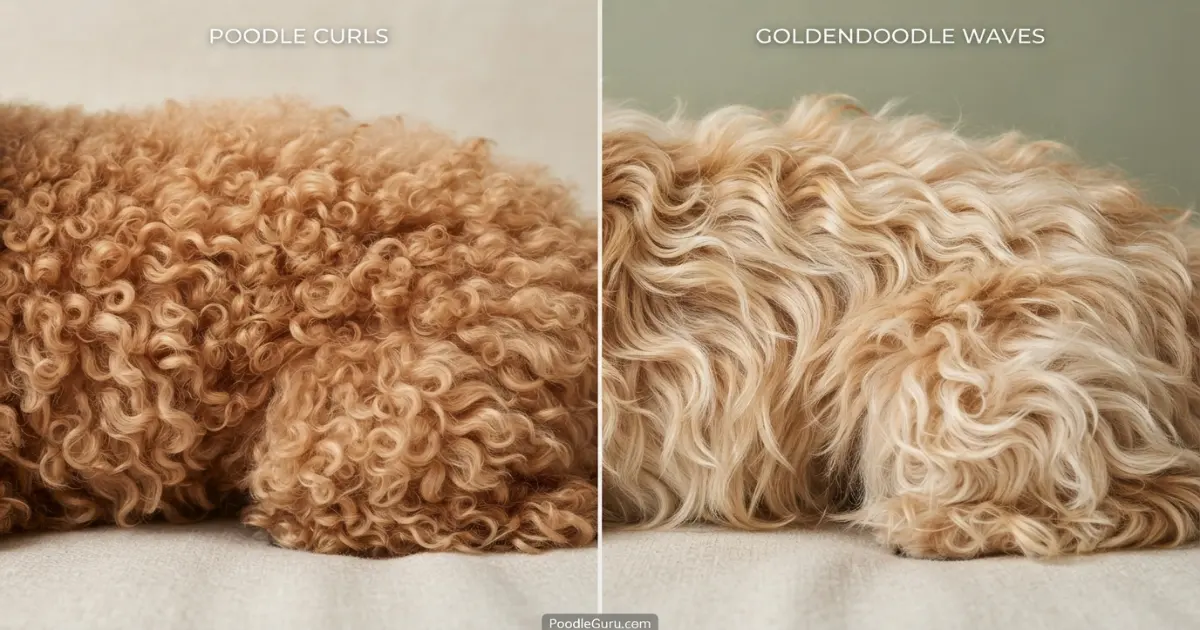
This is the section that decides things for most households. The Poodle’s coat is a single-layer marvel — dense, curly, and designed to trap shed hair before it hits your sofa. That’s brilliant for cleanliness. It also means that trapped hair must be brushed out or it mats against the skin. Skip a few days of brushing on a Poodle in a longer clip and you’re facing a dematting session that nobody enjoys — least of all the dog.
Goldendoodle coats introduce more variables. An F1 Goldendoodle (50% Poodle, 50% Golden Retriever) may inherit a double coat with an undercoat that blows out seasonally. That’s a shedding dog. An F1B (75% Poodle) usually trends toward a curlier, lower-shedding coat, but it’s still not guaranteed. Multi-generation Goldendoodles bred back to other Goldendoodles can stabilize coat type — or introduce new surprises depending on the breeder’s program.
Expert Insight: The Coat Nobody Warns You About
Professional groomers see a specific Goldendoodle coat type more than any other: the “looks fluffy, feels soft, mats like felt” coat. It’s the combination of fine Poodle curl and Golden Retriever density. Owners often underestimate how quickly it compacts. If you choose a Goldendoodle, budget for professional grooming every 4–6 weeks unless you’re committed to learning serious home maintenance. For Poodles, the same schedule applies — the difference is the coat behaves more predictably once you learn it.
Both dogs need regular grooming. Neither is “low-maintenance” in the way a short-coated breed can be. The question is whether you want a coat you can learn once and rely on (Poodle) or a coat that might surprise you even after you’ve owned the dog for two years (Goldendoodle).
Poodle vs Goldendoodle Temperament & Personality
Poodles are smart in a way that makes some people uncomfortable. They watch. They anticipate. They figure out patterns faster than many owners expect, and if you’re inconsistent, they’ll exploit every loophole. A Poodle doesn’t just learn “sit means sit.” It learns that you only enforce “sit” when you’re facing the dog directly, so it’ll test what happens when your back is turned. That’s not stubbornness — it’s intelligence looking for edges.
Goldendoodles tend to be softer. The Golden Retriever influence often rounds off the Poodle’s sharper edges, producing a dog that’s eager to please but less calculating. Many owners describe their Goldendoodles as goofier, more openly affectionate with strangers, and less likely to give you the “I already know this” stare during training. The trade-off: that softer temperament can come with lower focus and more easily distracted behavior.
Neither dog is aggressive by nature. Both need early socialization. Both can develop separation anxiety if their social needs aren’t met — and both breeds bond hard with their people. A lonely Poodle may become neurotic. A lonely Goldendoodle may become destructive. The cure is the same: treat them like family members, not yard ornaments.
Real-World Owner Tip
If you want a dog that keeps you on your toes and makes you a better trainer, the Poodle will deliver. If you want a dog that’s more forgiving of training mistakes and radiates warmth to everyone at the dog park, the Goldendoodle may fit better. Neither is the “smarter” dog — they express intelligence differently.
Poodle vs Goldendoodle Size & Life Expectancy
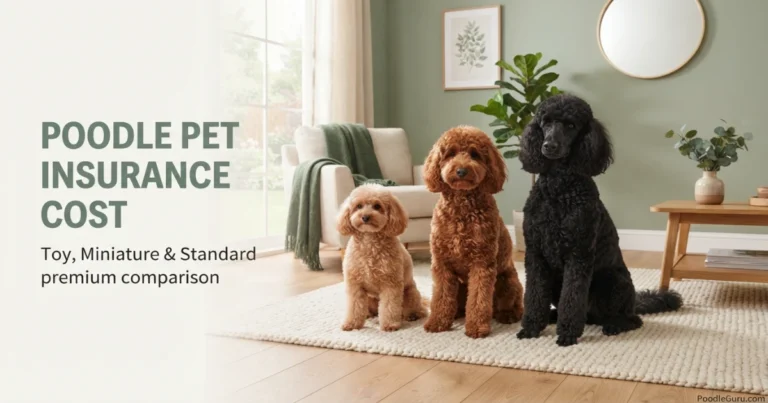
Poodles come in three clearly defined sizes. Toy Poodles weigh 4–6 lbs. Miniature Poodles reach 10–15 lbs. Standard Poodles stand over 15 inches at the shoulder and typically weigh 40–70 lbs. Within each size category, you know what you’re getting. A well-bred Standard Poodle puppy will grow into a Standard-sized adult — full stop.
Goldendoodle sizing is less precise. “Mini Goldendoodles” generally range from 15–35 lbs. “Medium Goldendoodles” land around 30–50 lbs. “Standard Goldendoodles” can reach 50–90+ lbs, especially if the Poodle parent was a large Standard. Breeders estimate adult weight based on parent sizes, but in a hybrid with no breed standard, outliers happen. A puppy sold as a “mini” might mature at 40 lbs if the genes shake out unexpectedly.
Lifespan tells a similar story. Standard Poodles live 12–15 years on average, with Toys and Miniatures often reaching the upper end or beyond. Goldendoodles generally live 10–14 years, with smaller varieties tending toward the longer side. The Golden Retriever contribution — a breed where cancer rates are a known concern — introduces variables the Poodle line doesn’t carry in the same way.

Poodle vs Goldendoodle Health Considerations
Let’s address the elephant in the room: the idea that hybrids are automatically healthier than purebreds. It’s not that simple. The term “hybrid vigor” describes a real phenomenon — outcrossing can reduce the expression of certain recessive disorders — but it’s not a magic health shield. A Goldendoodle bred from two parents who were never screened for hip dysplasia can absolutely develop hip dysplasia. The cross itself doesn’t erase genetic risk; responsible health testing does.
Purebred Poodles benefit from established, transparent health screening protocols. Responsible breeders test for hip dysplasia, eye disorders (via CAER exams), and several genetic conditions including von Willebrand’s disease and progressive retinal atrophy. The Orthopedic Foundation for Animals (OFA) maintains public databases where you can verify a Poodle breeder’s health testing claims. That infrastructure exists because Poodles have been bred and tracked for generations.
Goldendoodle health depends heavily on the breeder. The best Goldendoodle breeders test both parent dogs against the recommended health screens for both contributing breeds — Poodle panels and Golden Retriever panels. The Goldendoodle Association of North America health standards require member breeders to submit hip, elbow, heart, patella, and eye testing to OFA, but not every Goldendoodle breeder belongs to that system. Ask to see OFA or PennHIP results for hips, elbows, eyes, and cardiac. If the breeder cannot produce verifiable records, walk away.
When to Consult a Veterinarian
Regardless of which breed you choose, schedule a wellness exam within the first week of bringing your puppy home. Discuss breed-specific screening timelines — Poodles and Poodle-crosses should have hip evaluations and eye exams on a schedule your vet recommends. This guide is educational, not diagnostic. Always defer to your veterinarian for health decisions.
The PoodleGuru Poodle vs Goldendoodle Decision Framework
At PoodleGuru, we evaluate breed decisions by walking through a structured set of questions that cut through marketing and get to what actually matters in daily life. Answer these honestly, and the Poodle vs Goldendoodle question usually answers itself.
How much coat unpredictability can you tolerate?
If you need a guaranteed non-shedding coat for allergy reasons, the Poodle is the safer bet. Goldendoodle coats vary — sometimes dramatically — even among well-bred puppies. Be honest about whether you’re okay with finding out at 18 months that your dog sheds more than expected.
What’s your grooming commitment actually look like?
Both dogs need regular professional grooming or dedicated home care. The difference: Poodle coats are consistent once you learn them. Goldendoodle coats can change texture as the adult coat comes in. If you’re budgeting $80–$150 every 4–6 weeks for grooming, either dog works. If that number makes you wince, neither dog is right for you.
Do you value predictability or softness more?
Poodles are predictable — in size, coat, and temperament structure. Goldendoodles offer a softer, often goofier personality but less certainty across every other dimension. Neither value is wrong. You just need to know which one matters more in your home.
Can you verify the breeder’s health testing?
This is where the decision gets practical. Poodle breeders with OFA-verified testing are easy to find. Goldendoodle breeders who test both parent lines to the same standard are rarer — but they exist. If you can’t find one, don’t compromise. A dog with unknown health history from either category is a risk you don’t need to take.
Have you met adult dogs of both types?
Puppies are adorable and misleading. An 8-week-old Poodle and an 8-week-old Goldendoodle both look like fluffy teddy bears. Meet adult Poodles. Meet adult Goldendoodles. Watch how they move, how they react to strangers, how their coats feel under your hands. The adult dog is what you’re actually signing up for.
Buyer Red Flags & Mistakes to Avoid
Red Flag: “Hypoallergenic Guarantee”
No dog is completely hypoallergenic. Poodles come closer than most breeds because their single-layer coat traps dander. Goldendoodles may inherit that trait — or not. Any breeder who guarantees zero allergic reaction is overselling. Spend time with the actual dog before committing if allergies are a concern.
Red Flag: No Health Testing Transparency
If a breeder can’t show you OFA or PennHIP results for both parent dogs — with verifiable database entries — keep looking. “Vet-checked” is not the same as orthopedic and genetic screening. This applies equally to Poodle and Goldendoodle breeders.
Red Flag: “Rare” Color Pricing
Some breeders charge premiums for “rare” colors in both Poodles and Goldendoodles. A reputable breeder prioritizes health, structure, and temperament — not color marketing. Paying extra for a “phantom” or “merle” Poodle or Goldendoodle from a breeder who can’t produce health clearances is a classic buyer mistake.
Cost & Ownership Value (2026)
Well-bred Poodle puppies in 2026 typically range from $2,000 to $4,500, with show-quality or rare-color puppies sometimes exceeding that range. Goldendoodle puppies from health-testing breeders range from $1,800 to $5,000+, with carefully selected multigeneration lines often commanding the highest prices. The overlap is significant — neither breed is consistently cheaper.
What inflates price: color marketing, “designer” labels, and geographic demand spikes. What’s actually worth paying for: documented health testing, early socialization protocols, puppy culture exposure, and a breeder who stays in contact after you take the puppy home. A $1,500 puppy with no health testing costs far more over its lifetime than a $3,500 puppy with clear hips, clear eyes, and a breeder who answers your calls three years later.
2026 Ownership Cost Snapshot (Annual Estimate)
Professional grooming (every 5 weeks): $960–$1,800
Quality nutrition: $480–$900
Routine veterinary care: $300–$700
Training, supplies, insurance: $600–$1,200
These ranges are estimates. Geography, individual health, and grooming choices shift every number. Both breeds cost more to maintain than the average short-coated dog — plan accordingly.
For more detail on long-term Poodle care costs, see our Complete Poodle Grooming Guide — the grooming line item is the single largest recurring expense for both breeds.
Frequently Asked Questions
Are Poodles or Goldendoodles better for allergies?
Poodles are generally the safer choice for allergy sufferers. Their single-layer curly coat traps dander and shed hair, releasing less into the air. Goldendoodles vary — some inherit the Poodle coat, others get a shedding double coat from the Golden Retriever side. Spend time with adult dogs of the specific line before deciding if allergies are a concern.
Do Goldendoodles shed more than Poodles?
Most Goldendoodles shed more than Poodles. A purebred Poodle’s single-layer coat traps virtually all shed hair. Goldendoodles can inherit a double coat with seasonal undercoat shedding, especially in first-generation (F1) crosses. Multi-generation or F1B Goldendoodles bred back to Poodles tend to shed less, but the guarantee isn’t absolute.
Which is easier to train — Poodle or Goldendoodle?
Both are highly trainable. Poodles learn faster and can become bored with repetition — they need a trainer who keeps sessions varied. Goldendoodles tend to be more forgiving of handler mistakes and less likely to out-think a novice owner. Neither is difficult; they just need different training approaches.
How much does a Poodle cost compared to a Goldendoodle?
In 2026, well-bred Poodles range from $2,000–$4,500. Health-tested Goldendoodles range from $1,800–$5,000+. The ranges overlap heavily. A cheap puppy from either category almost always costs more long-term through health problems and behavioral issues than a thoughtfully bred dog with documented health clearances.
Which lives longer — Poodle or Goldendoodle?
Poodles typically live 12–15+ years, with Toy and Miniature sizes often reaching the upper end. Goldendoodles generally live 10–14 years. The Golden Retriever genetic contribution introduces health variables the purebred Poodle line doesn’t carry in the same proportion. Individual health history matters more than breed averages.
Can Goldendoodles be registered like Poodles?
Not in the same way. Poodles are AKC-recognized purebred dogs with formal breed registration. Goldendoodles are not AKC-recognized as their own breed, although Goldendoodle organizations such as GANA maintain breeder programs, standards, and registration-style records for participating dogs.
Final Summary: Poodle vs Goldendoodle
Both dogs can be extraordinary companions. The right choice depends on what you value most: predictability or softness, established standards or hybrid charm, guaranteed coat type or a willingness to embrace genetic surprise. Here’s what matters most, distilled:
- Purebred Poodles follow a formal kennel-club breed standard. Goldendoodles have breeder-association guidance, but they are not AKC-recognized as their own breed — every trait can vary more widely.
- Poodle coats are single-layer, consistently low-shedding, and require grooming every 4–6 weeks. Goldendoodle coats range from nearly Poodle-like to shedding double coats.
- Poodles are sharper, more observant, and need a trainer who stays interesting. Goldendoodles tend to be softer, goofier, and more forgiving.
- Health testing infrastructure is more established for Poodles. Goldendoodle health depends heavily on whether the breeder tests both parent lines thoroughly and shares verifiable records.
- Both breeds cost significantly more to maintain than short-coated dogs — grooming alone can exceed $1,200 annually.
- The PoodleGuru Decision Framework (5 questions above) will tell you more than any breed description can. Answer those questions honestly, meet adult dogs of both types, and the right choice becomes clear.
Next step: If you’re leaning Poodle, start with our Poodle Size Chart to narrow down which size fits your lifestyle. If you’re leaning Goldendoodle, apply the buyer red flags from this guide to every breeder you evaluate.
Poodle vs Goldendoodle: Full Side-By-Side Comparison
Two curly-coated favorites. One is a purebred with centuries of refinement. The other is a wildly popular hybrid that didn’t exist before the 1990s. Here’s what actually separates them — and what no one tells you until you’re already living with one.

Quick Answer: Poodle vs Goldendoodle
The Poodle is a purebred dog with a predictable coat, temperament, and size that follows a written breed standard. The Goldendoodle is a Golden Retriever–Poodle cross — a hybrid with no breed standard, wider variation in every trait, and a coat that can range from loose waves to tight curls. If you want guaranteed coat type, known adult size, and established health screening protocols, the Poodle is the clearer choice. If you want a softer-faced, often goofier companion and you’re comfortable with genetic unpredictability, a well-bred Goldendoodle can be wonderful. Neither is universally better. One is almost certainly a better fit for your home.
Quick Facts at a Glance
Poodle
Type: Purebred
Sizes: Toy, Miniature, Standard
Coat: Single-layer, dense curls
Shedding: Extremely low
Lifespan: 12–15+ years
Breed standard: Yes (AKC)
Goldendoodle
Type: Hybrid (Golden Retriever × Poodle)
Sizes: Mini, Medium, Standard
Coat: Wavy to curly, may shed
Shedding: Low to moderate (varies)
Lifespan: 10–14 years
Breed standard: None
Key Difference
Predictability. Poodles follow a written standard. Goldendoodles don’t. Every Poodle is predictably low-shedding with a single-layer curly coat. Goldendoodle coats range from nearly Poodle-like to loose, shedding waves — even within the same litter.
What Is a Poodle?
A Poodle is a purebred dog that belongs to one of the most extensively documented breeds in canine history. For poodle owners, this means you can look at a written breed standard and know — with remarkable accuracy — what your dog will look like, how large it will grow, and how its coat will behave.
The most important thing to understand is that Poodles are not just “the dog with the fancy haircut.” They’re working retrievers at their core. The same intelligence that makes them shine in obedience trials also means they notice everything you do. They read patterns. They remember. That’s either the best thing about owning one or the thing that humbles you daily — sometimes both.
The AKC recognizes three official poodle sizes — Toy, Miniature, and Standard — each with distinct height and weight ranges in the breed standard. All three share the same single-layer curly coat, the same rectangular silhouette, and the same expectation of intelligence written directly into the standard’s temperament description.

What Is a Goldendoodle?
A Goldendoodle is a crossbreed — specifically a Golden Retriever bred to a Poodle. For poodle-curious buyers, this means you’re looking at a dog that borrows traits from two distinct gene pools, and the results vary far more than most listings suggest.
The most important thing to understand is that “Goldendoodle” describes a type, not a breed. There is no unified standard, no required health testing protocol all breeders follow, and no guarantee that a puppy will inherit the Poodle’s coat or the Golden’s temperament in the proportions you’re hoping for. A first-generation cross (F1) can produce puppies with completely different coat types in the same litter.
That unpredictability isn’t a flaw — but it is a reality. Some Goldendoodles inherit mostly Poodle traits and are nearly non-shedding with tight curls. Others take after the Golden Retriever side with a thick double coat that sheds seasonally. Most fall somewhere in between. The Goldendoodle’s popularity means there are outstanding breeders and terrible ones — and the gap between them is wider than it is in the established Poodle breeding world.
Poodle vs Goldendoodle: Core Comparison Table
| Trait | Poodle | Goldendoodle |
|---|---|---|
| Breed type | Purebred with written standard | Hybrid — no unified standard |
| Coat layers | Single-layer, dense curls | Single to double; wavy to curly |
| Shedding level | Extremely low — hair trapped in coat | Low to moderate — some shed undercoat |
| Grooming frequency | Every 4–6 weeks professionally; daily brushing during longer coats | Every 4–8 weeks; varies sharply by coat type |
| Size predictability | High — follows size category reliably | Moderate — multi-gen breeding improves it |
| Temperament consistency | High — intelligent, alert, sometimes reserved | Variable — generally friendly, often softer drive |
| Health screening norms | Established (OFA, CHIC, CAER) | Varies widely by breeder commitment |
| Best for allergy-aware homes | Yes — single-layer coat = fewer airborne particles | Sometimes — F1B or multi-gen more reliable |
| 2026 puppy price range | $2,000–$4,500 | $1,800–$5,000+ |
| Lifespan range | 12–15+ years | 10–14 years |
All values reflect typical well-bred examples. Poorly bred dogs from either category can deviate sharply from every trait listed here.
Coat Type & Grooming: The Biggest Practical Difference
This is the section that decides things for most households. The Poodle’s coat is a single-layer marvel — dense, curly, and designed to trap shed hair before it hits your sofa. That’s brilliant for cleanliness. It also means that trapped hair must be brushed out or it mats against the skin. Skip a few days of brushing on a Poodle in a longer clip and you’re facing a dematting session that nobody enjoys — least of all the dog.
Goldendoodle coats introduce more variables. An F1 Goldendoodle (50% Poodle, 50% Golden Retriever) may inherit a double coat with an undercoat that blows out seasonally. That’s a shedding dog. An F1B (75% Poodle) usually trends toward a curlier, lower-shedding coat, but it’s still not guaranteed. Multi-generation Goldendoodles bred back to other Goldendoodles can stabilize coat type — or introduce new surprises depending on the breeder’s program.
Expert Insight: The Coat Nobody Warns You About
Professional groomers see a specific Goldendoodle coat type more than any other: the “looks fluffy, feels soft, mats like felt” coat. It’s the combination of fine Poodle curl and Golden Retriever density. Owners often underestimate how quickly it compacts. If you choose a Goldendoodle, budget for professional grooming every 4–6 weeks unless you’re committed to learning serious home maintenance. For Poodles, the same schedule applies — the difference is the coat behaves more predictably once you learn it.
Both dogs need regular grooming. Neither is “low-maintenance” in the way a short-coated breed can be. The question is whether you want a coat you can learn once and rely on (Poodle) or a coat that might surprise you even after you’ve owned the dog for two years (Goldendoodle).

Temperament & Personality: What Owners Actually Experience
Poodles are smart in a way that makes some people uncomfortable. They watch. They anticipate. They figure out patterns faster than many owners expect, and if you’re inconsistent, they’ll exploit every loophole. A Poodle doesn’t just learn “sit means sit.” It learns that you only enforce “sit” when you’re facing the dog directly, so it’ll test what happens when your back is turned. That’s not stubbornness — it’s intelligence looking for edges.
Goldendoodles tend to be softer. The Golden Retriever influence often rounds off the Poodle’s sharper edges, producing a dog that’s eager to please but less calculating. Many owners describe their Goldendoodles as goofier, more openly affectionate with strangers, and less likely to give you the “I already know this” stare during training. The trade-off: that softer temperament can come with lower focus and more easily distracted behavior.
Neither dog is aggressive by nature. Both need early socialization. Both can develop separation anxiety if their social needs aren’t met — and both breeds bond hard with their people. A lonely Poodle may become neurotic. A lonely Goldendoodle may become destructive. The cure is the same: treat them like family members, not yard ornaments.
Real-World Owner Tip
If you want a dog that keeps you on your toes and makes you a better trainer, the Poodle will deliver. If you want a dog that’s more forgiving of training mistakes and radiates warmth to everyone at the dog park, the Goldendoodle may fit better. Neither is the “smarter” dog — they express intelligence differently.
Size & Life Expectancy: Realistic Expectations
Poodles come in three clearly defined sizes. Toy Poodles weigh 4–6 lbs. Miniature Poodles reach 10–15 lbs. Standard Poodles stand over 15 inches at the shoulder and typically weigh 40–70 lbs. Within each size category, you know what you’re getting. A well-bred Standard Poodle puppy will grow into a Standard-sized adult — full stop.
Goldendoodle sizing is less precise. “Mini Goldendoodles” generally range from 15–35 lbs. “Medium Goldendoodles” land around 30–50 lbs. “Standard Goldendoodles” can reach 50–90+ lbs, especially if the Poodle parent was a large Standard. Breeders estimate adult weight based on parent sizes, but in a hybrid with no breed standard, outliers happen. A puppy sold as a “mini” might mature at 40 lbs if the genes shake out unexpectedly.
Lifespan tells a similar story. Standard Poodles live 12–15 years on average, with Toys and Miniatures often reaching the upper end or beyond. Goldendoodles generally live 10–14 years, with smaller varieties tending toward the longer side. The Golden Retriever contribution — a breed where cancer rates are a known concern — introduces variables the Poodle line doesn’t carry in the same way.

Health Considerations: Purebred vs Hybrid Realities
Let’s address the elephant in the room: the idea that hybrids are automatically healthier than purebreds. It’s not that simple. The term “hybrid vigor” describes a real phenomenon — outcrossing can reduce the expression of certain recessive disorders — but it’s not a magic health shield. A Goldendoodle bred from two parents who were never screened for hip dysplasia can absolutely develop hip dysplasia. The cross itself doesn’t erase genetic risk; responsible health testing does.
Purebred Poodles benefit from established, transparent health screening protocols. Responsible breeders test for hip dysplasia, eye disorders (via CAER exams), and several genetic conditions including von Willebrand’s disease and progressive retinal atrophy. The Orthopedic Foundation for Animals (OFA) maintains public databases where you can verify a Poodle breeder’s health testing claims. That infrastructure exists because Poodles have been bred and tracked for generations.
Goldendoodle health depends entirely on the breeder. The best Goldendoodle breeders test both parent dogs against the recommended health screens for both contributing breeds — Poodle panels and Golden Retriever panels. The worst breeders run no tests at all and lean on “hybrid vigor” as a marketing phrase. Ask to see OFA or PennHIP results for hips, elbows, eyes, and cardiac. If the breeder can’t produce them, walk away.
When to Consult a Veterinarian
Regardless of which breed you choose, schedule a wellness exam within the first week of bringing your puppy home. Discuss breed-specific screening timelines — Poodles and Poodle-crosses should have hip evaluations and eye exams on a schedule your vet recommends. This guide is educational, not diagnostic. Always defer to your veterinarian for health decisions.
The PoodleGuru Decision Framework: 5 Questions to Ask Yourself
At PoodleGuru, we evaluate breed decisions by walking through a structured set of questions that cut through marketing and get to what actually matters in daily life. Answer these honestly, and the Poodle vs Goldendoodle question usually answers itself.
How much coat unpredictability can you tolerate?
If you need a guaranteed non-shedding coat for allergy reasons, the Poodle is the safer bet. Goldendoodle coats vary — sometimes dramatically — even among well-bred puppies. Be honest about whether you’re okay with finding out at 18 months that your dog sheds more than expected.
What’s your grooming commitment actually look like?
Both dogs need regular professional grooming or dedicated home care. The difference: Poodle coats are consistent once you learn them. Goldendoodle coats can change texture as the adult coat comes in. If you’re budgeting $80–$150 every 4–6 weeks for grooming, either dog works. If that number makes you wince, neither dog is right for you.
Do you value predictability or softness more?
Poodles are predictable — in size, coat, and temperament structure. Goldendoodles offer a softer, often goofier personality but less certainty across every other dimension. Neither value is wrong. You just need to know which one matters more in your home.
Can you verify the breeder’s health testing?
This is where the decision gets practical. Poodle breeders with OFA-verified testing are easy to find. Goldendoodle breeders who test both parent lines to the same standard are rarer — but they exist. If you can’t find one, don’t compromise. A dog with unknown health history from either category is a risk you don’t need to take.
Have you met adult dogs of both types?
Puppies are adorable and misleading. An 8-week-old Poodle and an 8-week-old Goldendoodle both look like fluffy teddy bears. Meet adult Poodles. Meet adult Goldendoodles. Watch how they move, how they react to strangers, how their coats feel under your hands. The adult dog is what you’re actually signing up for.
Buyer Red Flags & Mistakes to Avoid
Red Flag: “Hypoallergenic Guarantee”
No dog is completely hypoallergenic. Poodles come closer than most breeds because their single-layer coat traps dander. Goldendoodles may inherit that trait — or not. Any breeder who guarantees zero allergic reaction is overselling. Spend time with the actual dog before committing if allergies are a concern.
Red Flag: No Health Testing Transparency
If a breeder can’t show you OFA or PennHIP results for both parent dogs — with verifiable database entries — keep looking. “Vet-checked” is not the same as orthopedic and genetic screening. This applies equally to Poodle and Goldendoodle breeders.
Red Flag: “Rare” Color Pricing
Some breeders charge premiums for “rare” colors in both Poodles and Goldendoodles. A reputable breeder prioritizes health, structure, and temperament — not color marketing. Paying extra for a “phantom” or “merle” Poodle or Goldendoodle from a breeder who can’t produce health clearances is a classic buyer mistake.

Cost & Ownership Value (2026)
Well-bred Poodle puppies in 2026 typically range from $2,000 to $4,500, with show-quality or rare-color puppies sometimes exceeding that range. Goldendoodle puppies from health-testing breeders range from $1,800 to $5,000+, with multi-generation “Australian Goldendoodle” lines often commanding the highest prices. The overlap is significant — neither breed is consistently cheaper.
What inflates price: color marketing, “designer” labels, and geographic demand spikes. What’s actually worth paying for: documented health testing, early socialization protocols, puppy culture exposure, and a breeder who stays in contact after you take the puppy home. A $1,500 puppy with no health testing costs far more over its lifetime than a $3,500 puppy with clear hips, clear eyes, and a breeder who answers your calls three years later.
2026 Ownership Cost Snapshot (Annual Estimate)
Professional grooming (every 5 weeks): $960–$1,800
Quality nutrition: $480–$900
Routine veterinary care: $300–$700
Training, supplies, insurance: $600–$1,200
These ranges are estimates. Geography, individual health, and grooming choices shift every number. Both breeds cost more to maintain than the average short-coated dog — plan accordingly.
For more detail on long-term Poodle care costs, see our Complete Poodle Grooming Guide — the grooming line item is the single largest recurring expense for both breeds.
Frequently Asked Questions
Are Poodles or Goldendoodles better for allergies?
Poodles are generally the safer choice for allergy sufferers. Their single-layer curly coat traps dander and shed hair, releasing less into the air. Goldendoodles vary — some inherit the Poodle coat, others get a shedding double coat from the Golden Retriever side. Spend time with adult dogs of the specific line before deciding if allergies are a concern.
Do Goldendoodles shed more than Poodles?
Most Goldendoodles shed more than Poodles. A purebred Poodle’s single-layer coat traps virtually all shed hair. Goldendoodles can inherit a double coat with seasonal undercoat shedding, especially in first-generation (F1) crosses. Multi-generation or F1B Goldendoodles bred back to Poodles tend to shed less, but the guarantee isn’t absolute.
Which is easier to train — Poodle or Goldendoodle?
Both are highly trainable. Poodles learn faster and can become bored with repetition — they need a trainer who keeps sessions varied. Goldendoodles tend to be more forgiving of handler mistakes and less likely to out-think a novice owner. Neither is difficult; they just need different training approaches.
How much does a Poodle cost compared to a Goldendoodle?
In 2026, well-bred Poodles range from $2,000–$4,500. Health-tested Goldendoodles range from $1,800–$5,000+. The ranges overlap heavily. A cheap puppy from either category almost always costs more long-term through health problems and behavioral issues than a thoughtfully bred dog with documented health clearances.
Which lives longer — Poodle or Goldendoodle?
Poodles typically live 12–15+ years, with Toy and Miniature sizes often reaching the upper end. Goldendoodles generally live 10–14 years. The Golden Retriever genetic contribution introduces health variables the purebred Poodle line doesn’t carry in the same proportion. Individual health history matters more than breed averages.
Can Goldendoodles be registered like Poodles?
No. Poodles are recognized by the AKC and other kennel clubs with full breed registration. Goldendoodles are not a recognized breed — they cannot be AKC-registered. Some Goldendoodle organizations maintain their own registries, but these are not equivalent to kennel club recognition and don’t enforce standardized health testing.
Final Summary: Poodle vs Goldendoodle
Both dogs can be extraordinary companions. The right choice depends on what you value most: predictability or softness, established standards or hybrid charm, guaranteed coat type or a willingness to embrace genetic surprise. Here’s what matters most, distilled:
- Purebred Poodles follow a written breed standard. Goldendoodles do not — every trait varies more widely.
- Poodle coats are single-layer, consistently low-shedding, and require grooming every 4–6 weeks. Goldendoodle coats range from nearly Poodle-like to shedding double coats.
- Poodles are sharper, more observant, and need a trainer who stays interesting. Goldendoodles tend to be softer, goofier, and more forgiving.
- Health testing infrastructure is more established for Poodles. Goldendoodle health depends entirely on whether the breeder tests both parent lines thoroughly.
- Both breeds cost significantly more to maintain than short-coated dogs — grooming alone can exceed $1,200 annually.
- The PoodleGuru Decision Framework (5 questions above) will tell you more than any breed description can. Answer those questions honestly, meet adult dogs of both types, and the right choice becomes clear.
Next step: If you’re leaning Poodle, start with our Poodle Size Chart to narrow down which size fits your lifestyle. If you’re leaning Goldendoodle, apply the buyer red flags from this guide to every breeder you evaluate.