Poodle von Willebrand Disease: A Complete Owner’s Guide
Quick Answer: Von Willebrand disease (vWD) in poodles is a genetic bleeding disorder that prevents blood from clotting normally. Poodles, especially miniature and some standard lines, are most often affected by Type I vWD, the mildest form. Affected dogs can live full, happy lives with careful management, but the condition demands awareness from owners and breeders—especially before any surgery or accidental injury.
If you’re researching Poodle von Willebrand disease, you’re probably facing one of a few situations: you just learned your poodle’s parent is a carrier, your own dog bled longer than expected after a routine nail trim, or you’re a meticulous breeder or buyer determined to leave nothing to chance. Whatever brought you here, this guide was built to be the most accurate, deeply useful, and empathetic resource you’ll find—because living with and understanding vWD isn’t about fear, it’s about preparation.
Too many online sources stop at a one-paragraph definition. They miss the real questions poodle families ask at the kitchen table: “Can my dog still live a normal life? Will this cost a fortune? Did the breeder hide something? Is it my fault?” We answer all of them, plainly, with the authority of a breed specialist who has no interest in sugarcoating the truth or terrifying you unnecessarily.
What Is von Willebrand Disease in Poodles?
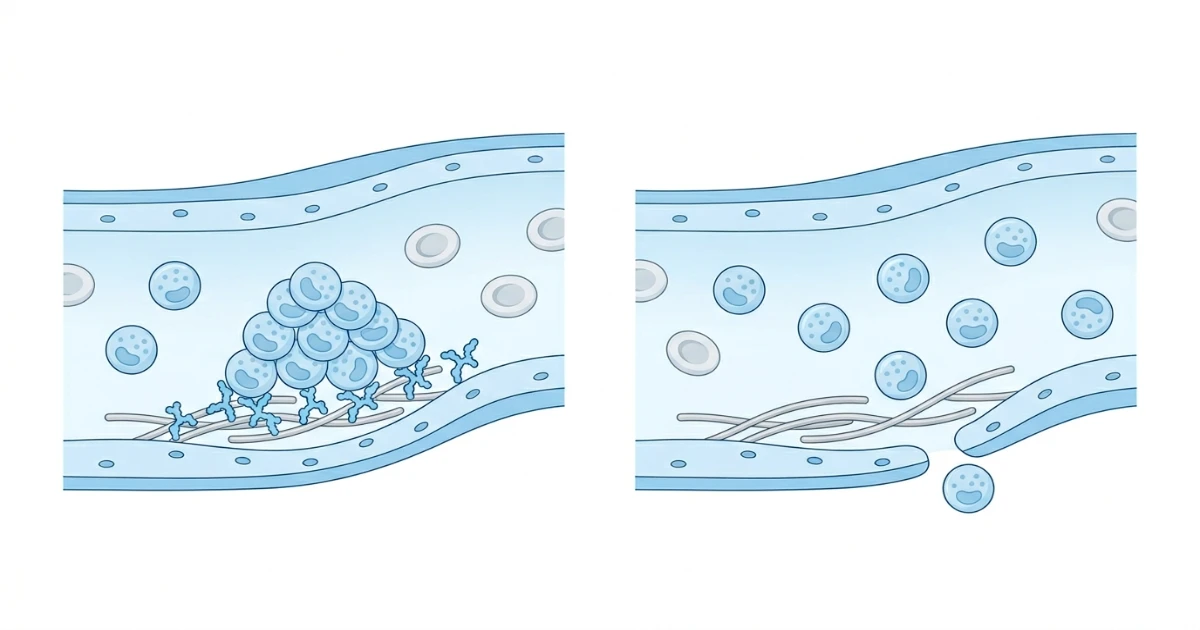
Von Willebrand disease (vWD) is the most common inherited bleeding disorder in dogs—and poodles are one of the breeds where it appears consistently enough that every responsible owner should understand it. At its simplest, a poodle with vWD does not have enough functional von Willebrand factor (vWF), a special protein that acts like glue to help platelets stick together and form a stable clot at the site of a blood vessel injury.
Think of normal clotting like stacking sticky notes. The von Willebrand protein is the first sticky note that anchors the stack. Without it, the whole tower crumbles. A poodle with low or dysfunctional vWF can still form a clot, but it takes much longer, and the seal is fragile. That delay is enough to be dangerous during spaying, dental extractions, or any wound that would typically stop bleeding quickly.
In poodles, the form of the disease is almost always Type I. This is good news in the world of bleeding disorders because Type I vWD is the mildest variant. Dogs with Type I have reduced levels of the protein—but they still produce some. That means a poodle with Type I vWD is not a hemophiliac and rarely bleeds without a trigger. The danger lies in what owners and vets don’t know.
Genetic Snapshot: The Poodle von Willebrand disease mutation that causes Type I is located on the VWF gene. It’s inherited in an autosomal recessive manner with incomplete dominance—meaning carriers might show slightly low vWF levels, but only dogs with two mutated copies are typically classified as “affected.” This nuance causes a lot of confusion in test results, which we’ll clear up shortly.
Why It Matters: The Silent Bleeding Risk for Poodles
Most poodle owners never suspect vWD until something routine goes wrong. A spay surgery that should have been straightforward turns into an emergency because the dog keeps oozing from the suture line. A dental cleaning leads to a bruised, swollen gum that won’t settle. A bitch whelps her first litter and loses far more blood postpartum than normal. These aren’t dramatic horror stories; they’re quiet, preventable crises that happen when vWD status is unknown.
The emotional weight of a late diagnosis can be brutal. Owners feel blindsided, breeders feel guilty, and the dog suffers a cascade of stress it never needed to experience. Because Type I vWD rarely causes spontaneous bleeding (unlike severe Type II or Type III), it hides until a challenge appears. That’s exactly why proactive screening and open breeder conversations matter so much.
The Genetics Behind Poodle vWD (And Why Test Results Can Feel Confusing)
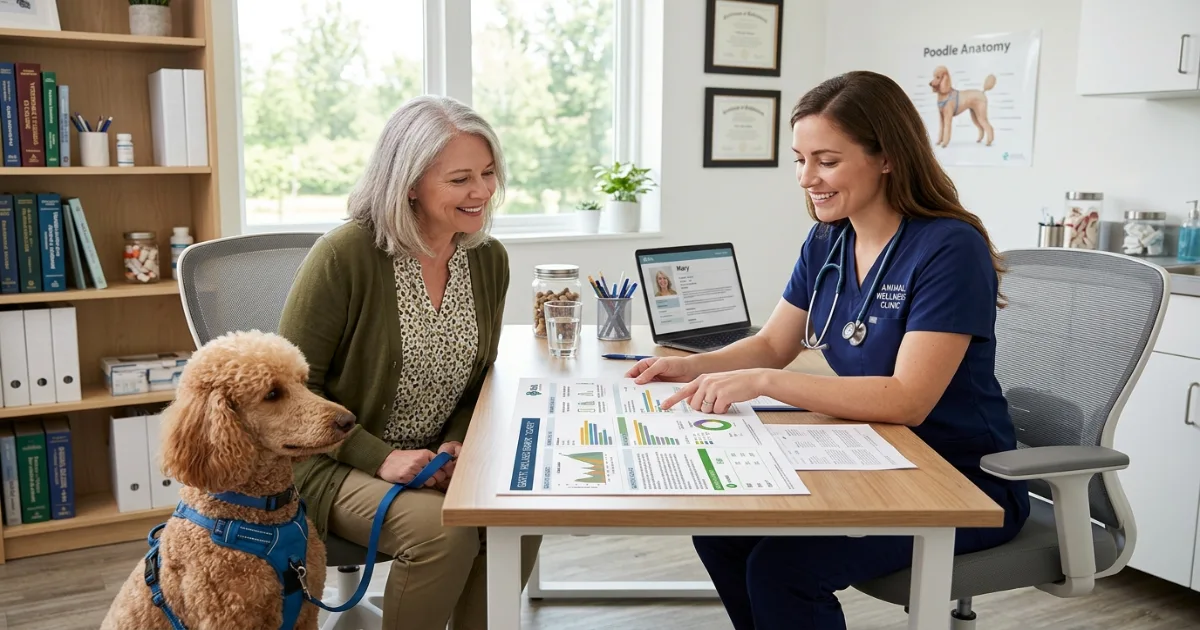
Grasping the inheritance clears up about 80% of the misinformation floating around online forums. In Poodle von Willebrand disease, every dog has two copies of the vWF gene—one from each parent. A DNA test categorizes a dog as clear (no mutation), carrier (one normal and one mutated copy), or affected (two mutated copies).
Here’s where breeders and buyers get tripped up: because Type I vWD shows incomplete dominance, a carrier might still have von Willebrand factor levels that fall on the lower end of normal—or slightly below. They are not clinically “affected,” but their clotting ability may be borderline. This is why professional veterinary organizations recommend that even carriers receive extra clotting consideration before major surgery. It’s not overkill; it’s being thorough.
Two clear parents produce only clear puppies. One carrier bred to a clear yields 50% carrier, 50% clear. Two carriers can produce 25% affected, 50% carrier, and 25% clear. An affected dog bred to a clear dog produces 100% carriers. No responsible breeder intentionally breeds two carriers, and certainly not an affected dog, because the risk of producing puppies who bleed under stress is completely avoidable.
Type I vWD in Poodles vs. Other Types: A Clear Comparison
Not all von Willebrand disease is created equal. Confusing the types leads to mismanaged expectations. Poodles almost exclusively belong to the Type I camp, but owners sometimes panic after reading about severe bleeding in Dobermans or Scottish Terriers. This table sets the record straight.
| Feature | Type I vWD (Poodle-relevant) | Type II vWD | Type III vWD |
|---|---|---|---|
| Protein problem | Low quantity of normal vWF | Abnormal structure/function | Nearly absent vWF |
| Breeds seen | Poodle (mini/standard), Doberman, Sheltie, etc. | German Shorthaired Pointer, Wirehaired Pointer | Scottish Terrier, Shetland Sheepdog |
| Bleeding tendency | Mild to moderate; usually triggered by trauma/surgery | Moderate to severe; can include spontaneous bleeding | Severe; often spontaneous bleeding episodes, hematomas |
| Typical diagnostic finding | vWF:Ag 10–50% of normal (affected) | Often normal vWF:Ag but dysfunctional | vWF:Ag <0.1% of normal |
| Management difficulty | Pre-surgical planning, drug avoidance, desmopressin possible | Often requires transfusions or plasma products | Strict bleeding prevention, transfusional support needed regularly |
Symptoms Poodle Owners Often Miss
Because Type I vWD is subtle, signs are easily dismissed as “maybe he just has sensitive gums” or “that nail must have cut into the quick deeper than I thought.” Learn what to pay attention to:
- Prolonged bleeding after a nail trim that continues beyond 5–10 minutes of steady pressure.
- Excessive bleeding during teething or when losing puppy teeth.
- Bruising after rough play that seems disproportionate to the impact.
- Blood in urine or stool without an obvious infection.
- Heavy or extended heat cycles in unspayed females, or noticeable bleeding after breeding.
- Gum bleeding after chewing a hard toy or during dental care.
- Post-surgical oozing that persists beyond the first 24 hours.
One of the most heartbreaking scenarios we hear at PoodleGuru is when a poodle was spayed, seemed “fine” at discharge, then collapsed at home from internal bleeding hours later. That’s not the norm, but it’s a reality for undiagnosed vWD. Knowing your dog’s status beforehand is a literal lifesaver.
How Veterinarians Diagnose von Willebrand Disease
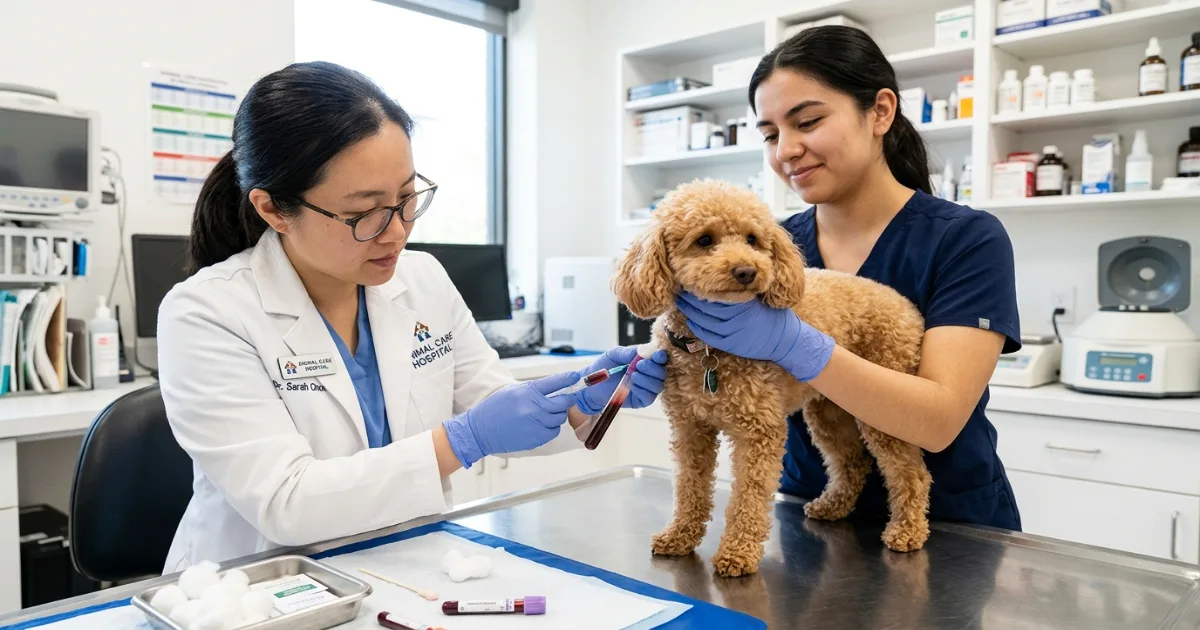
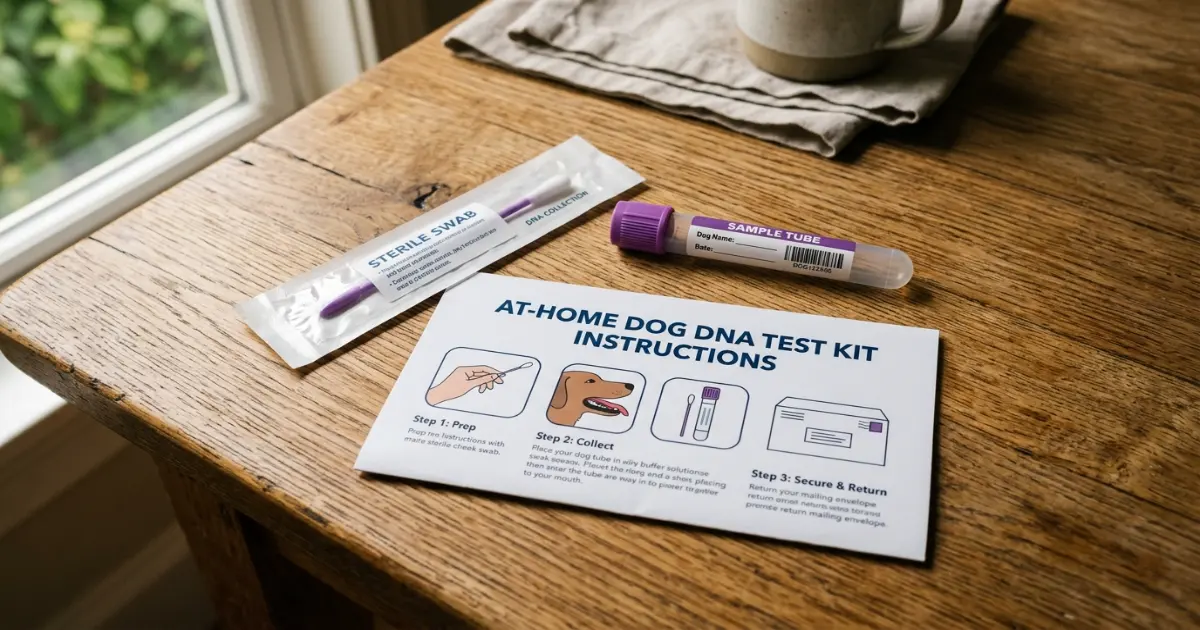
A definitive diagnosis typically follows one of two pathways—often both used together for the highest accuracy. First, the von Willebrand factor antigen assay (vWF:Ag) measures the actual protein level in a blood sample. In affected poodles, this number often falls between 10% and 50%. Second, a DNA test looks directly at the mutation and lets you know the genetic status (clear, carrier, affected).
A third tool, the buccal mucosal bleeding time (BMBT), may be done in-clinic to see how long it takes for a tiny, standardized gum incision to stop bleeding. This test can be influenced by stress, hydration, and other factors, so it’s a screening aid rather than a standalone diagnosis.
Living with a Poodle with vWD: Daily Care and Precautions
Caring for a poodle with confirmed Type I vWD does not mean living in a bubble. It means making thoughtful adjustments that become second nature. Here’s what the day-to-day looks like for an educated owner:
- Alert all veterinary staff. A red sticky note on the file. A tag on the collar. Nobody sedates or operates without knowing.
- Avoid certain medications. Drugs that interfere with platelet function—like aspirin, ibuprofen, and some antibiotics—can turn a mild vWD into a bleeding emergency. Never give over-the-counter pain meds without veterinary approval.
- Keep styptic powder and pressure bandages at home. A snapped nail shouldn’t mean a panicked dash to the emergency room if you’re prepared.
- Maintain gentle dental care. You want to prevent periodontal disease, but aggressive scaling can cause gum bleeding. Work with your vet to find a balance, and always mention vWD before any dental procedure.
- Plan elective surgeries carefully. Your vet may recommend pre-treatment with desmopressin (DDAVP), a synthetic hormone that temporarily raises vWF levels in some dogs. It doesn’t work in all Type I poodles, but when it does, it’s transformative.
Many vWD-affected poodles live long, active lives running, hiking, and being spoiled family companions. The disease is a management consideration, not a disability, when you’re informed.
The Cost of Managing von Willebrand Disease
2026 Cost Snapshot for Poodle von Willebrand Disease Management:
DNA test (breed-specific vWD panel): $65–$150, often included in larger health panels.
vWF antigen assay (through vet lab): $120–$240 depending on the clinic and reference lab.
Desmopressin injection (pre-surgery): $40–$90 per dose, if effective for your dog.
Blood plasma or cryoprecipitate transfusion (emergency): $500–$1,500+, depending on availability and hospitalization.
Extra surgical monitoring and extended stay: An additional $200–$700 on top of routine procedure costs.
Total first-year knowledge investment: If you test proactively and set up a safe surgical plan, you’re looking at a few hundred dollars, not thousands. The real cost comes from ignoring the risk.
What Breeders Should Tell You: A Buyer’s Intelligence Section
A trustworthy poodle breeder will openly share vWD testing results for both sire and dam. If a breeder claims “my lines don’t have it” without a DNA certificate, that’s not reassurance—it’s a red flag. Below are the non-negotiables when you bring a poodle puppy home.
Questions to ask before buying a poodle puppy:
- “Have both parents been DNA-tested for von Willebrand disease, and can I see the certificates?”
- “If one parent is a carrier, how do you plan the pairing to avoid producing affected puppies?”
- “Do you provide a written health guarantee that includes genetic bleeding disorders?”
- “What post-surgical experiences have you observed in related dogs from your breeding program?”
Breeders who avoid the topic or offer vague answers like “none of my puppies have ever had a problem” without documentation are gambling with your future dog’s health. The best breeders consider vWD testing as routine as hip scoring.
Buyer Tip
A puppy from a carrier-to-clear mating is not an affected puppy—and that puppy is often perfectly healthy. Carriers should not be stigmatized. The real danger is when two carriers are bred together unknowingly. So ask about the pairing, not just the individual dog’s status.
Common Mistakes and Misunderstandings About Poodle vWD
Even seasoned poodle people get this wrong. These misconceptions can lead to misinformed breeding choices, unnecessary panic, or tragic complacency.
Mistake 1: Confusing vWD with hemophilia. Hemophilia A (factor VIII deficiency) is a different, often more severe bleeding disorder. Poodles can carry hemophilia too, but it’s rarer. Assuming all bleeding issues are vWD can delay correct treatment.
Mistake 2: Believing a “clear by parentage” puppy is always safe. It’s possible a clear puppy was mislabeled if parentage is not properly DNA verified. Papers and promises aren’t laboratory reports. Insist on actual test documentation.
Mistake 3: Assuming a DNA “affected” result means the dog will bleed from everyday life. Many affected Type I poodles never have a noticeable bleeding episode until challenged by surgery. The genetic result is a warning, not a daily crisis.
Mistake 4: Thinking only miniature poodles get vWD. Historical data shows a higher frequency in miniatures, but standard poodles can and do test as carriers or affected. Toy poodles appear less often, but no size is magically immune. Testing all breeding stock is the only ethical path.
Mistake 5: Overreacting to a carrier test and eliminating the dog from a breeding program. Carriers still have immense value. With thoughtful pairing, a carrier can contribute to genetic diversity without producing affected offspring. Removing all carriers narrows the gene pool and can accidentally increase other health problems.
Pro Tips for Poodle Owners Navigating von Willebrand Disease
Ownership Wisdom Straight from Poodle Experts
- Carry a “vWD alert” card. Just like a human medical bracelet. In an emergency, seconds count. A small laminated card that says “This dog has von Willebrand disease (Type I). No NSAIDs. Contact vet immediately for bleeding.” can change outcomes.
- Build a relationship with a clinic that stocks plasma. Not every practice carries fresh frozen plasma or cryoprecipitate. Know where the nearest 24-hour facility with those resources is located before you need it.
- Monitor heat cycles closely if keeping an intact female. Some affected females bleed heavily during estrus. Spaying is often a health-positive choice after careful planning with your vet, but the surgery itself needs the full vWD protocol.
- Don’t skip annual bloodwork. Keep an eye on red blood cell counts and platelet numbers. Subtle anemia can creep up in a dog predisposed to slower clotting, even without a visible bleed.
Can You Prevent Poodle von Willebrand Disease?
You cannot reverse the genes your poodle already has. But on a breed level, prevention is entirely possible—and it’s happening. Responsible breeders who screen all breeding stock and avoid carrier-to-carrier pairings are steadily reducing the frequency of affected puppies. As a buyer, you prevent the heartbreak by insisting on proof of testing. As an owner, you prevent the dangerous bleeding episodes through preparation, not wishful thinking.
For those who already love a vWD-affected poodle, the goal shifts from prevention to proactive shielding. That means communicating clearly with everyone who might handle your dog, from groomers to dog sitters, and never skipping a safe-surgery planning step.
Frequently Asked Questions About Poodle von Willebrand Disease
- Can a Poodle with von Willebrand disease live a normal life?
- Yes. Most poodles with Type I vWD have a normal lifespan and enjoy daily activities, play, and companionship. The key is owner awareness—planning for surgeries, avoiding risky medications, and having a trauma plan make all the difference.
- Is von Willebrand disease in poodles the same as hemophilia?
- No. Hemophilia involves a deficiency of clotting factors VIII or IX. Von Willebrand disease involves a deficiency or dysfunction of von Willebrand factor, a different clotting protein. They are separate disorders, though both cause prolonged bleeding.
- How common is Poodle von Willebrand disease?
- Exact prevalence varies by line and geography, but studies have shown carrier rates of 10–25% in some miniature poodle populations. Affected rates are lower in well-tested breeding programs. Many undiagnosed mild cases exist because the dog never faced a clotting challenge.
- Should I test my poodle for vWD even if they seem healthy?
- Absolutely. The greatest value of testing is to know before a crisis. If your dog ever needs emergency surgery, that prior knowledge influences anesthesia protocols, drug choices, and preparedness. It’s a low-cost, high-impact investment.
- Can a DNA “carrier” poodle have bleeding problems?
- Occasionally. Some carriers have von Willebrand factor levels low enough to cause mild prolonged bleeding during surgeries. That’s why a carrier status should still be communicated to your vet—they may choose to run a vWF antigen level before major procedures.
- Does von Willebrand disease get worse with age?
- No. The genetic defect is static. However, older dogs may develop other conditions that compound bleeding risk, such as liver disease or the need for medications that affect clotting. So age doesn’t worsen vWD, but it may add complexity.
- Can I breed a carrier poodle safely?
- Yes. Breeding a carrier to a DNA-clear poodle will not produce affected puppies, only carriers and clears. This is a responsible way to preserve genetic diversity while eliminating clinical disease from the line over generations.
- What dog breeds are also prone to von Willebrand disease?
- Doberman Pinschers, Shetland Sheepdogs, Scottish Terriers, Golden Retrievers, and German Shorthaired Pointers are among the breeds with notable vWD prevalence. The type and severity differ widely by breed.
Final Summary: Poodle von Willebrand disease is not a life sentence of fragility. It’s a genetic reality that, when respected, becomes a footnote rather than a headline in your dog’s life. The power sits entirely with poodle owners and breeders who choose knowledge over guesswork. Test early. Communicate openly. Plan every surgery as if bleeding could be an issue—because for some poodles, it is. With clearheaded management, the dogs we love so fiercely will keep stealing our socks, demanding their walks, and reminding us why the extra steps were always worth it.