Poodle Epilepsy: Signs, Triggers & Management
Quick Answer: Poodle epilepsy is a neurological condition causing recurrent, unprovoked seizures. It is the most common chronic neurological disorder diagnosed in the breed, especially in Standard Poodles, where a strong hereditary component exists. Most poodles with epilepsy live full, happy lives when the condition is properly diagnosed, triggers are identified and minimized, and a consistent management plan—often including anticonvulsant medication—is maintained. Early recognition of seizure signs and having an emergency protocol in place dramatically improves outcomes and owner confidence.
Watching your poodle have a seizure is something no owner ever forgets. One moment your elegant, intelligent companion is padding across the room; the next, they are on their side, limbs rigid or paddling, eyes unseeing. Your heart races. You feel helpless. And in the quiet aftermath, a single question presses in: What just happened, and what do I do now?
Poodle epilepsy is not rare. Among all the health concerns that conscientious poodle owners research—hip dysplasia, Addison’s disease, bloat, progressive retinal atrophy—seizure disorders deserve a place near the top of the list, particularly if you own or are considering a Standard Poodle. The condition carries an emotional weight that few other diagnoses match, precisely because witnessing a seizure is so viscerally distressing. Yet the gap between how frightening poodle epilepsy feels and how manageable it usually is remains wide, and that gap is where fear breeds unnecessarily.
This guide exists to close that gap. It is built specifically for poodle people—not generic dog owners—because the breed has its own genetic landscape, its own seizure patterns, and its own management nuances that matter. Whether you are staring down a fresh diagnosis, supporting an epileptic poodle through midlife, or researching the breed before bringing a puppy home, you will find here the depth that surface-level articles miss.

What Is Poodle Epilepsy, Exactly?
Epilepsy, in the simplest clinical terms, is a brain disorder defined by recurrent, unprovoked seizures. The key word is unprovoked. A single seizure triggered by a known toxin, acute head injury, or metabolic crisis does not equal epilepsy. Epilepsy means the brain has an enduring predisposition to generate seizure activity, and it will do so repeatedly over time without an obvious immediate cause.
In poodles, the vast majority of epilepsy cases fall under idiopathic epilepsy—meaning the underlying cause is presumed genetic but cannot be pinpointed to a specific structural brain lesion or metabolic flaw on standard imaging and bloodwork. Idiopathic epilepsy in poodles is, in effect, a diagnosis of exclusion: your veterinarian rules out everything else, and what remains is a genetically wired seizure disorder.
There is also structural epilepsy, caused by identifiable brain abnormalities such as tumors, inflammatory disease, scar tissue from prior injury, or congenital malformations. This form is less common in younger poodles but becomes more relevant in dogs over six or seven years old, when brain tumors enter the differential diagnosis picture.
Breed-Specific Insight: Research published in canine genetics journals has identified Standard Poodles as one of the breeds with a notably elevated incidence of idiopathic epilepsy. A 2020 study in Canine Medicine and Genetics found that Standard Poodles were overrepresented among epileptic dogs compared to the general canine population. The heritability pattern suggests polygenic inheritance—multiple genes contribute—which makes breeding away from epilepsy more complex than a simple recessive trait. Reputable breeders track seizure history across pedigrees, but the polygenic nature means even careful breeding reduces, rather than eliminates, risk.
Why Are Poodles Prone to Epilepsy?
The question surfaces in every forum, every veterinary consult, every breeder conversation: Why my poodle? The answer lives at the intersection of genetics, breed history, and neurology.
Poodles, particularly Standards, descend from a relatively concentrated gene pool. While the breed’s overall genetic diversity is healthier than some, certain lines carry a higher seizure threshold vulnerability. The brain’s seizure threshold is the tipping point at which normal neuronal activity cascades into hypersynchronous firing—a seizure. In epileptic poodles, that threshold is inherently lower, and it takes less provocation to cross it.
Three factors converge in poodles specifically:
1. Hereditary loading. Multiple studies and clinical observations confirm familial clustering. If a Standard Poodle’s sire or dam had seizures, the offspring face elevated risk. This is not a guarantee—epigenetics and environment play roles—but the hereditary signal is strong enough that responsible breeders take it seriously.
2. Neuroanatomical sensitivity. Some researchers hypothesize that breeds with high intelligence and complex cortical development—poodles chief among them—may have subtly different neuronal excitability profiles. This remains speculative but aligns with anecdotal patterns across highly intelligent breeds.
3. Comorbidity with other poodle conditions. Poodles carry risk for autoimmune thyroiditis and other endocrine disorders that can lower the seizure threshold. A poodle with undiagnosed hypothyroidism, for example, may seize more readily than one with a balanced endocrine system.
Recognizing the Signs of Poodle Epilepsy
Seizures in poodles do not always look like the dramatic, full-body convulsions that popular culture depicts. In fact, one of the most common reasons poodle epilepsy goes unnoticed or misattributed for months is that focal seizures—also called partial seizures—can be subtle, brief, and easy to mistake for odd behavior.
The Three Phases of a Seizure
Understanding the arc of a seizure helps you identify episodes early and provide useful information to your veterinarian:
Pre-ictal phase (prodrome and aura). Hours or even a full day before a seizure, some poodles become restless, clingy, whiny, or unusually withdrawn. They may pace, pant, or press their head against you. Owners attuned to their dog’s baseline often sense that something is “off” before any convulsive activity begins. This is not anxiety—it is the brain’s electrical storm gathering.
Ictal phase (the seizure itself). This is the active seizure. In a generalized tonic-clonic seizure, the poodle collapses, loses consciousness, and exhibits rhythmic limb movements (paddling), jaw chomping, profuse salivation, and sometimes loss of bladder or bowel control. The dog is not aware and feels no pain during this phase. Focal seizures, by contrast, may involve only facial twitching, repetitive lip-licking, rhythmic blinking, or a single limb jerking—with consciousness partially or fully retained.
Post-ictal phase (recovery). After the seizure ends, the poodle enters a disoriented recovery period lasting minutes to hours. Temporary blindness, pacing, extreme hunger or thirst, deep sleep, and clinginess are all common. Some poodles appear drunk or stumble. This phase is not a continuation of the seizure but rather the brain “rebooting.”
Triggers That Lower the Seizure Threshold in Poodles
Epileptic poodles have brains that sit closer to the seizure threshold at baseline. Triggers do not cause epilepsy, but they can provoke breakthrough seizures in a dog already predisposed. Identifying and minimizing triggers is one of the most underutilized tools in poodle epilepsy management—yet it costs nothing and carries no side effects.
Commonly reported triggers in poodles include:
| Trigger Category | Specific Examples | Why It Matters for Poodles |
|---|---|---|
| Stress & Excitement | Boarding stays, grooming visits, thunderstorms, visitors, travel | Poodles are emotionally attuned; heightened arousal destabilizes neural equilibrium |
| Sleep Deprivation | Irregular routines, late-night activity, disrupted rest | Sleep regulates brain excitability; epileptic poodles need consistent rest |
| Dietary Factors | High-sodium treats, artificial preservatives, sudden diet changes | Some additives (BHA, BHT, ethoxyquin) are suspected neuroexcitants |
| Hormonal Fluctuations | Heat cycles in intact females | Estrogen lowers the seizure threshold; spaying may reduce seizure frequency |
| Illness & Fever | Infections, inflammatory conditions, overheating | Systemic stress on the body lowers the brain’s threshold for seizure activity |
| Missed Medication | Late or skipped anticonvulsant doses | Blood-level fluctuations are a leading cause of breakthrough seizures |
Not every poodle reacts to every trigger. One of the most valuable things you can do as an owner is keep a seizure diary—recording date, time, duration, description, and any potential precipitating factors in the 24 hours prior. Patterns emerge over weeks and months that empower you to make targeted environmental adjustments.
Types of Seizures: Focal vs. Generalized in Poodles
A common point of confusion—and a common reason owners delay veterinary consultation—is the assumption that seizures must involve full-body convulsions to “count.” This misunderstanding leads to focal seizures being dismissed as muscle spasms, anxiety tics, or quirky behavior. Here is a clear comparison:
| Feature | Generalized Seizure | Focal Seizure |
|---|---|---|
| What It Looks Like | Full-body collapse, paddling limbs, loss of consciousness, salivation, possible incontinence | Twitching in one body part (face, eyelid, ear, one limb), repetitive movements, altered awareness but may remain standing |
| Duration | Typically 30 seconds to 3 minutes | Seconds to under 2 minutes |
| Post-Ictal Recovery | Marked disorientation, exhaustion, temporary blindness common | Minimal; dog may resume normal behavior quickly |
| Risk of Being Missed | Low—hard to overlook | High—often mistaken for behavioral quirks or muscle spasms |
| Can It Generalize? | N/A | Yes—focal seizures can spread and become generalized |
| Diagnostic Importance | Suggests broader brain involvement | May point to a specific brain region; important for structural epilepsy evaluation |
If your poodle exhibits any repetitive, involuntary movement—no matter how subtle—record a video for your veterinarian. A ten-second phone video can clarify more than a ten-minute verbal description.
Diagnosing Poodle Epilepsy: What to Expect
There is no single test for idiopathic epilepsy. The diagnosis emerges through a process of elimination, and that process can feel frustratingly slow when you are desperate for answers. Understanding the diagnostic pathway ahead of time reduces anxiety and helps you partner effectively with your veterinarian or veterinary neurologist.
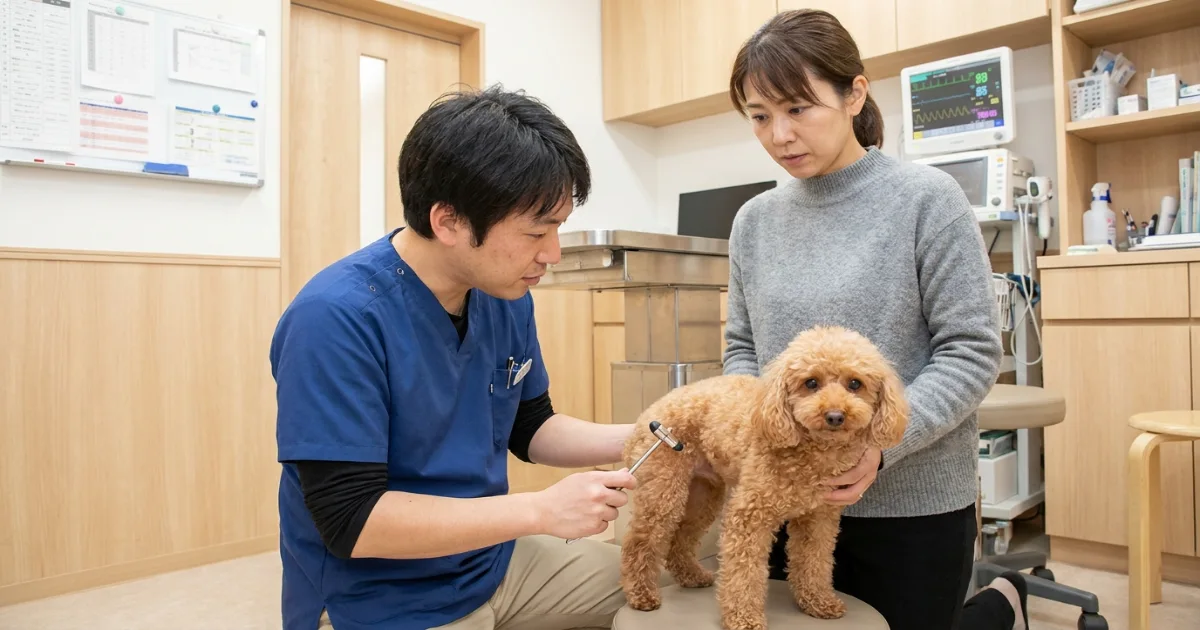
Step 1: Detailed history and physical exam. Your vet will ask about seizure frequency, duration, appearance, and any patterns you have noticed. Bring your seizure diary if you have kept one—it is genuinely useful clinical data.
Step 2: Baseline bloodwork. A complete blood count, serum chemistry panel, and thyroid profile rule out metabolic causes such as liver disease, electrolyte imbalances, hypoglycemia, and hypothyroidism that can mimic or exacerbate seizure activity.
Step 3: Advanced diagnostics (if indicated). If the poodle is older at first seizure onset (over six), shows neurological deficits between seizures, or has focal seizures that consistently localize to one side, your vet may recommend MRI and cerebrospinal fluid analysis to rule out structural brain disease.
Step 4: Diagnosis of exclusion. When all tests return normal and the seizure pattern fits idiopathic epilepsy (first seizure between one and five years, normal interictal behavior, no toxin exposure), the diagnosis is made. For many Standard Poodle owners, this is simultaneously relieving—no brain tumor—and sobering—this is lifelong.
Management & Treatment: A Realistic Roadmap
Managing poodle epilepsy is a marathon, not a sprint. The goal is not necessarily zero seizures forever—though that is the ideal—but rather achieving the best possible quality of life with the fewest side effects. Complete seizure freedom is achieved in approximately 60–70% of epileptic dogs on medication; the remainder achieve meaningful reduction in frequency and severity.
First-Line Medications
Phenobarbital and potassium bromide remain the most commonly prescribed first-line anticonvulsants for poodles. Phenobarbital is effective and affordable but requires regular liver function monitoring. Potassium bromide avoids liver metabolism but can cause GI upset and, in some dogs, mild sedation. Your veterinarian will select based on your poodle’s specific profile, including liver health, age, and seizure type.
Newer Options
Levetiracetam (Keppra) has gained popularity for its favorable safety profile and low drug-interaction risk. Zonisamide and gabapentin are also used, often as add-on therapies when first-line drugs provide incomplete control. These newer agents tend to be more expensive but may offer better tolerability for sensitive poodles.
Medication Adherence: Non-Negotiable
- Give medications at the same times every day—set phone alarms as backups.
- Never stop or adjust anticonvulsant medication without veterinary guidance; abrupt withdrawal can trigger life-threatening status epilepticus.
- Schedule blood-level monitoring as recommended—therapeutic drug monitoring prevents toxicity and ensures efficacy.
- Keep a minimum two-week medication supply; running out is not an option.
Dietary & Lifestyle Support
While diet alone does not control poodle epilepsy, certain nutritional strategies support neurological health. Medium-chain triglyceride (MCT) oil, found in some veterinary therapeutic diets, provides ketone bodies that may have anticonvulsant effects. Omega-3 fatty acids support brain health. Avoid high-sodium treats and foods with artificial preservatives. Consistent meal timing, like consistent medication timing, stabilizes metabolism and reduces variables that can tip the seizure threshold.
Emergency Protocol: What to Do When Your Poodle Has a Seizure
Every poodle owner managing epilepsy needs a clear, practiced emergency plan. In the moment, adrenaline hijacks rational thought, and having a mental checklist you have rehearsed makes all the difference.
Step-by-Step Seizure Response
- Stay calm. Your poodle is unconscious and not in pain. Your composure matters.
- Clear the area. Move furniture, sharp objects, or anything your dog could strike during convulsive movements.
- Do NOT put your hands near the mouth. Dogs cannot swallow their tongues, but they can inadvertently bite you during a seizure.
- Time the seizure. Use your phone’s stopwatch. Duration under two minutes is typical; over five minutes is an emergency.
- Dim lights, reduce noise. Lower sensory input to help the brain recover.
- Record if safe to do so. A brief video helps your vet assess seizure type.
- After the seizure stops, speak softly. Your poodle may be blind, confused, or frightened during the post-ictal phase. Gentle voice and touch anchor them.
- Call your vet if: the seizure exceeds five minutes, seizures cluster, your dog does not regain consciousness, or this is a first-ever seizure.
Long-Term Outlook: Quality of Life With Poodle Epilepsy
Here is what top-ranking articles often gloss over: the emotional journey of managing a chronic condition in a beloved dog. Poodle epilepsy is not a death sentence. Most epileptic poodles live normal or near-normal lifespans. They play, learn, snuggle, compete in agility, earn trick titles, and age gracefully. But the owner’s emotional load is real—the vigilance, the sleepless nights, the fear of the next episode, the medication schedules, the financial cost of monitoring and treatment.
Acknowledging that load matters. Connecting with other poodle owners managing epilepsy—through breed forums, social media groups, or local meetups—reduces isolation. Many owners report that the first year after diagnosis is the hardest, and that a rhythm eventually establishes itself: medication routines become automatic, triggers become predictable, and the fear, while never fully absent, recedes to manageable levels.

What Owners & Buyers Usually Get Wrong About Poodle Epilepsy
Misconceptions abound, and they cause real harm—delaying diagnosis, prompting premature euthanasia discussions, or leading buyers to pass on wonderful puppies from transparent breeders. Here are the most pervasive errors:
Mistake 1: Assuming a single seizure equals epilepsy. Many healthy poodles have a single isolated seizure in their lifetime—triggered by a transient toxin, metabolic blip, or stressful event—and never seize again. One seizure does not make an epileptic dog.
Mistake 2: Believing epilepsy means a short, miserable life. The data flatly contradicts this. With proper management, median survival for epileptic dogs approaches that of the general canine population. Quality of life, assessed by validated veterinary scales, is good to excellent for the majority.
Mistake 3: Thinking breeders who produce an epileptic puppy are unethical. Because poodle epilepsy is polygenic and common in the gene pool, even the most conscientious breeder—one who health-tests, tracks pedigrees, and removes known affected lines—can occasionally produce an affected puppy. Transparency about that reality, not the absence of epilepsy in a pedigree, is the hallmark of an ethical breeder.
Mistake 4: Attributing every odd behavior to seizures. Poodles are quirky, expressive dogs. Reverse sneezing, dream-twitching, idiopathic head tremors (a separate benign condition seen in the breed), and anxiety-related trembling are all frequently misidentified as seizure activity by worried owners.
Buyer Beware / Buyer Aware: When evaluating a poodle puppy, ask the breeder directly: “Have there been any seizure disorders in this puppy’s lineage, and if so, how have you managed that information in your breeding program?” A breeder who denies all knowledge or claims their lines are “100% seizure-free” may be uninformed or evasive. A breeder who discusses epilepsy openly, explains their tracking methods, and shares what they have done to reduce risk is demonstrating integrity. No line is genetically perfect; transparency is what counts.
Conditions Commonly Confused With Poodle Epilepsy
Several conditions mimic seizure activity and lead to misdiagnosis or delayed appropriate treatment. Poodle owners and veterinarians alike must distinguish between:
Syncope (fainting). Cardiac-related collapse, often seen in poodles with undiagnosed heart disease, can look like a seizure but typically involves sudden limpness without the rhythmic paddling and with rapid full recovery. A cardiac workup—ECG, echocardiogram—helps differentiate.
Idiopathic head tremors. Poodles, especially Standards, are predisposed to a benign condition involving rhythmic head bobbing or trembling that stops when the dog is distracted. Unlike seizures, consciousness is fully preserved, and the tremor can be interrupted by calling the dog’s name or offering a treat.
Vestibular disease. Often called “old dog vestibular syndrome,” this inner-ear disorder causes head tilt, circling, nystagmus (rapid eye flicking), and loss of balance. It can mimic post-ictal disorientation but is distinct in its persistent head tilt and eye movement pattern.
Narcolepsy. Rare in poodles but documented, narcolepsy causes sudden collapse during excitement—but the dog typically rouses immediately when stimulated, unlike a post-ictal state.
Practical Owner Insight: Living Day to Day
Beyond medications and vet visits, the texture of daily life with an epileptic poodle involves small, meaningful adjustments. Some owners find that switching from a high-stimulation doggy daycare to a calmer, smaller in-home pet-sitting arrangement reduces seizure frequency. Others discover that their poodle seizes reliably after grooming appointments and learn to schedule grooms for mornings when someone can be home all afternoon. Still others invest in pet cameras to check in remotely during the workday.
Financially, plan for: initial diagnostic workup ($800–$2,500 depending on whether MRI is pursued), ongoing medication ($20–$120 monthly depending on drugs used), therapeutic monitoring bloodwork ($150–$400 per test, typically 2–4 times yearly once stable), and the possibility of emergency visits for cluster seizures ($500–$2,000 per event). Pet insurance that covers pre-existing conditions is generally unavailable once epilepsy is diagnosed, which is why securing insurance before any seizure occurs—ideally when your poodle is a healthy puppy—is one of the smartest financial moves a poodle owner can make.

Comparison: Poodle Epilepsy vs. Epilepsy in Other Breeds
Understanding how poodle epilepsy compares to seizure disorders in other breeds sharpens your perspective and helps you advocate effectively:
| Aspect | Poodles | Other Breeds (e.g., Border Collies, Labs, GSDs) |
|---|---|---|
| Genetic Clarity | Polygenic; no single gene test available yet | Some breeds (e.g., Lagotto Romagnolo) have identified causal genes |
| Onset Pattern | Often 1–4 years for Standards | Varies widely; some breeds show later onset |
| Drug Sensitivity | Generally tolerate phenobarbital well; liver monitoring essential | Some herding breeds have MDR1 mutations affecting drug metabolism |
| Idiopathic Head Tremor Overlap | Notably common, leading to frequent misdiagnosis | Present in some breeds (Dobermans, Bulldogs) but less discussed |
| Breeder Transparency | Variable; best breeders track openly | Varies by breed culture and club guidelines |
Frequently Asked Questions About Poodle Epilepsy
Can poodle epilepsy be cured?
No, idiopathic epilepsy cannot be cured—it is a lifelong condition rooted in genetics. However, it can be effectively managed with medication, trigger avoidance, and consistent veterinary care. Many poodles achieve long periods of seizure freedom and live full, happy lives.
At what age do poodles typically develop epilepsy?
Idiopathic epilepsy most commonly emerges between one and five years of age in poodles, with peak onset around two to three years. Seizures beginning before six months suggest a congenital or metabolic cause; onset after age six raises concern for structural brain disease such as a tumor.
Are Standard Poodles more affected than Toy or Miniature Poodles?
Yes. Standard Poodles carry a significantly higher reported incidence of idiopathic epilepsy compared to Miniature and Toy varieties. The genetic concentration varies by line, but the breed-wide data consistently shows Standards as the most affected size variant.
Should I breed my poodle if she has epilepsy?
No. Breeding an epileptic poodle is strongly discouraged by veterinary neurologists and responsible breed organizations. Even if seizures are well-controlled on medication, the underlying genetic predisposition is still present and heritable. Ethical breeders remove affected dogs from breeding programs.
Can diet changes alone control poodle epilepsy?
Diet alone rarely controls epilepsy in poodles, though it can be a valuable supportive tool. Some dogs respond favorably to ketogenic-influenced diets or MCT oil supplementation, but most still require anticonvulsant medication. Never replace prescribed medication with dietary changes without veterinary guidance.
Is it safe to leave an epileptic poodle home alone?
Most well-managed epileptic poodles can be left alone for reasonable periods. Precautions include: securing the environment (blocking stairs, removing sharp-cornered furniture from the dog’s primary area), using a pet camera for remote monitoring, and ensuring someone can respond if a prolonged seizure occurs. Discuss your specific dog’s pattern with your vet to assess risk.
Does spaying help reduce seizures in female poodles?
There is evidence that spaying can reduce seizure frequency in intact female poodles whose seizures correlate with heat cycles. Estrogen lowers the seizure threshold, and eliminating cyclical hormonal fluctuations often stabilizes some females. Discuss timing with your veterinarian, as the decision involves broader health considerations.
How much does treating poodle epilepsy cost per year?
Annual costs vary widely based on medication choice, monitoring frequency, and whether emergencies occur. A reasonable estimate for a stable epileptic poodle on generic phenobarbital with twice-yearly blood monitoring is $800–$1,800 per year. Newer brand-name medications and emergency visits increase this substantially.
In Summary: Living Well With Poodle Epilepsy
Poodle epilepsy is serious but survivable. It is frightening but manageable. It demands vigilance but does not preclude joy. The Standard Poodle who seizes is still the same intelligent, sensitive, deeply bonded companion—one who now requires a more structured life and a more attuned owner. Recognize the signs early. Pursue a thorough diagnosis. Commit to consistent management. Build your support network. And know that thousands of poodle owners have walked this path before you, discovering along the way that their dog’s capacity for happiness far exceeds the limitations of the condition. With the right care, your poodle’s story is not defined by epilepsy—it simply includes it.