Poodle Crate Training: The Complete Age-by-Age Guide (2026)
Poodle crate training works best when you match the method to your dog’s age and temperament. Start with calm, positive introductions at 8 weeks, gradually extend alone time through adolescence, and adapt the crate as a lifelong safe den — not a punishment. Poodles are sensitive and intelligent, so harsh methods backfire. The right crate size, a consistent schedule, and patience are what turn the crate into your poodle’s favorite spot.
If you’ve just brought home a cloud-soft poodle puppy, or you’re rethinking routines with your adult standard, poodle crate training might feel like a tug-of-war between your need for calm moments and your dog’s strong desire to be right beside you. Poodles don’t shrug off isolation the way some breeds do. They notice everything — tone of voice, how long you’ve been gone, whether the crate smells like comfort or like being left behind. That’s why cookie-cutter crate advice rarely works for this breed.
This guide walks you through a true age-by-age plan. You’ll see exactly what changes from the 8-week puppy stage right through the silver years. We’ll also tackle crate buying mistakes, real-life schedules, and the subtle art of making a poodle choose the crate rather than resent it. Because when you get it right, the crate becomes a quiet anchor in your poodle’s world — a place of retreat, not restriction.
Why Poodle Crate Training Deserves Its Own Playbook
Poodles aren’t generic dogs. They rank near the top in working intelligence, emotional sensitivity, and human attachment. When you leave a poodle in a crate without proper conditioning, you’re not just dealing with barking — you’re often looking at genuine distress. That’s because the poodle’s breed history (retrieving, companionship, constant handler cooperation) wired them to stay connected.
A Border Collie might channel frustration into chewing; a poodle might internalize it, then develop clinginess or separation anxiety. So, poodle crate training has to be slower, softer, and smarter than standard advice. You’re building trust, not just a routine.
Poodle Crate Training by Age: 8 Weeks to Senior Years
Every age brings different needs, bladder control, and emotional wiring. Here’s exactly how to shape the crate experience through each life stage, keeping your poodle’s well-being front and center.
8 to 12 Weeks: The Foundation of Trust
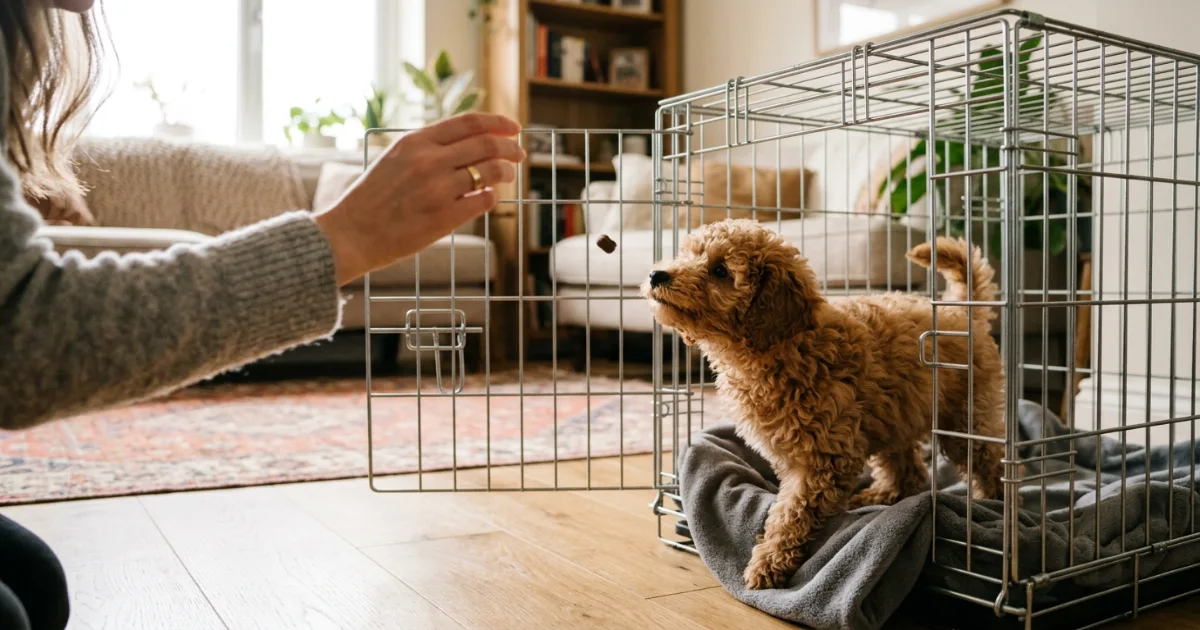
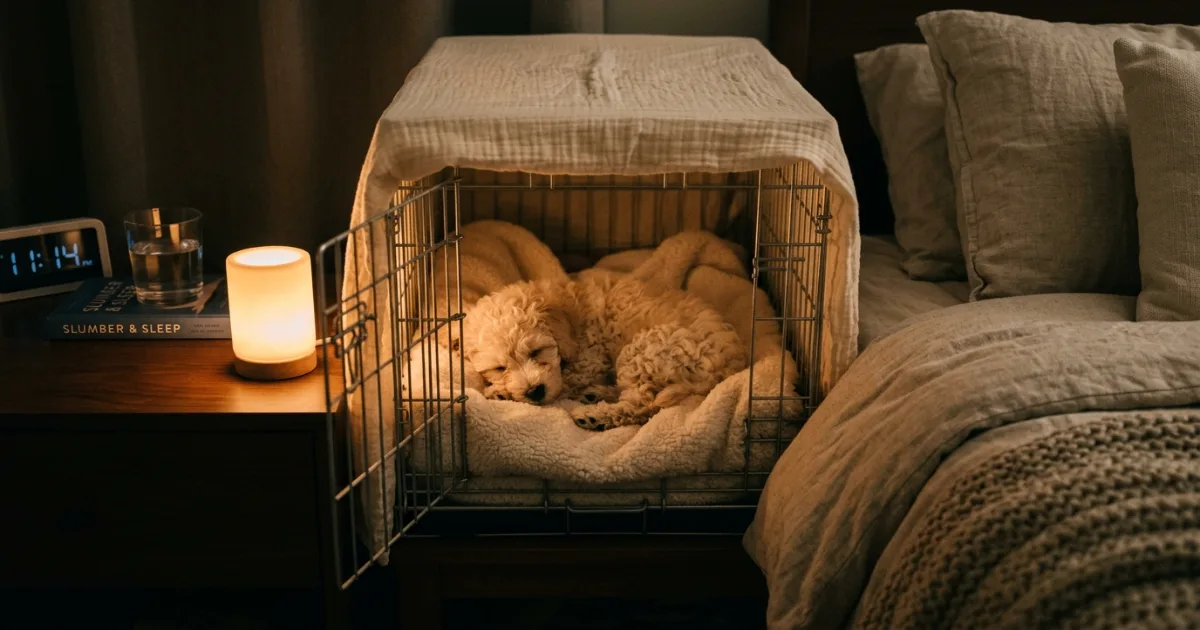
Your poodle puppy has just left the litter. Sleeping alone is alarming. Begin the first night with the crate right beside your bed, draped with a light cover to create a den feel. Place a soft, washable pad and a worn T-shirt that smells like you inside. Never shove the puppy in — instead, toss a high-value treat near the door, then inside, letting the pup explore freely. Feed meals inside the crate with the door open.
For nighttime, expect to take the puppy out every 2–3 hours. At this age, the crate isn’t about “holding it” all night; it’s about building positive associations and preventing accidents. Keep daytime sessions to 15–30 minutes, gradually stretching to an hour only if the puppy is calm and tired.
3 to 6 Months: Extending Alone Time with Confidence
Bladder control improves, but teething peaks. The crate becomes a safe zone where destructive chewing can’t happen. Practice short departures (1–3 minutes) while you’re still home, then return without a big greeting. This builds independence without drama. If your poodle starts to whine, wait for a pause before letting them out — teach that quietness opens the door.
By 4–5 months, many poodles can manage 3–4 hours in the crate during the day, provided they’ve had exercise and a potty break beforehand. Still, don’t expect an 8-hour day alone; that’s too much for a young poodle’s mind and body.
6 to 12 Months: The Adolescent Test
Welcome to the teenage poodle era. You may see sudden crate protests, even if they were fine before. Consistency is your anchor. Stick to calm departures, crate = good things, and never use the crate as a timeout for bad behavior. If you respond to whining by letting them out, you’re teaching that complaining works. Instead, reinforce moments of silence.
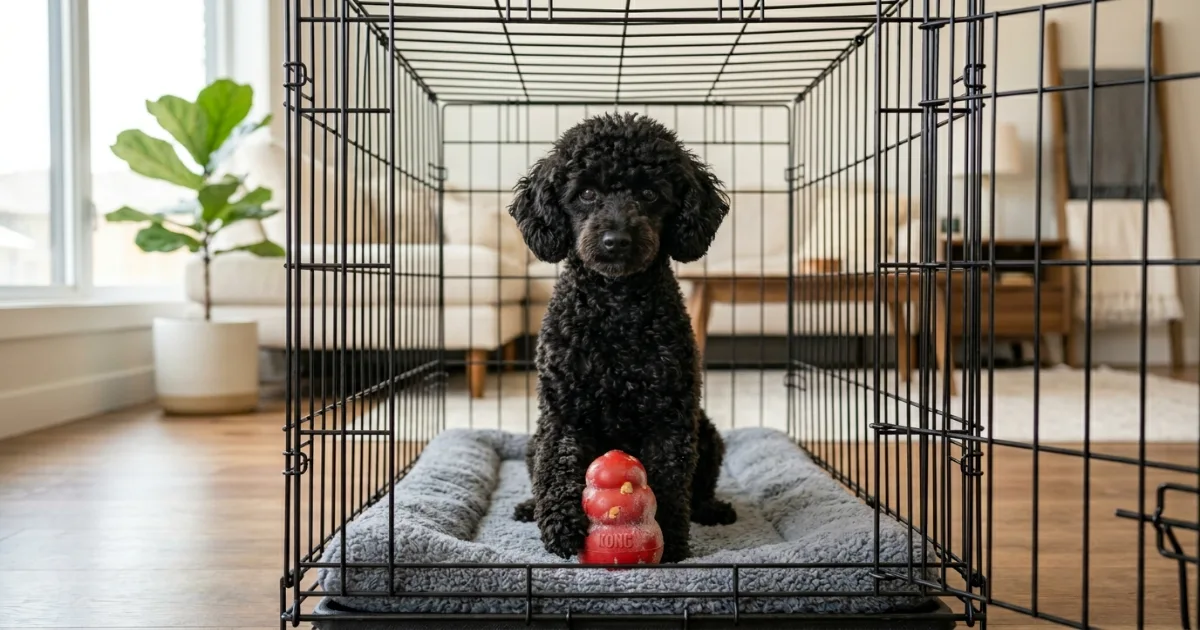
During this stage, many poodles can handle 4 hours alone, but they still need a midday break if you work full-time. A frozen stuffed Kong in the crate can transform it into a place they look forward to.
Adult Poodle (1–7 Years): The Respectful Den
A well-adjusted adult poodle often uses the crate voluntarily — door open, napping inside. You can phase out the locked door when you’re home, but keeping the crate accessible gives comfort. An adult poodle should not be crated for more than 4–5 hours during the day regularly. For the occasional longer stretch, arrange a dog walker or a safe, larger pen area instead.
If your adult poodle suddenly resists the crate after years of acceptance, investigate. Pain, a fright during your absence, or a change in household routine can trigger a setback. Step back to foundation games: treat tosses, meals in the crate, and very short departures again.
Senior Poodles (8+ Years): Comfort and Adaptation
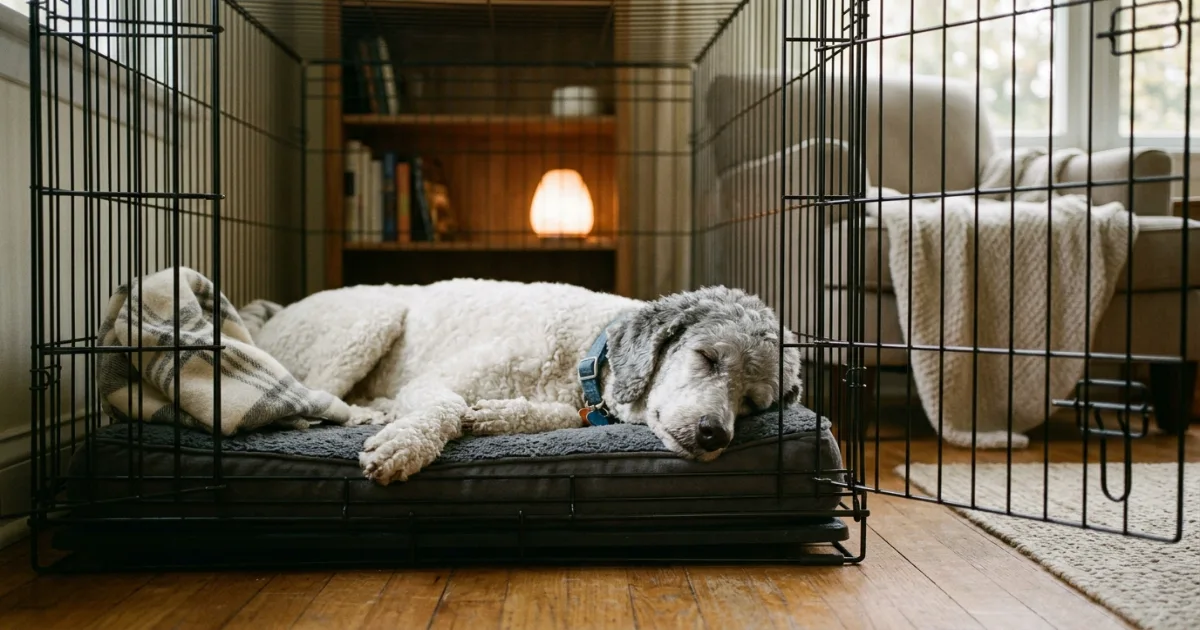
Aging poodles might need the crate more for rest and less for training. Joint stiffness makes thick orthopedic pads essential. A senior poodle may not be able to hold their bladder as long, so shorten crate sessions to 2–3 hours. Remove any pressure to “perform” — if they’d rather rest on a dog bed in a quiet room with a baby gate, honor that.
Keep the crate in a warm, draft-free area. For dogs with vision or hearing loss, the familiar scent and enclosed space can actually reduce anxiety. Just never lock a senior poodle away for convenience; the crate should soothe, not isolate.
Choosing the Right Crate for Your Poodle (Size and Type Matter)
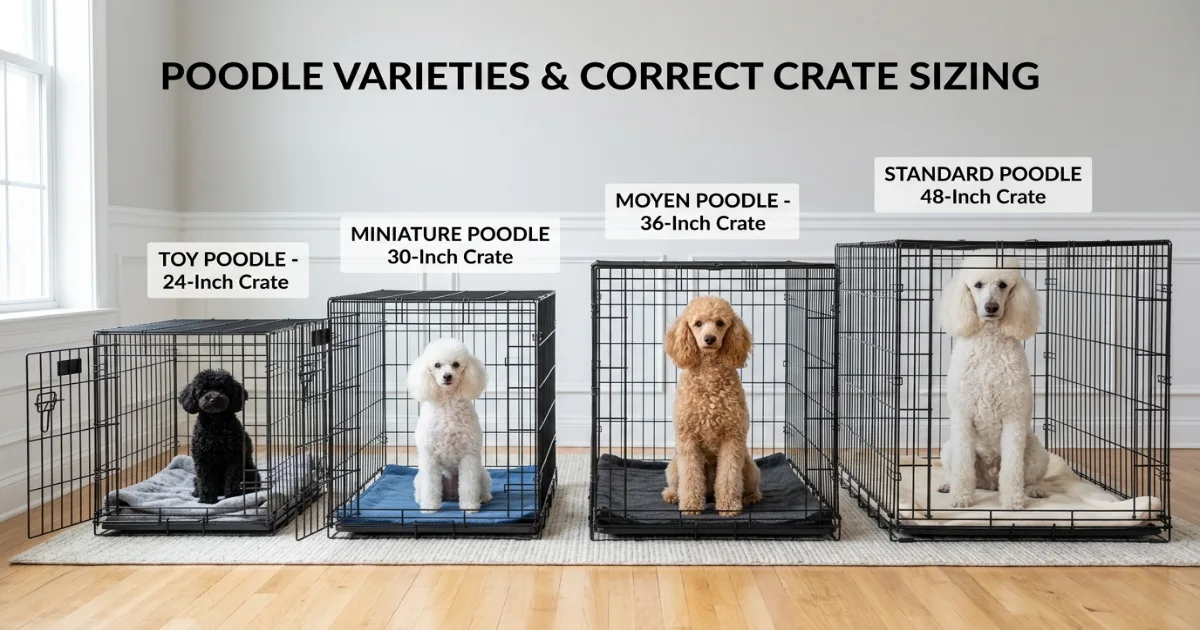
A crate that’s too big encourages soiling on one side and sleeping on the other. Too small, and your poodle can’t stretch or turn — that’s inhumane. Because poodles come in three main sizes plus the unofficial moyen, you must measure your dog from nose to tail base and from floor to top of head (or ears) when standing.
| Poodle Variety | Approx. Weight | Recommended Crate Size (L×W×H) | Interior Fit Notes |
|---|---|---|---|
| Toy Poodle | 4–6 lbs | 24″L × 18″W × 19″H | Snug den; can stand and turn easily |
| Miniature Poodle | 10–15 lbs | 30″L × 19″W × 21″H | Plenty of room to stretch out |
| Moyen / Klein (medium) | 20–30 lbs | 36″L × 23″W × 25″H | Often the sweet spot for active movers |
| Standard Poodle | 45–70 lbs | 42″L × 28″W × 30″H | Must allow full stand-up; some need 48″ length |
Crate Type Comparison for Poodles
Poodles often feel more secure in a den-like environment. Your choice affects their comfort and your convenience.
| Crate Type | Best For | Poodle-Specific Pros | Watch Out For |
|---|---|---|---|
| Wire crate (with cover) | Home use, good ventilation | Can add privacy cover; easy to clean | Noisy if dog paws at bars; less den-like without cover |
| Plastic travel crate | Car trips, quiet dens | Dark, cozy feel reduces stimulation | Less airflow; some poodles dislike confinement feel |
| Heavy-duty escape-proof | Anxious escape artists | Virtually indestructible | Heavy, expensive, can feel institutional |
| Soft-sided crate | Calm adult poodles | Lightweight, cozy | Not chew-proof; unsuitable for puppies |
| Furniture-style crate | Living area blend-in | Looks like an end table; dual-purpose | Often poorly ventilated; ensure sturdy construction |
Crate Training Mistakes Poodle Owners Make (And How to Steer Clear)
Even devoted owners slip into patterns that undermine poodle crate training. Here are the most common missteps — and what to do instead.
- Using the crate as punishment — This teaches the crate is a bad place. A time-out area should be separate.
- Wrong size crate — A standard poodle crammed into a 36-inch crate will hate it. Measure accurately.
- Skipping exercise before crating — A poodle with pent-up energy will vocalize. A good walk or play session makes a calm crate dog.
- Leaving a collar on inside — Collars can snag on wires. Safety first: always remove.
- Too much crate time too soon — A 10-week-old poodle cannot hold it for hours. Build duration slowly to avoid accidents and anxiety.
- Ignoring separation anxiety signs — If your poodle drools excessively, chews the bars, or injures themselves, seek professional help. Crate alone won’t fix true anxiety.
2026 Price Guide: What Does a Quality Poodle Crate Cost?
Crates range from budget-friendly basics to investment furniture pieces. Here’s what to expect this year, and what actually matters for your poodle’s well-being.
Prices reflect 2026 market averages. A good poodle crate doesn’t have to be expensive; it needs to be the right size, safe, and paired with patient training.
What inflates the price: Furniture finishes, heavy-gauge steel, custom dividers, and brand names. But a basic wire crate with a fitted cover and a comfortable pad often works beautifully for most poodles.
Pro Tips for a Calm, Crate-Trained Poodle at Any Age
🛠️ How to Build Crate Love Step by Step
1. Make the crate invisible in your routine. Feed every meal inside with the door open for days. Scatter hidden treats under the pad.
2. Add a “settle” cue. Lure your poodle inside, say “crate” or “den,” and reward. Practice closing the door for 3 seconds, then open and reward — repeat until boredom sets in.
3. Desensitize departure cues. Pick up keys, put on shoes, touch the door handle — without leaving — dozens of times so they lose meaning.
4. Never make homecoming a jackpot. Calm returns prevent hyper-attachment. A quiet “hello” and immediate potty break keeps emotions level.
5. Introduce crate-comfort items wisely. A safe chew, a soft blanket, and a heartbeat-style snuggle toy can help young puppies. Remove anything they shred.
What Buyers Get Wrong When Shopping for a Poodle Crate
Many first-time poodle owners grab a “small” crate for a toy poodle or a “large” for a standard, then realize the proportions are off. A toy poodle in a 30-inch crate may feel lost, and a standard in a 42-inch crate might not stand upright. The fix: measure your individual dog. Also, people often choose style over function — a beautiful furniture crate with poor ventilation can become a stuffy prison. Poodles need airflow and the option of darkness (via a cover), not a sealed box.
Another trap: expecting a puppy to love a crate overnight because a friend’s Labrador did. Poodles often need an extra week or two of no-door association before they willingly settle. Don’t rush the timeline; rushing almost always backfires.
Is Crate Training Right for Every Poodle?
Most poodles can learn to adore a crate, but a small percentage (especially those with severe isolation distress) may never relax inside one. If you’ve patiently conditioned for weeks and your dog still panics, consult a veterinary behaviorist. Alternatives like a puppy-proofed room with a baby gate can give safety without confinement triggers. The goal is a settled dog, not a crate victory.
Poodle Crate Training: Frequently Asked Questions
At what age can a poodle puppy sleep in a crate overnight?
Most poodle puppies can handle a 6–7 hour overnight stretch without a potty break around 12–14 weeks, provided the crate is the right size and they had a late-night potty trip. Tiny toy poodles might need a bit longer due to small bladders. Always let the puppy’s signals guide you.
How long can a poodle stay in a crate during the day?
Healthy adult poodles should not be crated for more than 4–5 hours at a time during the day. Puppies under 6 months need much shorter periods according to age (max is roughly their age in months plus one in hours, up to a safe limit). If you work full-time, arrange a midday walk or dog sitter.
Do poodles like crates?
When introduced correctly, many poodles genuinely love their crates. The enclosed space taps into a natural denning instinct. You’ll often find them napping inside of their own accord. The key is positive, force-free training that respects the poodle’s sensitive nature.
What size crate does a standard poodle need?
A standard poodle typically needs a 42-inch long crate, and some tall individuals require a 48-inch model. Always measure your dog: standing height from floor to ear tips plus a few inches, and nose-to-tail length. The crate must allow standing, turning, and sprawling out without touching the sides.
Can you crate train an older poodle?
Yes, older poodles can learn to accept or even enjoy a crate. The process may take longer because long-standing habits need reshaping. Use extra patience, ultra-high-value treats, and always associate the crate with calm, never forced confinement. Senior poodles often appreciate the quiet space once they adjust.
How do I stop my poodle from crying in the crate at night?
First, rule out a potty need. If the puppy is just lonely, place the crate beside your bed and drape a cover. A warmed snuggle toy and a worn shirt with your scent can help. Never respond while they’re actively crying; wait for a brief silence, then offer gentle verbal reassurance. Consistency over a few nights usually solves it.
Is crate training necessary for poodles?
It’s not mandatory, but it’s strongly recommended for safety, house-training, and preventing separation-related destruction. A crate-trained poodle has a portable safe space for travel, vet stays, and emergencies. If done well, it builds confidence rather than creating dependence.
What bedding should I put in a poodle’s crate?
Choose something washable and chew-resistant, like a fleece crate pad or a thin, fitted bed. Avoid loose blankets that can be shredded or ingested. For puppies prone to accidents, a waterproof mat under a towel works best. Remove any bedding if the dog starts chewing on it.
Summary: Poodle crate training succeeds when it’s tailored to the dog’s age, size, and emotional wiring. Start young, keep sessions positive, and never rush the trust. An appropriately sized crate, combined with a predictable routine, turns confinement into comfort. From 8-week-old fluffballs to dignified seniors, the crate becomes a bedroom door your poodle will happily walk through.