Poodle as a Service Dog: Is It Possible?
Quick Answer: Yes, a poodle as a service dog is not only possible—it’s a quietly brilliant choice. Poodles possess the intelligence, trainability, and hypoallergenic coat that make them exceptional candidates for psychiatric, medical alert, mobility, and guide work. However, the path from eager pup to working partner is nuanced. Not every poodle has the temperament; the breed’s sensitivity demands a specific style of training, and the grooming commitment extends into public access work. This guide untangles the real story, so you can decide if a poodle service dog belongs in your future.
I remember the first time I watched a Standard Poodle guide a handler through a crowded airport terminal. He moved with that signature light-footed trot, head up, utterly unflappable while wheeled suitcases clattered past. Passengers did double-takes—most still picture a Golden Retriever or Labrador when they imagine a service dog. But that poodle navigated the chaos with an elegance that was impossible to ignore. The handler, a woman with a balance disorder, later told me she chose a poodle precisely because the breed thinks. Not blindly obeys, but genuinely assesses.
That encounter sparked years of conversations with poodle service dog handlers, trainers, and breeders who specialize in working lines. The consensus? A well-bred, properly trained poodle can absolutely excel as a service dog. But the decision to go this route requires more upfront knowledge than choosing a Lab. Poodles are not the path of least resistance; they are the path for someone who understands the breed’s wiring and is willing to work with it, not against it.
🧠 Top-Tier Intelligence
Poodles consistently rank among the most trainable breeds. They learn commands in fewer repetitions and problem-solve independently — a double-edged sword.
🌿 Hypoallergenic Coat
The non-shedding curly coat reduces allergens, a significant advantage for handlers with allergies or in public settings where shedding is undesirable.
🎭 Emotional Sensitivity
Poodles mirror handler emotions. For psychiatric service work, this attunement is powerful; it can also lead to anxiety if the handler is frequently distressed.
📏 Size Versatility
From Toy to Standard, poodles can be matched to specific tasks — a Toy for diabetic alert in a small apartment, a Standard for mobility support.
Understanding What a Service Dog Actually Is (and What It Isn’t)
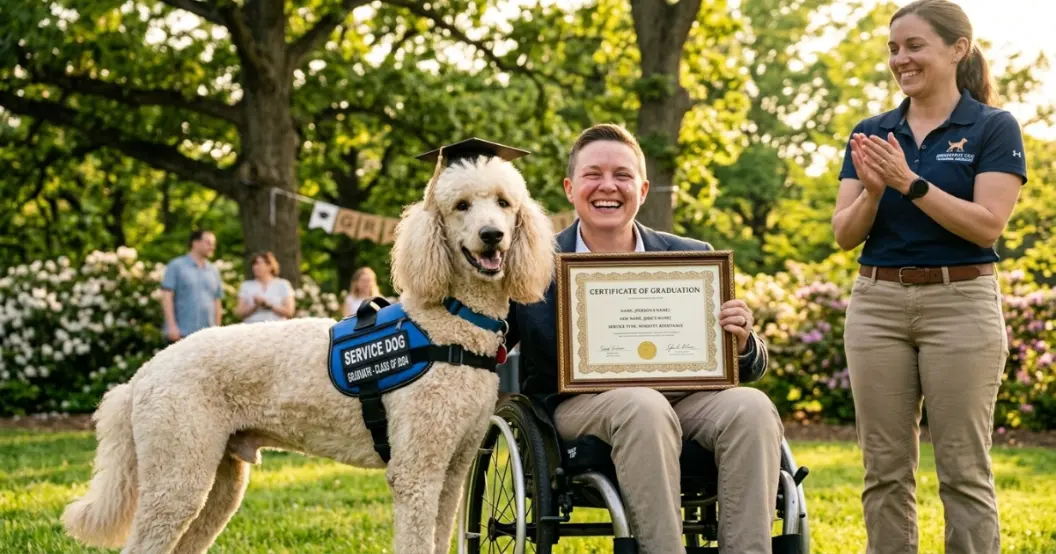
Before we dive into poodle specifics, let’s clear the legal ground. Under the Americans with Disabilities Act (ADA), a service dog is specifically trained to perform tasks that mitigate a person’s disability. The dog is not a pet, not an emotional support animal (ESA), and not a therapy dog. ESAs provide comfort by their mere presence; they have no public access rights beyond housing. Service dogs undergo hundreds of hours of task training and must behave impeccably in environments where pets are prohibited. If you’re considering a poodle as a service dog, you’re committing to that rigorous standard.
Clarity on Terminology
Far too many owners mistakenly label a poodle with a vest as a service dog because the dog makes them feel safe. That’s not enough. To be legal, the dog must perform at least one trained task directly related to the disability — such as alerting to a panic attack, retrieving medication, or providing counterbalance. Without task training, a poodle with a vest is just a well-dressed pet breaking public access laws.
Why a Poodle as a Service Dog Makes Extraordinary Sense
Poodles were originally bred as water retrievers — working dogs with a powerful drive to collaborate with humans. That heritage translates into a dog that thrives on partnership. Unlike breeds that simply tolerate training, poodles often crave mental challenges. For a handler needing complex chains of tasks (for instance, opening a door, fetching a phone, then alerting to a medical event), a poodle’s ability to sequence behaviors is remarkable.
The hypoallergenic coat is a genuine advantage in service work. It opens doors — literally — because businesses and landlords who cite allergy concerns about shedding dogs have far less standing when a curly-haired, non-shedding poodle enters the room. Additionally, poodles carry less of the typical “dog odor,” which matters during long hours in close public contact. Grooming, however, becomes a service dog maintenance task. You’ll need to keep the coat clean, mat-free, and neatly trimmed to maintain a professional appearance. Many handlers keep their working poodle in a short, practical clip like the “retriever” or “sporting” trim.
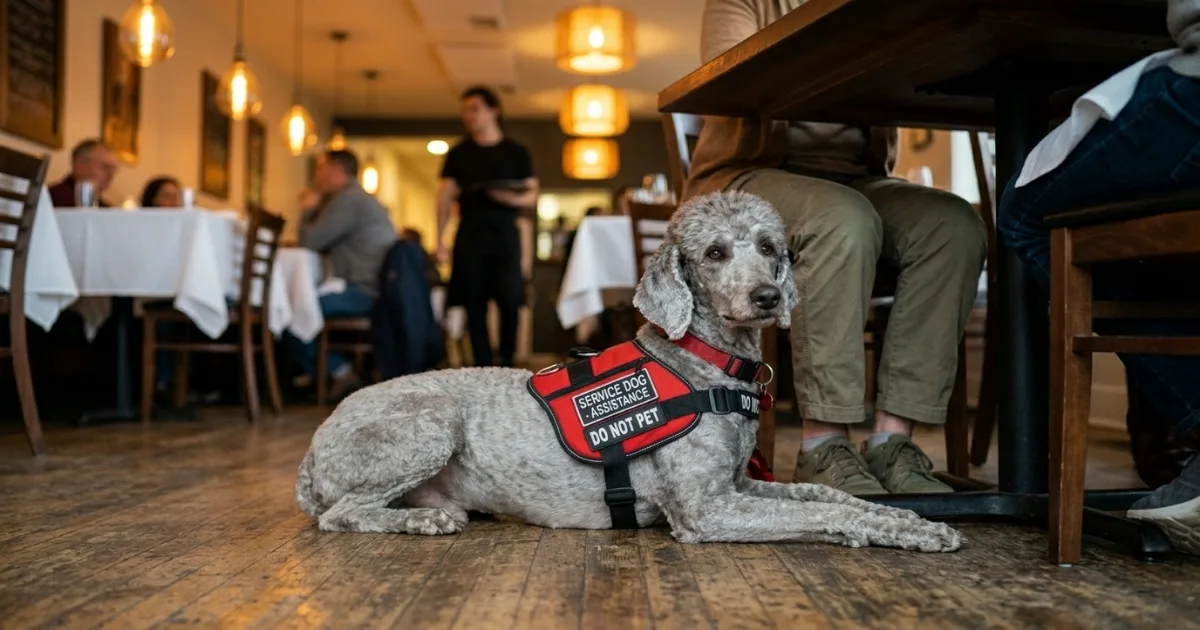
The Hidden Challenges: What Trainers Won’t Always Say About Poodles
It would be dishonest to paint the poodle as the perfect service dog candidate for everyone. Poodles possess a sensitivity that can become a liability if mismanaged. A poodle who is punished harshly or forced through aversive training will shut down—or worse, become neurotic and reactive. Service dog training with a poodle requires a positive-reinforcement, relationship-first approach. The breed’s cleverness can backfire: bored poodles invent their own jobs, like creatively stealing food off grocery store shelves or testing public boundaries. You need a trainer who understands that poodles are not Labrador Retrievers with curls; they are independent thinkers who need a clear, patient, and consistent handler.
Then there’s the “poodle social tax.” In public, you’ll be stopped constantly. People will want to pet your dog, exclaim about the breed, and question whether a poodle can really be a service dog. This public fascination can be exhausting, and it can distract even a well-trained poodle from their work. Handlers must become adept at polite but firm deflection. A poodle that enjoys the attention too much may start soliciting interaction, which undermines service dog decorum.
Trainer’s Secret
Poodles work best for handlers who can maintain their own emotional regulation. Because the breed absorbs human stress, a handler prone to frequent panic attacks needs a poodle with a resilient, “bombproof” temperament, paired with a training plan that actively builds the dog’s confidence rather than merely exposing it to triggers.
Poodle Size and Service Suitability: Which Size Fits Which Role?
One of the poodle’s greatest gifts is its size range. But each size comes with distinct strengths and limitations for service work. The table below provides a realistic overview.
| Poodle Size | Weight Range | Best Suited Tasks | Limitations | Public Access Fit |
|---|---|---|---|---|
| Toy | 4–6 lbs | Diabetic alert, hearing alert, small-item retrieval, psychiatric grounding (lap-sized) | Too small for mobility tasks; physically fragile; can be stepped on in crowds | Easily fits in a carrier or lap; must be protected from heavy foot traffic |
| Miniature | 10–15 lbs | Psychiatric alert, medical alert, hearing dog, some light mobility (e.g., pushing small buttons, retrieving lightweight objects) | Cannot provide counterbalance or heavy mobility support; still somewhat vulnerable in dense public spaces | Compact enough for tight spaces; very portable |
| Standard | 40–70 lbs | Guide work, mobility support (counterbalance, bracing), wheelchair pulling, psychiatric tasks, comprehensive retrieval, seizure response | Requires more physical space; larger size can be intimidating to some; higher food and equipment costs | Excellent for visibility and physical tasks; needs broad aisles and ample personal space |
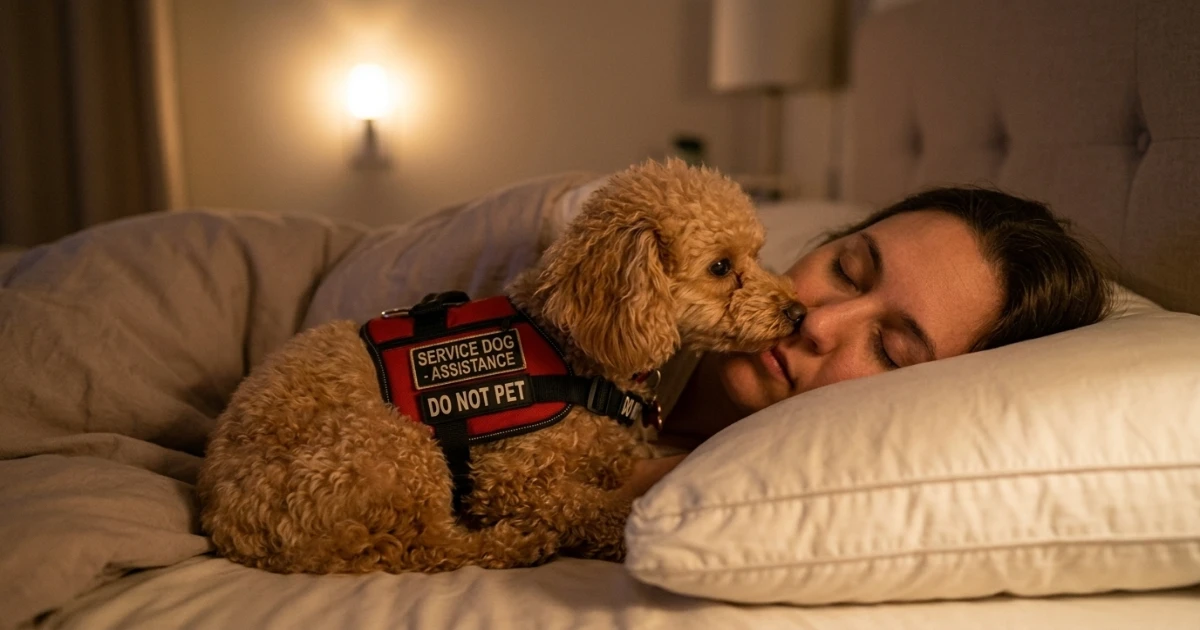
Poodles vs. Traditional Service Breeds: An Honest Comparison
The default service dog image is a Labrador or Golden Retriever. Poodles offer a compelling alternative, but they’re not interchangeable. Here’s a side-by-side look to cut through the generalizations.
| Trait | Poodle | Labrador / Golden Retriever |
|---|---|---|
| Trainability | Extremely high; may think independently and modify tasks | Very high; tends to follow commands with fewer improvisations |
| Sensitivity to Handler | Exceptional emotional attunement; can absorb handler stress | Moderate; more emotionally robust but less intuitive to subtle cues |
| Public Perception | Often questioned; handler must advocate constantly | Instantly recognized as a service dog; less need for explanation |
| Grooming Needs | High; regular clipping, brushing, and clean-up to maintain professional appearance | Moderate shedding; less stigma around “messy” appearance |
| Allergy Friendliness | Excellent; minimal dander and no shedding | Significant shedding; not suitable for handlers with dog allergies |
| Energy & Drive | High mental and physical energy; needs a job and daily enrichment | High energy but often more forgiving of downtime |
Many handlers who switch from a Lab to a poodle remark on the breed’s almost uncanny ability to anticipate needs. But they also note that a poodle is more likely to challenge a command that seems illogical. This is not stubbornness; it’s cognitive processing. Handlers who enjoy a thinking dog thrive. Those who want unquestioning compliance may find the poodle frustrating.
The Real Cost of a Poodle Service Dog in 2026
Financially, the commitment is significant whether you owner-train with professional help or purchase a fully trained dog. Underestimating these numbers is a primary reason poodle service dog journeys stall.
2026 Price Guide for a Poodle Service Dog
| Route | Expected Cost Range | Notes |
|---|---|---|
| Well-bred poodle puppy from health-tested, temperament-focused breeder | $2,000–$4,500 | Service prospects often cost more. Insist on OFA clearances, ENS/ESI exposure, and working-line lines if possible. |
| Professional board-and-train (6–12 months) | $10,000–$25,000 | Includes task training, public access work; handler coaching is essential. |
| Owner-training with private trainer support | $5,000–$15,000+ over 2 years | Weekly sessions, group classes, and equipment add up. Time commitment is the hidden cost. |
| Fully trained poodle service dog from a program | $15,000–$50,000 | Some nonprofits offer reduced fees, but poodle-specific programs are rare; waitlists can be years long. |
Monthly maintenance for food, grooming, veterinary care, gear, and ongoing training typically runs $150–$400 for a working poodle.
Buyer be aware
Many breeders market “service dog prospects” without comprehensively evaluating temperament. Avoid any breeder who guarantees a puppy will become a service dog; the washout rate even with stellar breeding is around 30-40%. A reputable breeder will have a waitlist, health-tested parents, and a rigorous puppy-rearing protocol — and they’ll still be honest about the odds.
How the Poodle Service Dog Journey Often Gets Misunderstood
First-time handlers frequently assume that because poodles are smart, they’ll practically train themselves. The opposite is true: a highly intelligent poodle left without structured mental engagement becomes anxious, destructive, or overly self-directed. Task training cannot be rushed. Public access skills — settling quietly in a restaurant, ignoring dropped food, navigating loud crowds — take months of meticulous proofing.
Another mistake is choosing a poodle solely for the hypoallergenic coat while ignoring temperament. A poodle from show lines may have a softer, more reserved nature unsuitable for demanding public access. Working-line poodles, or those bred for versatility sports, often possess the resilience and drive needed. If your heart is set on a particular fluffy apricot because of looks, you might end up with a beautiful pet who cannot handle the pressure of service work.
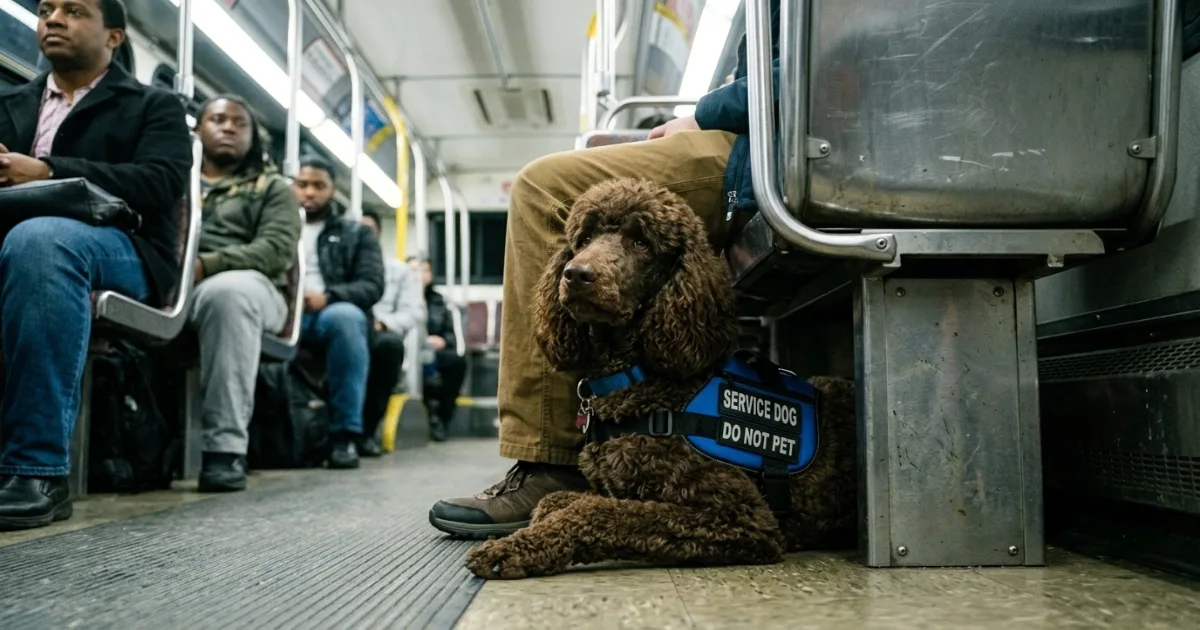
Practical Owner Insight: Daily Life with a Poodle Service Dog
Living with a poodle service dog means integrating care rituals into your disability management routine. Grooming becomes a non-negotiable, twice-weekly event; you’ll brush out the coat to prevent mats that could pull painfully under a harness. Baths every two to three weeks keep dander and allergens low. You’ll become expert at quick paw wipes because poodles in service work pick up sidewalk grime constantly.
Mentally, your poodle will need off-duty time to run, sniff, and just be a dog. Many handlers find that a daily session of fetch or a romp in a safe field allows the dog to decompress. A poodle that never gets to release its natural exuberance will either burn out or become unmanageably silly when they should be working. Balancing work and play is not optional; it’s the foundation of a long, healthy service career.
Pro Tips for Aspiring Poodle Service Dog Handlers
- Start temperament testing early: work with a trained evaluator to assess the puppy’s resilience, startle recovery, and focus around 7–8 weeks.
- Socialization is not just exposure: controlled, positive experiences in hundreds of different environments build the unflappable public access dog.
- Master the “go to mat” behavior: a portable mat becomes your poodle’s office. They learn that going to the mat means relaxation and treats.
- Teach a “focus” cue for ignoring strangers: because everyone will try to interact with your curly dog, a strong “watch me” cue is your frontline defense.
- Plan for coat management from day one: desensitize the puppy to clippers, dryers, and handling so grooming never becomes a battle.
- Join poodle service dog handler communities: the solidarity, gear swaps, and real-world advice are invaluable for navigating the unique public perception challenges.
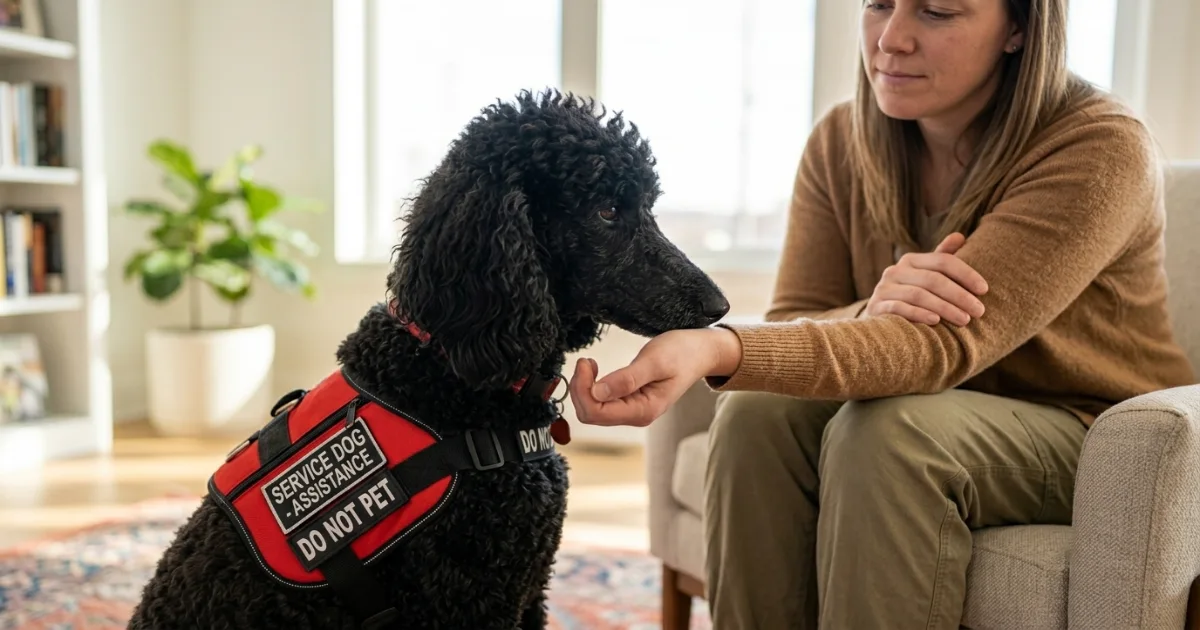
Frequently Asked Questions About Poodle as a Service Dog
- Can any poodle become a service dog?
- No. While many poodles have the capacity, a successful service dog requires a specific temperament: confident, non-reactive, resilient, and intensely handler-focused. Not every poodle, even from excellent lines, possesses this combination. A honest evaluation is critical.
- Are Toy and Miniature Poodles recognized as service dogs under the ADA?
- Absolutely. The ADA does not restrict service dogs by breed or size. A Toy or Miniature Poodle can perform tasks like diabetic alert, hearing alert, and psychiatric grounding. Public access must be managed safely given their small size.
- What tasks can a poodle service dog realistically perform?
- Poodles can be trained for medical alerts (seizures, blood sugar), psychiatric tasks (interrupting self-harm, deep pressure therapy), mobility support (standards only), guide work, hearing signals, and complex retrievals. The limitation is physical size and handler need, not the breed’s intelligence.
- How long does it take to train a poodle as a service dog?
- Typically 18–24 months of consistent training, including basic obedience, task training, and extensive public access proofing. Rushing this timeline significantly increases the risk of a washed-out dog.
- Does a poodle service dog require a professional trainer?
- Almost always yes. Even experienced dog owners benefit from a trainer skilled in service dog preparation. Public access training and task shaping require a professional eye to avoid subtle errors that can disqualify a dog later.
- Why do some trainers advise against poodles for service work?
- Some trainers unfamiliar with poodles mistake the breed’s sensitivity for instability. Poodles require training methods that build confidence and use positive reinforcement; trainers reliant on compulsion often fail with poodles and then blame the breed, not their methods.
- Can a poodle who was once a pet be retrained as a service dog?
- It’s possible but challenging. The dog must have the correct temperament, no deeply ingrained behavioral issues, and the handler must be prepared for a long transition. Starting with a purpose-bred puppy yields more predictable results.
- What’s the biggest mistake first-time poodle service dog handlers make?
- Choosing a poodle based on coat color or breeder convenience rather than temperament, and then expecting the dog’s intelligence to compensate for a lack of professional guidance. A beautiful, smart poodle that can’t reliably task is not a service dog.
Bottom line: A poodle as a service dog is a powerful, life-changing partnership when the match is right. The breed brings intellect, empathy, and a clean coat to the working relationship, but it demands a handler who respects the poodle’s sensitive core and invests in proper training, grooming, and advocacy. If you’re prepared to navigate the unique challenges and commit to the years-long journey, a poodle may not only be possible—it may be the most extraordinary service companion you could ever wish for.
For official guidelines on service dog rights and requirements, visit the ADA Service Animal Guidelines from the U.S. Department of Justice — they outline what a poodle as a service dog is legally permitted to do and where they are allowed to go.