Are Poodles Good Family Dogs? Temperament Explained
If you’ve ever watched a poodle move through an agility course, sit calmly in a child’s lap, or greet a stranger at the front door with a wagging tail and bright, curious eyes, you already have a sense of what this breed is about. But the question families most often ask before bringing one home is a practical one: are poodles good family dogs?
The short answer is yes — with some important nuances. Poodles consistently rank among the most intelligent, adaptable, and affectionate breeds in the world, and they’ve been beloved family companions for centuries across Europe and North America. But like any breed, the experience you have with a poodle depends heavily on which size you choose, how you train them, and whether their temperament and energy level genuinely match your household’s lifestyle.
In this guide, we’ll break down poodle temperament with kids, energy levels, training needs, multi-pet compatibility, and help you figure out which poodle size makes the best fit for your family. By the end, you’ll have a clear, honest picture of what life with a poodle actually looks like — the joys and the responsibilities included.
Quick Verdict: Are Poodles Good Family Dogs?
Yes — poodles are excellent family dogs for most household types. They are gentle, highly trainable, low-shedding, and deeply bonded to their people. Standard and miniature poodles are especially well-suited to families with children. Toy poodles thrive in calmer homes or with older children and adults.
Poodle Personality Traits: What Makes Them Tick
To understand why poodles make such strong family dogs, you first need to understand what they were bred to do. The standard poodle originated as a working water retriever in Germany — a dog that had to be athletic, responsive to human direction, and calm under pressure in unpredictable environments. Over centuries of refinement, those traits became deeply embedded in the breed’s DNA, and they show up just as clearly in a miniature or toy poodle today as they do in a standard.
Here are the core poodle personality traits that define the breed across all three size varieties:
The standout quality that families notice first is how attuned poodles are to human emotion. These are dogs that genuinely read the room. They sense when a child is upset, when a household is calm, and when something new is happening that requires their attention. This sensitivity makes them remarkably easy to bond with, but it also means they don’t thrive in chaotic, inconsistent, or emotionally volatile environments.
Poodles are also notably non-aggressive by nature. While they’ll alert bark at strangers or unusual sounds — which makes them decent watchdogs — they very rarely show aggression toward family members, children, or other pets. With proper socialization, aggression-related behavioral issues are uncommon in this breed.
Poodle Temperament With Kids
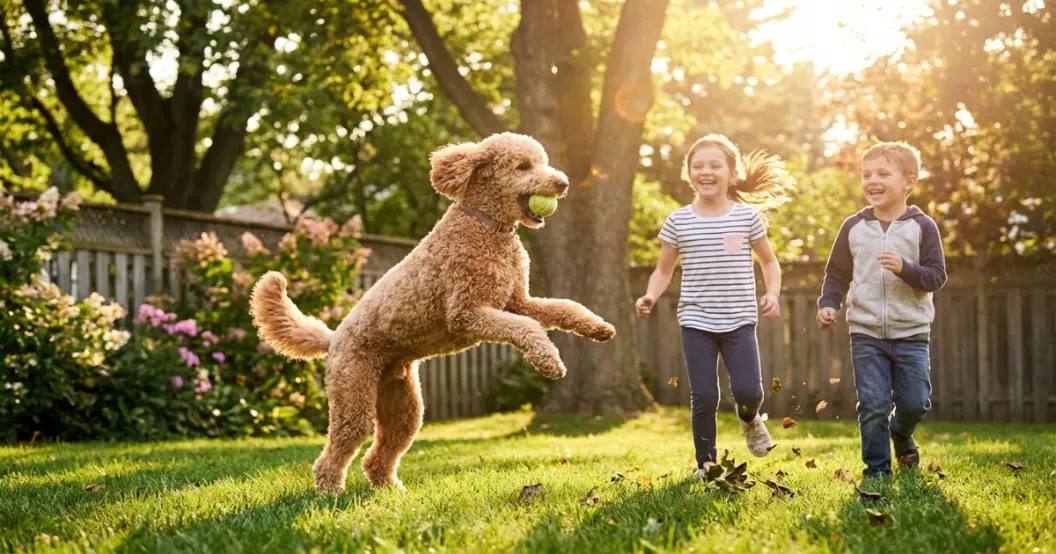
One of the most important factors for any family considering a dog is how well it gets along with children. The good news here is that poodles have an excellent track record with kids — particularly when raised alongside children from puppyhood.
Their natural patience, playfulness, and eagerness to please make them ideal playmates for energetic children. Standard poodles, in particular, are robust enough to handle the roughhousing and unexpected movements that come with having kids in the house. They match a child’s energy during active play, then settle calmly at their feet during quieter moments.
Important Size Considerations for Families
While all three poodle varieties can do well with children, size matters more than many families initially realize:
- Standard poodles are the most physically compatible with young, energetic children. They’re large enough that a toddler falling on them won’t cause injury, and they have the stamina to keep up with an active family throughout the day.
- Miniature poodles are a great middle ground — sturdy enough for families with kids over 5 or 6 years old, while being more manageable in size than a standard.
- Toy poodles require more careful supervision around young children. Their small, delicate frames mean even well-intentioned rough play can result in injury. They tend to be better suited to families with older, calmer children who understand gentle handling.
As with any breed, supervision is non-negotiable when young children and dogs interact — no matter how well-tempered the dog is. Teaching children how to interact respectfully with a dog is as important as training the dog itself.
Poodle Energy Levels and Exercise Needs
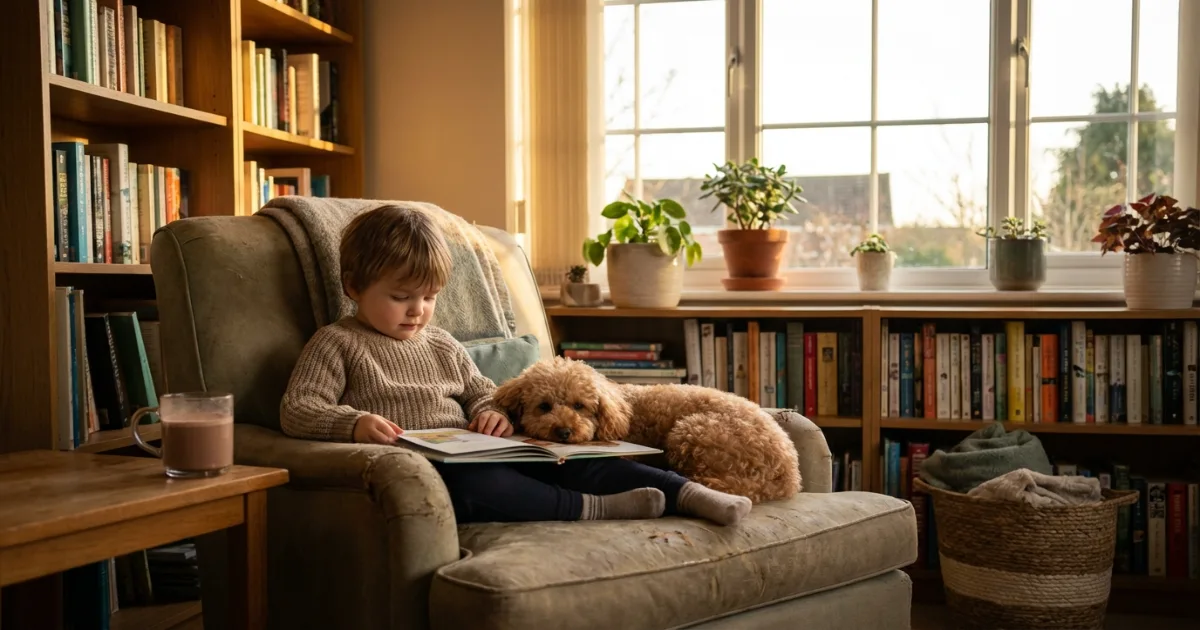
Let’s be honest about something that some breed guides gloss over: poodles are active, high-energy dogs. They are not couch potatoes, and families who bring one home expecting a low-key, easygoing companion without significant daily exercise may find themselves surprised.
That energy, however, is one of the very qualities that makes poodles such great family dogs. They’re always up for a game of fetch in the backyard, a trip to the park, a run alongside a bike, or a family hike. For active families, this is a huge plus. The dog becomes a willing participant in family activities rather than a reluctant tag-along.
Daily Exercise Requirements by Size
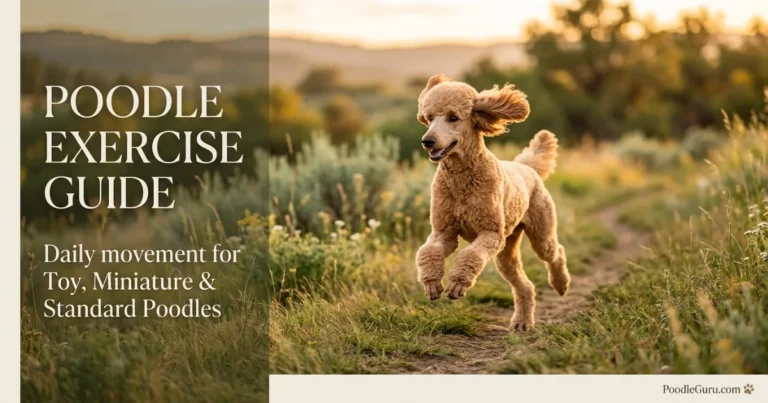
- Standard poodle: Needs 60–90 minutes of vigorous physical activity per day. Off-leash time in a secure area, fetch, swimming, or dog sports like agility are ideal outlets.
- Miniature poodle: Requires 45–60 minutes of moderate to vigorous exercise daily. A combination of walks and active play sessions works well.
- Toy poodle: 30–45 minutes of moderate exercise per day is usually sufficient, though they’re often more energetic than their size suggests.
Beyond physical exercise, poodles have exceptional mental stimulation needs. They were bred to work alongside humans, solve problems, and think. A poodle that gets plenty of physical exercise but no mental challenge will find its own ways to stay occupied — which usually means chewing, digging, or persistent attention-seeking behaviors.
Puzzle feeders, training sessions, hide-and-seek games, and interactive toys are all effective ways to keep a poodle’s mind engaged. Even a 10-minute training session teaching a new trick does wonders for a poodle’s mood and behavior for the rest of the day.
Training Poodles: Easier Than Almost Any Other Breed
Ask any experienced dog trainer which breeds they love working with, and poodles will almost invariably come up. Poodles are ranked second in intelligence among all dog breeds by canine psychologist Stanley Coren — behind only the Border Collie — and that intelligence translates directly into trainability that most dog owners simply don’t encounter with other breeds.
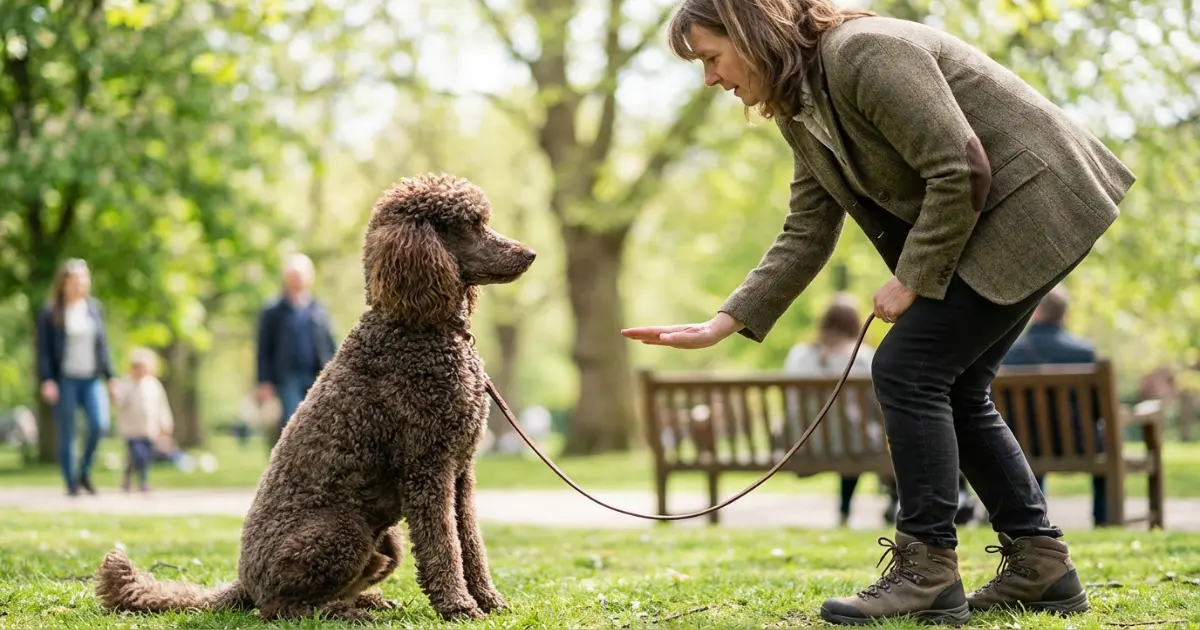
Most poodles understand a new command in fewer than five repetitions. They retain what they’ve learned with minimal reinforcement, they generalize commands across different environments well, and they are extraordinarily motivated by positive reinforcement — praise, treats, play, and affection all work brilliantly.
What Makes Poodle Training So Effective
- They pay close attention. Poodles are always watching and reading their owner. They pick up on body language, tone of voice, and even facial expressions, which makes communication during training sessions unusually rich and effective.
- They want to please. Unlike more independent breeds, poodles are inherently motivated by their owner’s approval. A simple enthusiastic “good dog!” carries genuine weight.
- They’re food motivated. Most poodles are reliable treat-takers, which makes reward-based training straightforward from day one.
- They transfer skills. A poodle trained in basic obedience tends to apply that framework broadly, making advanced training, tricks, and commands feel natural rather than laborious.
For families, this trainability is enormously practical. A poodle can be reliably taught to be gentle around babies, to sit calmly when guests arrive, to stay off furniture, and to stop jumping up — all within a few weeks of consistent training. These are behaviors that make daily family life dramatically easier.
Best Poodle Size for Families: Toy vs Miniature vs Standard
Choosing the right poodle size for your family is one of the most consequential decisions in the process. All three sizes share the same wonderful core temperament, but their size-related differences have real, practical implications for how they live with a family day to day.
🐾 Toy Poodle
- Under 10 inches, 4–6 lbs
- Devoted, spirited companion
- Best for calmer households
- Fragile around young children
- Ideal for adults, seniors, or families with kids 10+
→ Read: Male Toy Poodle Guide
🐾 Miniature Poodle
- 10–15 inches, 10–15 lbs
- Versatile, playful, adaptable
- Suits most home sizes
- Great with kids 5 and older
- Often recommended for first-time owners
→ Read: Miniature Poodle Guide
🐾 Standard Poodle
- 18–24 inches, 40–70 lbs
- Gentle giant energy
- Robust enough for young kids
- Needs space and daily exercise
- Excellent with active families
| Factor | Toy Poodle | Miniature Poodle | Standard Poodle |
|---|---|---|---|
| Good with toddlers | ⚠ With caution | ✓ Generally yes | ✓ Excellent |
| Good with school-age kids | ✓ Yes | ✓ Excellent | ✓ Excellent |
| Good with other dogs | ✓ Yes | ✓ Yes | ✓ Yes |
| Apartment friendly | ✓ Excellent | ✓ Good | ⚠ Possible, if exercised |
| First-time owner friendly | ✓ Yes | ✓ Excellent | ✓ Yes |
| Suitable for allergy families | ✓ Yes | ✓ Yes | ✓ Yes |
| Daily grooming commitment | Moderate | Moderate | High |
Poodles as Family Dogs: Honest Pros and Cons
No breed is perfect for every family, and the most helpful thing we can do is give you an honest assessment of both sides.
✅ Pros
- Highly intelligent and easy to train
- Affectionate, deeply bonded to family
- Low-shedding — great for allergy families
- Adaptable to most home sizes
- Gentle and patient with children
- Non-aggressive temperament
- Long-lived (12–18 years depending on size)
- Excellent in multi-pet households
- Available in three sizes to suit any lifestyle
❌ Cons
- Require significant daily exercise and mental stimulation
- Regular professional grooming is non-negotiable
- Prone to separation anxiety if left alone often
- Can develop “small dog syndrome” if undertrained (toys especially)
- High intelligence means they test boundaries
- Standard poodles can be costly to feed and groom
- Toy poodles are fragile around very young children

Poodles in Multi-Pet Households
Many families already have pets at home when they start considering a poodle, and the great news is that poodles are among the most compatible breeds for multi-pet households. They are generally non-territorial, non-dominant, and socially curious — qualities that make introductions to other dogs, cats, and even smaller pets far less fraught than with many other breeds.
That said, early socialization remains the most important factor. A poodle raised alongside cats from puppyhood will generally view them as companions rather than prey. A poodle introduced to an established cat at two years of age will require a more careful, gradual introduction process — but with patience, the majority of poodles adjust well.
With other dogs, poodles tend to be playful rather than dominant. They enjoy canine company and often thrive with a second dog for companionship, particularly in households where family members are away for parts of the day. Puppy classes and regular visits to dog-friendly parks from an early age go a long way toward ensuring positive social development.
Frequently Asked Questions
Final Verdict: Are Poodles Good Family Dogs?
Without hesitation, yes — poodles are outstanding family dogs for the right household. They bring together a rare combination of traits that most families genuinely want: exceptional intelligence that makes training a pleasure, a gentle and patient temperament that works beautifully with children, a low-shedding coat that helps allergy-sensitive families breathe easier, and a loyal, affectionate nature that creates bonds lasting the full length of their long, healthy lives.
The key to success is matching the right size to your lifestyle, committing to consistent training from day one, and providing the daily exercise and mental stimulation that keeps a poodle’s brilliant mind satisfied. Do those things, and you’ll have a family dog that will surprise you regularly — with its cleverness, its warmth, and its seemingly endless enthusiasm for being part of the family’s daily life.
Whether you’re drawn to the compact devotion of a toy poodle, the versatile charm of a miniature poodle, or the athletic elegance of a standard, you’ll be welcoming one of the finest family companions the dog world has to offer.
Explore More Poodle Breed Guides
Ready to take the next step? Dive deeper into the poodle varieties that interest you most.