Last Updated: March 2025 | Written by the PoodleGuru Editorial Team
Poodle Size Chart: Toy vs Miniature vs Standard
If you’re thinking about welcoming a poodle into your home, one of the first — and most important — decisions you’ll face is choosing the right size. Poodles come in three officially recognized varieties: Toy, Miniature, and Standard. Each one brings the same brilliant mind, low-shedding coat, and warm personality to the table, but their size differences have real consequences for where they can live, how much exercise they need, and how they fit into your daily routine.
That’s where a thorough poodle size chart becomes invaluable. Whether you’re comparing toy poodle size vs miniature poodle size, trying to picture a full-grown standard poodle in your living room, or just wondering “how big do toy poodles get?” — this guide covers every measurement, growth stage, and lifestyle factor you need to make a confident choice.
Let’s dig in.
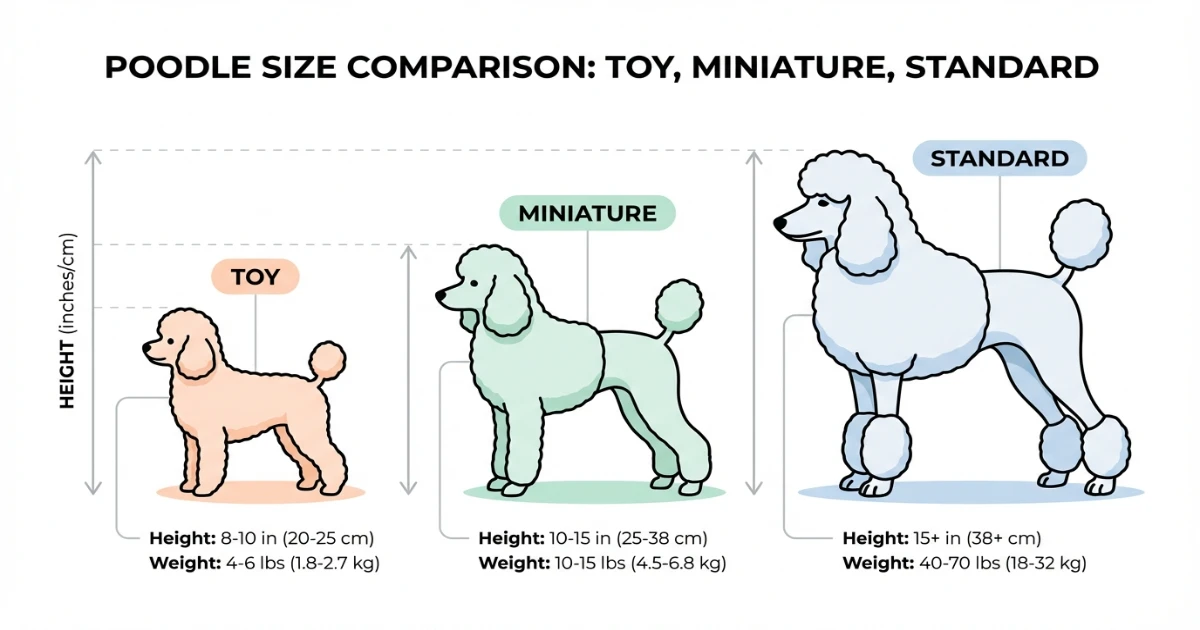
Toy · Miniature · Standard Poodle Size Comparison Infographic
Alt text: toy miniature standard poodle size comparison chart
Poodle Breed Size Overview
Before we break down each variety in detail, here’s a quick snapshot of the three official poodle sizes side by side. These figures reflect AKC breed standards and typical adult ranges reported by reputable breeders.
| Variety | Height at Shoulder | Adult Weight | Fully Grown By |
|---|---|---|---|
| Toy Poodle | Up to 10 inches | 4 – 6 lbs | 6 – 8 months |
| Miniature Poodle | 10 – 15 inches | 10 – 15 lbs | 7 – 12 months |
| Standard Poodle | Over 15 inches (typically 18 – 24 in) | 40 – 70 lbs | 18 – 24 months |
🐾 Toy Poodle
- Smallest of the three
- Ideal for apartments
- Excellent lap dog
- Fragile around young children
🐾 Miniature Poodle
- Middle-ground size
- Great all-rounder
- Suits most home types
- Sturdy yet manageable
🐾 Standard Poodle
- Largest variety
- Athletic working dog
- Great with active families
- Needs space to move
Toy Poodle Size
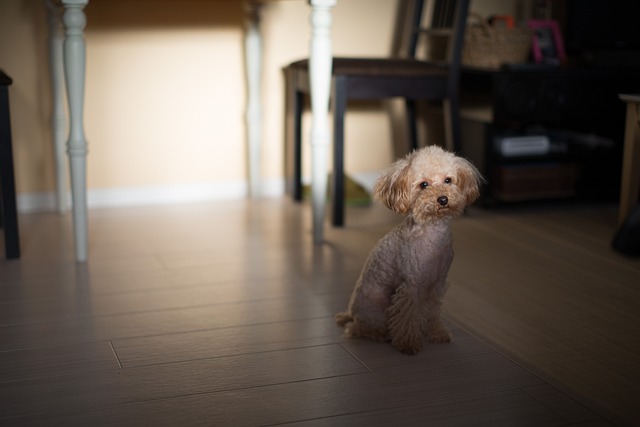
Don’t let the name fool you — the toy poodle is every bit as intelligent and lively as its larger cousins. It simply comes in a much more compact package. According to the American Kennel Club breed standard, a toy poodle must stand 10 inches or under at the highest point of the shoulder. Most breeders see their toy poodle adults settle between 8 and 10 inches.
Toy Poodle Height and Weight
A fully grown toy poodle typically weighs between 4 and 6 pounds, though it isn’t unusual for a healthy individual to tip the scale at 7 or 8 pounds, depending on bone structure and genetics. Males and females are close in size, though males sometimes run slightly larger.
Toy Poodle Growth Stages
Toy poodles grow rapidly in their first few months and reach most of their adult height by around 6 months of age. Full physical maturity — including muscle development and final weight — is usually complete by 8 to 10 months. Because they’re so small, they don’t go through the long adolescent “gangly” phase that larger breeds experience.
Nutritionally, toy puppies need a high-quality small-breed puppy formula until they reach adulthood. Overfeeding a toy poodle is easy to do and can put unnecessary strain on tiny joints, so weigh portions carefully rather than free-feeding.
Want a deeper dive into the male-specific development patterns? Our guide to the male toy poodle covers temperament, size nuances, and care in detail.
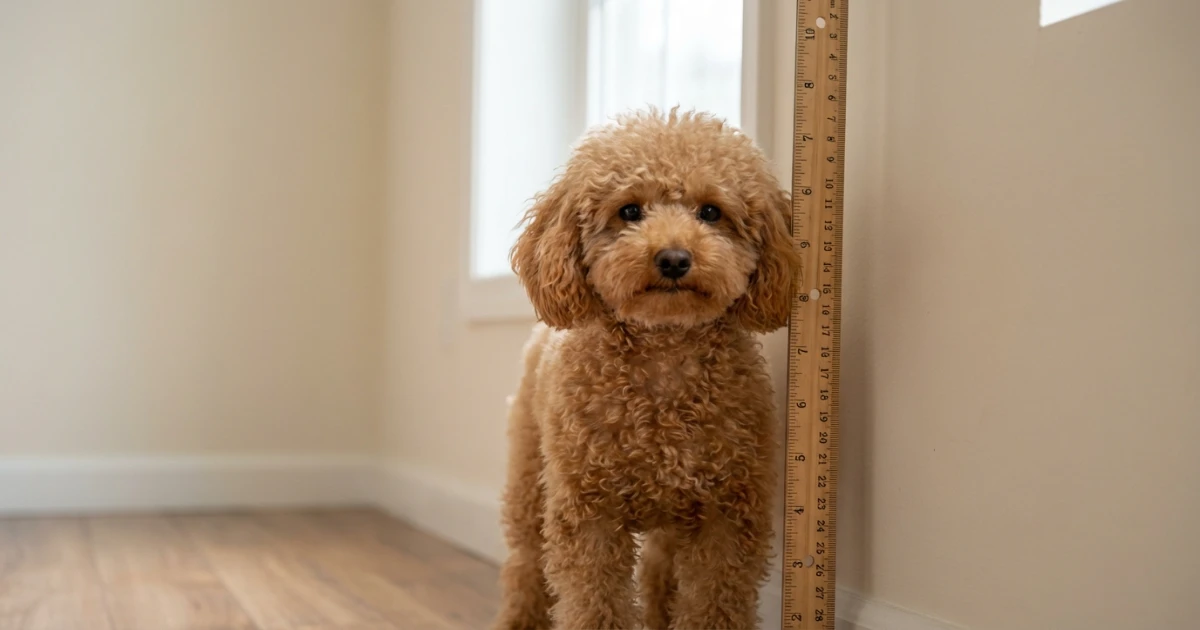
Toy Poodle Standing Next to Ruler — Height Reference Infographic
Alt text: toy poodle size height measurement infographic
Miniature Poodle Size
The miniature poodle occupies what many owners consider the “sweet spot” of the poodle world. It’s small enough to be portable and apartment-friendly, yet sturdy enough to roughhouse with older children and keep up with active adults. The AKC defines the miniature as any poodle measuring over 10 inches but no more than 15 inches at the shoulder.
Miniature Poodle Height and Weight
Most miniature poodles land between 11 and 14 inches tall, with adult weights ranging from 10 to 15 pounds. Again, males tend to run slightly heavier than females, but the difference is rarely more than 2–3 pounds.
Miniature Poodle Growth Rate
Miniature poodles grow faster in the first four months than toy poodles — they simply have more growing to do. Height typically plateaus between 9 and 11 months, while muscle and chest width continue developing through the first birthday. By 12 months, most miniature poodles are at or very close to their adult dimensions.
Their moderate size means miniature poodles transition from puppy food to adult food a little later than toys — most breeders recommend switching around 10–12 months rather than at 8 months. A small-breed adult formula works well for most miniatures.
For a comprehensive look at everything miniature poodles bring to the table — from temperament to coat care — explore our full miniature poodle breed guide.
Standard Poodle Size
The standard poodle is the original — the variety from which toy and miniature types were selectively bred. These are large, athletic dogs with a working heritage rooted in waterfowl retrieval in Germany and France. The AKC requires a standard poodle to stand over 15 inches at the shoulder, though most adults measure considerably more.
Standard Poodle Height and Weight
In practice, most adult standard poodles stand between 18 and 24 inches at the shoulder. Males are typically taller and heavier, ranging from 60 to 70 pounds, while females generally fall between 40 and 55 pounds. Show-line dogs sometimes run larger than companion-line dogs, and European-imported lines can be particularly tall and leggy.
Working Dog Traits and Physical Build
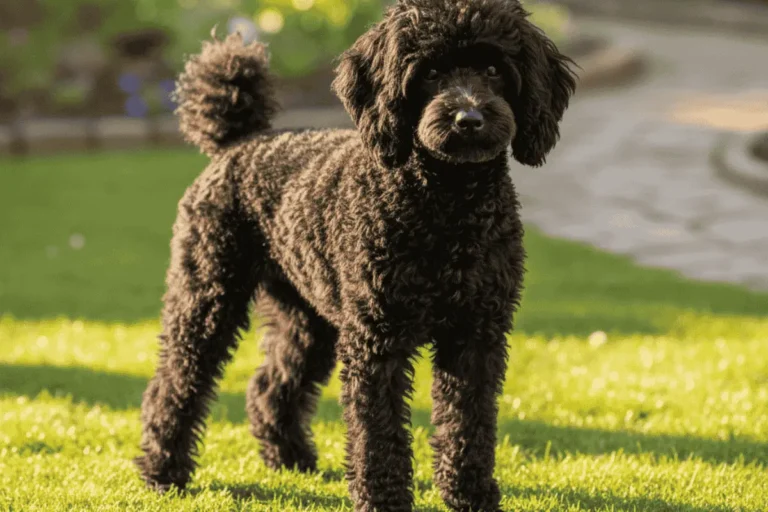
Standard poodles are built for endurance and agility. They have a deep chest, long neck, and well-muscled hindquarters that allow for powerful, effortless movement. Despite their elegant appearance, these are not fragile dogs — they were historically used to retrieve game from cold water, and their physical design reflects that.
Standard poodles are also commonly used today as service dogs, therapy dogs, and canine athletes in sports like agility, rally obedience, and dock diving. Their size and strength make them well-suited for tasks that require physical capability alongside intelligence.
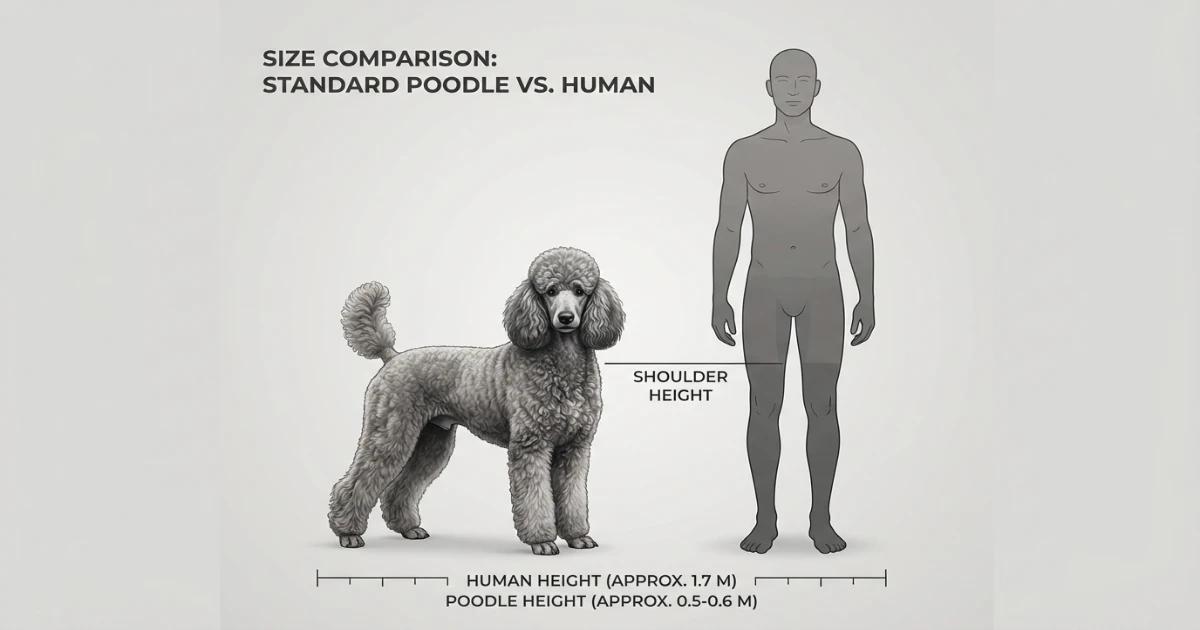
Standard Poodle Size Comparison Diagram (vs Human Silhouette)
Alt text: standard poodle size comparison diagram
Poodle Growth Chart by Age
One of the most common questions from new poodle owners is: “Is my puppy growing at the right pace?” While every dog is an individual, the table below gives you a reliable poodle growth chart by age so you can track your puppy’s development against typical benchmarks.
These are average weight estimates. Your puppy may be slightly above or below these figures and still be perfectly healthy. If you have concerns, always check with your veterinarian.
| Age | Toy Poodle (lbs) | Miniature Poodle (lbs) | Standard Poodle (lbs) |
|---|---|---|---|
| 8 weeks | 0.5 – 1.5 | 2 – 4 | 8 – 16 |
| 3 months | 1.5 – 2.5 | 4 – 7 | 20 – 30 |
| 4 months | 2 – 3.5 | 5 – 9 | 28 – 40 |
| 6 months | 3 – 5 | 7 – 12 | 35 – 52 |
| 9 months | 3.5 – 5.5 | 9 – 14 | 42 – 62 |
| 12 months | 4 – 6 | 10 – 15 | 45 – 65 |
| 18 months | 4 – 6 | 10 – 15 | 50 – 70 |
| Adult | 4 – 6 | 10 – 15 | 40 – 70 |
Key Growth Milestones to Know
- 8–12 weeks: All poodle puppies grow rapidly. This is the critical socialization window — expose your puppy to a wide range of people, sounds, and environments.
- 3–6 months: The fastest vertical growth phase for toys and miniatures. Standard poodles are still putting on significant weight and height.
- 6–12 months: Toy and miniature poodles approach adult height. Adolescent behavior (stubbornness, hyperactivity) often peaks here.
- 12–24 months: Standard poodles continue filling out in chest width and muscle mass even after their height has plateaued. They may still behave puppyish well into their second year.
Which Poodle Size Is Best For You?
There’s no universally “best” poodle size — there’s only the best fit for your specific lifestyle. Here’s how to think through the decision honestly.
Choose a Toy Poodle If…
- You live in an apartment or small home with limited outdoor space.
- You travel frequently and want a dog that fits in a cabin-approved carrier.
- You’re looking for a devoted companion that thrives on being close to you.
- You’re comfortable with a more delicate dog that requires careful handling.
- Your household doesn’t include young children who may accidentally injure a tiny dog.
Choose a Miniature Poodle If…
- You want the classic poodle personality without a very large or very small dog.
- You have a modest home or yard — miniatures adapt well to both environments.
- You have older children or other medium-sized dogs in the home.
- You want a dog that can join you on hikes or jogs without getting worn out too quickly.
- You’re a first-time dog owner — miniatures are often considered the most forgiving of the three sizes to train and manage.
Choose a Standard Poodle If…
- You live in a house with a yard and an active lifestyle.
- You want a larger, more physically imposing family dog.
- You’re interested in dog sports, service work, or advanced training.
- You have a confident, experienced hand with large dogs.
- You’re prepared for higher food and grooming costs associated with a bigger dog.
Still unsure? Use the step-by-step framework below to narrow it down based on your actual situation.
Assess Your Living Space
Measure your home’s square footage and note your outdoor access. Toy poodles thrive in studios and apartments; standard poodles are happiest in homes with a yard or near parks for daily off-leash time.
Evaluate Your Activity Level
Standard poodles need 1–2 hours of vigorous exercise daily. Toy and miniature poodles are satisfied with 30–45 minutes of moderate walking and play. Be honest about your lifestyle — a bored standard poodle will find its own entertainment.
Consider Children and Other Pets
Standard poodles are robust enough to play confidently with children. Toy poodles are more vulnerable to accidental injury and do better in calmer, adult-led households. Miniatures typically fall comfortably in between.
Budget for Ongoing Costs
Larger poodles cost more to feed, groom, and medicate. A standard poodle’s full groom can run $80–$150 per session; a toy poodle’s groom might cost $40–$65. Factor this into your monthly budget before committing.
Research Size-Specific Health Risks
Toy poodles are prone to dental crowding, hypoglycemia, and luxating patellas. Standard poodles carry a higher risk of bloat (GDV) and hip dysplasia. Speak with a vet familiar with the breed before finalizing your choice.
Frequently Asked Questions
Ready to Learn More About Poodles?
Explore our in-depth breed guides and find the perfect poodle for your family.
Read the Miniature Poodle Guide →Final Thoughts
Choosing between a toy, miniature, or standard poodle ultimately comes down to matching the dog’s physical needs and characteristics with your own lifestyle — not just which one is cutest in a photo. Use the poodle size chart and growth tables in this guide as your starting point, speak with reputable breeders, and if possible spend time with dogs of each size variety before making your decision.
No matter which size you choose, you’ll be getting one of the most intelligent, adaptable, and affectionate breeds in the world. Poodles are a joy to train, a pleasure to live with, and loyal companions for life. Good luck on your poodle journey!