The Complete Poodle Breed Guide (Toy, Miniature & Standard)
Everything you need to know — from lifespan and grooming to temperament and health — in one authoritative guide.
If you’ve been researching the poodle dog breed, you’ve already discovered something that dog lovers around the world have known for centuries: poodles are extraordinary. Consistently ranked among the most popular dogs in the United States and across Europe, the poodle is far more than just a fancy haircut on four legs. They are loyal, brilliant, athletic, and genuinely fun to live with — which is exactly why families, singles, retirees, and first-time dog owners keep choosing them year after year.
But here’s what surprises most people: there isn’t just one poodle. There are three officially recognised sizes — the Toy Poodle, the Miniature Poodle, and the Standard Poodle — and each one has its own personality quirks, exercise demands, and living requirements. Choosing the right size for your home and lifestyle is one of the most important decisions a future poodle owner can make.
This complete poodle care guide covers every dimension of the breed: history, size differences, temperament, grooming needs, health concerns, training, exercise, and more. By the time you finish reading, you’ll know exactly what life with a poodle really looks like — and whether this iconic companion dog is the perfect match for you.

Poodle Breed Overview
Before we dive deep, here’s a quick-reference snapshot of the poodle’s most important characteristics. Keep this table bookmarked — it answers most of the basic questions new owners ask.
| Characteristic | Detail |
|---|---|
| Origin | Germany / France |
| Breed Group | Non-Sporting (AKC) / Gun Dog (UKC) |
| Lifespan | Toy: 14–18 yrs · Mini: 13–15 yrs · Standard: 10–13 yrs |
| Temperament | Intelligent, playful, loyal, alert, eager-to-please |
| Intelligence Ranking | #2 on Stanley Coren’s list of most intelligent dog breeds |
| Coat Type | Dense, curly, single-layer coat |
| Shedding | Minimal to none |
| Hypoallergenic | Yes (low-allergen; see caveats below) |
| Exercise Needs | Moderate–High (size-dependent) |
| Good with Children | Yes — excellent family dog |
| Good with Other Pets | Yes, especially when socialised early |
| Trainability | Exceptionally high |
History of the Poodle Breed
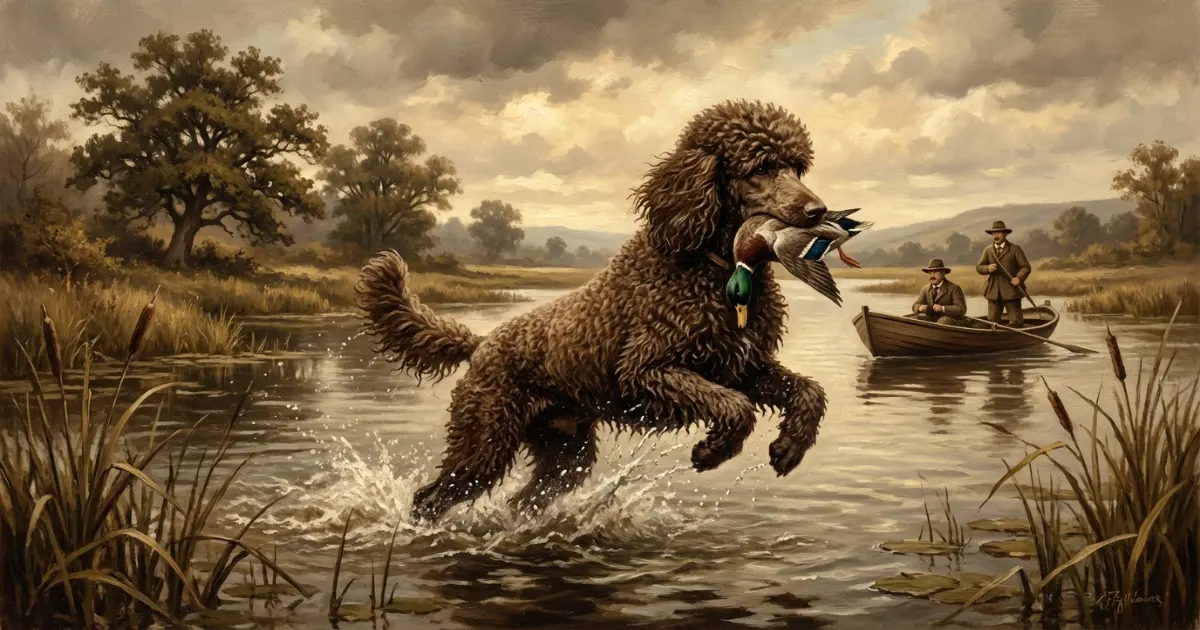
The poodle’s history is far more rugged than its polished show-ring image suggests. Despite France claiming the poodle as its national dog, most canine historians trace the breed’s roots firmly to Germany, where it was known as the Pudelhund — literally “puddle dog” — a reference to its original job as a water-retrieving working dog.
For centuries, hunters used Standard Poodles to retrieve shot waterfowl from lakes and marshes. The breed’s distinctive curly coat was a functional adaptation: dense enough to insulate against frigid water, yet porous enough to allow free movement. Those ornate “pompons” you see on show dogs? They started as practical patches of fur left to protect joints and vital organs in cold water, with excess hair shaved away to reduce drag.
By the 16th and 17th centuries, poodles had transitioned from the marshlands into the royal courts of France, Spain, and England. Their theatrical intelligence made them natural performers, and circus troupes across Europe trained poodles to walk tightropes, perform arithmetic, and execute elaborate tricks that left audiences astonished. The breed’s ability to learn complex tasks quickly — something modern owners still marvel at — has deep historical roots.
The Toy and Miniature varieties were selectively bred down in size to serve as elegant companion dogs for European nobility. By the late 19th century, all three sizes were well established, and the American Kennel Club recognised the Standard Poodle in 1887, with the Miniature and Toy following thereafter.
Types of Poodles Explained: Toy vs. Miniature vs. Standard
Choosing between a toy poodle, miniature poodle, and standard poodle is one of the biggest decisions you’ll make — and it goes well beyond height and weight. Each size has a distinct personality profile and set of lifestyle requirements. Here’s what you need to know.
Toy Poodle
- Height: Up to 10 inches
- Weight: 4–6 lbs
- Best for: Apartments, seniors, small homes
- Energy: Moderate — big personality, small body
- Lifespan: 14–18 years
Miniature Poodle
- Height: 10–15 inches
- Weight: 10–15 lbs
- Best for: Families, varied living spaces
- Energy: Moderate-High — playful and adaptable
- Lifespan: 13–15 years
Standard Poodle
- Height: Over 15 inches (typically 18–24″)
- Weight: 40–70 lbs
- Best for: Active families, homes with yards
- Energy: High — needs vigorous daily exercise
- Lifespan: 10–13 years
Toy Poodle
Don’t let the tiny frame fool you — the Toy Poodle is the same dog as its larger relatives, just compressed. They carry all the intelligence, sensitivity, and sass of the breed in a pocket-sized package. Toy Poodles form intense bonds with their primary person and can be prone to velcro dog tendencies, following their owners from room to room. They thrive in apartments and smaller homes, but they still need daily mental stimulation and play. Their long lifespan (up to 18 years) means a Toy Poodle is a serious long-term commitment.
Miniature Poodle
The Miniature Poodle is the middle ground in almost every way — mid-sized, mid-energy, and wonderfully adaptable. Many experienced poodle owners call the Mini the “best of both worlds.” They’re sturdy enough for more boisterous play with children, yet compact enough for apartment or condo living. Miniatures tend to be slightly more social and less anxious than Toys, making them a top recommendation for first-time dog owners looking for a poodle.
Standard Poodle
The Standard Poodle is the original, the working dog, and in many ways the most athletic of the three. Standards are calm and dignified indoors but come alive outdoors — they love swimming, running, agility courses, and long hikes. They are exceptional family dogs, gentle with children, and often described as having an almost human emotional intelligence. They require more space, more exercise, and more food than their smaller relatives, but owners consistently describe them as one of the most rewarding dogs they’ve ever owned.
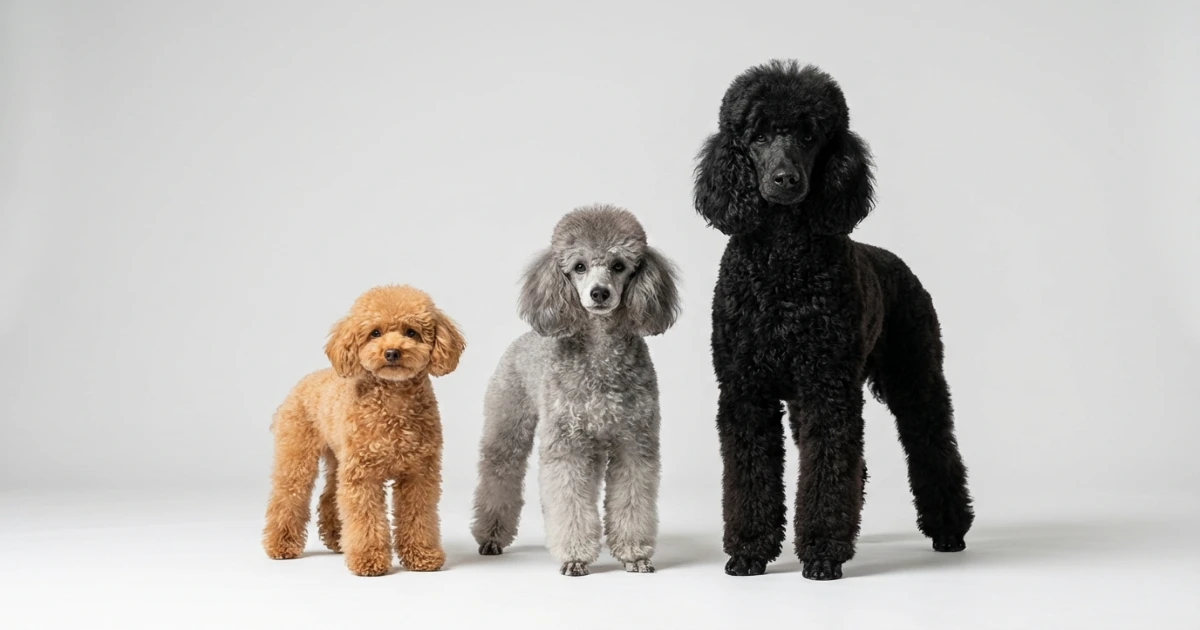
| Size | Height | Weight | Lifespan | Best For |
|---|---|---|---|---|
| Toy | Up to 10″ | 4–6 lbs | 14–18 yrs | Apartments, singles, seniors |
| Miniature | 10–15″ | 10–15 lbs | 13–15 yrs | Families, varied homes |
| Standard | 15–24″ | 40–70 lbs | 10–13 yrs | Active families, larger homes |
Poodle Temperament and Personality
If there’s one thing every poodle owner agrees on, it’s this: living with a poodle is unlike living with any other dog. Their poodle temperament is a fascinating blend of athletic drive, emotional sensitivity, comedic playfulness, and astonishing intellectual depth.
How smart are poodles? According to canine psychologist Dr. Stanley Coren’s landmark study on poodle intelligence, the poodle ranks #2 among all dog breeds — second only to the Border Collie. Poodles can learn a new command in fewer than five repetitions and obey it on the first request over 95% of the time. That kind of brain power means they’re a dream to train, but it also means a bored poodle will find their own entertainment — which is rarely what you had in mind.
Are poodles good family dogs? Absolutely. Poodles are celebrated for their warmth and gentleness with children. Standard Poodles in particular are patient and sturdy enough to handle the energy of toddlers and school-age kids. Toy Poodles, due to their small size, are better suited to families with older, calmer children. All three sizes tend to get along well with other dogs and cats when properly socialised from puppyhood.
Energy level: This is an active dog breed — all three sizes. Poodles were bred to work, and they retain that drive. They need both physical exercise and meaningful mental stimulation every single day. A poodle that doesn’t get enough of either will become anxious, vocal, or destructive. Give them what they need, however, and they are calm, joyful, and deeply bonded housemates.
💡 Personality Tip: Poodles are highly empathetic and will mirror their owner’s emotional state. A calm, confident owner raises a calm, confident poodle. Nervous energy in the household often translates to nervous behaviour in the dog.
Are Poodles Hypoallergenic?
This is one of the most frequently asked questions about the poodle dog breed — and the answer is mostly yes, with an important clarification. No dog is 100% hypoallergenic. All dogs produce the protein allergen Can f 1 in their saliva, skin cells (dander), and urine. What makes poodles significantly more allergy-friendly than most breeds is their unique curly coat.
Unlike double-coated breeds that blow their undercoat twice a year and leave fur on every surface in your home, poodles have a single-layer, tightly curled coat that traps shed hair and dander close to the skin rather than releasing it into the air. This means far less airborne allergen circulating in your living space. Do poodles shed? They do — but minimally, and the hair stays in the coat rather than scattering across your sofa.
For allergy sufferers, poodles are consistently recommended by allergists as a lower-risk breed. That said, if you have severe dog allergies, spend time with a poodle before bringing one home — individual reactions vary. You can learn more in our dedicated article: Do Poodles Shed? — The Complete Guide.
🐾 Allergy Tip: Regular dog coat maintenance — bathing and brushing your poodle every 3–4 weeks — dramatically reduces the amount of dander in your home and is one of the best things allergy-prone owners can do.
Poodle Grooming Needs
Let’s be completely honest here: poodle grooming requirements are substantial. This is not a wash-and-walk breed. The same luxurious curly coat that makes poodles low-shedding also grows continuously — just like human hair — and requires consistent, dedicated maintenance. This is one of the most important things to understand before adopting a poodle.
Brushing: Poodles should be brushed at minimum three to four times per week, and daily brushing is ideal for longer coat styles. Without regular brushing, the curly coat mats rapidly — and mats can be painful, cause skin irritation, and sometimes require the coat to be shaved completely off. A quality slicker brush and a steel-toothed comb are essential tools. Browse our guide to the best grooming tools for poodles and our comprehensive list of poodle grooming tools for product recommendations.
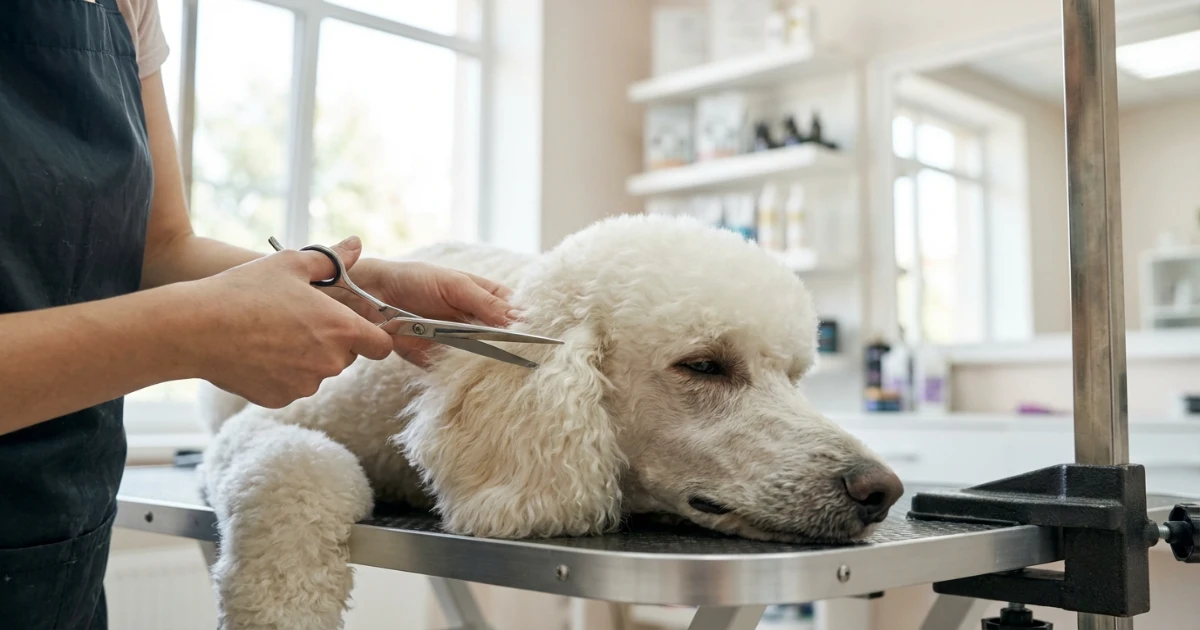
Professional grooming: Most poodle owners schedule a professional groom every six to eight weeks. A professional groomer will handle clipping, scissoring, ear cleaning, nail trimming, and anal gland expression. Budget approximately $60–$120 per session depending on your location and the size of your dog — this is a recurring cost that every prospective poodle owner should factor into their budget.
Popular poodle haircut styles include the Puppy Clip (rounded and fluffy), the Continental Clip (the classic show look), the Teddy Bear Clip (soft, rounded face), and the Sporting Clip (practical and low-maintenance). The style you choose will affect how often brushing is needed at home.
Bathing: Bathe your poodle every three to four weeks using a dog-safe, moisturising shampoo. Always blow-dry and brush the coat after bathing — allowing it to air dry can encourage the formation of tight, hard-to-remove mats.
Ears: Poodles have floppy ears and hair that grows inside the ear canal — a combination that traps moisture and warmth, creating a prime environment for ear infections. Check and gently clean ears weekly. Your veterinarian or groomer can show you the proper technique for removing excess ear hair.
Poodle Health and Lifespan
Poodles are generally a healthy, long-lived breed — particularly the Toy and Miniature sizes, which routinely reach their mid-teens. However, like every purebred dog, poodles carry certain genetic predispositions that responsible owners and breeders should be aware of. Understanding these poodle health issues early allows you to take proactive steps and catch problems before they become serious.
| Health Concern | Which Sizes Affected | Key Prevention / Management |
|---|---|---|
| Hip Dysplasia | Standard (primarily) | OFA screening, healthy weight, joint supplements |
| Progressive Retinal Atrophy (PRA) | All sizes | CAER eye testing of breeding dogs |
| Sebaceous Adenitis | Standard (primarily) | Regular skin checks, specialised shampoos — see our poodle skin problems guide |
| Cataracts & Eye Issues | All sizes | Annual eye exams — learn more in our poodle eyes guide |
| Ear Infections (Otitis) | All sizes | Weekly ear checks, keep ears dry, trim canal hair |
| Addison’s Disease | Standard (higher risk) | Know the symptoms; annual bloodwork recommended |
| Bloat (GDV) | Standard (large, deep-chested) | Slow feeding, avoid exercise after meals, discuss prophylactic gastropexy |
| Patellar Luxation | Toy & Miniature | Maintain healthy weight, OFA screening |
How long do poodles live? Toy Poodles: 14–18 years. Miniature Poodles: 13–15 years. Standard Poodles: 10–13 years. These are impressive numbers. The key to maximising your poodle’s lifespan comes down to three pillars: quality nutrition, regular veterinary care (including annual wellness exams and recommended screenings), and keeping your dog at a healthy weight throughout their life.
If you’re buying from a breeder, always ask for health clearances on both parents. Reputable breeders will test for hip dysplasia (OFA), eye conditions (CAER), and breed-specific genetic diseases before breeding. This single step dramatically reduces the risk of hereditary conditions in your puppy.
Poodle Training and Intelligence
If you want a dog that will make you look like a genius trainer, get a poodle. Their legendary poodle intelligence and natural eagerness to please make them arguably the most trainable dogs on earth. Are poodles easy to train? Extraordinarily so — with the right approach.
Poodles thrive on positive reinforcement. They respond to praise, treats, and play with enthusiasm, and they retain learned behaviours reliably. Basic obedience — sit, stay, come, down, leave it — can typically be mastered within the first few weeks of consistent training. More complex behaviours like off-leash recall, tricks, and advanced obedience come naturally to most poodles with regular practice.
The most important thing to understand is the mental stimulation component. Poodles are problem-solvers by nature. A poodle that spends eight hours alone with nothing to do will develop anxiety, bark excessively, or redecorate your furniture. Puzzle feeders, hide-and-seek games, sniff walks, and trick training sessions are all excellent tools for keeping that magnificent brain engaged. Aim for at least 20–30 minutes of dedicated mental enrichment daily — in addition to physical exercise.
Dog obedience classes are highly recommended for first-time poodle owners, not because poodles are difficult, but because they advance so quickly through a structured class environment that it’s enormously satisfying. Many poodles go on to excel in agility, rally obedience, scent work, and even therapy dog work.
Start poodle puppy care and training early. Socialisation between 8 and 16 weeks is critically important. Expose your poodle puppy to as many different people, environments, sounds, and other animals as possible during this window. Well-socialised poodles become confident, calm adults.
Exercise Needs of Poodles
All three poodle sizes are active dog breeds that require daily physical activity — but the amount and intensity differs meaningfully by size.
| Size | Daily Exercise Minimum | Ideal Activities |
|---|---|---|
| Toy | 30–45 minutes | Indoor play, short walks, trick training, puzzle toys |
| Miniature | 45–60 minutes | Walks, fetch, agility, swimming |
| Standard | 60–90+ minutes | Running, hiking, swimming, agility, field work |
Don’t underestimate how much poodles love water. Standard Poodles in particular are natural swimmers — their webbed feet, water-resistant coat, and athletic build make them exceptional in water. If you have access to a safe swimming area, your Standard Poodle will likely consider it the highlight of their week.
Mental stimulation counts toward dog exercise needs in an important way: a 20-minute training session or puzzle-feeding session can tire a poodle out as effectively as a 30-minute walk. On days when outdoor exercise is limited by weather, lean into brain games to keep your dog balanced and content.
Is a Poodle the Right Dog for You?
Poodles are remarkable dogs — but they’re not the right dog for everyone. Here’s an honest assessment to help you decide.
Poodles are ideal for: Allergy sufferers who want a dog with minimal shedding. Families with children of all ages (size permitting). First-time dog owners who want an intelligent, trainable companion. Active individuals or families who can provide daily exercise and enrichment. People who enjoy the grooming ritual or are willing to budget for regular professional grooming. Those looking for a long-lived, deeply loyal companion dog.
Poodles may not be the right fit for: People who travel frequently and can’t bring their dog or arrange consistent care — poodles can develop separation anxiety. Households that want a truly low-maintenance dog. Owners who aren’t prepared to commit to regular grooming. Families where very young children may inadvertently injure a Toy Poodle due to its small size.
Apartment living: Toy and Miniature Poodles adapt exceptionally well to apartment life, provided their dog exercise needs are met through daily walks and indoor play. Standard Poodles can live in apartments with highly committed owners, but they genuinely thrive in homes with more space.
🐕 For beginners: The Miniature Poodle is widely considered the best poodle size for first-time dog owners. It offers the full poodle experience — intelligence, affection, trainability — in an adaptable, manageable size.
Conclusion: A Breed That Rewards Every Bit of Effort
The poodle dog breed stands apart for good reason. Whether you choose a compact Toy, a versatile Miniature, or a majestic Standard, you are welcoming one of the most intelligent, affectionate, and adaptable dogs ever bred into your life. They ask for consistency, mental engagement, regular grooming, and your time — and in return, they give you unflinching loyalty, endless entertainment, and a bond that many owners describe as unlike anything they’ve experienced with another animal.
Do your homework, choose a reputable breeder or rescue, commit to the grooming schedule, and give your poodle the exercise and training they need. Do those things, and a poodle will reward you for 10 to 18 extraordinary years.
People Also Ask: Poodle FAQs
Yes — poodles are outstanding family dogs and are consistently ranked among the best breeds for households with children. They are gentle, patient, and playful, and they form strong bonds with every member of the family rather than attaching exclusively to one person. Standard Poodles are particularly well-suited to families with young children because their larger size makes them less fragile. Toy Poodles are better matched with families whose children are old enough to understand how to handle a small dog carefully. All poodle sizes socialise well with other pets when introduced properly from a young age.
Poodles are naturally alert dogs and will bark to announce strangers, unusual sounds, or perceived threats. However, they are not excessive barkers. Most nuisance barking comes from boredom, under-stimulation, or separation anxiety. A well-exercised and mentally engaged poodle will usually bark only when necessary.
The Miniature Poodle is widely considered the best choice for first-time dog owners. It offers a balanced temperament, manageable size, and high adaptability, making it easier to handle than both Toy and Standard varieties.
Toy Poodles typically live 14–18 years, Miniature Poodles 13–15 years, and Standard Poodles 10–13 years. Proper diet, regular vet care, and maintaining a healthy weight are key to a long lifespan.
Poodles shed very minimally. Their curly coat traps loose hair instead of releasing it into the environment, making them a popular choice for allergy sufferers. Regular brushing is required to prevent matting.
Yes — poodles are extremely easy to train. They are one of the most intelligent dog breeds and respond quickly to positive reinforcement like treats and praise.