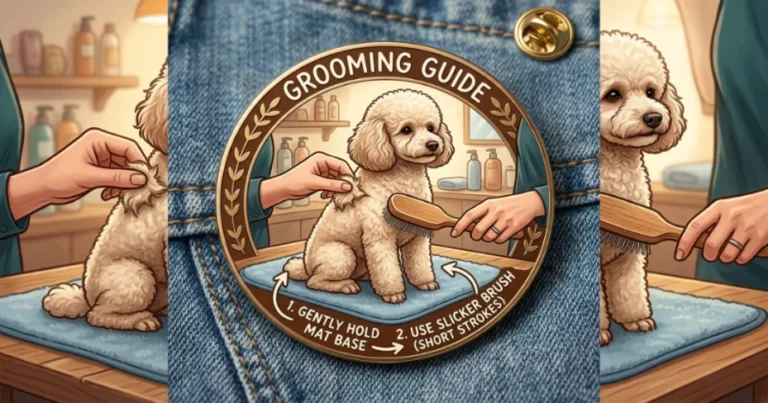
Poodle Sporting Clip Tutorial for Beginners (Step-by-Step 2026)
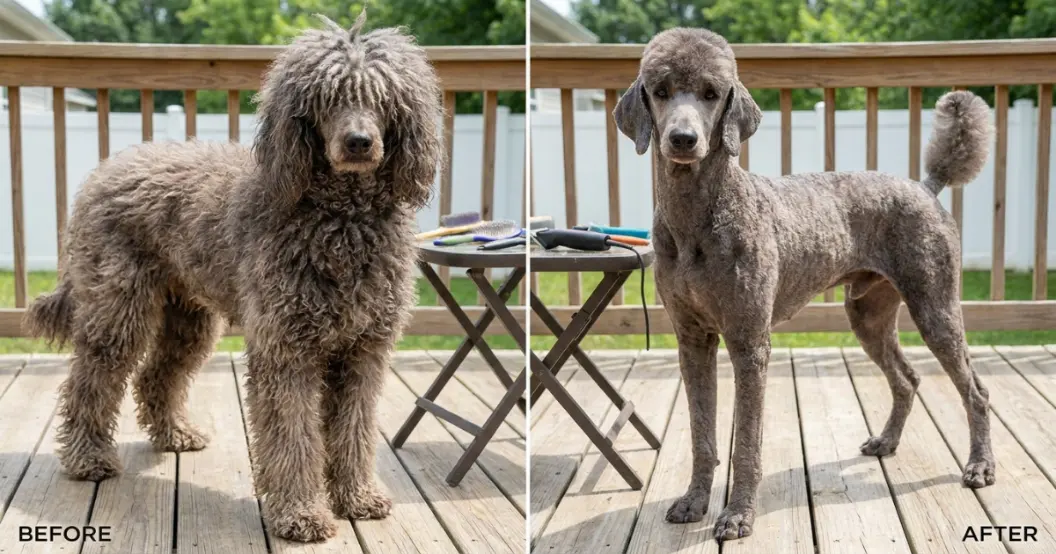
This poodle sporting clip tutorial for beginners walks you through a practical, historically inspired trim that’s low-maintenance, hygienic, and perfect for active dogs. The sporting clip shaves the face, feet, and tail base closely, while leaving the body and legs at a uniform medium length — about ½ to 1 inch — giving your poodle a clean, athletic silhouette without the high upkeep of a show cut. With the right clippers, blades, and a steady beginner-friendly approach, you can master this clip at home in under three hours.
There’s a particular elegance to a poodle walking through tall grass with a coat that whispers “purpose” rather than “pamper.” The sporting clip isn’t about fluff or fashion — it’s the working look that accompanied poodles through icy water and dense brush for generations. For today’s owner, it’s a revelation: all the breed’s intelligence and movement on display, without hours of brushing or the shock of a complete shave-down. If you’ve been hesitating to pick up clippers because show cuts feel intimidating, you’ve landed in the right place.
This poodle sporting clip tutorial for beginners was built for real people. You don’t need grooming school, and you don’t need a steady hand like a surgeon. You need clear instruction, the right tools, and patience with yourself — and your poodle. By the end, you’ll know not just how to execute the trim, but why each part matters, where beginners commonly stumble, and how to tweak the clip to fit your dog’s body and your lifestyle.
What Exactly Is the Poodle Sporting Clip?
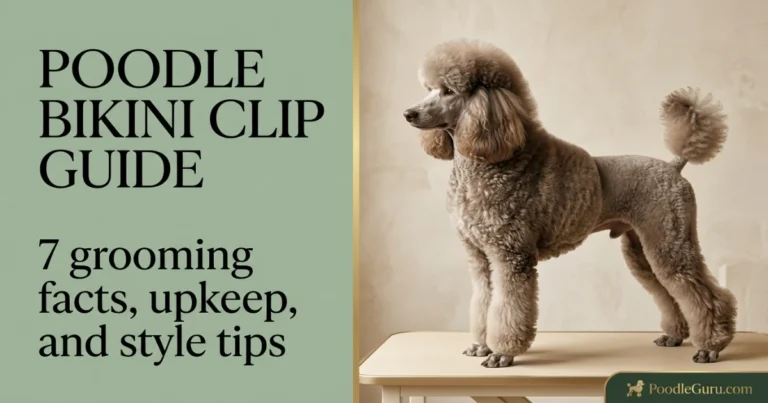
The sporting clip — sometimes called the “utility clip” or “sporting trim” — evolved directly from the poodle’s original job as a water retriever. Hunters needed the dog’s joints and vital organs protected from cold water, so they left the hair thicker over the chest, kidney area, and leg joints. The face, feet, and base of the tail were shaved to prevent ice buildup and tangling in reeds. Today’s version keeps that functional spirit: a clean face and clean feet, a short-to-medium body coat (usually ½ to 1 inch), slightly fuller leg cover, and a neatly sculpted tail with a rounded pompom.
Unlike the exaggerated geometry of a continental or English saddle clip, the sporting trim follows the dog’s natural lines. It’s forgiving of small imperfections, and it grows out gracefully — meaning you won’t be a prisoner to the grooming table.
Why Beginners Should Choose the Sporting Clip Over Other Trims
Many first-time poodle groomers gravitate toward the simplest option: a uniform clip all over (the “puppy clip” or “kennel clip”). That’s a valid starting point, but the sporting clip offers compelling advantages even for novices. The clean feet and face dramatically reduce the places where burrs, mud, and food collect. The shorter body length means you’ll brush less and spot skin issues sooner. And because the lines are natural rather than architectural, your small mistakes blend into the silhouette rather than screaming for attention.
It’s also the ideal gateway to learning more complex clips later. Mastering the clean face and clean feet teaches you control over your clippers in sensitive areas — skills that translate to every other trim you’ll ever try.
Sporting Clip vs. Other Popular Poodle Clips: A Beginner’s Cheat Sheet
Understanding how the sporting clip sits alongside other trims helps you make a confident choice, and it helps you explain what you want to a professional if you ever switch hands.
| Clip Style | Body Length | Face / Feet | Maintenance Level | Best For |
|---|---|---|---|---|
| Sporting Clip | ½ – 1 inch uniform | Clean shaven | Low-Medium | Active pets, water lovers |
| Kennel / Puppy Clip | ½ – 1 inch all over | Scissored, not shaved | Medium | Easy overall trim |
| Continental Clip | Shaved hindquarters, full rosettes | Clean face/feet | Very High | Show dogs only |
| Town & Country / Pet trim | 1-2 inches, shaped with scissors | Usually clean face/feet | Medium-High | Everyday elegance |
| Summer Shave-down | Very short (#7 or #10 blade) | Same as body | Very Low | Extreme heat, low maintenance |
Essential Tools and Supplies: What You’ll Need to Begin
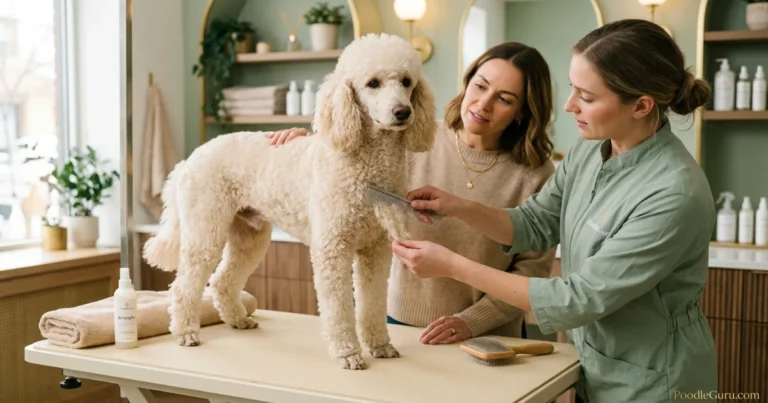
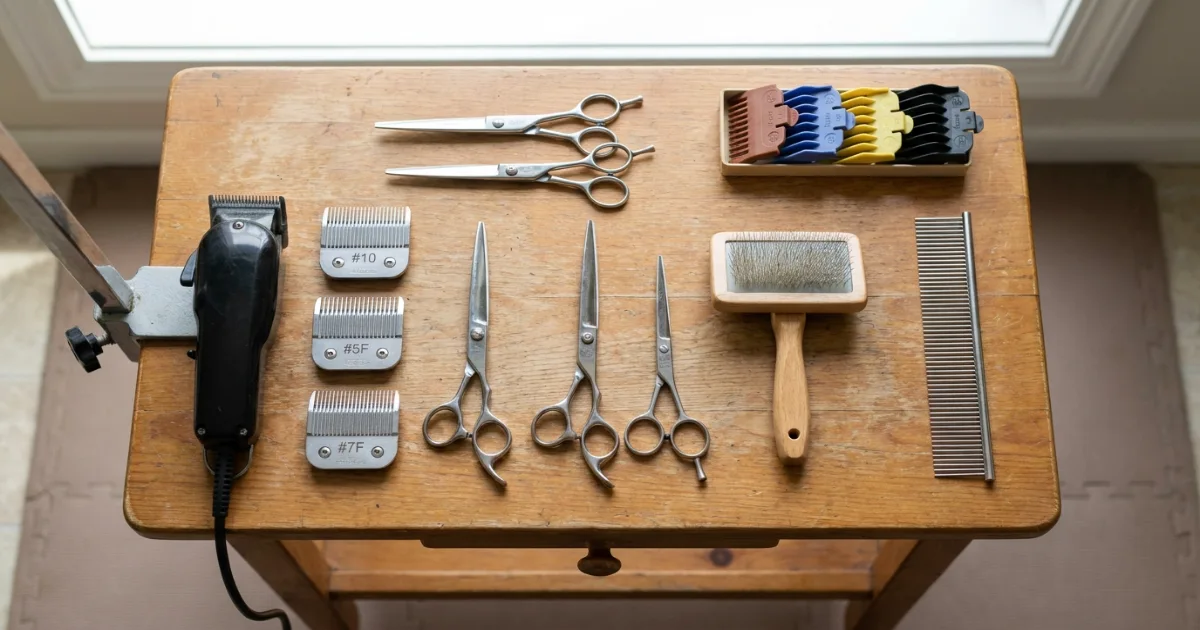
You can’t fake a clean finish with dull blades or household scissors. Invest in a solid beginner clipper, a few specific blades, and a grooming table or non-slip mat. The right tools cut your learning time in half.
2026 price estimates. A full kit runs $300–$450 — roughly 2-3 professional grooming visits. The tools pay for themselves within a year for most owners.
Step-by-Step: How to Give Your Poodle a Sporting Clip at Home
Before you start, your poodle must be completely dry, brushed out to the skin, and free of mats. Clipping a matted coat is painful and will ruin the finish. Set aside a quiet block of time where you won’t feel rushed. The following steps are laid out in the order that typically keeps a dog most comfortable.
Step 1: Clean Face (The Focal Point)
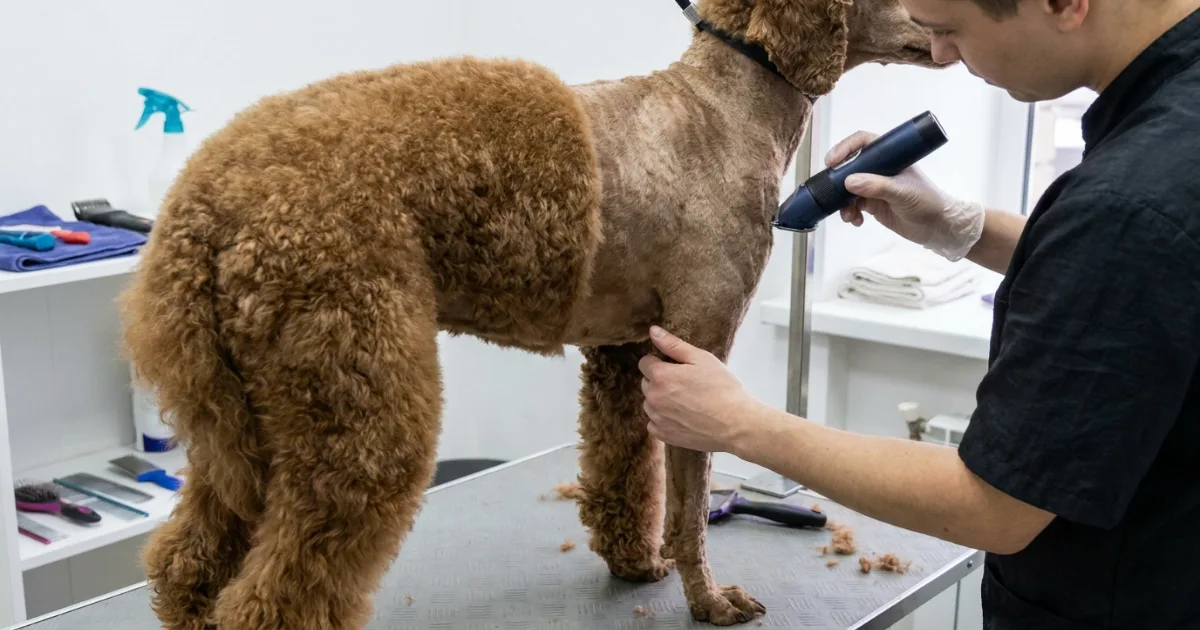
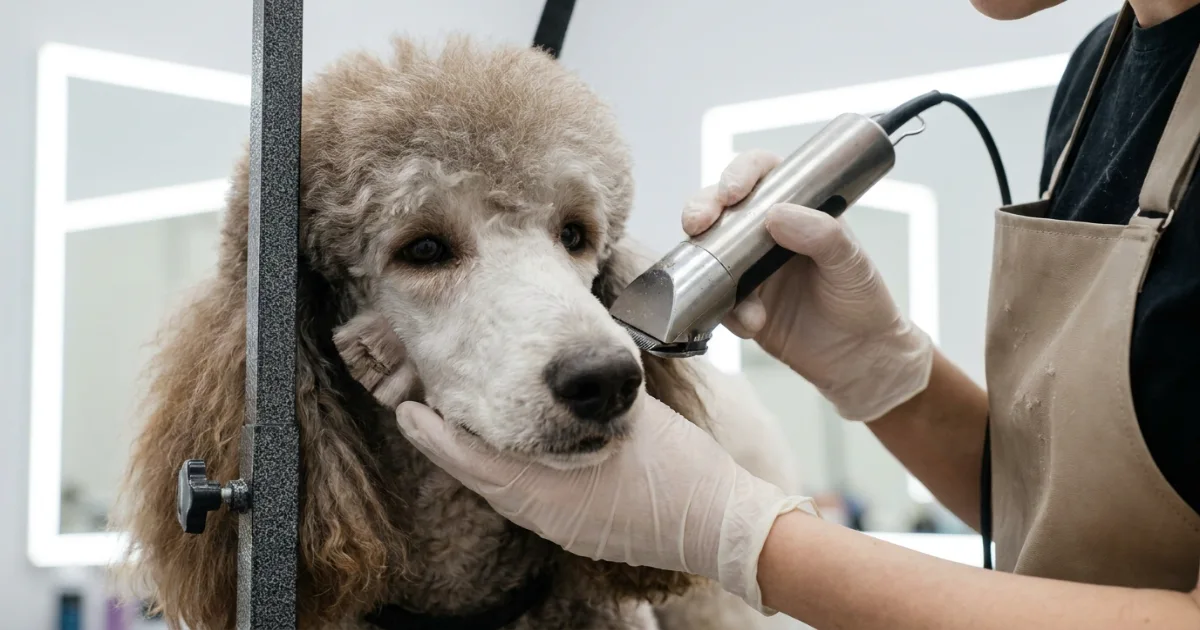
Attach a #10 blade to your clipper. Hold your poodle’s muzzle gently but securely. Clip downward from the corner of the eye along the cheek, and from the lower eyelid down the muzzle. Work against the grain for the smoothest result — on most poodles that means clipping from the outer cheek toward the nose. Leave a tiny inverted V between the eyes to separate the face from the topknot if you plan to keep a topknot; if you’re going for a fully clean head look, clip it all. Take care around the lip folds and throat; stretch the skin taut with your free hand to avoid nicks.
Step 2: Clean Feet (Hygiene and Grip)
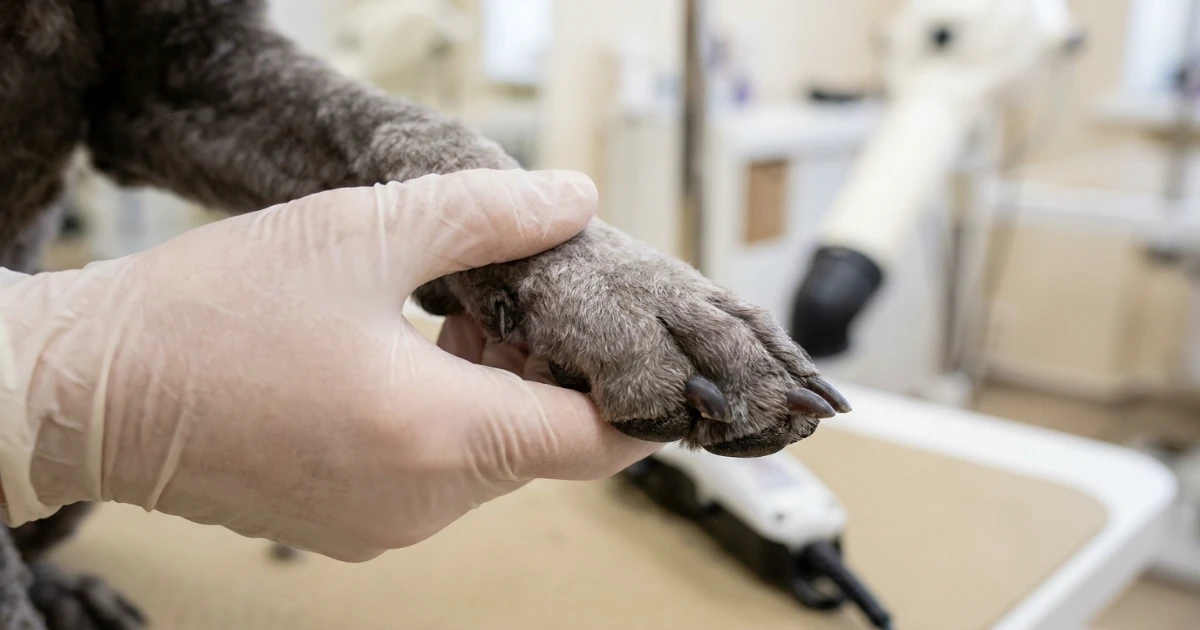
With the same #10 blade, clip the top of the foot from the nail beds up to the wrist (or hock on the back leg) in the direction of hair growth. Then carefully go between the toes with the corner of the blade, spreading the toes gently. The padding should be visible and clean. Remove hair that spills over the nails. A clean foot looks tight and oval — like a cat’s paw. Don’t rush between the toes; a calm poodle and steady hand prevent nicks.
Step 3: Sanitary Trim
A quick sanitary trim using the #10 around the genitals and under the tail keeps your dog comfortable and clean. Use very light pressure; lift the tail and clip a small area away from the anus outward. This step is brief but essential.
Step 4: The Body — Uniform Length
Switch to a #5F blade for a ¼-inch finish or a #7F for a slightly shorter ⅛-inch, or use an adjustable clipper comb over a #30 blade for longer lengths (½–1 inch). Beginners often feel safer starting with a clip comb to avoid shaving too close. Work from the back of the neck down the spine, then the sides, keeping the clipper flat against the dog’s contour. Go with the grain (head to tail) for a slightly longer, smoother look; reverse clipping leaves an even shorter finish but requires more skill.
The chest, belly, and flanks should blend seamlessly. Don’t forget the outside of the thighs and the top of the croup. The key to the sporting clip is a natural, athletic line — no abrupt ledges or patches.
🔑 Beginner’s Golden Rule
Always run the clipper over the coat twice: first with the grain, then inspect and clean up any uneven spots by going lightly against the grain only where needed. Constantly check blade temperature — if it’s hot against your wrist, it’s too hot for your poodle. Cool it with blade spray and swap to a second blade if needed.
Step 5: Legs — Subtle Shape
The sporting clip doesn’t demand elaborate leg poofs. Use the same blade or clip comb as the body on the upper legs, then gently scissor a very slight taper from the wrist to the paw to create a clean column. The back legs can retain slightly more hair over the hock for a natural “breeches” look, but keep it moderate. Scissor any stray hairs around the dewclaws.
Step 6: The Tail — Pompom Placement
The sporting clip traditionally features a shaved tail base with a rounded pompom at the tip. Shave from the base of the tail (where it meets the body) about two-thirds of the way down using the #10 blade, leaving a ball of hair at the end. The length of the shaved part should be roughly twice the length of the pompom. Shape the pompom with scissors, rounding it neatly. The result is a jaunty, functional flag that won’t collect debris.
Step 7: Final Scissoring and Blending
With curved scissors, gently blend any transition lines between body and legs, and neaten the edges around the neck and hocks. Step back and look at your dog from all angles. Walk them around. You’re sculpting a living creature — let the dog’s movement finish the shape.
Common Beginner Mistakes That Ruin the Sporting Clip Look
- Skipping the brush-out. Clippers catch on mats and pull painfully. Always comb to the skin first.
- Using a dull blade. It drags rather than cuts, leaving a choppy finish and risking clipper burn.
- Over-scissoring the legs. The sporting clip should look natural, not like a topiary. Less shaping, more blending.
- Placing the clean face line too high. The shaved area should stop at the back of the jaw, not creep up behind the ears.
- Uneven pompom. A lopsided tail ball draws the eye for all the wrong reasons. Comb the hair out and trim slowly, checking from all sides.
- Rushing the feet. One quick swipe with a blade can nick webbing. Go slow, stretch the skin, and reward your dog’s patience heavily.
Maintaining the Sporting Clip Between Full Trims
The beauty of this clip is its mercy on your schedule. Brush twice a week with a slicker and metal comb to prevent matting, paying attention behind the ears and around the leg joints where the longer hair meets the shaved areas. The clean face and feet may need a quick touch-up with a #10 blade every 2–3 weeks to stay crisp — a 10-minute job once you’re practiced. Wipe the face daily with a damp cloth to keep tear stains in check. The body will grow out evenly, and the look remains dignified even when slightly overgrown — a huge advantage over the shaggy chaos of poorly grown-out poodle trims.
How People Misunderstand the Sporting Clip (And End Up With a Modified Pet Trim)
A common misstep is thinking that any short-all-over clip with a clean face is a sporting clip. But the sporting clip intentionally retains subtle leg cover and a distinct pompom — it’s not a shave-down. Omitting the pompom and leaving legs as short as the body veers into a kennel clip. That’s still a lovely pet trim, just a different one. The soul of the sporting clip lies in those small nods to breed heritage: the clean feet, the tail pompom, and the slightly fuller leg breeches. Without those, you’ve got a smart utility trim, but not the classic sporting silhouette.
Frequently Asked Questions About the Poodle Sporting Clip
Is the sporting clip suitable for toy and miniature poodles?
Absolutely. The sporting clip works beautifully on all poodle sizes. Toy and mini poodles may need a slightly longer body length (1 inch) to avoid looking too stark. The clean face and feet are universally flattering and practical.
How often should I refresh the sporting clip?
Most owners schedule a full clip every 4 to 6 weeks. The face and feet can be touched up every 2 to 3 weeks at home to maintain the crisp look. How fast your poodle’s hair grows will fine-tune that rhythm.
Can I do a sporting clip without shaving the face and feet?
Technically that becomes a modified pet clip, not a sporting clip. The clean face and clean feet are defining features rooted in the breed’s working heritage. If you’re uneasy, start with a slightly longer blade like a #7F on the face for a softer look, then transition to #10 as confidence grows.
What blade leaves the best body length for beginners?
Beginners often have the most success with a #5F blade (¼ inch) or an adjustable clip comb that leaves ½ inch. These lengths are forgiving, don’t show skin imperfections, and still give the sporty silhouette. A #7F blade reveals more skin and requires steadier handling.
Does the sporting clip help with allergies or skin issues?
It can. The shorter body coat makes it easier to wipe down allergens after walks, and the clean feet reduce the amount of pollen and dirt tracked indoors. The clip also makes topical skin treatments simpler to apply. However, it’s not a medical solution — consult your vet for specific skin conditions.
How do I keep my poodle calm during the face clip?
Warm up the clippers away from the face so the noise becomes background. Work slowly, pair the sound with high-value treats, and keep sessions short at first. Allow your poodle to sniff the running clippers. Holding the muzzle gently but confidently — not nervously — communicates reassurance.
Will my poodle get cold with this short coat?
The sporting clip leaves enough coat to provide thermal protection, but in very cold climates or winter months, consider a dog coat on frosty walks. Poodles, especially standards, have a single insulating layer; they feel temperature shifts more than double-coated breeds.
Can a professional groomer replicate a sporting clip if I describe it?
Most experienced poodle groomers know the sporting clip well. Show them a reference photo and specify you want a clean face, clean feet, a ½ to 1-inch body, and a tail pompom. The term “sporting clip” is well-understood in the grooming community.
Summary: The poodle sporting clip is the ultimate intersection of heritage and practicality. With a clean face, clean feet, and a uniform short-to-medium body, it keeps your dog cool, reduces grooming time, and celebrates the breed’s athletic build. This beginner tutorial breaks the process into manageable steps — from prepping your tools to shaping that signature pompom. Master it, and you’ll give your poodle not just a cut, but a second skin that moves with them.