Poodle Cushing’s Disease: The Early Warning Signs You Can’t Afford to Ignore
There’s a particular kind of heartbreak that comes from watching a bright, animated poodle slowly dim into a dog you barely recognize—one that pants heavily through the night, drains the water bowl compulsively, and loses the plush curl of her coat to a thin, fragile wispiness. Poodle cushing’s disease is one of the most commonly diagnosed endocrine disorders in the breed, yet its earliest whispers are often mistaken for normal aging, a stubborn summer heatwave, or “just a phase.” If you’ve found yourself Googling symptoms that don’t quite add up, this guide is for you. It will walk you through the subtle, insidious warning signs that surface long before a Cushing’s diagnosis becomes undeniable, and equip you to advocate fiercely for your poodle’s health at the vet’s office.
The earliest warning signs of Cushing’s disease in poodles often mimic aging: increased thirst (polydipsia) and urination (polyuria), a slightly swollen or pot-bellied appearance, unexplained panting, thinning hair—particularly on the flanks—and a marked increase in appetite. Because these changes are gradual, they are frequently dismissed until the disease has progressed. Recognizing the cluster of symptoms and requesting specific diagnostic tests is the most powerful step an owner can take.
What Exactly is Cushing’s Disease in Poodles?
Hyperadrenocorticism—veterinary jargon for Cushing’s disease—is a chronic condition where the adrenal glands flood the body with too much cortisol. Cortisol is vital for stress response, immunity, and metabolism, but when it’s produced unchecked for months or years, it begins a slow assault on muscle tissue, skin integrity, liver function, and the immune system. For a poodle owner, the disease essentially puts the dog’s body into a state of prolonged, silent wear-and-tear. The physical changes you see externally—the bloated belly, the fragile skin—are visible markers of internal systems breaking down under the strain of hormonal excess.

Why Poodles Are Disproportionately Affected
While any dog can develop Cushing’s, poodles—particularly miniature and toy varieties—appear in veterinary endocrinology textbooks as a poster breed for the condition. The genetic predisposition is strong, though researchers are still mapping the precise hereditary factors. This means that when an aging poodle presents with a constellation of vague symptoms, a savvy veterinarian will move Cushing’s to the top of the differential list much faster than they would for, say, a Labrador. As a poodle guardian, this is crucial context: you are not being an alarmist by suspecting Cushing’s. You are responding to a documented breed vulnerability. The condition is less “if” and more “when” for many poodle lines, which is why breeders who health-test and track longevity are so vital to the breed’s future.
Poodles are masters of stoicism. By the time they openly show pain, a condition is often advanced. Cushing’s is usually painless in the classic sense—which is precisely why it progresses undetected. The dog doesn’t yelp; she simply changes her habits. This is why owner observation is the single most powerful diagnostic tool available.
The Two Faces of Cushing’s: Pituitary vs. Adrenal
The underlying mechanism matters, because treatment paths diverge depending on the cause. The vast majority of poodles (about 85%) suffer from pituitary-dependent hyperadrenocorticism (PDH), where a tiny, usually benign tumor on the pituitary gland at the base of the brain sends relentless signals to the adrenal glands to produce cortisol. The adrenal glands, in turn, grow slightly larger and work overtime. In about 15% of cases, a tumor grows directly on one of the adrenal glands, causing that gland alone to overproduce cortisol. Adrenal-dependent Cushing’s can sometimes be addressed surgically, whereas pituitary cases are generally managed with lifelong medication. The symptoms are largely identical, which is why advanced diagnostics like the low-dose dexamethasone suppression test (LDDST) or an abdominal ultrasound are necessary to pinpoint the type.
Spotting the Subtle Shift: The True Early Warning Signs
If you wait for all the “classic” signs to appear simultaneously, you’ve likely missed the early window. Here is how the disease creeps into a poodle’s daily life, piece by piece.
1. The Bowl That’s Always Empty (PU/PD)
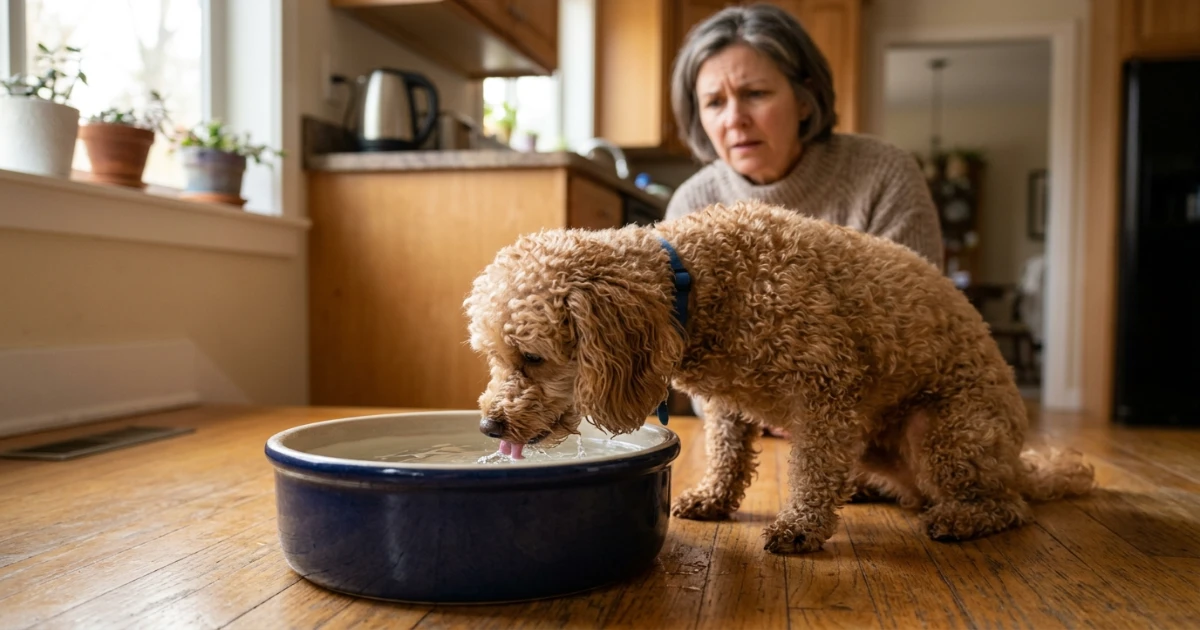
Polyuria/polydipsia (PU/PD) sounds clinical, but in your home, it looks like refilling the water bowl twice as often, or a dog who suddenly can’t make it through the night without a potty break. Maybe the pee spots in the grass look diluted and pale, almost watery. This is the earliest and most consistent red flag, and it’s driven by cortisol’s interference with the kidneys’ ability to concentrate urine.
2. The Ravenous Appetite That Goes Beyond Normal Poodley Enthusiasm
Poodles are naturally food-motivated. A Cushingoid poodle, however, becomes a bottomless pit. She might counter-surf with a desperation she never showed before, scavenge obsessively on walks, or steal food from other pets’ bowls. This isn’t greed; it’s a hormonal hijacking of the hunger signals in the brain.
3. The Abdomen That Begins to Sag
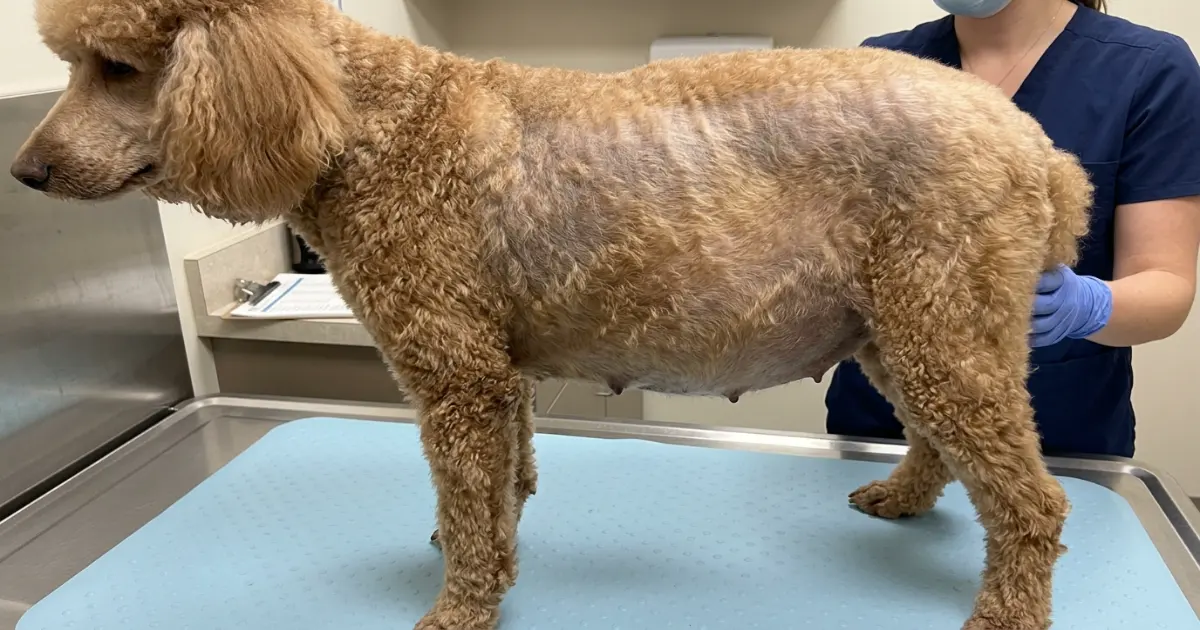
Muscle weakness, particularly in the abdominal wall, allows the belly to distend. Combine that with an enlarged liver (another cortisol effect) and some fat redistribution, and you get the signature “pot-bellied” poodle. Early on, it looks like a few extra ounces of weight. Touch the belly—does it feel firmer, more taut than usual? That’s not just fat; it’s weakening muscle tone.
4. Coat Changes: From Plush to Puny
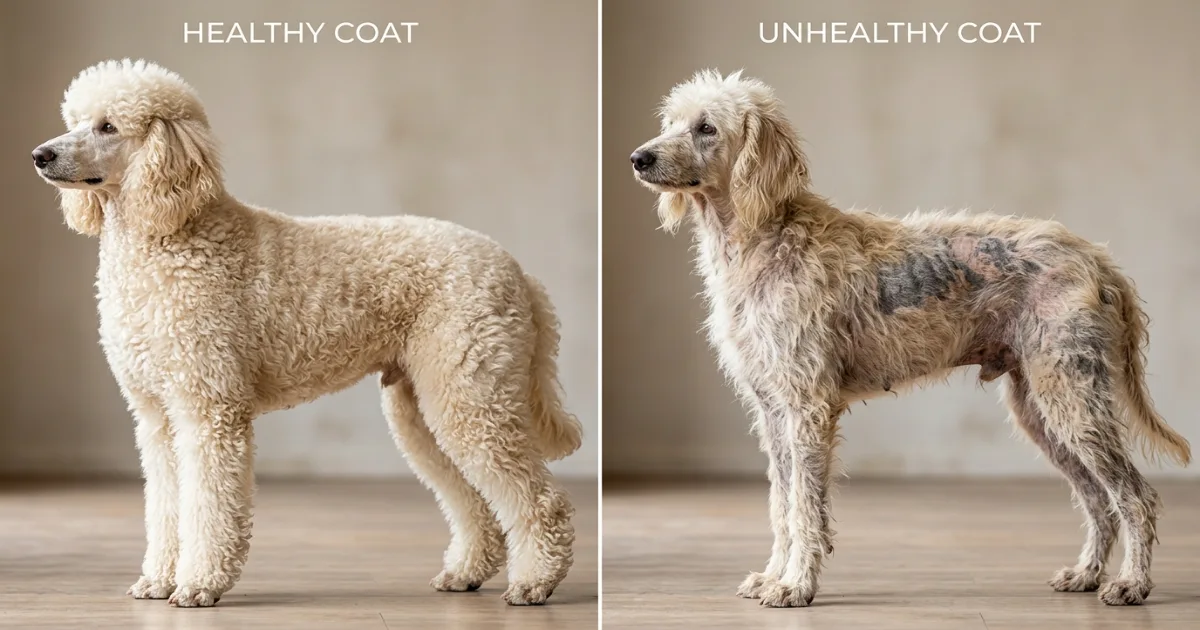
Excess cortisol chokes the hair follicles. The coat becomes thin, dry, and brittle. Symmetrical hair loss on the flanks is textbook Cushing’s. The hair might not grow back after grooming, or you might notice darkening of the skin (hyperpigmentation). For a breed celebrated for its gorgeous coat, these changes are especially stark.
5. The Panting Without a Purpose
A poodle resting comfortably in a cool room—not hot, not anxious—yet panting rapidly and shallowly. This is one of the most distressing symptoms for owners. It stems from multiple causes: weakened respiratory muscles, an enlarged liver pressing on the diaphragm, and possibly a direct effect of cortisol on the respiratory center. It’s not anxiety; it’s physiology.
6. Recurring Infections and Slow Healing
Chronic high cortisol suppresses the immune system. A simple scratch gets infected. Urinary tract infections come back repeatedly. Skin infections that should clear up with a basic medicated wash linger for weeks. If your poodle seems to be sick more often than she’s well, the immune dysregulation of Cushing’s should be on your radar.
Symptom Progression: When Early Signs Become Advanced Disease
| Symptom | Early Stage Appearance | Advanced Stage Appearance |
|---|---|---|
| Thirst & Urination | Subtle increase; leaking small amounts overnight | Severe incontinence; urine pools dilute; dog constantly searches for water |
| Appetite | Finishes meals faster; extra interest in treats | Frantic, insatiable hunger; steals food aggressively |
| Body Shape | Slight abdominal sag; beginning of muscle waste over spine | Grossly distended belly; prominent spine and shoulder blades; thin legs |
| Coat & Skin | Dry, slow to regrow; thinning over trunk | Near-complete alopecia; paper-thin skin that tears easily; calcinosis cutis |
| Energy & Behavior | Longer naps; less interest in long walks | Lethargy; unwillingness to exercise; excessive panting even at rest |
What Owners Commonly Mistake for “Just Getting Old”
This is the most dangerous misconception surrounding poodle cushing’s disease. An eight- or nine-year-old poodle will naturally slow down somewhat. She might sleep more deeply. Her muzzle will gray. But she should not be losing her housetraining, shedding her coat in clumps, or turning into a ravenous scavenger. These are not normal markers of aging—they are symptoms of disease. A well-intentioned owner can lose six to twelve precious months attributing these changes to old age before seeking a diagnosis, and in that time, the physical toll of cortisol on the heart, liver, and kidneys worsens. If your poodle seems “old” very suddenly, push for blood work. Do not accept that she is simply winding down.
The Diagnostic Journey: Proving What You Suspect
There is no single, perfect test for Cushing’s disease. Diagnosis is a puzzle, and your vet will fit together pieces from the history you provide, a physical exam, and lab results. Typically, the process begins with routine blood work and a urinalysis. A very high ALP (alkaline phosphatase) in a poodle is a classic flag, along with a low urine specific gravity. From there, your vet will likely recommend an LDDS test (low-dose dexamethasone suppression test) or an ACTH stimulation test. An abdominal ultrasound is invaluable—it allows the vet to visualize adrenal gland size and check for liver changes or tumor spread. This workup takes time and investment, but it is the only way to differentiate pituitary-dependent Cushing’s from adrenal Cushing’s and to determine the appropriate medication dosage.
Practical Owner Insight: Living With a Cushingoid Poodle
Managing a poodle with Cushing’s is a marathon, not a sprint. Most dogs are placed on trilostane (Vetoryl), a medication that inhibits cortisol production. This is a delicate balancing act—too much suppression causes an Addisonian crisis, too little lets the disease progress. You’ll schedule regular blood tests, called ACTH stim tests, to ensure the dose remains in the therapeutic window. These vet visits, often every few months initially, become the rhythm of your life. At home, you’ll monitor water intake obsessively, protect fragile skin with soft bedding, treat any minor cuts immediately with antiseptic, and feed a high-quality, moderate-protein diet to support wasting muscles without overtaxing the liver. It’s not a normal dog-owner relationship. It’s caregiving, and it’s intense. But carefully managed, many Cushingoid poodles enjoy years of good quality life—just a quieter, more protective kind of life.
Pro Tips for Managing Life with a Cushingoid Poodle
- Keep a logbook. Track water consumption, urine frequency, energy levels, and appetite. This data is pure gold for your vet when adjusting medication doses.
- Switch to a harness. A collar puts pressure on the fragile trachea and can damage the thin skin of the neck.
- Invest in washable potty pads or a doggy diaper. Even well-managed patients may have accidents, and stress only worsens cortisol levels—stay calm when they happen.
- Guard against scalding. Thin, vulnerable skin can burn easily. Be cautious with heating pads and direct sunlight.
Frequently Asked Questions About Poodle Cushing’s Disease
What is the life expectancy of a poodle with Cushing’s disease?
With consistent treatment and careful monitoring, poodles can live 2–4 years post-diagnosis, often dying of other age-related conditions rather than Cushing’s itself. However, untreated Cushing’s significantly shortens lifespan and quality of life.
Can diet help manage Cushing’s in poodles?
While diet won’t cure Cushing’s, it is a cornerstone of management. A moderate-protein, low-fat, low-fiber diet helps support weakening muscles and liver function, while strict portion control prevents the excessive weight gain driven by cortisol.
What is the difference between pituitary and adrenal Cushing’s in dogs?
Pituitary Cushing’s (PDH) stems from a brain tumor signaling excess cortisol production, and is treated with medication. Adrenal Cushing’s comes from a tumor on the adrenal gland itself and can sometimes be surgically removed, offering a potential cure.
Is Cushing’s disease painful for poodles?
Generally, Cushing’s is not a directly painful condition, but its secondary effects—muscle wasting, thin skin that tears, and panting—cause significant discomfort and distress. Treatment aims to relieve this distress.
How much does Cushing’s disease treatment cost?
In 2026, initial diagnostics can range from $500 to $1,500 for definitive testing and ultrasound. Lifelong medication and monitoring typically average $1,200 to $3,000 annually depending on medication dose and frequency of testing.
Can Cushing’s disease in poodles be cured?
Adrenal-dependent Cushing’s can sometimes be cured if surgery successfully removes the tumor. Pituitary-dependent Cushing’s, the more common form in poodles, is not curable but is very manageable with lifelong medication.
What are the signs that Cushing’s medication is working?
Water consumption should normalize first, followed by reduced appetite and slowly improved energy. The pot-belly and coat changes take much longer—sometimes months—to reverse, if they improve at all.
Why is my poodle panting so much at night with Cushing’s?
Nighttime panting in Cushing’s is often caused by the enlarged liver pushing on the diaphragm, weakened respiratory muscles, and cortisol’s direct effect on the brain’s breathing center. Adjusting medication often provides relief.
Early Detection Is Protection
Poodle cushing’s disease is a master of disguise, wrapping itself in the quiet, gradual changes that busy owners chalk up to old age. But you know your poodle better than anyone. If she’s filling the water bowl faster, panting at rest, thinning out along the flanks, or gaining a belly while losing muscle, trust that inner voice. See your veterinarian. Ask for the tests. A diagnosis of Cushing’s is not a sharp end to your life together; it’s a pivot into a chapter of attentive, loving management that can grant you precious, comfortable years with your dog. And that is the truest expression of the poodle guardian’s promise.