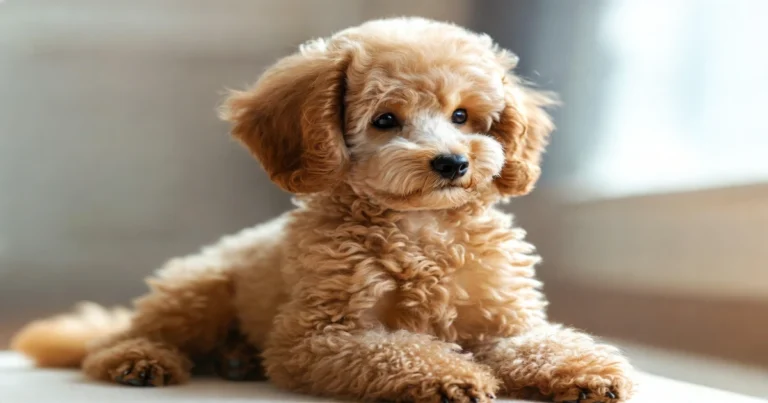
Phantom Poodle Markings Explained: Genetics, Colors & AKC Rules (2026)
A phantom poodle is a poodle with a clearly defined two-color tan-point pattern: a solid base color paired with secondary markings on the eyebrows, muzzle, chest, lower legs, and under the tail. Phantom markings are genetic, visible from birth, and one of the most eye-catching multi-color poodle patterns, which is why phantom poodles usually cost more than solid-color dogs.
Phantom poodles stop people in their tracks. At a glance, the sharp eyebrow dots and rich tan-point pattern often remind people of a Doberman or Rottweiler, but under the curls, this is still unmistakably a poodle: elegant, intelligent, athletic, and deeply people-focused.
What makes phantom poodles so fascinating is that their beauty is not random. Their markings follow a highly predictable genetic pattern, and once you know what to look for, it becomes much easier to tell a true phantom from a parti poodle, an abstract poodle, or a poorly labeled mixed-color puppy listing online.
In this guide, you will learn what a phantom poodle actually is, how the genetics work, what color combinations are possible, how AKC registration language usually applies, what phantom puppies cost in 2026, and how to avoid breeder marketing that sounds impressive but is genetically shaky.
Phantom poodles are identified by symmetrical tan-point markings controlled through the agouti/A-locus pattern system. The pattern is present at birth, does not “appear later,” and usually commands a premium because strong contrast, complete markings, and health-tested breeding lines are hard to produce consistently.
What Is a Phantom Poodle?
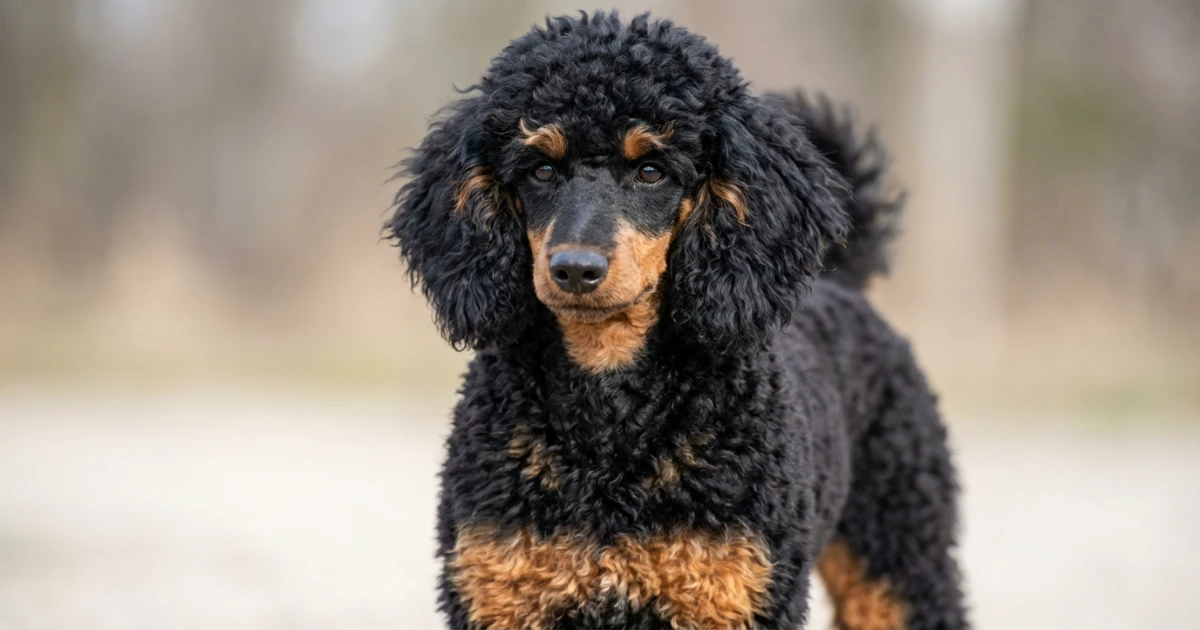
A phantom poodle is a two-color poodle with a very specific marking layout. The base coat covers most of the body, while the lighter or secondary color appears in fixed areas commonly called tan points. This pattern is the whole reason the word “phantom” exists in poodle discussions.
That distinction matters because many listings online use the word phantom loosely. A puppy with random patches, white spotting, or uneven contrast is not automatically a phantom. Phantom means the second color appears where the pattern is genetically supposed to appear.
The classic phantom marking points
- Two dots above the eyes
- Secondary color on both sides of the muzzle
- A chest patch or paired chest panels
- Lower legs and feet
- Under the tail
- Sometimes inside or at the edge of the ears
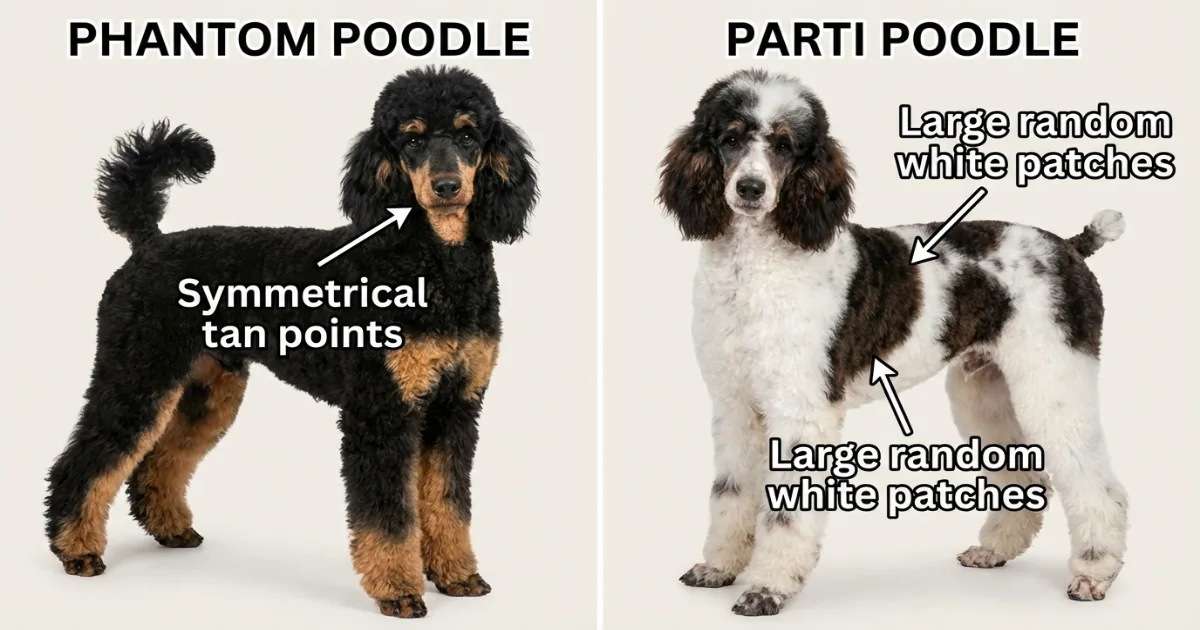
If those points are balanced and clearly visible, you are usually looking at a true phantom pattern. If the dog has broad white areas or randomly scattered patches, you are probably dealing with parti, abstract, or another multi-color expression instead.
Why Phantom Poodles Are So Popular Right Now
Phantom poodles sit at the perfect intersection of beauty, rarity, and search demand. Buyers want something visually distinctive but still recognizable as a poodle. Phantom coats deliver that instantly.
- They photograph beautifully: The contrast between the base coat and point markings is dramatic in photos and social posts.
- They look “rare” even to casual buyers: That visual uniqueness drives premium pricing.
- They appeal across all sizes: Toy, miniature, and standard phantom poodles all attract dedicated buyers.
- They feel designer without being a mix: Many buyers want a rare look while staying within purebred poodle lines.
In short, phantom poodles have become a buyer-intent dream keyword because they combine genetics, aesthetics, registration questions, breeder selection, and price curiosity in one topic.
Phantom Poodle Genetics: The Agouti (A) Locus Explained
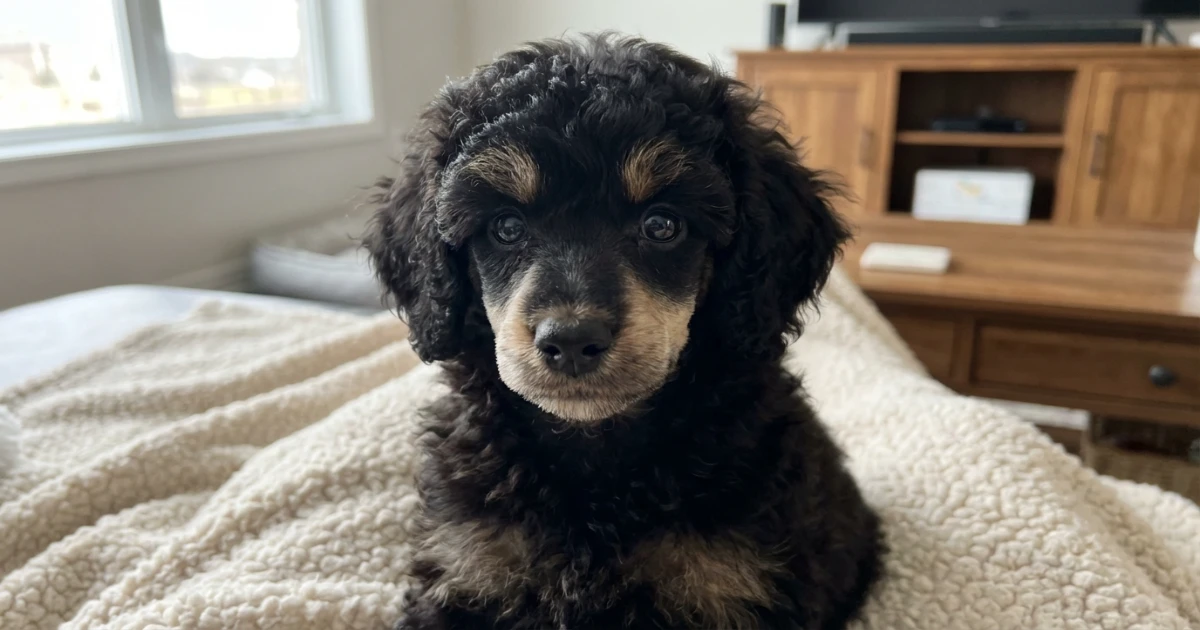
The phantom pattern is tied to the dog’s agouti/A-locus pattern system. The tan-point allele is commonly described as at. In practical breeder language, phantom expression depends on tan-point inheritance plus interaction with other coat-color genes that affect whether the pattern can be seen clearly.
That sounds technical, but the big idea is simple: some genes decide where pigment goes, and others affect what color that pigment appears. Phantom poodles need the right pattern genetics plus compatible coat-color genetics for the markings to show well.
What the A locus does
The A locus helps control the distribution of eumelanin and phaeomelanin in the coat. In everyday terms, it helps decide whether the body shows a solid dark color, a sable pattern, or tan-point areas. Tan points are what create the phantom look.
Why phantom breeding is not always simple
- A dog can carry tan-point genetics without visibly looking phantom.
- Other genes can mute or soften contrast.
- Red, cream, and apricot-related expression can make the pattern harder to see.
- Greying or fading genes can alter the visual intensity as the dog matures.
This is why serious breeders rely on DNA testing rather than guessing from appearance alone. Two beautiful parents do not automatically guarantee a strongly marked phantom litter.
Common phantom color combinations
| Base Color | Point Color | Visual Effect | Buyer Demand |
|---|---|---|---|
| Black | Tan / rust | Highest contrast, classic phantom look | Very high |
| Brown / chocolate | Cream / tan | Rich and softer than black phantom | High |
| Red | Apricot / cream | Warm and striking, often premium-priced | High |
| Silver | Cream / white | Elegant but rarer and subtler | Very high |
| Blue | Cream / tan | Unusual, often changes as coat matures | High |
| Apricot | Cream | Beautiful but lower contrast | Moderate |
Do Phantom Poodles Change Color?
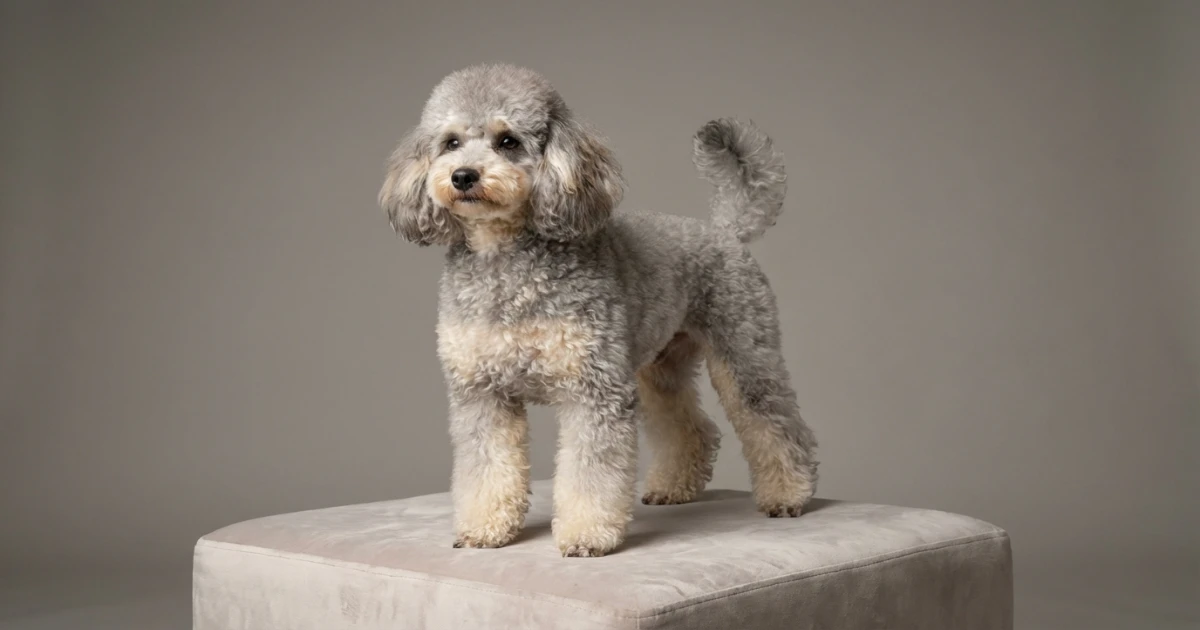
This is one of the most common buyer questions, and the best answer is: the pattern stays, but the shade can shift. A phantom poodle does not suddenly stop being phantom. The placement of the markings remains the same. What can change is the intensity of the coat color over time.
For example, a black-based phantom carrying greying or fading influences may lighten with age. Brown coats may soften. Tan points may shift toward cream. On lower-contrast phantom combinations, this can make the pattern look less dramatic in adulthood than it looked in puppy photos.
AKC Rules and Registration Language for Phantom Poodles
This part confuses many buyers because registration language and show language are not always the same thing. The safest approach is to separate three questions:
- Can the puppy be AKC registered?
- How is the color/marking described on paperwork?
- Does that automatically mean the dog fits every show preference or class expectation?
In practice, phantom poodles can still be AKC-registered when the breeder completes paperwork correctly and uses the available color/marking terminology or codes. The AKC also maintains breed color and markings references, while standard poodle pages list recognized standard colors such as black, blue, brown, apricot, red, cream, silver, white, and related variations.
What buyers should not do is assume that every breeder uses identical wording. Some will emphasize “phantom,” while others focus on the base color plus markings. That is why the best move is to ask for:
- A copy of the intended registration description
- Puppy photos at several ages
- DNA testing information for the parents
- Clarification on whether the dog is pet, performance, or show prospect quality
Phantom vs Parti vs Abstract Poodle
| Pattern Type | Main Visual Clue | White Required? | Pattern Placement |
|---|---|---|---|
| Phantom | Tan-point style markings | No | Fixed and symmetrical |
| Parti | Large white with colored patches | Yes, usually substantial white | Random patching |
| Abstract | Mostly solid with limited white accents | Not necessarily | Irregular, not tan-point based |
The easiest way to remember it is this: phantom is about point placement, parti is about white patching, and abstract is about small irregular white accents.
Phantom Poodle Temperament: Does the Pattern Affect Personality?
No. Phantom is a coat-pattern trait, not a temperament trait. A phantom poodle still has the temperament profile people already love in poodles: intelligence, trainability, sensitivity, athleticism, and strong attachment to people.
What really shapes a phantom poodle’s personality is the same set of factors that matter in every poodle:
- Parent temperament
- Breeder socialization practices
- Early handling and confidence building
- Household routine and training
- Size variety, since toy, miniature, and standard poodles often differ in energy expression
So if a breeder tries to sell you on the idea that phantoms are naturally calmer, smarter, sweeter, or more protective purely because of color, treat that as marketing, not science.
Phantom Poodle Care Guide
Grooming
The phantom pattern does not make the coat harder to maintain, but it does make grooming choices more important visually. Some trims hide the contrast, while others showcase it beautifully.
- Best pattern-showing trims: sporting clip, lamb cut, clean face and feet, and tidy body trims that keep color borders visible
- At-home brushing: every 2–3 days minimum to prevent mats
- Professional grooming: usually every 4–8 weeks depending on coat length
- Sun fading awareness: darker coats can lose depth with heavy sun exposure
Bathing and products
Use a gentle moisturizing dog shampoo and avoid harsh whitening products unless your groomer specifically recommends them. On phantom coats, product overuse can dull texture or affect how crisp the contrast looks in photos.
Skin and coat monitoring
Because owners tend to focus so much on color, they sometimes miss basic coat health. Prioritize the fundamentals: healthy skin, regular ear care, dental maintenance, and mat prevention. Beauty follows health.
How to Identify a True Phantom Poodle (Step by Step)
- Look for eyebrow dots: The points above the eyes should be distinct and balanced.
- Check the muzzle: Phantom markings usually appear on both sides of the muzzle rather than as random facial color.
- Inspect the chest: There should be visible secondary-color placement on the forechest area.
- Look at the lower legs: Classic phantom points appear on all four lower legs or feet areas.
- Check under the tail: This is a very useful confirmation point.
- Assess symmetry: Phantom patterns should feel intentional, not accidental.
- Ask for DNA support: Good breeders should understand the genetics behind the pairing.
A real phantom poodle should look patterned, not patched. The more symmetrical and clearly placed the markings are, the more confidently you can separate phantom from other multi-color terms used in pet listings.
Phantom Poodle Price Guide (2026)
💰 Typical Phantom Poodle Price Ranges
- Toy phantom poodle: $2,500–$4,500
- Miniature phantom poodle: $3,000–$5,000
- Standard phantom poodle: $3,500–$6,500+
- Rare high-contrast or breeder-established lines: often above those ranges
Price depends on far more than color alone. Breeder reputation, health certifications, pedigree depth, structure, puppy socialization, and size variety all matter. Still, phantom markings usually raise asking prices because demand is high and supply is limited.
Why phantom poodles cost more
- They require intentional genetic planning
- Strong contrast is not guaranteed in every litter
- Buyers actively search for them
- Many reputable breeders combine color goals with health testing, which increases costs
Red flags on cheap phantom listings
- “Rare phantom” with no parent photos
- No DNA or health-testing discussion
- No mention of registration paperwork
- Heavily edited puppy pictures
- Seller cannot explain how phantom differs from parti or abstract
Pro Tips Before Buying a Phantom Poodle
🧠 Smart Buyer Checklist
- Ask for stacked and casual photos: You want to evaluate both the pattern and the dog’s overall structure.
- Confirm health testing: Color should never come before health and temperament.
- Expect waitlists: Ethical phantom breeders often have fewer puppies than demand.
- Do not buy only by color: The prettiest puppy is not always the best fit for your home.
- Ask how the coat may mature: Especially important in blue, silver, red, and lower-contrast combinations.
- Get clarity in writing: Registration plan, deposit terms, and breeding-rights status should all be documented.
Common Myths About Phantom Poodles
“Phantom means mixed breed”
False. Phantom is a color-pattern term, not proof of a crossbred dog.
“All phantom poodles are show dogs”
No. Some are pets, some are performance prospects, and only a smaller portion will have the structure, movement, and presentation needed for serious conformation goals.
“Phantom markings develop later”
Not in the true phantom sense. The pattern is there early. What can change later is color intensity and contrast.
“Phantom poodles are healthier than other poodles”
There is no general evidence that the phantom pattern alone makes a poodle healthier. Health depends on breeding decisions, screening, and overall care.
Frequently Asked Questions About Phantom Poodles
Yes. Phantom poodles are less common than solid colors because the pattern depends on a specific genetic setup and not every poodle line carries or expresses it strongly. High-contrast, well-marked phantom puppies are especially sought after.
Yes. The placement of the phantom pattern stays the same. What may change is the shade or contrast of the coat as the dog matures.
A phantom poodle has symmetrical tan-point style markings in fixed locations, while a parti poodle has larger random patches of white and another color. They are different pattern types.
Usually yes. Their rarity, strong buyer demand, and the planning required to produce attractive, well-marked puppies often push prices above typical solid-color poodles.
Yes. Phantom is a pattern, not a separate size category. You can find phantom toy, miniature, and standard poodles.
No. Coat pattern does not determine personality. Temperament is shaped by breeding quality, socialization, training, and the individual dog.
Ask about parent DNA testing, expected color outcomes, registration wording, health testing, and how they distinguish phantom from parti or abstract patterns. A serious breeder should answer those questions comfortably.
Most owners prefer trims that preserve visible contrast, such as sporting, lamb, or other balanced body clips that do not blur the color borders too much.
Summary — Phantom Poodle at a Glance
A phantom poodle is a true poodle with a tan-point style two-color pattern that appears in specific, repeatable locations such as the eyebrows, muzzle, chest, lower legs, and under the tail. The pattern is genetic, visible from puppyhood, and highly valued because it is visually dramatic and less common than solid colors. For buyers, the smartest approach is to focus on health-tested breeders, clear DNA understanding, honest registration paperwork, and strong puppy quality first — then enjoy the beauty of the phantom pattern as the bonus that makes the dog unforgettable.