Poodle Size Chart 2026: Toy vs Miniature vs Standard
Compare Toy, Miniature, Moyen and Standard Poodles by shoulder height and typical weight, with measuring advice and links to official breed standards.
Size definitions checked September 5, 2026. AKC breed standard · FCI breed standard. Weight ranges are guides, not breed-class limits.
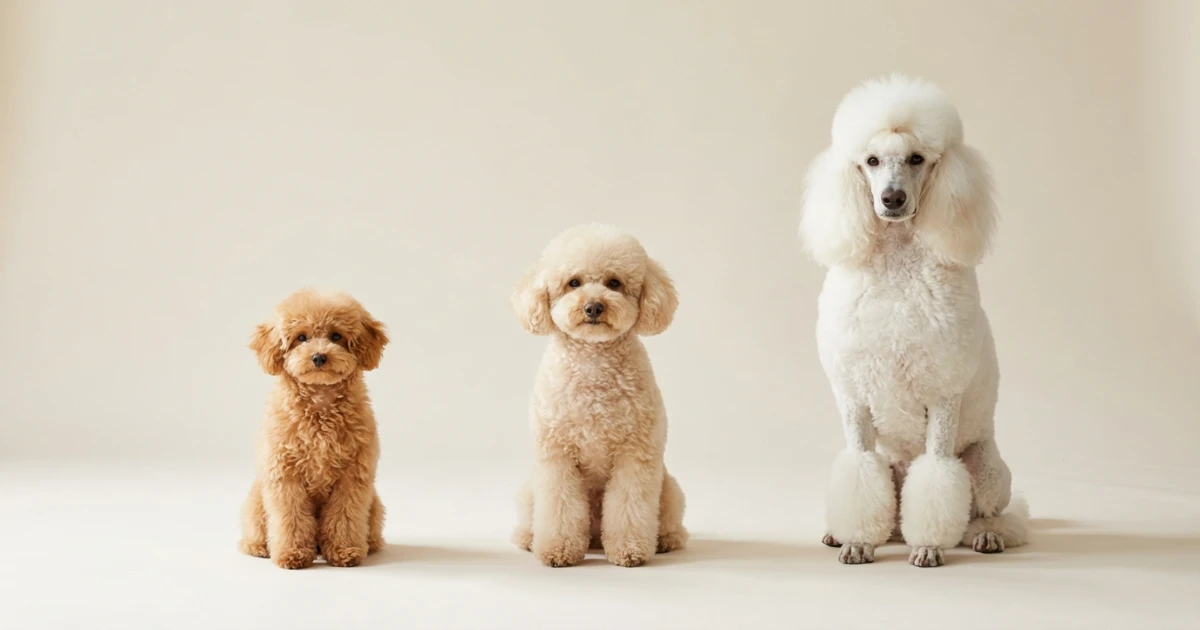
Grab a tape measure and stand three poodles side by side, and you’ll see something almost no other purebred dog can claim: a 4-pound Toy that fits in a jacket pocket, and a 70-pound Standard that could out-swim you at the lake — both, genuinely, the same breed. That’s not an accident of breeding gone loose. Each poodle size was shaped on purpose, for a different job, and those old jobs still shape the dog sitting in front of you today.
This poodle size chart pulls together the AKC breed standard, breed-size reference material and the FCI definition of the Medium variety, so you can compare poodle sizes — Toy, Miniature, Moyen, and Standard — without hunting across six different sites. You’ll find a proper poodle size comparison chart, an interactive height/weight/lifespan tool, a real growth timeline, a step-by-step guide to measuring your own dog at home, and a two-question lifestyle matcher that tells you which size actually fits your life — not just which one looks cutest online.
- Toy poodle: ≤ 10 inches tall · 4–6 lbs · fully grown by 6–8 months · lifespan 14–18 yrs
- Miniature poodle: 10–15 inches · 10–15 lbs · fully grown by 10–12 months · lifespan 13–17 yrs
- Moyen poodle (Europe): over 35 to 45 cm (about 13.8–17.7 inches) · 20–35 lbs · FCI-recognized, not AKC
- Standard poodle: 15+ inches (typically 22–27 in) · 40–70 lbs · fills out by 18–24 months · lifespan 12–15 yrs
AKC varieties are defined by height, not weight. The Standard variety has no upper height limit in the AKC standard. The FCI uses different size divisions, so do not combine the two systems when classifying a dog.
Poodle Size Comparison Chart: All Poodle Sizes at a Glance
Here’s the full poodle size comparison chart, reflecting the official AKC breed standards and general weight guidance. One honest note before you scan it: the Moyen row is included for completeness — it’s recognized by the FCI and most European kennel clubs, but the AKC doesn’t acknowledge it as a separate class in the US.
| Variety | Shoulder Height | Adult Weight | Fully Grown By | Avg. Lifespan | AKC Status |
|---|---|---|---|---|---|
| 🐾 Toy | ≤ 10 in (≤ 25.4 cm) | 4 – 6 lbs | 6 – 8 months | 14 – 18 years | ✅ Recognized |
| 🐾 Miniature | > 10–15 in (> 25.4–38.1 cm) | 10 – 15 lbs | 10 – 12 months | 13 – 17 years | ✅ Recognized |
| 🐾 Moyen / Medium | > 35–45 cm (about 13.8–17.7 in) | 20 – 35 lbs | 12 – 18 months | 13 – 15 years | ⚪ FCI only |
| 🐾 Standard | > 15 in · typically 22–27 in | 40 – 70 lbs | 18 – 24 months | 12 – 15 years | ✅ Recognized |
📊 Interactive Poodle Size Comparison Chart
Toy Poodle
- Smallest AKC variety
- Ideal for apartments & city life
- Top lap dog & travel companion
- Fragile with very young children
- Longest typical lifespan
Miniature Poodle
- The “sweet spot” size
- Ask for size-appropriate health screening
- Great first-time owner breed
- Suits most home types
- Sturdy yet portable
Moyen Poodle
- European medium variety (FCI)
- Not AKC-recognized in the U.S.
- Fills gap between Mini & Standard
- Gaining popularity worldwide
- Excellent family size
Standard Poodle
- Original, largest variety
- Athletic working dog heritage
- Excellent with active families
- Used as service & therapy dogs
- Needs space & daily vigorous exercise
Toy Poodle Size — Full Breakdown
The Toy poodle is the smallest of the three AKC-recognized varieties — but don’t mistake small for simple. It carries the same intelligence, trainability, and honestly, the same big personality as its larger relatives, just packed into a frame you could carry through an airport in one arm. According to the AKC official breed standard, a Toy poodle must stand 10 inches or under at the highest point of the shoulder. Cross that line, even by a fraction, and the dog is disqualified from competing as a Toy.
Toy Poodle Height and Weight
Most healthy adult Toy poodles settle between 8 and 10 inches tall and weigh 4 to 6 pounds. A few with heavier bone structure creep up to 7–8 pounds without being overweight at all — frame size varies more than people expect, even within one variety. Males run very slightly larger than females on average, though the gap is often under half a pound.
Toy Poodle Growth Timeline
Toy poodles grow fast, and it can genuinely catch first-time owners off guard. They reach most of their adult height by 6 months and hit full physical maturity — muscle, final body weight, the works — by 8–10 months. Their tiny frame means they largely skip the long, gangly adolescent phase that bigger breeds go through for a full year or more.
Feeding is where Toy owners most often slip up. An extra 200 calories a day sounds trivial until you remember the whole dog only weighs five pounds — that’s a meaningful weight swing for a Toy, in a way it just isn’t for a Standard. Ask your veterinarian when to transition from growth food to adult food, and weigh portions instead of relying on an unmeasured scoop.
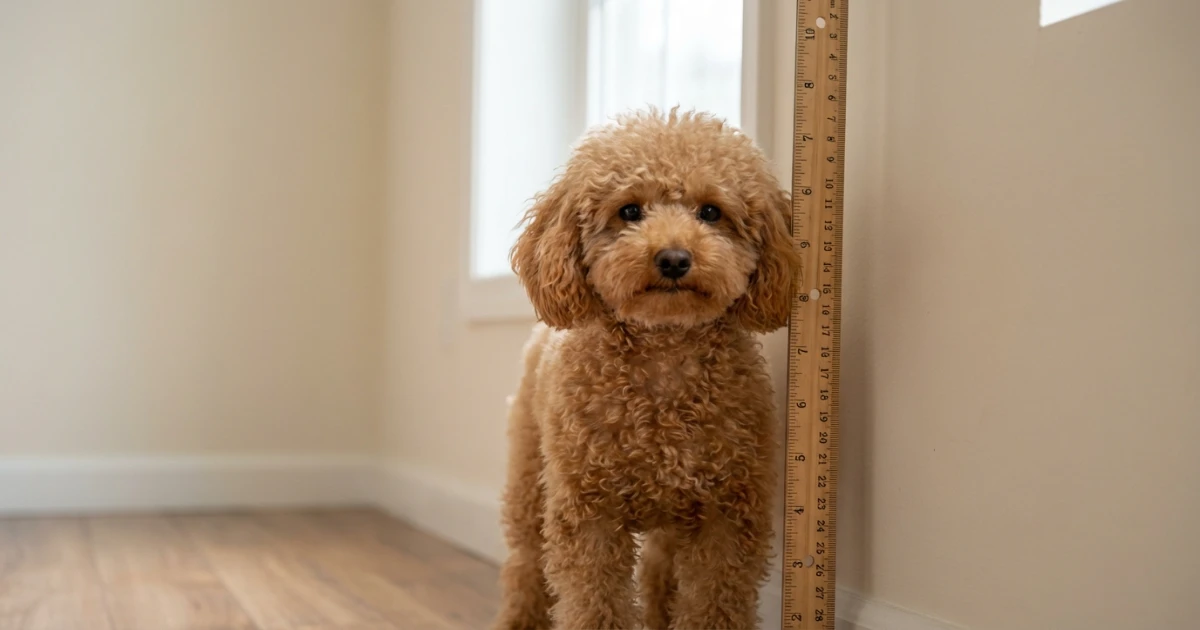
Toy Poodle Height Reference — standing next to a ruler for scale
Curious what a Toy actually costs to bring home and keep? Our dedicated Toy Poodle Price guide breaks down purchase price, first-year cost, and the real monthly bill by size.
Miniature Poodle Size — Full Breakdown
Ask breeders and long-time owners which poodle size they’d recommend to a friend with no strong preference, and an awful lot of them land on the Miniature. It’s small enough to be portable and apartment-friendly, yet sturdy enough to roughhouse with older kids and keep pace on a real walk. The AKC defines the Miniature as any poodle measuring over 10 inches but no more than 15 inches at the shoulder — a full five-inch window, which is why Minis vary more in build than people expect.
Miniature Poodle Height and Weight
Poodle Club of America data puts most well-bred Miniatures between 13 and 15 inches at the shoulder — the upper end of the class rather than the low end. Adult weight usually lands between 10 and 15 pounds, with males running 2–3 pounds heavier than females on average.
Miniature Poodle Growth Rate
Minis pack on size faster than Toys in the first four months — there’s simply more dog to build. Height typically plateaus between 9 and 11 months, while chest width and muscle keep filling in through the first birthday. By 12 months, most Miniatures are sitting at or very near their final adult dimensions.
Discuss the timing of adult-food transition with your veterinarian; height alone does not establish nutritional maturity.
Weighing purchase price against monthly upkeep? The Miniature Poodle Price guide lays out both, size by size.
Moyen Poodle (Medium) — What You Need to Know
The Moyen (Medium) poodle is a fourth size variety recognized by the Fédération Cynologique Internationale (FCI) and most Continental European kennel clubs. The AKC simply doesn’t acknowledge it. AKC size classification depends on shoulder height: over 15 inches is Standard, while over 10 through 15 inches is Miniature.
Moyen Poodle Height and Weight
FCI standards put the Moyen at over 35 to 45 centimeters (about 13.8–17.7 inches) at the shoulder, weighing 20 to 35 pounds. That’s the exact size gap sitting between the AKC Miniature and Standard — a gap some US breeders fill informally through intervariety pairings, marketed under the Moyen name even without an official standard behind it here.
Standard Poodle Size — Full Breakdown
The Standard poodle is the original — the variety Miniatures and Toys were bred down from over centuries, not the other way around. These are large, athletic dogs with genuine working heritage, bred to retrieve waterfowl out of cold German and French rivers. The AKC only requires a Standard to stand over 15 inches at the shoulder, but in practice, the Poodle Club of America notes most well-bred Standards measure 22–27 inches — well clear of that minimum.
Standard Poodle Height and Weight by Sex
| Sex | Typical Height | Typical Weight | Senior Age Starts |
|---|---|---|---|
| Male Standard | 24 – 27 inches | 60 – 70 lbs | 7 years |
| Female Standard | 22 – 25 inches | 40 – 55 lbs | 7 years |
Physical Build and Working Dog Traits
Standard poodles are built for endurance, not just elegance. The deep chest, long neck, and well-muscled hindquarters that make the breed-standard clip look so sculptural are also, functionally, a swimming and retrieving machine. Underneath the fancy trim at Westminster is a dog that was hauling ducks out of freezing water for a living not that many generations ago — and the body still shows it.
Today, that combination of size, brains, and trainability shows up in guide dog work, psychiatric service work, therapy visits, and competitive agility, rally, and dock diving. Few breeds pair physical capability with this much nuance in what they can actually learn to do.
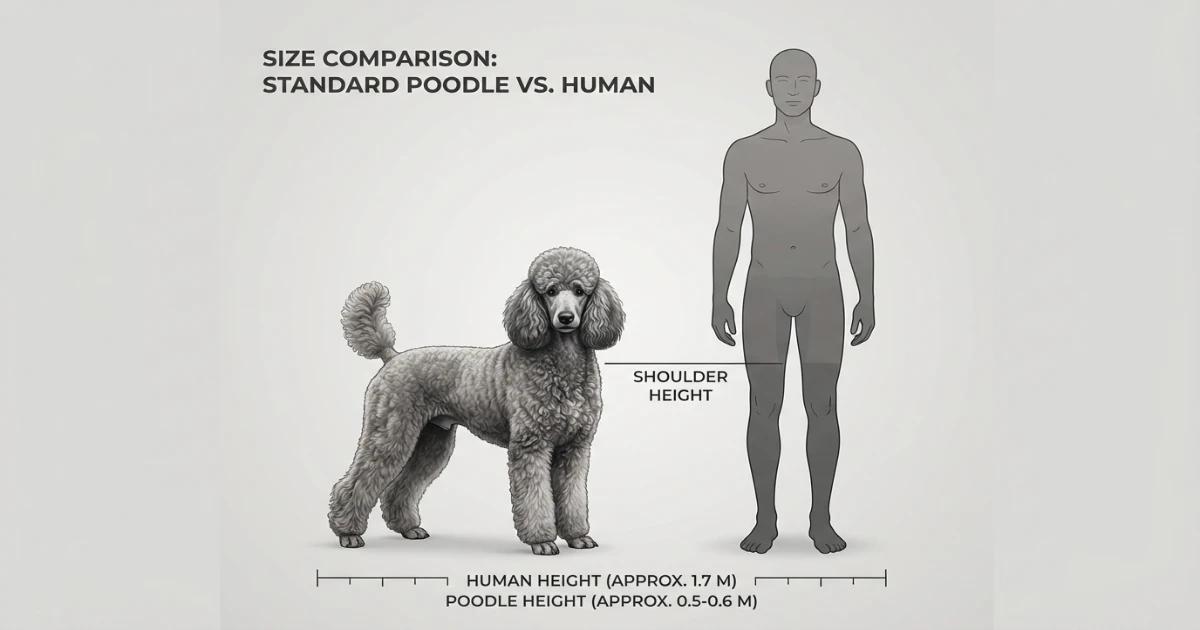
Standard Poodle Size Diagram — shown alongside a human silhouette for scale
See exactly what that extra size costs to buy and keep in our Standard Poodle Price guide — spoiler: the purchase price often runs lower than a Toy’s, but the monthly bill runs highest of the three.
How to Measure Your Poodle at Home (No Vet Visit Required)
Every number on this page assumes you can actually measure your own dog accurately — and most owners have never done it correctly even once. A poodle’s fluffy coat makes eyeballing height almost useless; you need to measure the actual body underneath, not the hair standing up around it. Here’s the real method, the same one groomers and breeders use.
📏 Height at the Withers
Stand your poodle square on a flat floor. Find the withers — the highest point of the shoulder blades, where a collar naturally sits. Measure straight up from the floor to that point, not to the top of the head or the ears. This is the number every size chart, including this one, is actually built on.
⚖️ Weight, Using a Scale
Weigh yourself first, then step on the scale holding your poodle, and subtract. For Toys and Minis this works well on a normal bathroom scale; for a wriggly Standard, a vet clinic scale during a routine visit is far more reliable.
📐 Chest Girth (for Harness Fit)
Wrap a soft tape around the widest part of the chest, just behind the front legs. This number matters more than height when you’re sizing a harness — two Miniatures at the same shoulder height can still need different harness sizes if one runs stockier.
Poodle Growth Chart: Illustrative Ranges
The question every new owner eventually asks: “Is my puppy growing at the right pace?” The chart below contains broad illustrative estimates, not a validated growth standard or a target weight for your puppy. Assess growth with your veterinarian using serial measurements and body condition.
📈 Weight Growth by Age (lbs) — All Three AKC Varieties
| Age | Toy Poodle (lbs) | Miniature Poodle (lbs) | Standard Poodle (lbs) |
|---|---|---|---|
| 8 weeks | 0.5 – 1.5 | 2 – 4 | 8 – 16 |
| 3 months | 1.5 – 2.5 | 4 – 7 | 20 – 30 |
| 4 months | 2 – 3.5 | 5 – 9 | 28 – 40 |
| 6 months | 3 – 5 | 7 – 12 | 35 – 52 |
| 9 months | 3.5 – 5.5 | 9 – 14 | 42 – 62 |
| 12 months | 4 – 6 | 10 – 15 | 45 – 65 |
| 18 months | 4 – 6 | 10 – 15 | 50 – 70 |
| Adult (final) | 4 – 6 lbs | 10 – 15 lbs | 40 – 70 lbs |
Key Growth Milestones
- 8–12 weeks: All varieties grow rapidly. This is also the critical socialization window — expose your puppy to diverse people, sounds, and environments now, not later.
- 3–6 months: Fastest vertical growth phase for Toy and Miniature. Standards, meanwhile, are still packing on significant weight and height with a long way to go.
- 6–12 months: Toys and Miniatures close in on adult height. This is also when adolescent stubbornness and hyperactivity tend to peak — hang in there.
- 12–24 months: Standards keep filling out in chest width and muscle well after height has leveled off. Expect puppy-ish behavior clear into year two.
Poodle Lifespan: Broad Estimates
Poodles are among the longest-lived purebred dogs, and the pattern here is consistent with most breeds: smaller varieties tend to outlive larger ones, mostly thanks to slower aging and less strain on joints and organs. Several Toy poodles have been documented reaching 20+ years, with isolated veterinary records of Toys living past 22.
🐾 Toy Poodle
14–18
years, broad estimate
🐾 Miniature Poodle
13–17
years, broad estimate
🐾 Moyen Poodle
13–15
years, broad estimate
🐾 Standard Poodle
12–15
years, broad estimate
Monthly Cost Comparison by Poodle Size (2026)
Size directly affects what you’ll spend every month — not just the puppy price. The chart below shows estimated monthly costs for food and professional grooming (amortized at every 6–8 weeks), as illustrative budgeting examples, not a surveyed national average. For the full first-year and lifetime breakdown, see the three dedicated price guides linked below the chart.
Want the full picture — purchase price, first-year cost, and lifetime total? See Toy Poodle Price, Miniature Poodle Price, and Standard Poodle Price, or start with the overview in Average Poodle Price.
Which Poodle Size Is Right for You?
There’s no universally “best” poodle size — only the right fit for your actual life, not the one you picture on your best day. Here’s how to think it through honestly, without romanticizing the version of yourself who walks a Standard for two hours every morning.
Choose a Toy Poodle if…
- You live in an apartment or small home with limited outdoor space.
- You travel frequently and want a dog that fits in a cabin-approved carrier.
- You’re looking for a devoted companion that thrives on close contact.
- Your household doesn’t include young children who may accidentally injure a tiny dog.
- You want the longest possible lifespan — Toys regularly reach 15–18 years.
Choose a Miniature Poodle if…
- You want the classic poodle personality without going very large or very small.
- You have a modest home or yard — Miniatures adapt to both environments well.
- You have older children or other medium-sized dogs at home.
- You’re a first-time dog owner — Miniatures are widely considered the most forgiving of the three to train and manage.
- You can commit to preventive care and check the health-screening records of both parents.
Choose a Standard Poodle if…
- You live in a house with a yard and lead an active outdoor lifestyle.
- You’re interested in canine sports, service work, or advanced obedience.
- You have a confident, experienced hand with large, energetic breeds.
- You want a physically imposing family dog with exceptional intelligence.
- You’re prepared for higher food, grooming, and vet costs at scale.
5-Step Framework for Choosing Your Poodle Size
Assess Your Living Space
Measure your home’s square footage and note your outdoor access. Toy poodles thrive in studios and apartments. Standard poodles are happiest in homes with a yard or near parks for daily off-leash time. Miniatures suit either environment.
Evaluate Your Activity Level Honestly
Standard poodles need 60–120 minutes of vigorous exercise daily. Toy and Miniature poodles are satisfied with 30–45 minutes of moderate activity. A bored Standard poodle will find its own entertainment — and you won’t enjoy it.
Consider Your Household Members
Standard poodles are robust enough for young children and larger dogs. Toy poodles are fragile and better suited for adult-led or calmer households. Miniatures typically land comfortably between the two extremes.
Budget for the Real Monthly Costs
A Standard poodle’s full groom runs $100–$150+ per session in 2026. A Toy poodle’s groom is $45–$70. Food costs scale by size. Add pet insurance, annual vet care, and supplies — then decide if the budget fits before committing.
Research Size-Specific Health Risks
Toys are prone to hypoglycemia, luxating patellas, and dental crowding. Standards carry higher bloat (GDV) and hip dysplasia risk. No size guarantees better health for an individual dog. Ask a vet familiar with the breed before you decide.
🎯 Lifestyle Matcher
Answer two quick questions to see which size fits your life best.
Your living situation?
Your daily activity level?
Health Screening Before Choosing a Poodle
Size alone cannot predict an individual dog’s health. Ask for the parents’ screening results, not only a claim that they were vet checked. The Poodle Club of America health resources explain inherited concerns and testing by variety. Discuss the records and your dog’s preventive-care plan with your veterinarian.
This size chart is not a diagnostic tool or a feeding prescription. Unexpected weight changes, poor growth or symptoms need veterinary assessment.
Frequently Asked Questions
Ready to Go Deeper?
Explore our breed-specific guides for training tips, grooming schedules, and health screening checklists tailored to each poodle size.
Read the Miniature Poodle Guide →Final Thoughts
Choosing between a Toy, Miniature, Moyen, or Standard poodle comes down to one thing: honest self-assessment, not the size that photographs best. What does your home actually look like on a Tuesday, not a Pinterest board? How active is your real routine, not the one you’re planning to start next month? Who else shares your space, and how would they actually get along with a 6-pound dog versus a 65-pound one? The poodle size chart and growth data in this guide give you the facts — the lifestyle match is yours to make.
Whatever size you land on, you’re getting one of the most intelligent, adaptable, and affectionate breeds in the world. Poodles have won Westminster Best in Show more times than almost any other breed, served as water retrievers, circus performers, service dogs, and unconditional companions — and they’ve done all of it at every size on this chart. That’s not a coincidence. It’s a breed that genuinely punches above its weight, no matter which weight that happens to be.