Why Do Poodles Follow Their Owners Everywhere? (Velcro Dog Explained)
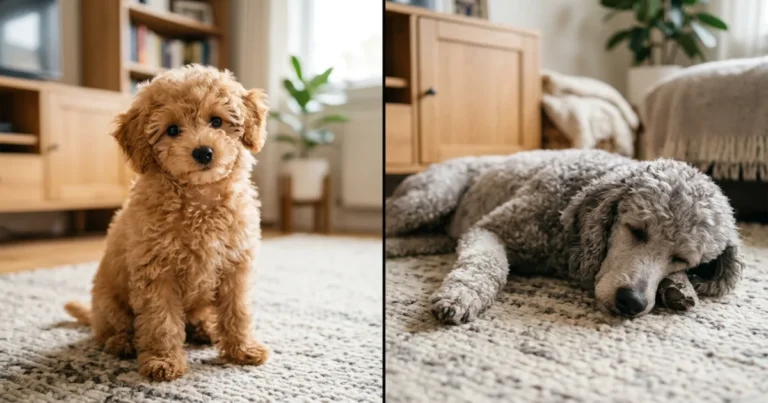
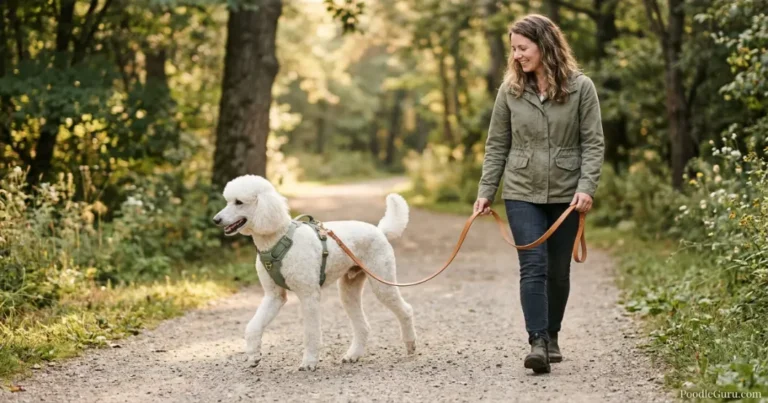
If you share your home with a poodle, you already know the feeling: you stand up from the sofa, and four soft paws hit the floor right behind you. You walk to the kitchen — there they are. You close the bathroom door and hear a gentle scratch on the other side. You are living with what dog lovers affectionately call a Velcro dog — and understanding why do poodles follow you everywhere requires looking at instinct, intelligence, and the incredible bond this breed builds with its people.
The answer is layered. It touches on ancient pack instinct, the extraordinary emotional bond poodles form with their families, their remarkable intelligence, and sometimes, an underlying anxiety that deserves genuine attention. This guide unpacks every reason your poodle shadows your every step — and helps you understand when devotion is healthy and when it needs to be addressed.
The Pack Instinct: An Ancient Drive That Never Left
To understand why your poodle follows you everywhere, you need to travel back thousands of years. Before domestication, dogs lived in social packs where sticking together was not just preferable — it was survival. Separating from the pack meant losing access to food, warmth, and protection from predators. That ancient wiring has never been fully switched off.
When a poodle looks at you, it does not see a human — it sees its pack. And in pack behavior, members do not simply wander off alone. They move together, eat together, sleep together, and watch over one another. Your poodle following you from the bedroom to the kitchen is not annoying clingy behavior; it is thousands of years of evolution expressing itself in real time.
This instinct is particularly strong in poodles because the breed was historically developed as a working dog, bred to stay close to hunters and respond instantly to commands. Proximity was a job requirement, and it became deeply embedded in the breed’s temperament. The pack drive in a poodle is not background noise — it is front and center, informing nearly every social decision they make.
💡 Key Insight: Your poodle is not being clingy — they are fulfilling an evolutionary role that kept their ancestors alive for thousands of years. Understanding this reframes following behavior from nuisance to instinct.
Poodle Intelligence: The Smartest Follower in the Room
Poodles consistently rank among the most intelligent dog breeds in the world. According to widely cited canine intelligence research, they are second only to the Border Collie in working and obedience intelligence. That brainpower plays a direct and fascinating role in their following behavior.
A highly intelligent dog pays close attention to patterns. Your poodle knows that when you put on shoes, it usually means a walk. When you pick up your keys, you leave. When you move toward the kitchen mid-afternoon, a meal might be coming. This constant environmental reading keeps a smart poodle engaged with your movements at all times. They are not just following you — they are studying you.
That intelligence also means poodles pick up on emotional cues with impressive accuracy. If you are stressed, your poodle senses it. If you are excited, they feel it too. This emotional attunement creates a feedback loop: the more responsive you are to your poodle, the closer they want to stay because being near you is, for them, endlessly interesting and rewarding.
Unlike a less intelligent breed that might simply sprawl in one room all day, a poodle is mentally engaged in tracking your behavior, reading your mood, and anticipating your next move. Their intelligence does not just make them trainable — it makes them profoundly invested in the person they love most.

Bonding Behavior: Why Your Poodle Chose You
Poodles are one of the most emotionally bonded dog breeds in existence. While many dogs enjoy human company, poodles actively seek deep, personal attachment. This is the result of selective breeding over generations to produce a companion that is loyal, empathetic, and people-focused above all else.
When a poodle bonds with a person, that relationship becomes the center of their world. The bond is reinforced by shared activities, positive interactions, feeding, play, and the simple act of spending time together. Every positive experience deepens the attachment, and with that attachment comes the natural desire to be physically near the bonded person as much as possible.
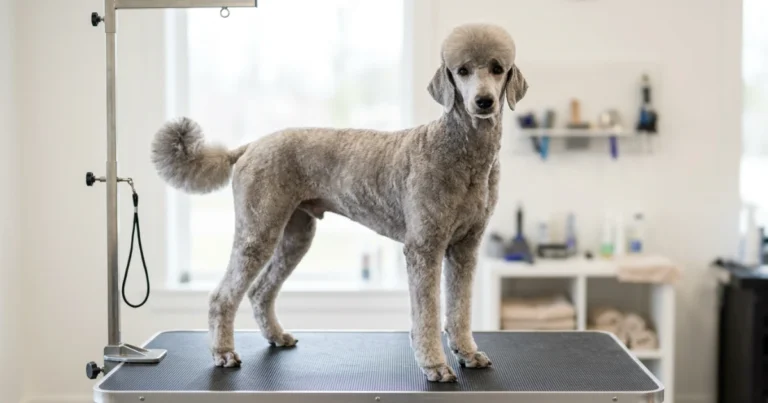
This bonding behavior is a large part of why the male toy poodle, in particular, is so often noted for its almost singular devotion. Smaller poodle varieties tend to concentrate their bond even more acutely, since their entire world is built around a smaller physical environment with fewer outside interactions. Your presence becomes, quite literally, the most important thing in their day.
Bonding also creates what behaviorists call a secure base effect. A well-bonded dog uses its owner as an anchor — a safe point from which to explore, and to which they return when uncertain. Following you is, in part, their way of maintaining that anchor as it moves through the house.
💡 Did You Know? Research on human-dog bonding shows that both dogs and owners experience a rise in oxytocin — the “love hormone” — during eye contact and physical closeness. Poodles are especially adept at initiating these bonding moments.
Loyalty Traits: The Poodle’s Defining Characteristic
Loyalty is not just a nice adjective to describe a poodle — it is a core personality trait that shapes nearly every behavior they exhibit. Poodles are fiercely devoted to their families. They remember who feeds them, who plays with them, who scratches behind their ears. That memory builds a repertoire of trust, and trust produces following behavior.
Unlike more independent breeds that are content to roam a yard alone, a poodle measures its own comfort level by your proximity. You are not just the provider of food and shelter — you are the anchor point of their emotional security. When you move, that anchor moves, and instinctively, they follow it.
This loyalty also means poodles are extraordinarily sensitive to shifts in the household dynamic. A new baby, a move, a change in your work schedule — any of these can temporarily intensify following behavior as your poodle recalibrates and seeks reassurance. It is not manipulation; it is loyalty working in real time.
The mini poodle is a particularly striking example of this trait. Despite their small size, miniature poodles carry the same depth of emotional investment as their standard counterparts — sometimes even more intensely, because their world is physically smaller and the people in it loom correspondingly larger in their emotional landscape.
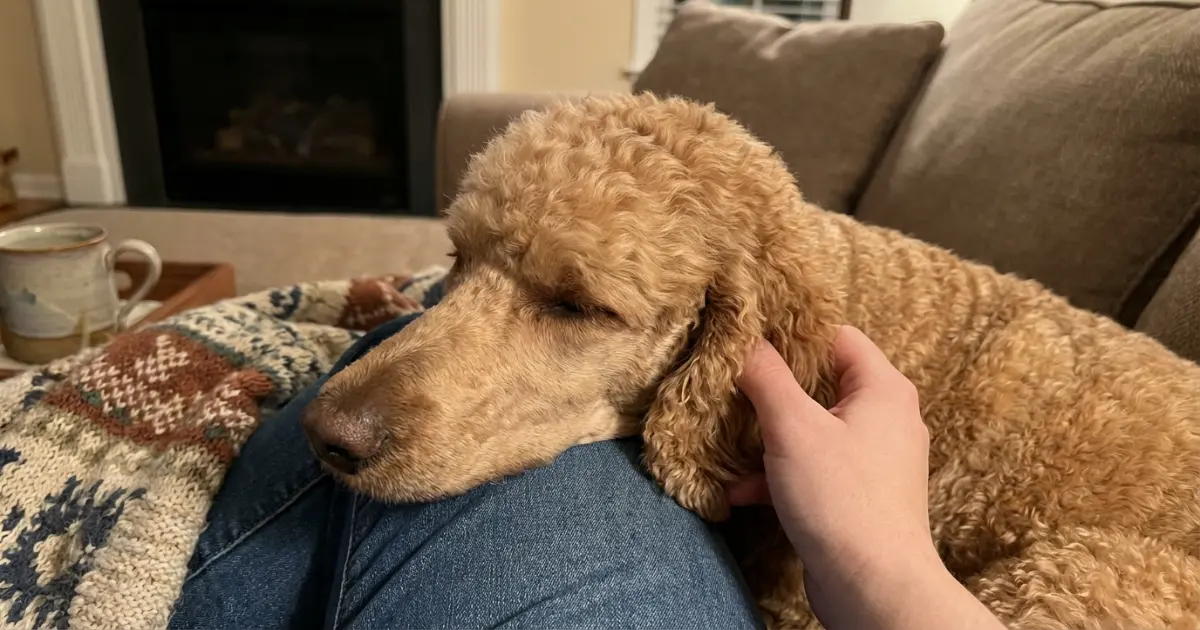
Separation Anxiety: When the Bond Becomes a Burden
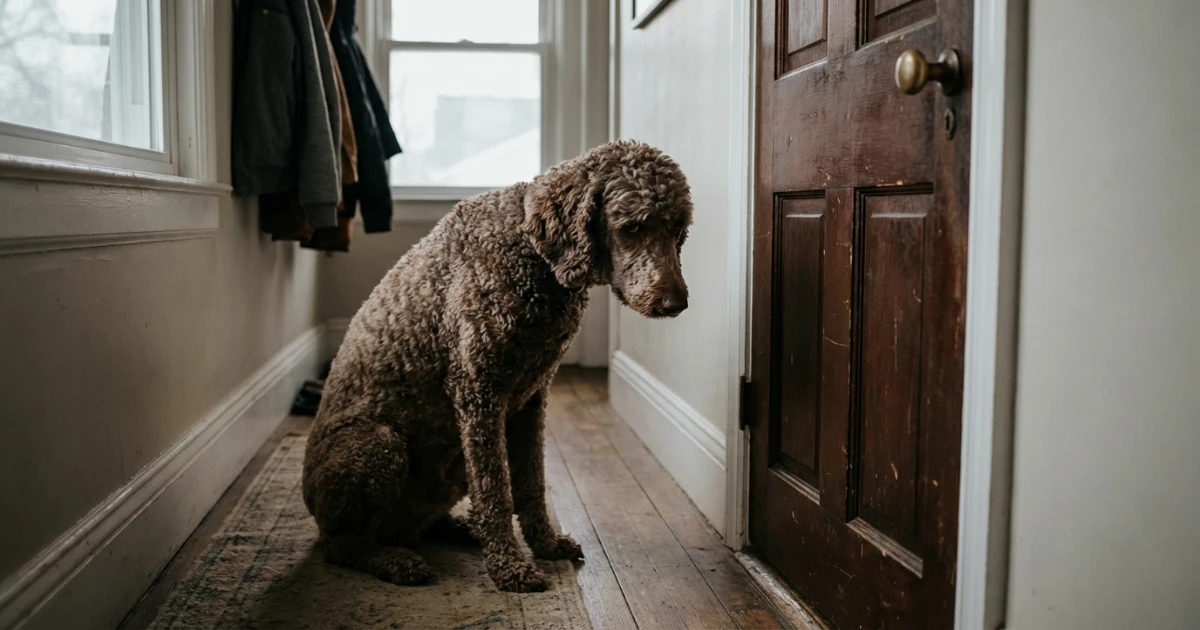
There is a meaningful difference between a poodle who follows you because they love you and one who follows you because they are terrified of being without you. Separation anxiety is a genuine behavioral condition that affects a significant number of poodles, and it can masquerade as affectionate behavior right up until the moment you walk out the door.
- Destructive behavior — chewing furniture, scratching doors — specifically when left alone
- Excessive barking or howling that begins immediately after your departure
- Urinating or defecating indoors despite being fully house-trained
- Pacing, drooling, trembling, or panting when you prepare to leave
- Refusing to eat or drink while you are away from home
- Frantic, prolonged, or overwhelming greeting behavior when you return
If your poodle ticks several of these boxes alongside constant following, the issue goes beyond devotion. An anxious poodle is a suffering poodle. Addressing separation anxiety is not about making your dog love you less — it is about helping them feel safe and settled even when you are not physically present.
Separation anxiety often develops in poodles that were never taught to be comfortable alone, or those that experienced a significant disruption — rehoming, a sudden change in schedule, illness, or the loss of another pet. Early prevention through gradual alone-time training is far easier than treating entrenched anxiety, which in severe cases may require professional behaviorist support or veterinary intervention.
Attention-Seeking: The Poodle Who Learned a Trick
Not all following behavior is instinct-driven. Some of it is simply learned. If every time your poodle follows you and nudges your hand you reach down and pet them, you have just rewarded the following behavior with exactly what they wanted. Over time, this creates a clear loop: follow owner → receive attention → follow owner more frequently.
Poodles are highly responsive to operant conditioning. They learn quickly that certain actions produce certain outcomes, and following you is one of the easiest behaviors to get rewarded. This does not make them manipulative — it makes them excellent students who have accurately read the classroom rules.
The solution is not to ignore your dog entirely, but to shift when and how attention is given. Reward calm, settled behavior on a bed or mat. Give focused attention during structured play or training sessions rather than in response to nudging and shadowing. Your poodle will adapt quickly — they are nothing if not adaptable.
Training Influence: How You May Have Encouraged It
Your daily habits have a greater influence on your poodle’s following behavior than you might realize. Consider how often you call your dog to come with you, how frequently you use their presence as casual comfort, or how consistently you have reinforced staying close during walks and play. Over months and years, these micro-interactions shape a dog’s default behavioral patterns.
Training influence cuts both ways. If you have inadvertently reinforced following, you can also train a healthier balance. The key principles are straightforward and well within reach for any poodle owner:
Place Training
Teach your poodle a “place” cue — a specific mat or bed they go to on command. Reward them generously for staying put while you move around the room.
Desensitization
Practice departure cues — picking up keys, putting on shoes — without actually leaving. This reduces the emotional spike those signals trigger over time.
Independent Enrichment
Provide puzzle toys, slow-feeders, and chews that give your poodle a rewarding activity to do independently, without needing your involvement.
Alone Time Practice
Start with short, low-stakes alone periods and reward calm behavior consistently. Build the duration slowly over days and weeks for lasting results.
When Following Becomes Unhealthy: Drawing the Line
Following in itself is not a problem. The issue arises when a poodle cannot function independently at all — when they are so fused to their owner’s movements that any brief separation triggers genuine distress. This is not companionship; it is dependency, and it diminishes quality of life for both the dog and the owner.
Signs that the following behavior has crossed into unhealthy territory include a poodle that cannot settle in a room alone for even five minutes, that shows visible distress whenever the owner leaves their sight, or that has never developed any independent resting habits in their life.
- Your poodle can rest calmly in a separate room for at least 30 minutes
- They greet your return with happiness — not frantic, prolonged distress
- They engage with toys, chews, or independent exploration when you are occupied
- They settle on their own bed without being told, on most occasions
- Departures and arrivals are calm, low-drama events rather than emotional crises
If your poodle cannot meet these benchmarks, it is worth working with a certified professional dog trainer (CPDT-KA) or a veterinary behaviorist. Medication is sometimes appropriate for severe anxiety cases and can be transformative when combined with behavior modification. There is no award for managing alone — your poodle deserves to feel genuinely okay, even when you are not in the room.

Final Thoughts: Love on Four Legs
The reason your poodle follows you everywhere is ultimately a testament to the extraordinary relationship between this breed and its people. Pack instinct, bonding behavior, deep-set loyalty, towering intelligence, and yes — sometimes anxiety and learned habits — all converge in the shadow that moves quietly with you from room to room.
Understanding why poodles follow you everywhere does not require you to change it. In most cases, the behavior is simply your poodle saying: you are my person, and where you go, I want to be. That is a profound thing to receive from any living being.
Where it does need attention — where the following is driven by fear rather than love — the good news is that it is almost always addressable with patience, consistency, and the right guidance. Your poodle is one of the most trainable animals on earth. With the right approach, they can love you fiercely and rest peacefully at the same time.
People Also Ask — answered in full